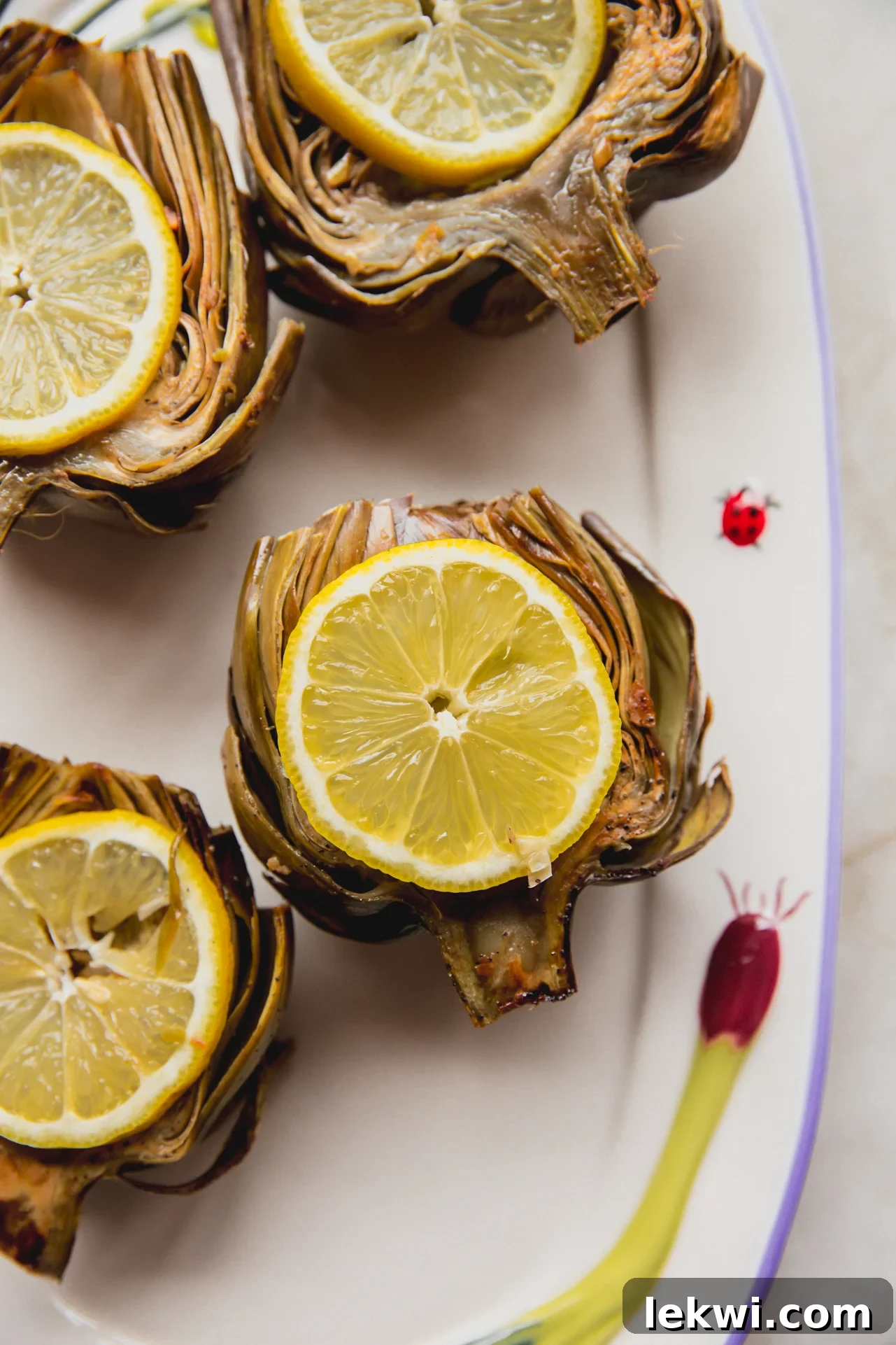
Unlock the secrets to perfectly preparing and enjoying magnificent oven-baked artichokes. This comprehensive guide will show you how to transform this beautiful and unique vegetable into a truly delicious and impressive dish.
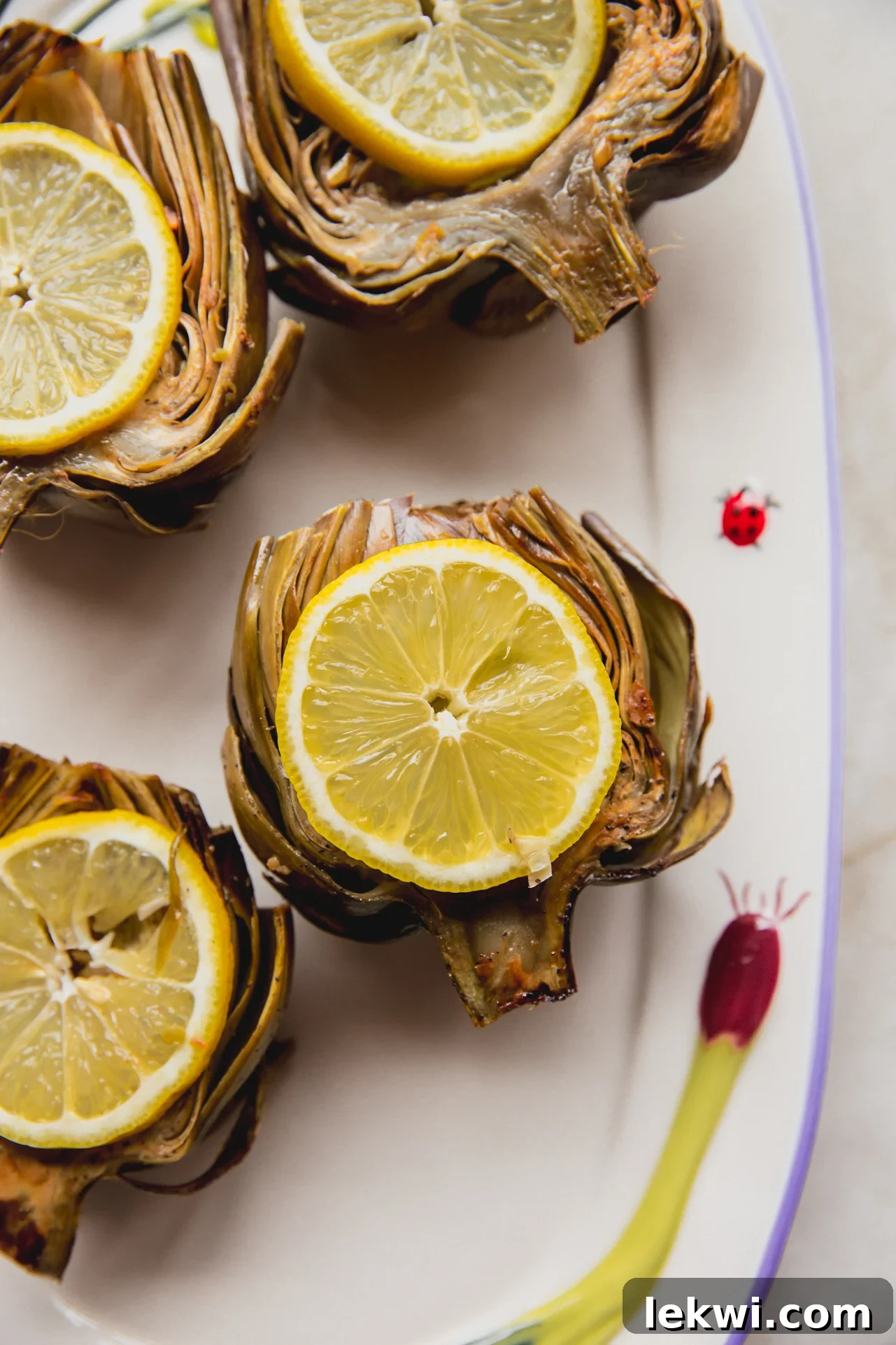
Why You’ll Adore Whole Roasted Artichokes
For a long time, the idea of cooking whole artichokes at home seemed daunting. They always looked so intricate and mysterious at the grocery store, captivating yet intimidating. While I enjoyed artichoke hearts in salads, creamy dips, and on pizzas, the thought of preparing an entire one from scratch felt like a culinary challenge. However, I discovered that preparing whole roasted artichokes is surprisingly straightforward and incredibly rewarding.
This recipe for oven-baked artichokes isn’t just a seasonal dish; it’s an experience. Perfect for springtime gatherings or a delightful family meal, here’s why this recipe will quickly become a favorite in your kitchen:
- Effortlessly Impressive: Despite its gourmet appearance, this dish is remarkably simple to prepare. With just a few basic steps and a handful of ingredients, you can create a culinary masterpiece that will impress your dinner guests without spending hours in the kitchen. It’s the perfect way to elevate any meal.
- A Celebration of Spring Produce: Artichokes are at their peak during the spring months, offering the best flavor and tenderness. This recipe allows you to fully embrace the freshness of seasonal ingredients, bringing vibrant, earthy notes to your table. Cooking them whole truly highlights their natural beauty and unique texture.
- Nutrient-Rich and Wholesome: Artichokes are not only delicious but also packed with essential nutrients. They are an excellent source of dietary fiber, promoting digestive health, and rich in Vitamin C, an antioxidant crucial for immune function. Enjoying this dish means nourishing your body with every delightful bite.
- A Fun and Engaging Eating Experience: Eating a whole roasted artichoke is an interactive and enjoyable process. Peeling back each leaf to savor the tender meat, and finally reaching the coveted heart, makes for a memorable dining adventure. It’s a great way to encourage mindful eating and enjoy your food slowly.

Demystifying Artichokes: Essential Basics You Need to Know
Artichokes are nutritional powerhouses, boasting high levels of fiber, which aids digestion, promotes gut health, and helps regulate blood sugar levels. They are also an excellent source of Vitamin C, a vital antioxidant that supports the immune system and skin health. Furthermore, artichokes contain unique antioxidants like cynarin and silymarin, known for their potential liver-protective benefits and anti-inflammatory properties. Including them in your diet is an easy and delicious way to boost your overall well-being. (source)
The flavor of artichokes is subtly unique – a delicate blend of earthy, nutty, and slightly sweet notes. Many describe it as a mild, slightly bitter taste with a refreshing finish, often compared to asparagus or Brussels sprouts. The true magic, however, lies in the texture: the tender, fleshy base of each leaf offers a satisfying scrape, leading to the creamy, soft, and utterly decadent heart. The act of pulling off the leaves and dipping them makes the eating experience truly fun and engaging.
Roasted artichokes make a fantastic side dish or even a light appetizer. Their rich flavor pairs beautifully with a variety of main courses. Consider serving them alongside a perfectly baked chicken breast, a juicy grilled steak, or a pan-seared salmon for a balanced meal. Don’t forget the essential dipping sauce! Classic choices include melted ghee (clarified butter) or traditional butter, which complement the artichoke’s flavor wonderfully. For a zesty kick, a homemade garlic aioli or a tangy lemon-herb vinaigrette would be superb additions. You can also get creative with flavored butters or creamy avocado dips.
Artichokes have two primary seasons: a major peak from March to May and a smaller season in the fall, typically in October. Spring is undoubtedly the best time to find them in abundance, offering the freshest quality and most competitive prices. During this peak season, you’ll notice them readily available in grocery stores and farmers’ markets, often looking their absolute best. While you might occasionally spot them out of season, their quality and price won’t compare to the springtime harvest.
The availability of fresh artichokes can vary by region, but during peak season (March to May), they are usually easy to find. I regularly spot excellent quality artichokes at health-focused grocery stores like Sprouts, Whole Foods, and Natural Grocers. Many conventional supermarkets also carry them, especially when they are in season. When selecting an artichoke, look for ones that are heavy for their size, have tightly packed leaves, and a vibrant green color. A slight squeak when squeezed is also a good sign of freshness. Avoid those with dry, discolored, or spreading leaves.
While steaming is a common method for cooking artichokes, I consistently recommend baking them for superior flavor and texture. Roasting or baking caramelizes the natural sugars, intensifying their earthy sweetness and creating a beautifully tender result. The dry heat also contributes to a more robust flavor profile compared to the milder taste of steamed artichokes. This recipe will guide you through the exact steps to achieve perfectly baked artichokes that are bursting with flavor.
Essential Ingredients for Perfect Artichokes
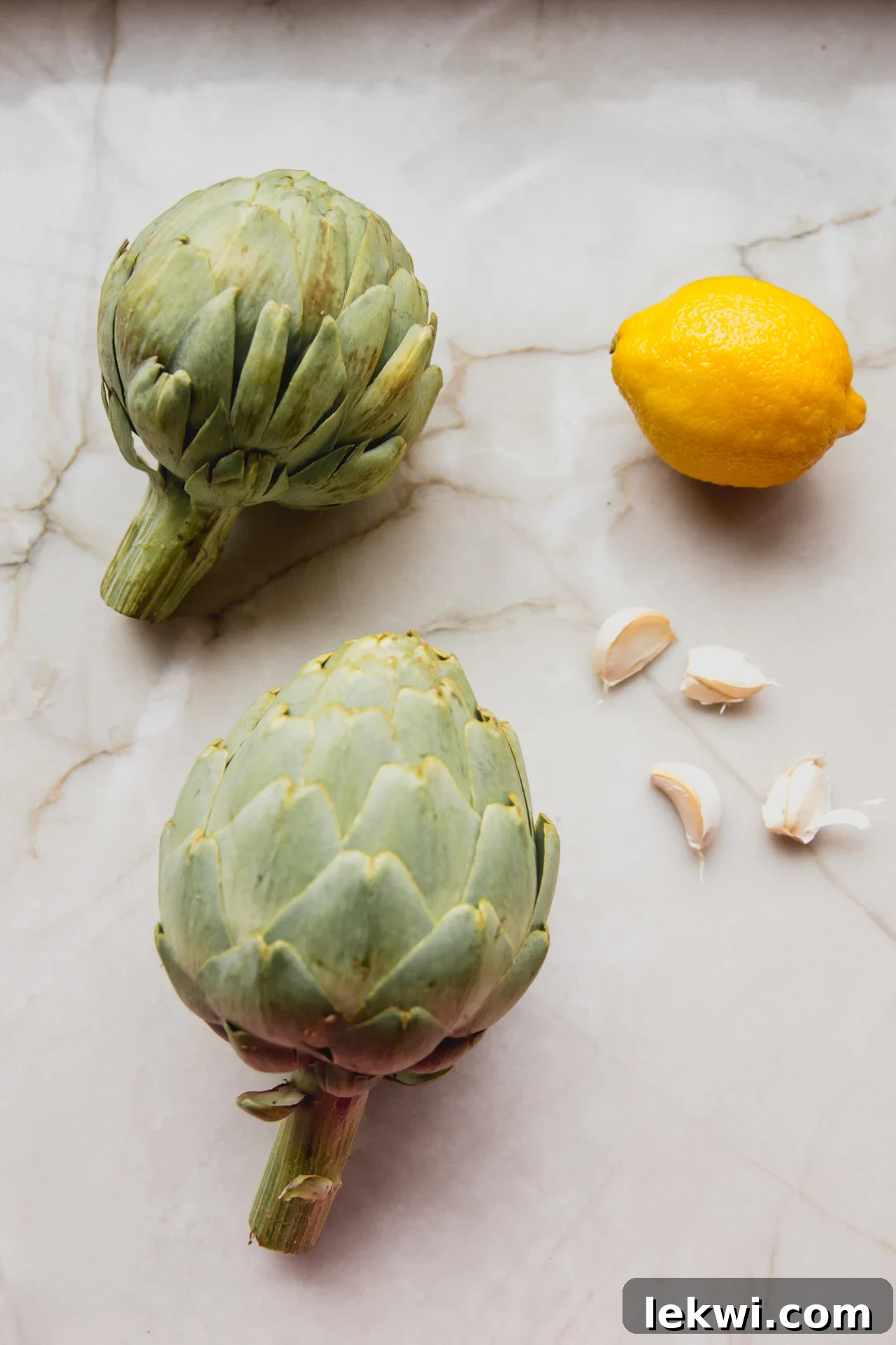
- Fresh Artichokes: These beautiful thistles are undoubtedly the star of our dish. When selecting them, look for ones that feel heavy for their size, have tight, compact leaves, and a rich, vibrant green color. I typically prepare at least two at a time—one for my husband and one for myself—and often an extra one for delicious leftovers to enjoy the next day!
- Garlic: Minced garlic cloves, tucked directly into the heart of the artichoke before roasting, infuse every layer with an aromatic, savory depth. As it bakes, the garlic softens and becomes incredibly sweet, complementing the artichoke’s natural flavors perfectly.
- Lemon: Fresh lemon juice is absolutely crucial for this recipe. It serves multiple purposes: its bright, acidic notes cut through the richness of the artichoke, enhancing its flavor, and more importantly, it prevents the freshly cut artichoke from browning due to oxidation, keeping it visually appealing. Lemon slices also make a beautiful garnish.
- Avocado Oil: A neutral, high-heat oil like avocado oil is ideal for roasting. It helps the artichokes become beautifully tender and slightly crispy on the edges while also carrying the flavors of the salt, pepper, and garlic. Olive oil is also a suitable alternative.
- Sea Salt & Black Pepper: Simple seasonings are all you need to bring out the best in fresh artichokes. Sea salt enhances their natural taste, while freshly ground black pepper adds a subtle warmth. Adjust to your preference, and omit pepper if following a strict AIP diet.
Mastering the Art of Oven-Baked Artichokes: A Step-by-Step Guide
Transforming a whole artichoke into a tender, flavorful dish is simpler than you might think. Follow these clear, detailed steps with accompanying photos to prepare perfect oven-baked artichokes every time. The full, concise instructions can also be found in the recipe card below.
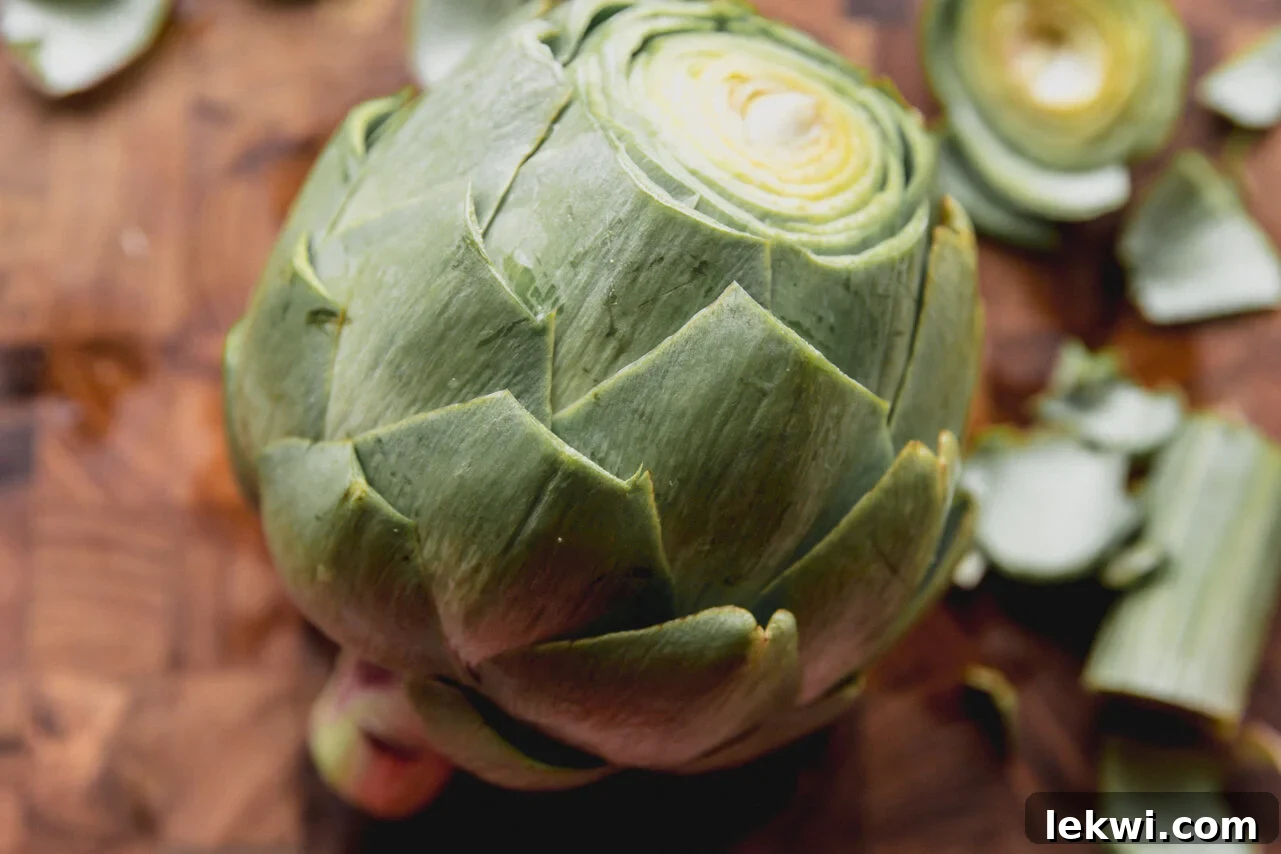
Step One: Prepare and Trim the Artichoke. Begin by preheating your oven to 400°F (200°C). Thoroughly wash the artichokes under cold running water. Using a sharp chef’s knife, carefully slice off about one inch from the pointed top of each artichoke. Next, trim any excess stem, leaving only a short base of about half an inch. Remove the tough, small leaves at the very base by simply pulling them off; there are usually 3-5 of these. Finally, use kitchen shears to snip off the sharp, thorny tips of the remaining outer leaves. Exercise caution during this step, as the leaf tips can be surprisingly sharp.
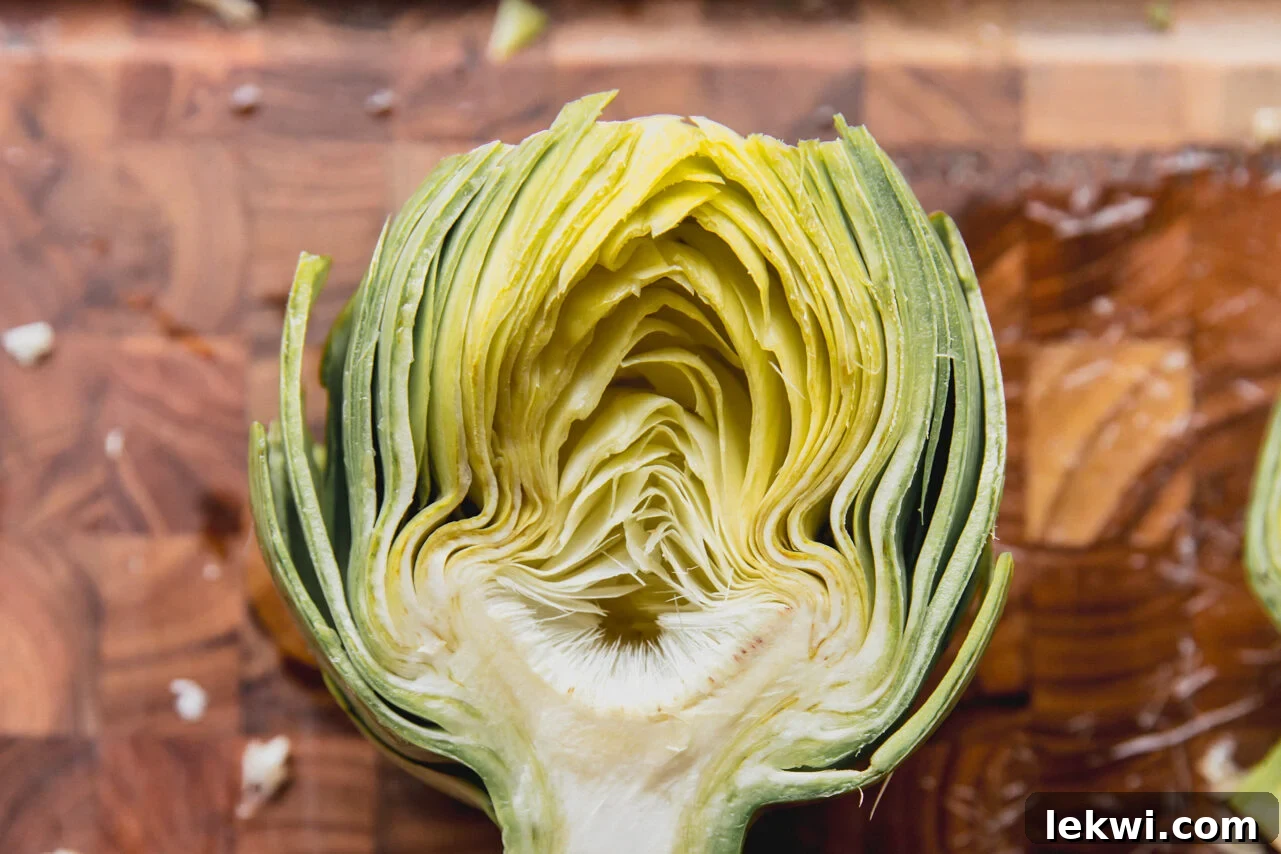
Step Two: Halve and Clean the Interior. Place each trimmed artichoke on its side and carefully slice it in half vertically, from top to bottom, using your sharp knife. Once halved, you’ll see the fuzzy choke in the center, which is inedible. Use a spoon to gently scoop out and discard this fuzzy choke and any small, purple-tinged inner leaves. These purple leaves are typically tougher and less palatable. Immediately brush the cut surfaces of the artichoke with fresh lemon juice. This crucial step prevents oxidation and browning, ensuring your artichokes maintain their appealing color throughout the cooking process.
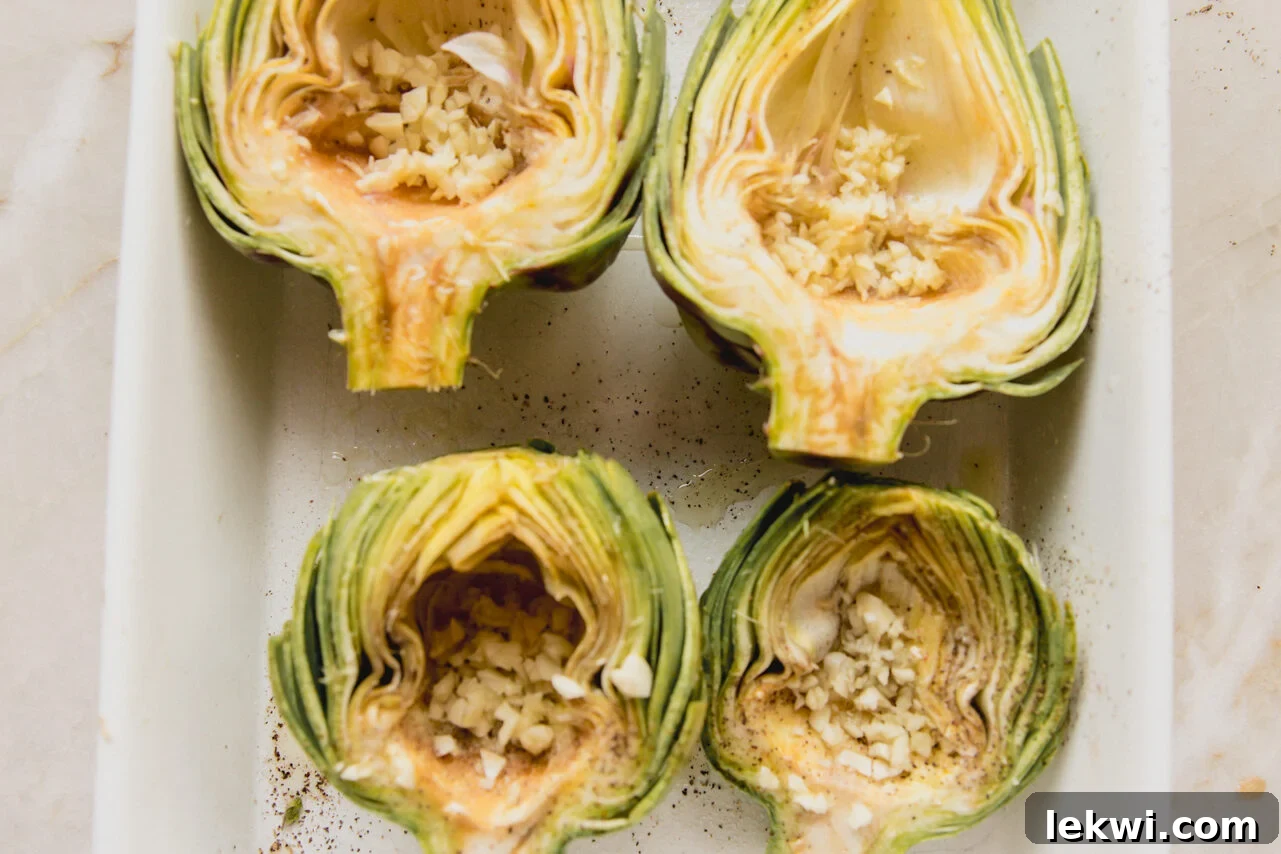
Step Three: Season and Stuff. Prepare a casserole dish by lightly greasing it with oil. Place the artichoke halves leaf-side down and heart-side up in the prepared dish. Generously fill the hollow centers where the choke was removed with minced garlic cloves. Drizzle the artichokes with about half of the avocado oil and season them liberally with half of the sea salt and black pepper (if using). Ensure the garlic is nestled well within the cavity.
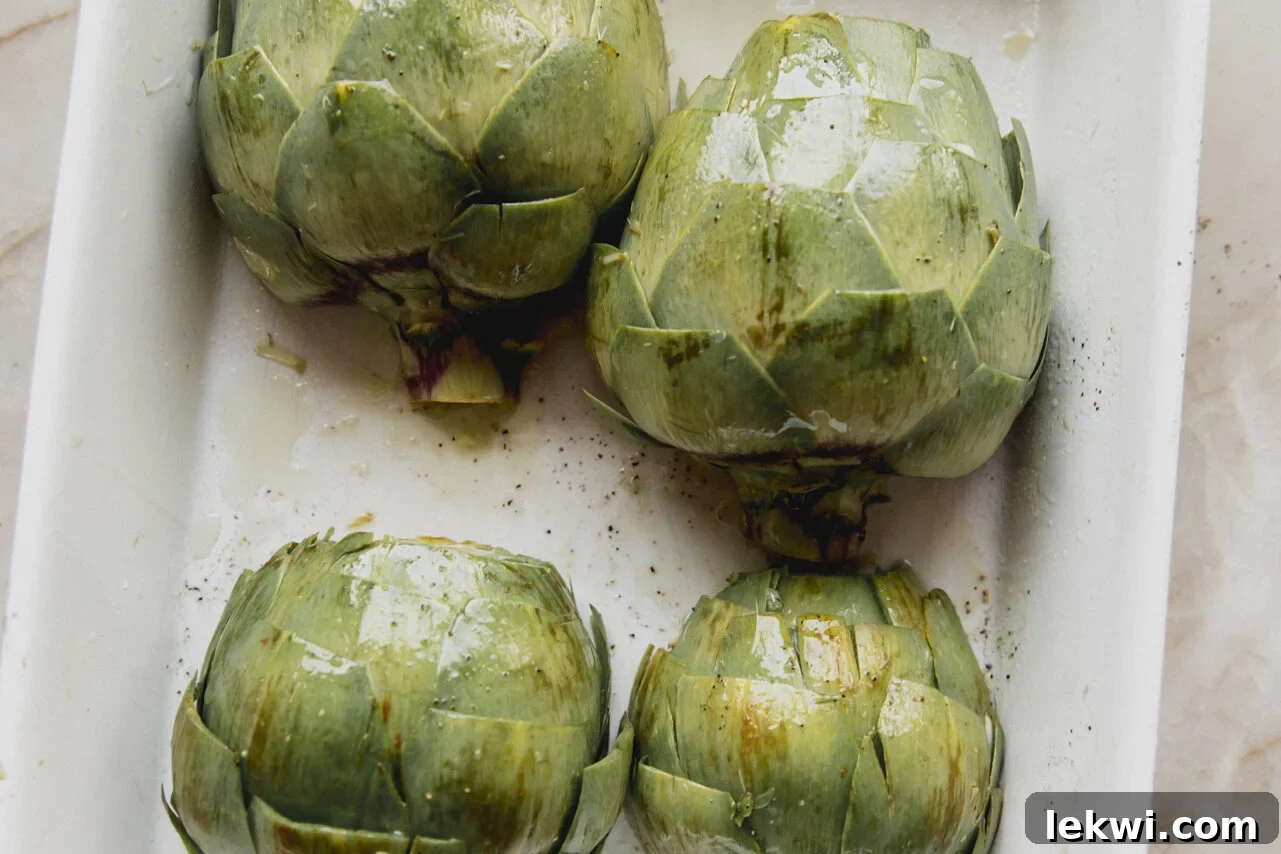
Step Four: Arrange for Baking. Carefully flip the artichoke halves so they are now leaf-side up in the casserole dish. Gently use your fingers to ensure the garlic cloves remain tucked inside the cavity as you flip them. This positioning allows the leaves to soften beautifully while the heart cooks. Drizzle the remaining avocado oil over the artichokes and sprinkle them with the rest of the salt and pepper.
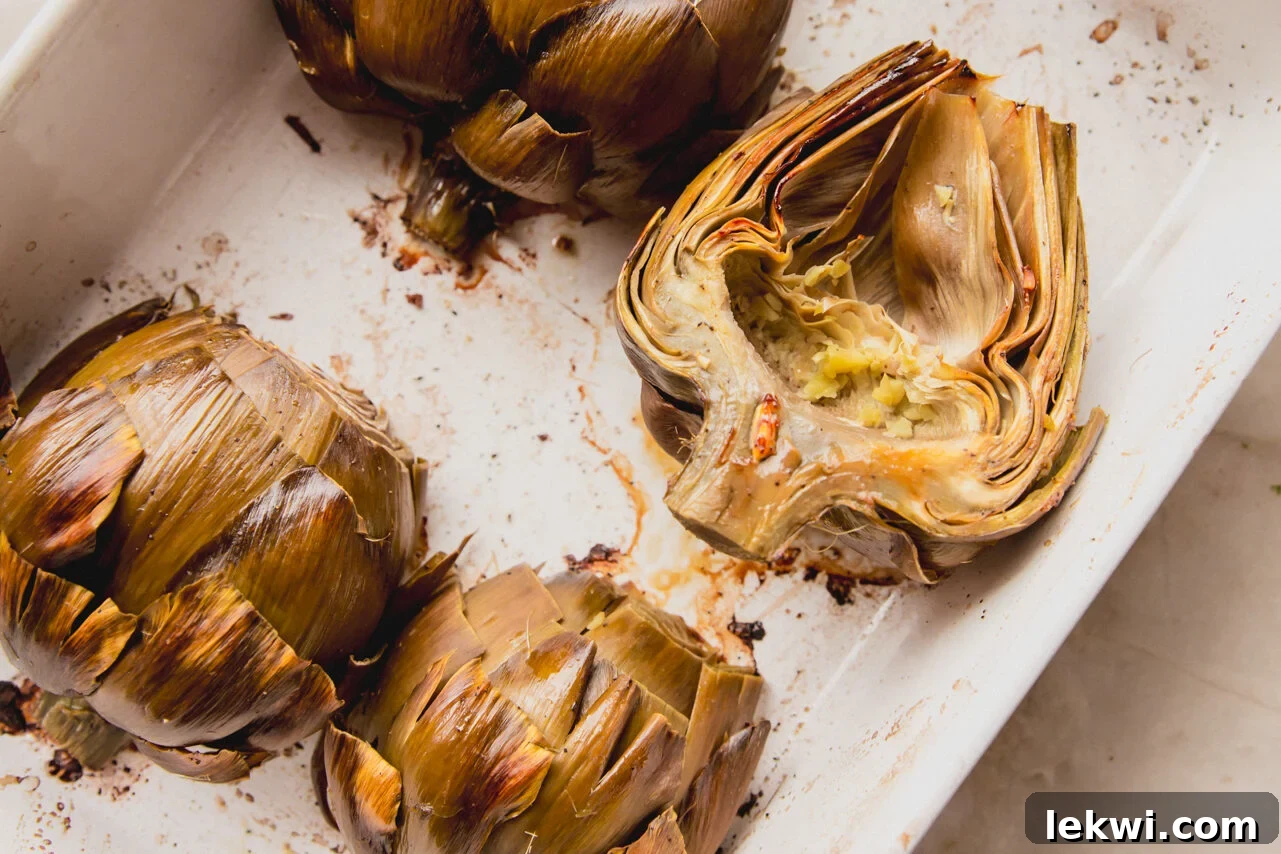
Step Five: Bake to Perfection. Transfer the uncovered casserole dish to your preheated oven and bake for 20 minutes. After this initial baking period, remove the dish, cover it tightly with a lid (or aluminum foil), and return it to the oven for an additional 20-25 minutes. The artichokes are ready when the outer leaves can be easily pulled away, and the heart feels tender when pierced with a knife. Baking covered helps to steam the artichokes, ensuring they become incredibly tender.
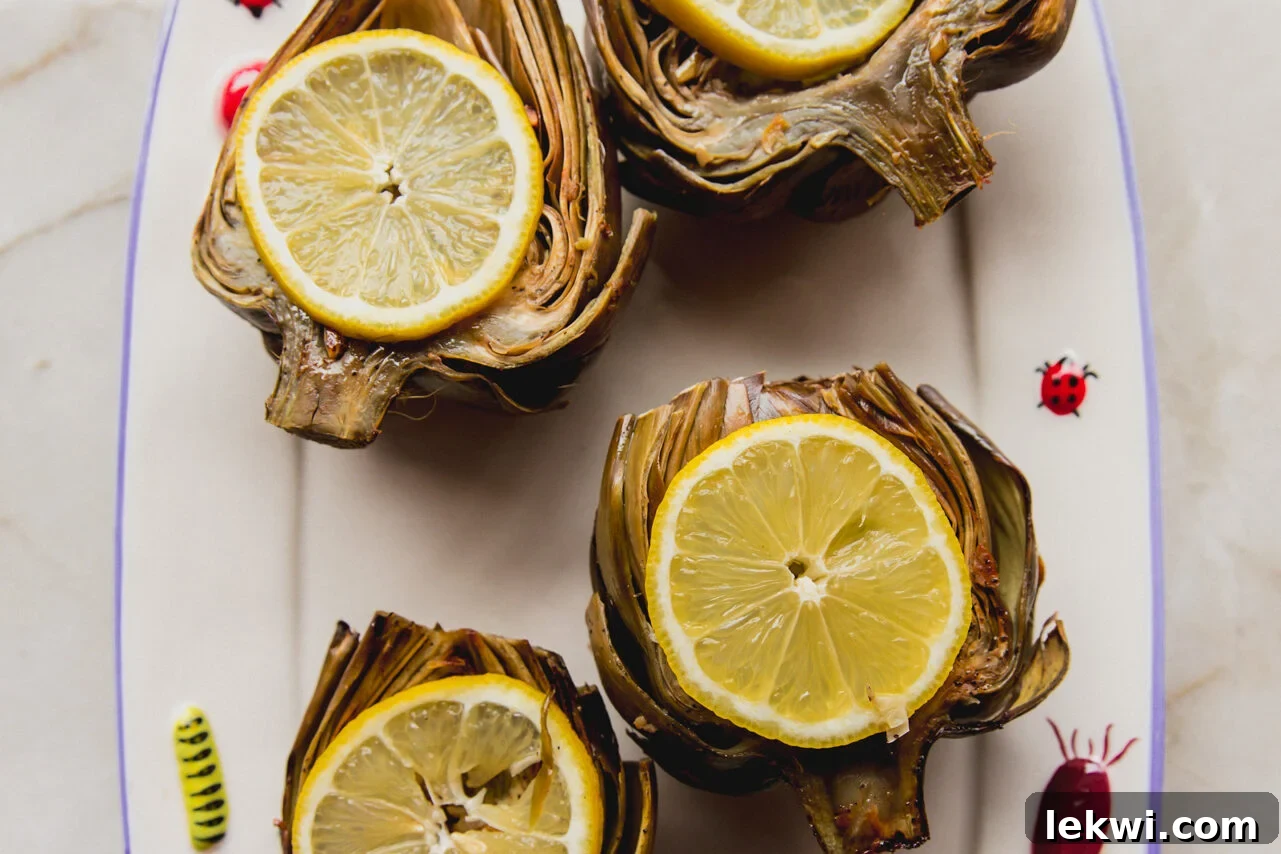
Step Six: Cool and Serve. Once baked, carefully remove the artichokes from the oven. Allow them to cool slightly in the dish for a few minutes before using a spoon to gently flip them back to heart-side up for presentation. Garnish with additional fresh lemon wedges and serve immediately with your favorite dipping sauce. The warmth brings out their best flavors, making them an irresistible treat.
The Art of Eating: Savoring Every Part of a Whole Artichoke
For many, the artichoke heart is the only familiar part, but the true joy of a whole roasted artichoke lies in exploring its entire structure. It’s an interactive and delightful experience, especially when paired with a flavorful dip.
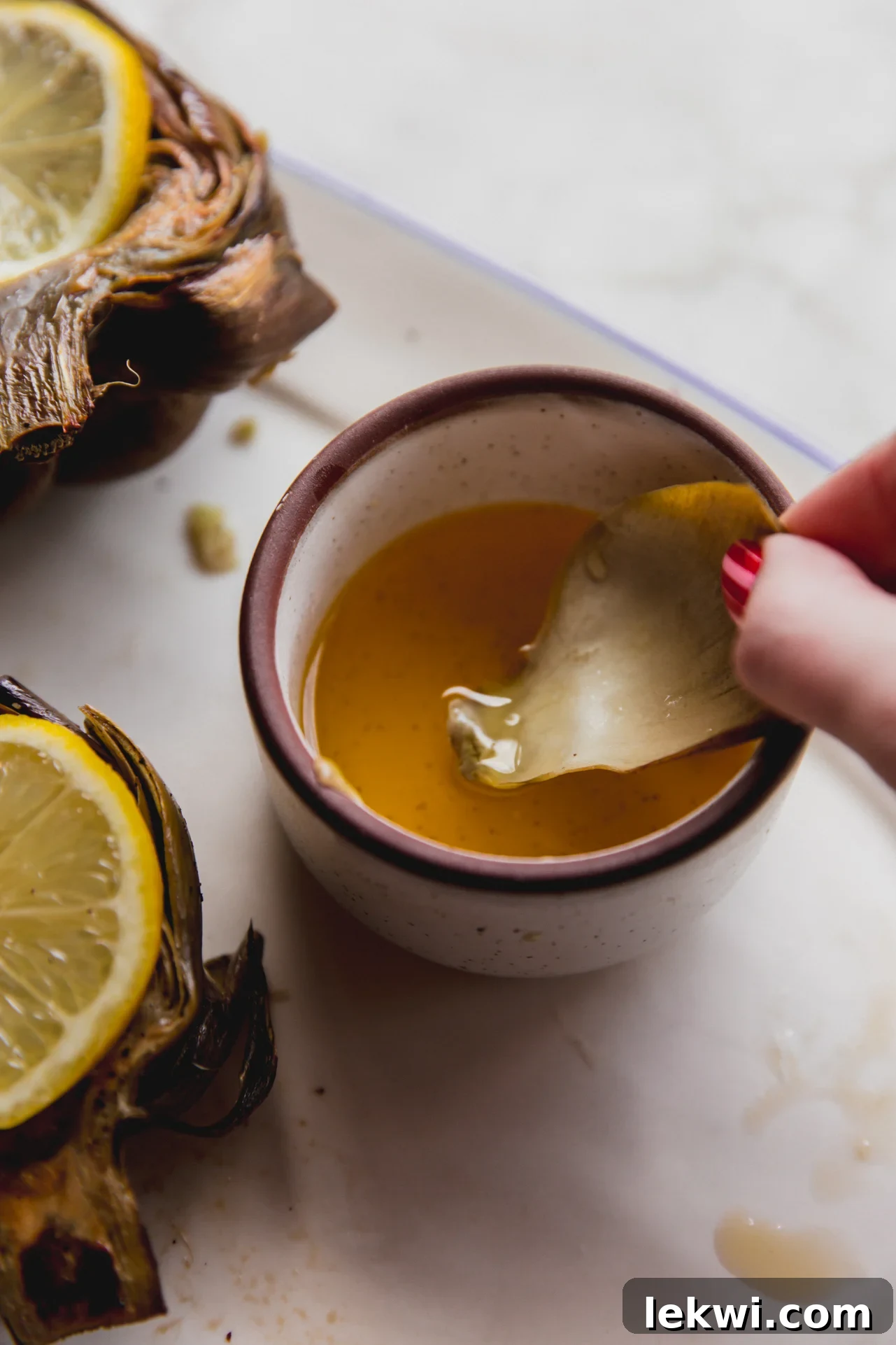
- Begin with the Flavorful Leaves: Don’t overlook the outer leaves – they hold a surprising amount of tender “meat” at their base. To enjoy them, simply pull off one leaf at a time. Dip the fleshy, wider end into your desired sauce (melted ghee, butter, or aioli works wonders). Then, place the leaf in your mouth, slide your bottom teeth over the base, and gently scrape off the soft, edible portion. Discard the fibrous remainder of the leaf. Repeat this process with each leaf, working your way towards the center. While each leaf provides a small amount, the cumulative effect of many tender scrapes is incredibly satisfying and flavorful.
- Culminate with the Prized Heart: As you progress through the leaves, you’ll eventually reach the innermost, tender leaves that are fully edible. Beneath these lies the artichoke heart – the most coveted and substantial part of the vegetable. This tender, fleshy section is incredibly succulent and has a rich, buttery texture. You can enjoy the heart by simply cutting it into pieces and nibbling on it, perhaps with a final generous dip in your sauce. It’s the perfect grand finale to your artichoke eating adventure.
Expert Tips & Tricks for Artichoke Perfection
Achieve the best possible results with your oven-baked artichokes by keeping these helpful tips in mind:
- Ensure Proper Covering for Tenderness: The key to tender, thoroughly cooked artichokes is creating a steamy environment in the oven. While aluminum foil is a common choice for covering baking dishes, you can also achieve the same effect by using a tightly fitting lid over a casserole dish or an oven-safe plate placed on top. The goal is to trap moisture and heat, allowing the artichokes to steam while they bake, resulting in a perfectly soft texture without drying out.
- Prepare Your Dipping Sauce in Advance: An artichoke is rarely complete without a delicious dipping sauce. Have your chosen dip ready before the artichokes come out of the oven. Melted ghee (clarified butter) or regular butter are traditional and highly recommended for their rich flavor. For something different, consider a homemade garlic aioli, a creamy lemon-herb dressing, or even a zesty balsamic vinaigrette. Having it ready makes serving and enjoying seamless.
- Handle with Care When Trimming Leaves: Artichoke leaves, especially the outermost ones, can sometimes have surprisingly sharp, pointed tips. While trimming them with kitchen shears, always be vigilant and handle them carefully to avoid any pricks. A good pair of sturdy kitchen scissors makes this task much easier and safer.
- Don’t Rush the Cooling Process: After baking, allow the artichokes to cool for a few minutes before handling them. They will be very hot, and a short resting period helps them firm up slightly and makes them easier to manage when flipping and serving.
- Storage and Reheating: Leftover baked artichokes can be stored in an airtight container in the refrigerator for up to 3-4 days. To reheat, you can warm them gently in the oven at a lower temperature (around 300°F/150°C) until heated through, or briefly in the microwave. They are also delicious cold in salads!
If you enjoyed this recipe, you might also like these wholesome dishes:
- Crispy Baked Sweet Potato Fries
- Healthy Baked Zucchini Chips
- Flavorful Roasted Asparagus with Turmeric Dressing
How to Bake & Eat Artichokes
2 servings
15 mins
45 mins
Michelle
Leave a Review
Pin Recipe
Ingredients
- 2 large whole artichokes
- Juice of one fresh lemon, plus extra lemon slices for garnish
- 4 cloves garlic, minced
- 1 tsp sea salt
- ½ tsp black pepper (omit for AIP diet)
- 3 tbsp avocado oil (or olive oil)
Instructions
- Preheat your oven to 400°F (200°C). Lightly grease a casserole dish with oil; ensure it has a lid or a suitable cover (see notes).
- Prepare the artichokes: Wash them thoroughly. Using a sharp knife, slice off about 1 inch from the pointed top. Trim any excess stem, leaving a short base. Remove the hard, small leaves at the very base (usually 3-5). With kitchen scissors, snip the sharp tips off each remaining leaf. Carefully slice each artichoke in half vertically.
- Clean the interior: Use a spoon to scoop out and discard the fuzzy choke and any purple leaves. Immediately brush the cut surfaces with lemon juice to prevent browning.
- Stuff and season: Place the artichoke halves, leaf-side down and heart-side up, in the prepared casserole dish. Fill the hollow centers with minced garlic cloves. Drizzle with half of the avocado oil and season generously with half of the sea salt and black pepper.
- Flip and re-season: Carefully flip the artichokes (gently holding the garlic in place) so they are now leaf-side up. Drizzle with the remaining oil and season with the rest of the salt and pepper.
- Initial bake: Bake in the preheated oven, uncovered, for 20 minutes.
- Cover and finish baking: Remove the dish from the oven, cover it tightly (with a lid or foil), and return it to the oven for another 20-25 minutes, or until the leaves can be easily pulled from the artichoke and the heart is tender.
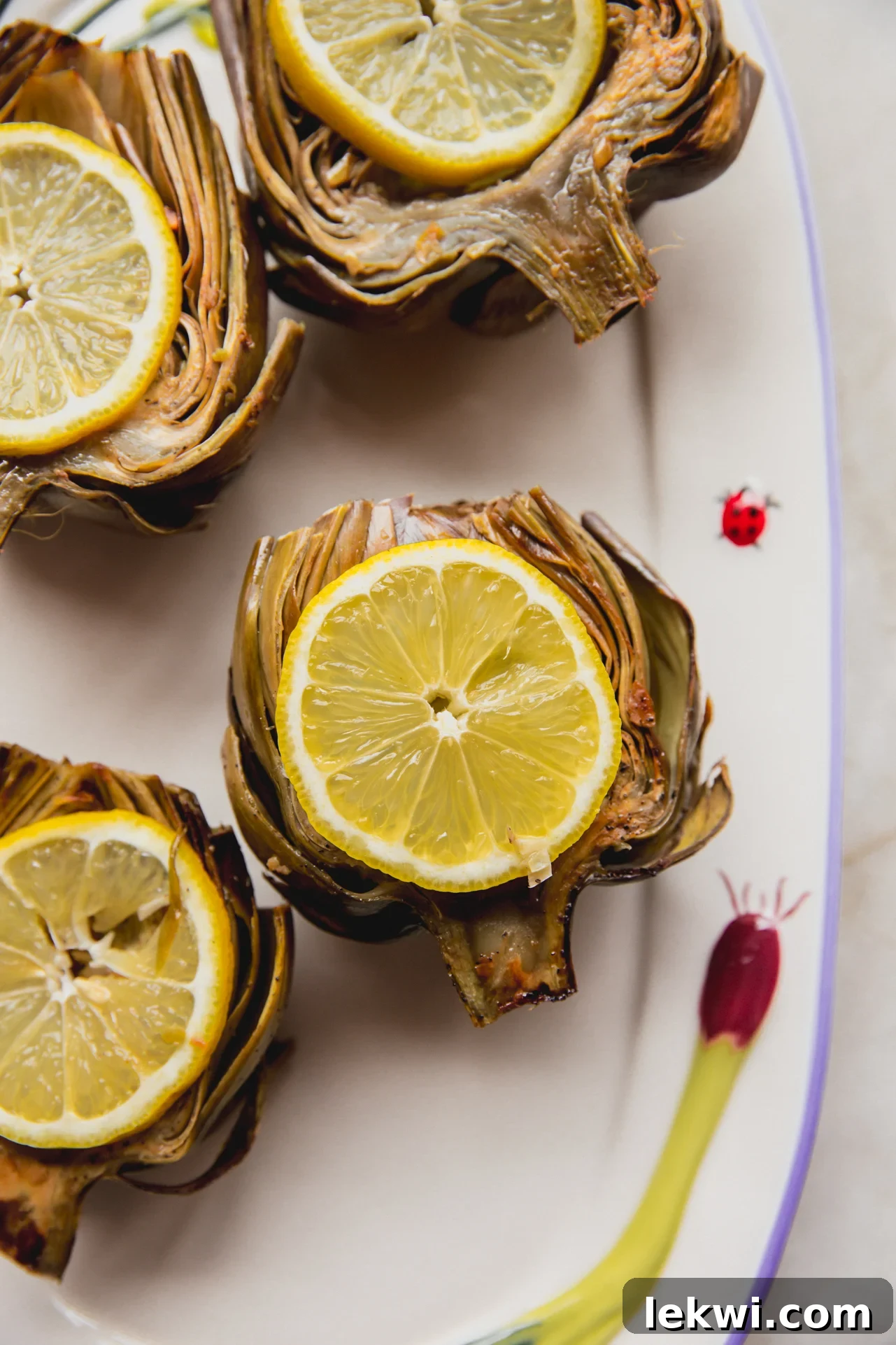
- Cool and serve: Allow the artichokes to cool slightly before gently flipping them heart-side up with a spoon. Garnish with fresh lemon wedges and serve with your favorite dip, such as melted ghee, butter, or aioli.
Notes
A note on covering the dish: The purpose of covering the baking dish is to create a steaming effect, ensuring the artichokes become perfectly tender. While aluminum foil is an option, a tightly fitting lid over a casserole dish or an oven-safe plate works just as effectively to trap moisture.
How to eat the artichokes: Pull off the leaves one by one, dip the fleshy base in your desired sauce, and scrape the tender meat off with your teeth. Continue until you reach the soft, edible inner leaves and finally the flavorful heart, which can be enjoyed whole or in pieces with your dip.
Serving: 1serving
Calories: 247kcal
Carbohydrates: 14g
Protein: 4g
Fat: 21g
Saturated Fat: 2g
Polyunsaturated Fat: 3g
Monounsaturated Fat: 15g
Sodium: 1283mg
Potassium: 480mg
Fiber: 7g
Sugar: 1g
Vitamin A: 19IU
Vitamin C: 15mg
Calcium: 59mg
Iron: 2mg
Did you make this delicious recipe?
We’d love to see your creations! Tag @unboundwellness on Instagram and use the hashtag #unboundwellness to share your culinary success!
Want to save this recipe for later?
Don’t miss out on this delightful dish! Pin it to your favorite Pinterest board or bookmark this page for easy access whenever the artichoke craving strikes.