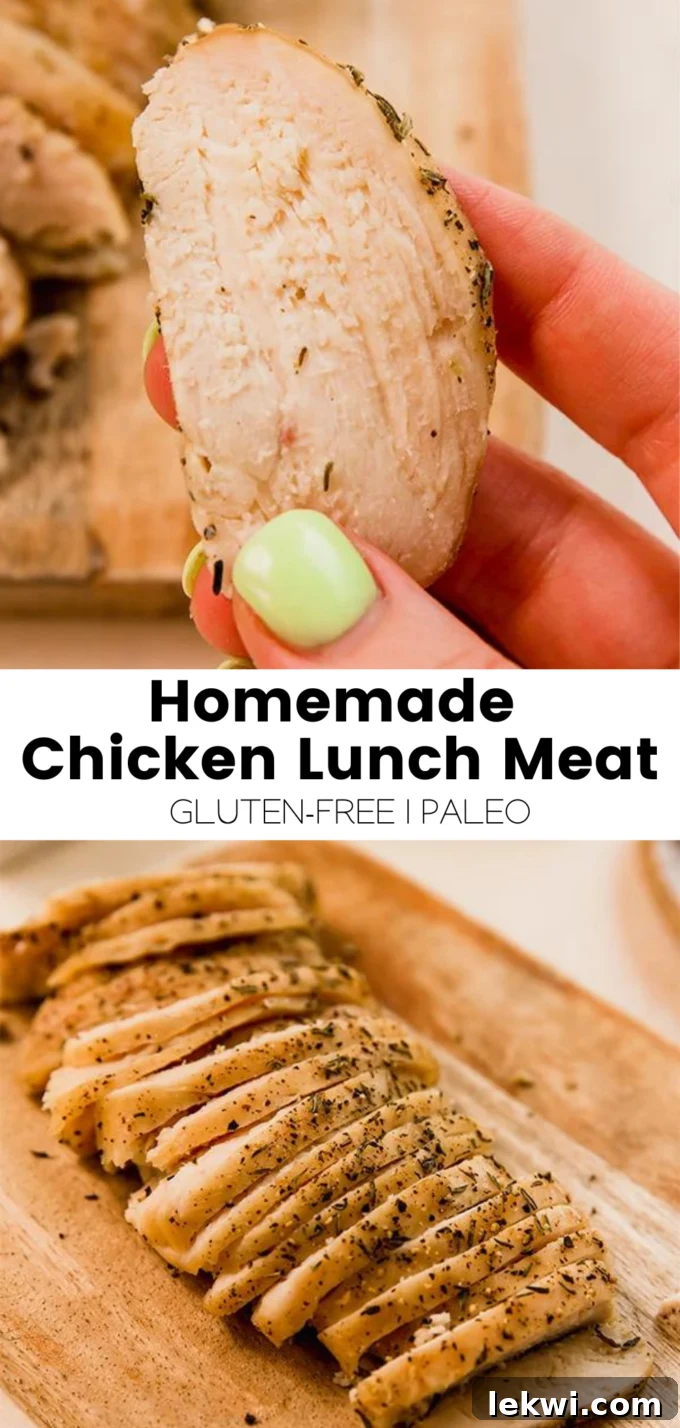
The Ultimate Guide to Homemade Chicken Lunch Meat: Healthy & Delicious Deli-Style Chicken
Imagine enjoying succulent, thinly sliced chicken deli meat that’s not only bursting with flavor but also free from the usual suspects like excessive sodium, refined sugars, and artificial additives. This isn’t just a dream; it’s entirely achievable right in your own kitchen! Making your own chicken lunch meat from scratch is surprisingly simple, utilizing real food ingredients for an authentic taste that rivals store-bought versions. Get ready to elevate your sandwiches, salads, and snack platters with this wholesome, homemade alternative.
Many of us rely on the convenience of pre-packaged turkey or chicken lunch meat for quick meals. However, a quick glance at the ingredient list often reveals a concoction of unwanted components: nitrates, high sodium levels, artificial colors, and hidden sugars. These additives can leave you feeling less than great, and the overall quality often falls short of expectations. The good news? You can take control! Crafting your own deli chicken at home allows you to dictate every ingredient, ensuring a healthier, more flavorful product that aligns with your dietary preferences and values.
This comprehensive guide will walk you through everything you need to know, from selecting the best chicken breasts to mastering the art of seasoning and slicing. Prepare to discover a simple yet transformative cooking method that will revolutionize your lunch routine.
Why Choose Homemade Deli Chicken Over Store-Bought?
The decision to make your own deli meat goes beyond just a fun kitchen project. It’s a conscious choice for better health and superior taste. Here’s why homemade triumphs:
- Ingredient Control: This is the number one benefit. You choose the quality of your chicken and seasonings. Say goodbye to caramel coloring, modified food starches, and preservatives like nitrates or nitrites.
- Reduced Sodium: Commercial deli meats are notoriously high in sodium. By making your own, you can significantly reduce the salt content to suit your health needs without sacrificing flavor.
- No Refined Sugars: Many store-bought varieties contain added sugars to enhance flavor and texture. Our recipe uses natural sweeteners like maple syrup or honey, offering a subtle sweetness without the refined sugar overload.
- Uncompromised Quality: Experience the difference of real, wholesome ingredients. The texture is natural, the flavor is clean, and you know exactly what you’re feeding yourself and your family.
- Customization: Love a hint of spice? Prefer more herbs? Homemade allows for endless flavor customization to match your palate perfectly.
- Cost-Effective: While requiring a little upfront effort, making your own deli meat can often be more economical in the long run, especially if you buy chicken in bulk.
The Essential Ingredients for Your Homemade Chicken Lunch Meat
Creating delicious deli-style chicken requires only a handful of common ingredients. The magic lies in how they are combined and prepared to bring out the best in the chicken.
- Chicken Breast: The star of our recipe. Opt for high-quality, boneless, skinless chicken breasts. You can use frozen chicken, but ensure it’s fully defrosted before beginning the marination process for even flavor absorption. Organic or free-range chicken breasts can offer even better flavor and quality. While this recipe focuses on breast, you could experiment with boneless, skinless chicken thighs for a richer, juicier result, though cooking times might vary.
- Maple Syrup (or Honey): This isn’t just for sweetness. Maple syrup (or honey) contributes to a beautiful golden crust during baking and adds a subtle depth of flavor that balances the savory seasonings. It also aids in tenderizing the chicken slightly.
- Onion Powder and Garlic Powder: These pantry staples are crucial for building a robust, savory flavor profile. They infuse the chicken with aromatic notes that are classic in deli-style meats, providing a foundation of deliciousness.
- Apple Cider Vinegar: A secret weapon for making the flavors truly pop! Apple cider vinegar acts as a tenderizer due to its acidity and adds a bright, slightly tangy note that cuts through the richness of the chicken, enhancing the overall taste complexity.
- Black Pepper and Dried Thyme: Classic seasonings that complement chicken beautifully. Black pepper provides a mild warmth, while dried thyme adds an earthy, herbaceous aroma. For those following an AIP (Autoimmune Protocol) diet, black pepper can be omitted without significantly compromising flavor.
- Salt: Essential for seasoning and bringing out the natural flavors of the chicken. The amount can be adjusted to your preference, keeping in mind that the reverse brining step will help balance the saltiness. Consider using sea salt or kosher salt for better flavor and control.
By using these simple, real food ingredients, you’re setting the stage for a remarkably tasty and healthy homemade deli experience.
Step-by-Step Guide: How to Craft Your Perfect Homemade Chicken Lunch Meat
Follow these detailed steps to create tender, flavorful, and perfectly sliced chicken lunch meat that you’ll be proud to serve.
Step 1: Prepare and Marinate the Chicken for Flavor Infusion
- Begin by patting your chicken breasts thoroughly dry with paper towels. This crucial step helps the marinade adhere better and promotes a more even browning during baking. Place the dry chicken on a clean surface or in a shallow dish.
- In a small bowl, combine 1 tablespoon of maple syrup (or honey), 1 tablespoon of garlic powder, 2 teaspoons of onion powder, and 1-2 teaspoons of salt (adjust to your preference; remember, some salt will be drawn out later). Mix these ingredients well until a smooth paste forms.
- Generously rub this flavorful marinade onto all sides of your chicken breasts, ensuring they are fully coated.
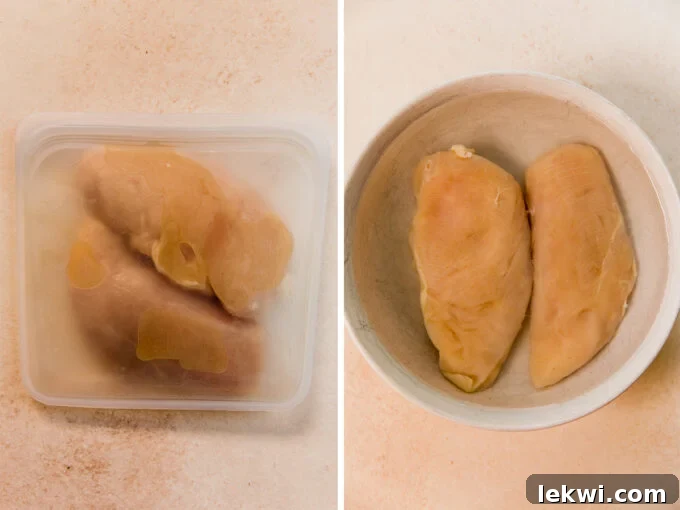
- Transfer the marinated chicken to a reusable, airtight bag (like a Stasher bag) or a covered bowl. Place it in the refrigerator and allow it to marinate for a significant period: 36 to 48 hours. This extended marination time is key to deeply infusing the chicken with flavor and helping to tenderize the meat, mimicking the curing process of traditional deli meats.
Step 2: The Reverse Brine for Moisture and Balance
- After marination, prepare a large bowl filled with chilled water. Remove the chicken from its marinade bag or bowl and place it directly into the water.
- Cover the bowl and let the chicken sit at room temperature for one hour. This technique, known as “reverse brining” or desalting, helps to draw out some of the excess salt from the surface of the chicken while simultaneously helping the meat retain its natural moisture. The result is a perfectly seasoned, succulent product that isn’t overly salty.
Step 3: Season, Bake, and Achieve Perfection
- Preheat your oven to a low temperature of 250°F (120°C). Line a baking sheet with parchment paper to prevent sticking and for easy cleanup.
- Remove the chicken from the water and pat it very dry again. This is important for crisping the exterior. Place the chicken breasts on the prepared baking sheet.
- Now, rub the chicken on all sides with 2 teaspoons of apple cider vinegar. This adds a final touch of tang and aids in tenderization.
- Season the chicken generously on all sides with your desired amount of black pepper (omit for AIP) and 1-2 teaspoons of dried thyme. Feel free to add other preferred seasonings at this stage, such as a pinch of smoked paprika or a dash of rosemary.
- Bake in the preheated oven for approximately one hour or more, depending on the thickness of your chicken breasts. The exact time will vary, so rely on an instant-read meat thermometer. Bake until the internal temperature of the thickest part of the chicken reaches 165°F (74°C). Baking at a low temperature ensures the chicken cooks slowly and evenly, resulting in a tender, juicy texture akin to traditional deli meat.
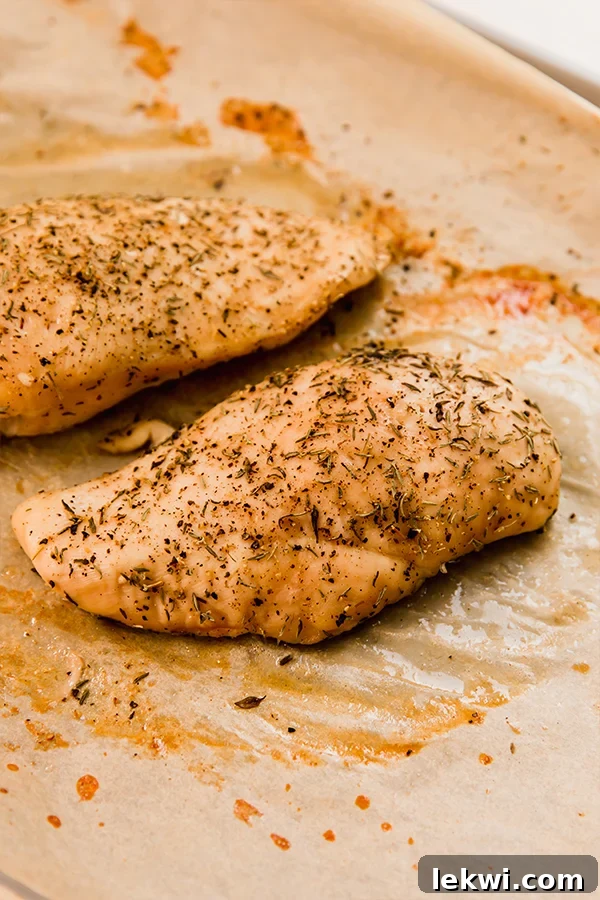
Step 4: Cool, Slice, and Savor
- Once cooked, remove the chicken from the oven and allow it to rest on the baking sheet for at least 30 minutes. This resting period is crucial; it allows the juices to redistribute throughout the meat, ensuring maximum tenderness and flavor.
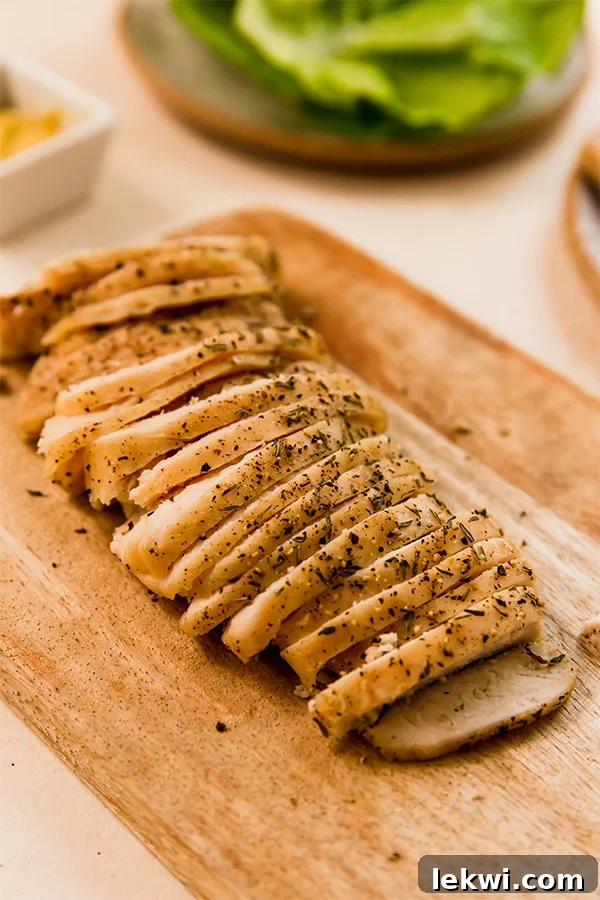
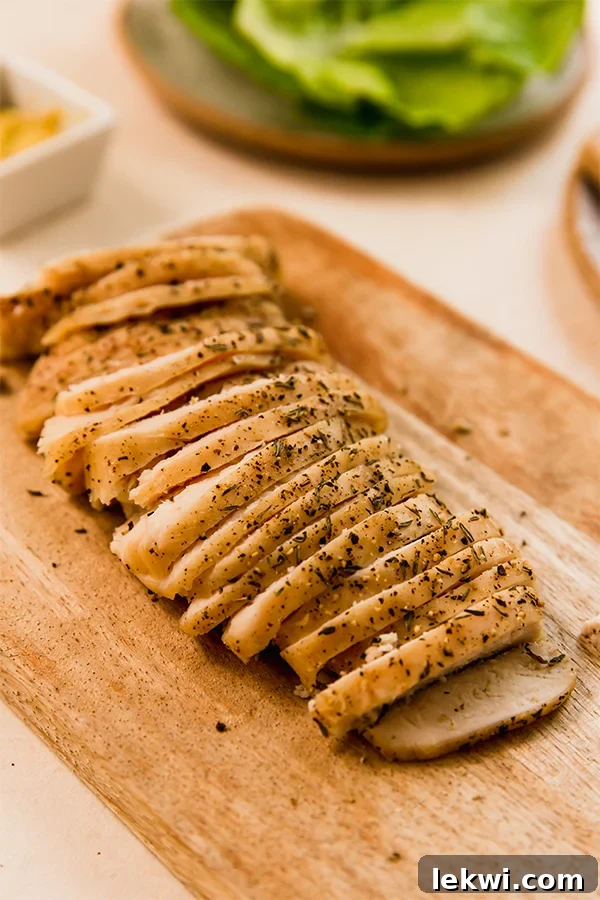
- After resting, transfer the chicken to a cutting board. Using a very sharp knife or a mandoline slicer, thinly slice the chicken against the grain. The thinner the slices, the more like traditional deli meat it will feel and taste.
- Serve your freshly made homemade chicken lunch meat just as you would any store-bought variety: piled high on sandwiches, tucked into wraps, diced into salads, or simply enjoyed as a protein-packed snack!
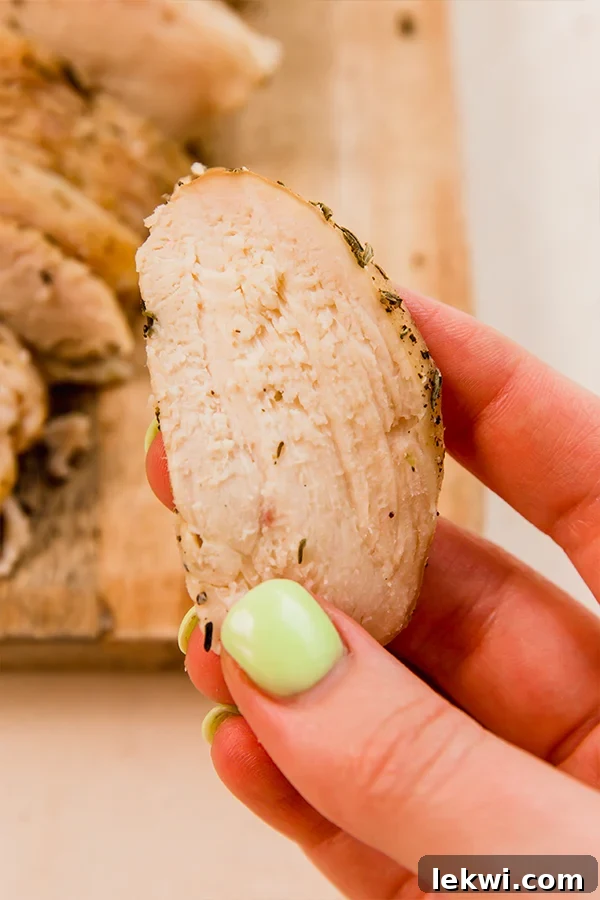
Flavor Variations & Customization
While the base recipe is fantastic, don’t hesitate to get creative with your seasonings to match your taste preferences:
- Blackened Seasoning: For a bold, spicy kick, rub your chicken with a generous amount of blackened seasoning before baking.
- Italian Herb Blend: Incorporate dried oregano, basil, and a touch of red pepper flakes for a Mediterranean flair. This pairs wonderfully with roasted bell peppers and provolone cheese.
- More Herbs: Experiment with other fresh or dried herbs like rosemary, sage, marjoram, or even a bay leaf during marination for deeper aromatic complexity.
- Smoked Paprika: A teaspoon or two of smoked paprika added to the marinade or final seasoning can give a lovely smoky depth without needing a smoker.
- Lemon Herb: Add lemon zest to the marinade and a squeeze of fresh lemon juice with the apple cider vinegar before baking for a brighter, citrusy profile.
- Spicy Kick: A pinch of cayenne pepper or chili powder can elevate the flavor for those who enjoy a bit of heat.
Frequently Asked Questions About Homemade Deli Chicken
Can you use this method for other proteins like turkey?
Absolutely! This versatile method works beautifully with other lean proteins, especially turkey breast. However, keep in mind that turkey breasts are generally larger and thicker than chicken breasts, so you will need to adjust the amount of marinade ingredients proportionally. More importantly, the cooking time will be longer. Always use a meat thermometer to ensure the internal temperature reaches 165°F (74°C) for food safety. You could also explore this technique with pork tenderloin or even a leaner cut of beef for different deli meat options.
How long does homemade chicken lunch meat stay fresh?
Once cooled and sliced, your homemade chicken lunch meat will stay fresh in an airtight container in the refrigerator for 3-4 days. For longer storage, you can definitely freeze it! To freeze, arrange the slices in a single layer on a baking sheet and flash freeze until solid. Then transfer them to a freezer-safe bag or container, separating layers with parchment paper to prevent sticking. It will last for up to 2-3 months in the freezer. Thaw frozen slices in the refrigerator overnight before use.
Is this recipe suitable for specific diets?
Yes, this recipe is inherently friendly to several dietary needs:
- Gluten-Free: All ingredients listed are naturally gluten-free.
- Paleo: This recipe aligns perfectly with Paleo principles, focusing on whole, unprocessed ingredients.
- AIP (Autoimmune Protocol): For AIP, simply omit the black pepper, as it’s a nightshade spice. All other ingredients are AIP compliant.
What kitchen equipment do I need to make this?
You’ll need a few basic kitchen tools:
- A large bowl for marinating (or a reusable, airtight bag).
- Measuring spoons and cups.
- A baking sheet and parchment paper.
- An instant-read meat thermometer (essential for food safety and perfect doneness).
- A very sharp knife or a mandoline slicer for thin, uniform slices.
- An airtight container for storage.
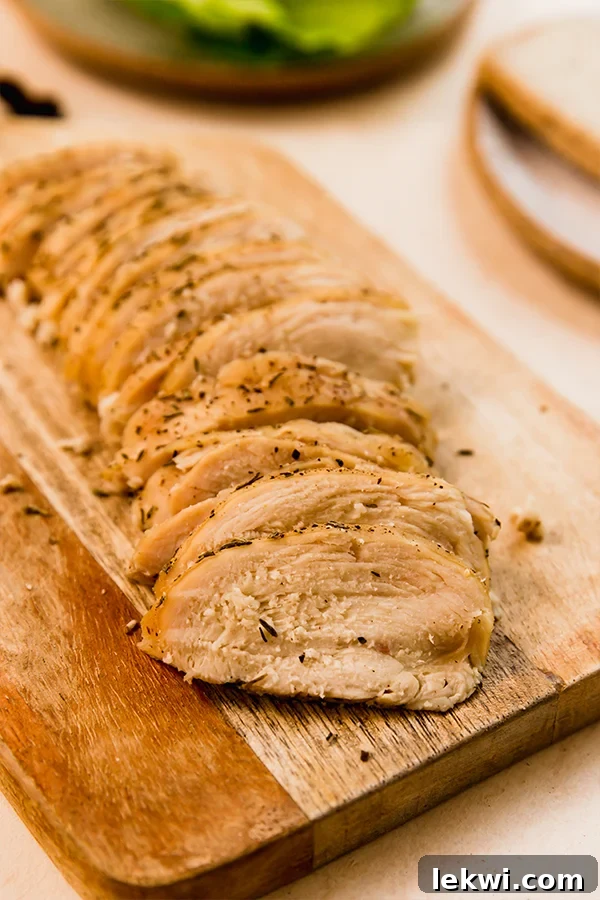
Making your own chicken lunch meat is a simple yet incredibly rewarding endeavor. It gives you complete control over what goes into your food, ensuring a healthier and more delicious alternative to store-bought options. With minimal effort and real ingredients, you can enjoy a versatile, flavorful protein for countless meals. Give this recipe a try, and you might never go back to commercial deli meats!
You’ll also like these related recipes:
- 10 Gluten Free Lunch Ideas on the Go
- Paleo Chicken Bacon Ranch Wraps
- Easy AIP Lunch Ideas
Homemade Chicken Lunch Meat Recipe
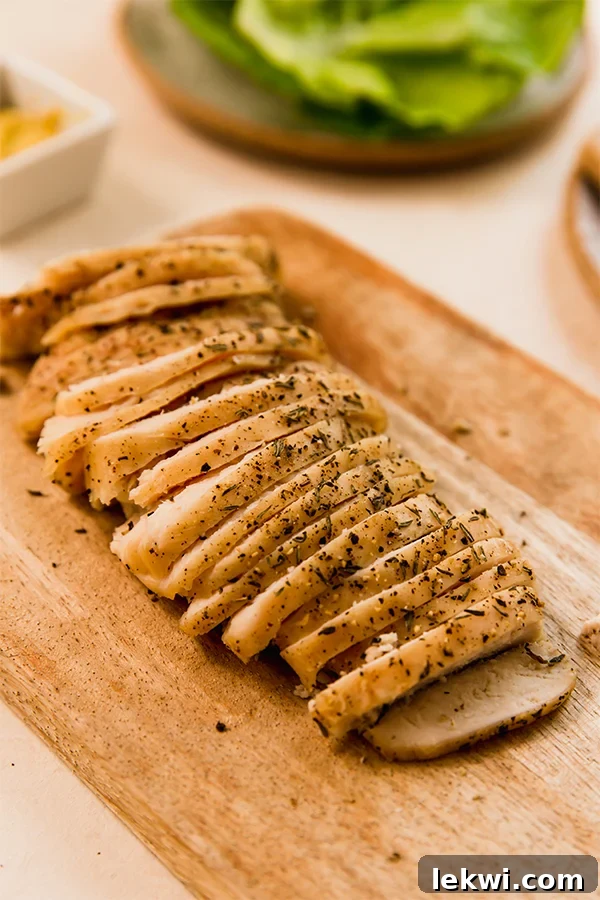
Yield: 4 servings
Author: Michelle
Print Recipe
Leave a Review
Pin Recipe
Ingredients
- 1 lb chicken breast
- 1 tbsp maple syrup (or honey)
- 1 tbsp garlic powder
- 2 tsp onion powder
- 1-2 tsp salt (see notes)
- 2 tsp apple cider vinegar
- 1-2 tsp black pepper (omit for AIP)
- 1-2 tsp dried thyme
Instructions
- Pat your chicken breast dry and set it on a clean surface.
- Combine the maple syrup, garlic powder, onion powder, and salt in a bowl until well mixed. Rub the mixture onto all sides of your chicken. Place the chicken in a reusable bag or a covered bowl. Allow to marinate in the fridge for 36-48 hours.
- Prepare a bowl filled with chilled water and add your chicken. Cover and allow to sit at room temperature for an hour. This helps to draw out some salt and keep the chicken moist.
- Preheat the oven to 250 F and line a baking sheet with parchment paper.
- Pat the chicken dry and add to the parchment paper. Rub the chicken with apple cider vinegar on all sides and season with your desired amount of pepper and thyme on all sides.
- Bake in the preheated oven for an hour or more depending on the thickness of your chicken breast, until the internal temperature is 165 F.
- Remove from the oven and allow to rest for 30 minutes before thinly slicing.
- Serve like you would any other lunch meat on sandwiches, wraps, etc!
Notes
You can lower the salt to avoid excess sodium, however, keep in mind that soaking the chicken in water does help draw out some of the salt. I add 2 tsp and find the salt level in the finished product is perfect!
All nutritional information are estimations and will vary. Estimations do not include optional ingredients.
Inspired by torts and tarts and day in the kitchen.
Nutrition Facts (Estimated per serving)
- Serving: 1 serving
- Calories: 163 kcal
- Carbohydrates: 6.4g
- Protein: 26.1g
- Fat: 3g
- Fiber: 0.6g
All nutrition facts are estimated and will vary.
Did you Make this Recipe?
Tag @unboundwellness on Instagram and hashtag #unboundwellness!