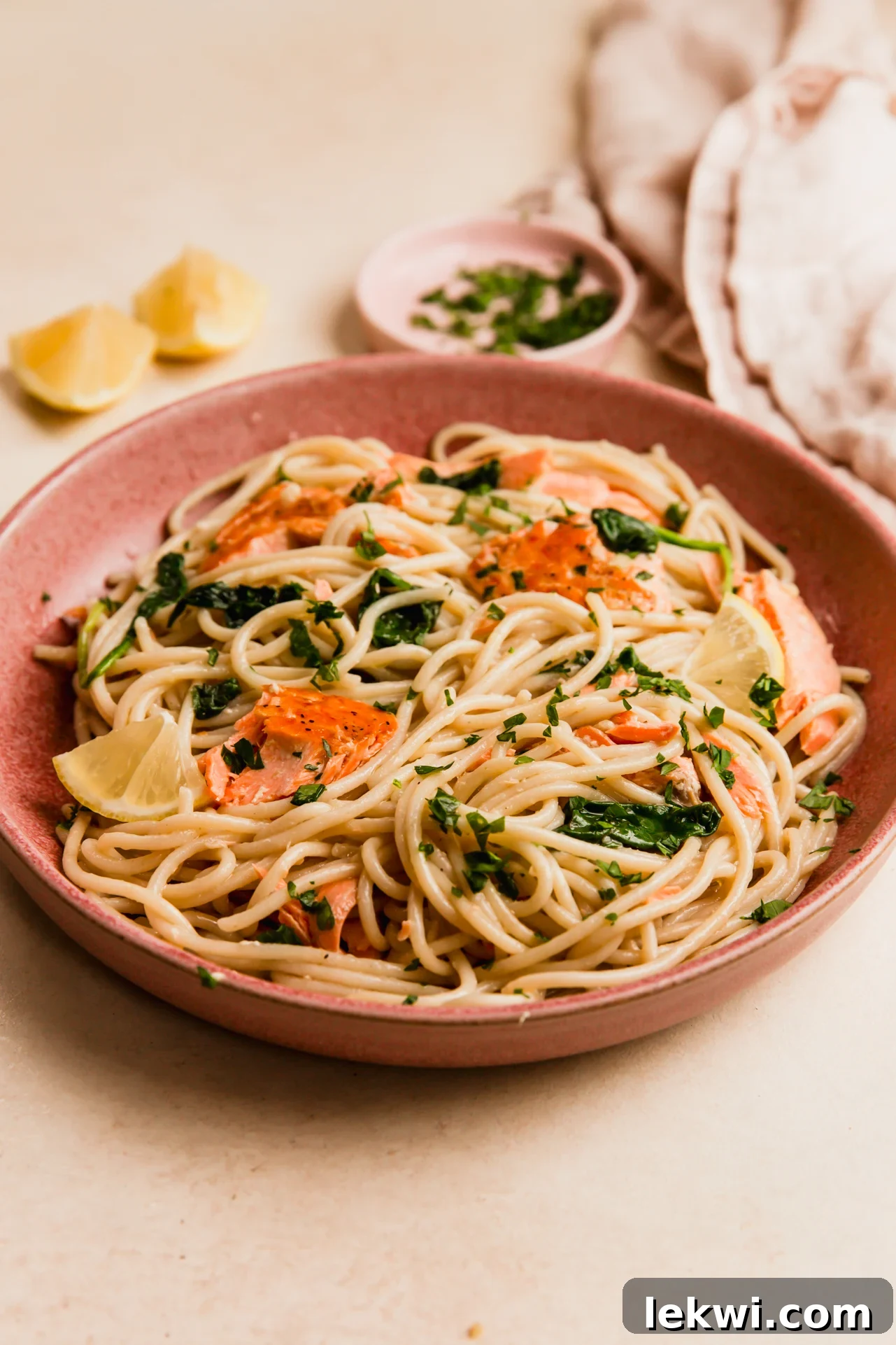
Effortlessly Delicious: The Ultimate Lemon Salmon Pasta (Gluten-Free & Dairy-Free)
This lemon salmon pasta is a symphony of flavors – buttery, garlicky, and incredibly wholesome. It’s a testament to how simple ingredients can create something truly spectacular. What’s even better? It’s naturally gluten-free and dairy-free, making it accessible for many dietary preferences, and surprisingly easy to whip up with just a handful of ingredients.
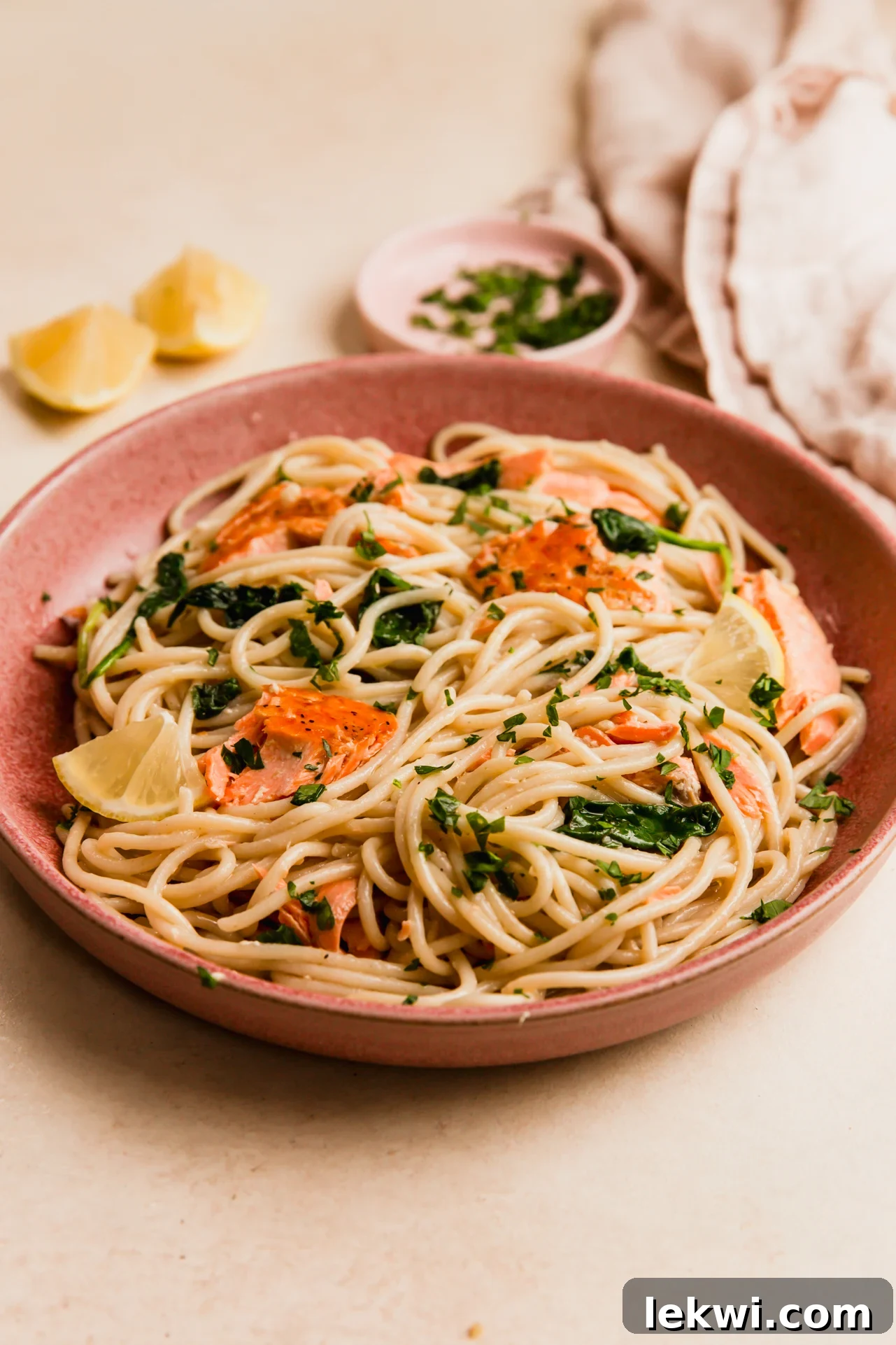
Salmon has long been one of my go-to proteins in the kitchen. Its rich flavor and tender, flaky texture make it a joy to cook with, not to mention its impressive nutritional profile. While I often gravitate towards Asian-inspired salmon dishes, this recipe showcases salmon in a beautifully light and fresh “Pasta al Limone” style, proving its versatility beyond measure. The bright, zesty notes of lemon perfectly complement the salmon, creating a dish that feels gourmet yet is incredibly simple to achieve.
This pasta is wonderfully light, bursting with fresh flavors, and packed with essential nutrients from the succulent salmon, vibrant spinach, pungent garlic, and invigorating fresh lemon.
Table of contents
- Why You’ll Adore This Recipe
- Essential Recipe Ingredients
- Crafting Your Lemon Salmon Pasta: A Step-by-Step Guide
- Expert Tips for Perfection
- Can You Make This Pasta Creamier?
- The Wholesome Goodness: Health Benefits
- Serving Suggestions for a Complete Meal
- Storing and Reheating Your Leftovers
- More Gluten-Free Pasta Recipes to Explore
Why You’ll Adore This Recipe
There are countless reasons why this Lemon Salmon Pasta will quickly become a cherished favorite in your recipe rotation. It truly hits all the right notes for a satisfying and easy meal:
- Unbelievably Simple to Prepare: This lemon salmon pasta recipe is designed for maximum flavor with minimal effort. The salmon cooks quickly to a perfect crisp, and the elegant sauce magically comes together with just lemon, ghee, and a touch of reserved pasta water. It’s perfect for busy weeknights when you crave something special without the fuss.
- Light, Fresh, and Flavorful: The star of the show is undeniably the lemon, which infuses the entire dish with a bright, uplifting zest. Unlike heavy, rich pasta sauces, this dish leaves you feeling perfectly satisfied and energized, rather than overly full or sluggish. The delicate balance of citrus and savory salmon is simply divine.
- Nutrient-Dense Powerhouse: Beyond its delightful taste, this pasta is a nutritional winner. Salmon provides a generous dose of heart-healthy omega-3 fatty acids and high-quality protein. Spinach adds essential vitamins and minerals, while garlic and lemon bring their own array of health benefits and antioxidants. It’s a meal that truly nourishes your body.
- Dietary-Friendly & Adaptable: Catering to specific dietary needs can sometimes be a challenge, but this recipe effortlessly accommodates. Being gluten-free and dairy-free by design, it’s ideal for those with sensitivities or who simply prefer these options. Its versatility also means you can easily tweak ingredients to suit your personal taste or what you have on hand.
- Elegant Yet Approachable: Whether you’re cooking for a weeknight family dinner or entertaining guests, this dish strikes the perfect balance. It looks impressive on the plate with its vibrant colors, yet its straightforward preparation means you won’t be stressed in the kitchen.
Essential Recipe Ingredients
Quality ingredients are the foundation of any great dish, and this Lemon Salmon Pasta is no exception. Here’s a closer look at what you’ll need and why each component is vital:
- Salmon: The hero of our dish! For this recipe, I prefer using coho salmon due to its delicate flavor and beautiful color, though sockeye salmon is another excellent choice with a richer taste. When selecting salmon, look for firm, moist flesh with a bright, vibrant color and a fresh, ocean scent. Salmon is packed with omega-3 fatty acids, which are fantastic for heart health, brain function, and reducing inflammation.
- Gluten-Free Pasta: To keep this dish accessible for everyone, a good quality gluten-free pasta is key. I’m particularly fond of Jovial gluten-free spaghetti for its excellent texture that holds up well. However, feel free to use your favorite brand or type, whether it’s made from brown rice, corn, lentils, or chickpeas. Grain-free options also work wonderfully if you’re following a paleo or AIP diet. The aim is to choose a pasta that maintains its integrity during cooking and tossing.
- Ghee (or Butter/Olive Oil): Ghee, clarified butter, offers a rich, nutty flavor that complements the lemon and garlic beautifully. It’s also a great dairy-free alternative to traditional butter. If dairy isn’t an issue for you, unsalted butter can be used for a classic buttery taste. For a completely dairy-free and vegan option, a good quality extra virgin olive oil will also work, lending a slightly different but equally delicious Mediterranean flavor profile.
- Garlic: Freshly minced garlic is non-negotiable! It provides an aromatic foundation that elevates the entire dish. Its pungent, savory notes are essential for balancing the bright lemon and rich salmon.
- Fresh Lemon: This dish truly lives up to its name, requiring both fresh lemon juice and vibrant lemon zest. The juice provides the tang and acidity that brightens the sauce, while the zest contains essential oils that deliver an intense, aromatic lemon flavor. Always use fresh lemons for the best results; bottled juice simply won’t capture the same brightness.
- Parsley and Spinach: These fresh greens add both flavor and a beautiful burst of color and nutrients to the pasta. Spinach wilts down quickly, adding a subtle earthiness and a wealth of vitamins. Fresh parsley, with its clean, slightly peppery notes, is the perfect finishing herb, adding a final touch of freshness and aroma.
- Olive Oil, Salt, and Pepper: These kitchen staples are used for seasoning the salmon and coating the pasta. A good quality extra virgin olive oil enhances flavor and aids in cooking. Salt and freshly ground black pepper are crucial for seasoning the salmon and seasoning the finished dish to taste.
- White Wine (or White Wine Vinegar): A splash of dry white wine is used to deglaze the pan after cooking the salmon, adding a layer of depth and complexity to the sauce. If you prefer to avoid alcohol, white wine vinegar is an excellent non-alcoholic substitute that provides similar acidity and tang.
Crafting Your Lemon Salmon Pasta: A Step-by-Step Guide
This recipe comes together with surprising ease, proving that healthy and delicious meals don’t have to be complicated. Follow these simple steps to create a truly memorable meal. You’ll find the full, detailed instructions in the recipe card below, but here’s an overview with visual guidance:
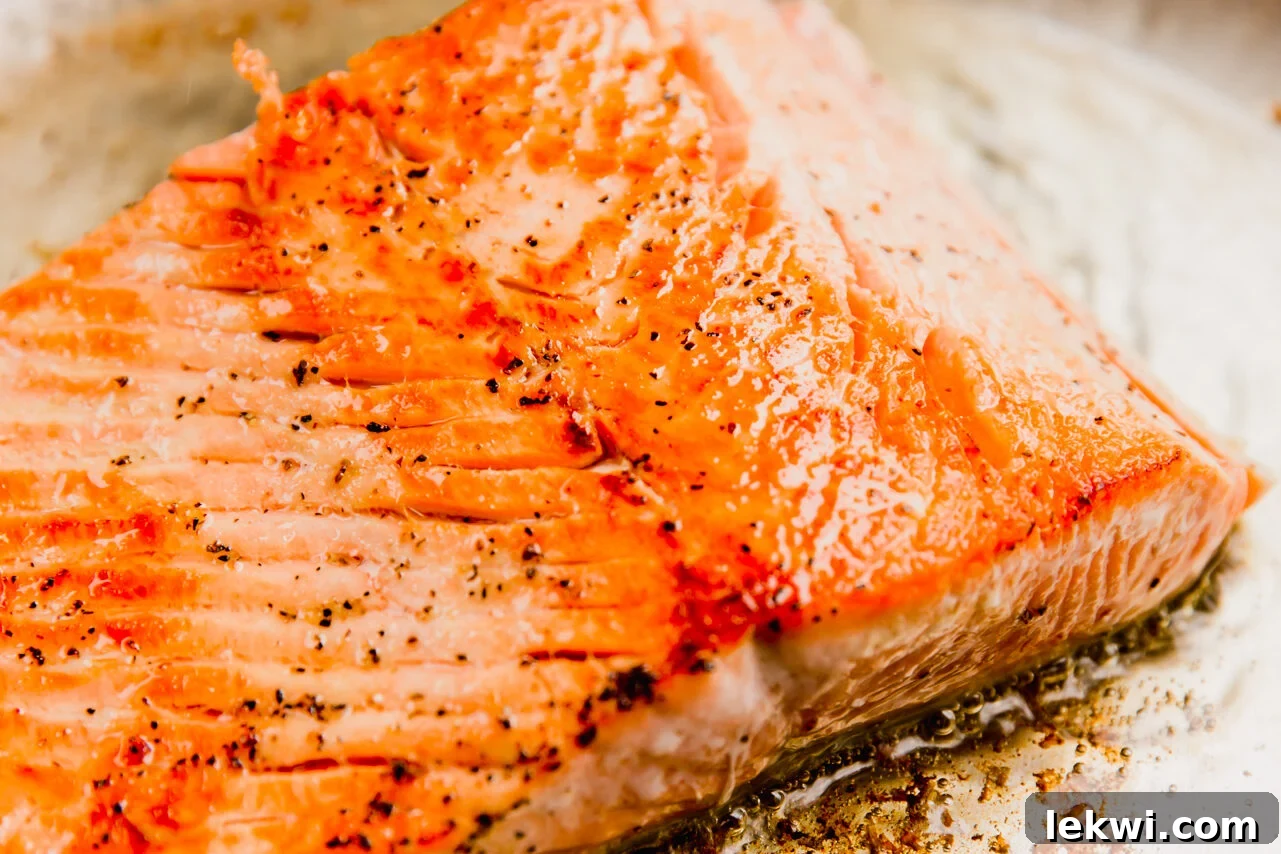
Step One: Cook the pasta and prepare the salmon. Begin by cooking your chosen gluten-free pasta according to package directions until it’s perfectly al dente. This is crucial for texture. Before straining, remember to reserve about ¼ cup of the starchy pasta water – it’s your secret ingredient for a silky sauce! Drain the pasta and set it aside, tossing lightly with a touch of olive oil to prevent sticking. While the pasta cooks, pat your salmon fillets dry thoroughly. Season generously with salt, pepper, and a squeeze of fresh lemon juice. Heat olive oil in a pan over medium-high heat until shimmering. Place the salmon, flesh-side down, and cook for 3-4 minutes until a beautiful, crispy crust forms. Carefully flip and continue cooking until the salmon is cooked through and flakes easily. Remove from the pan and let it rest for a few minutes before flaking into bite-sized pieces.
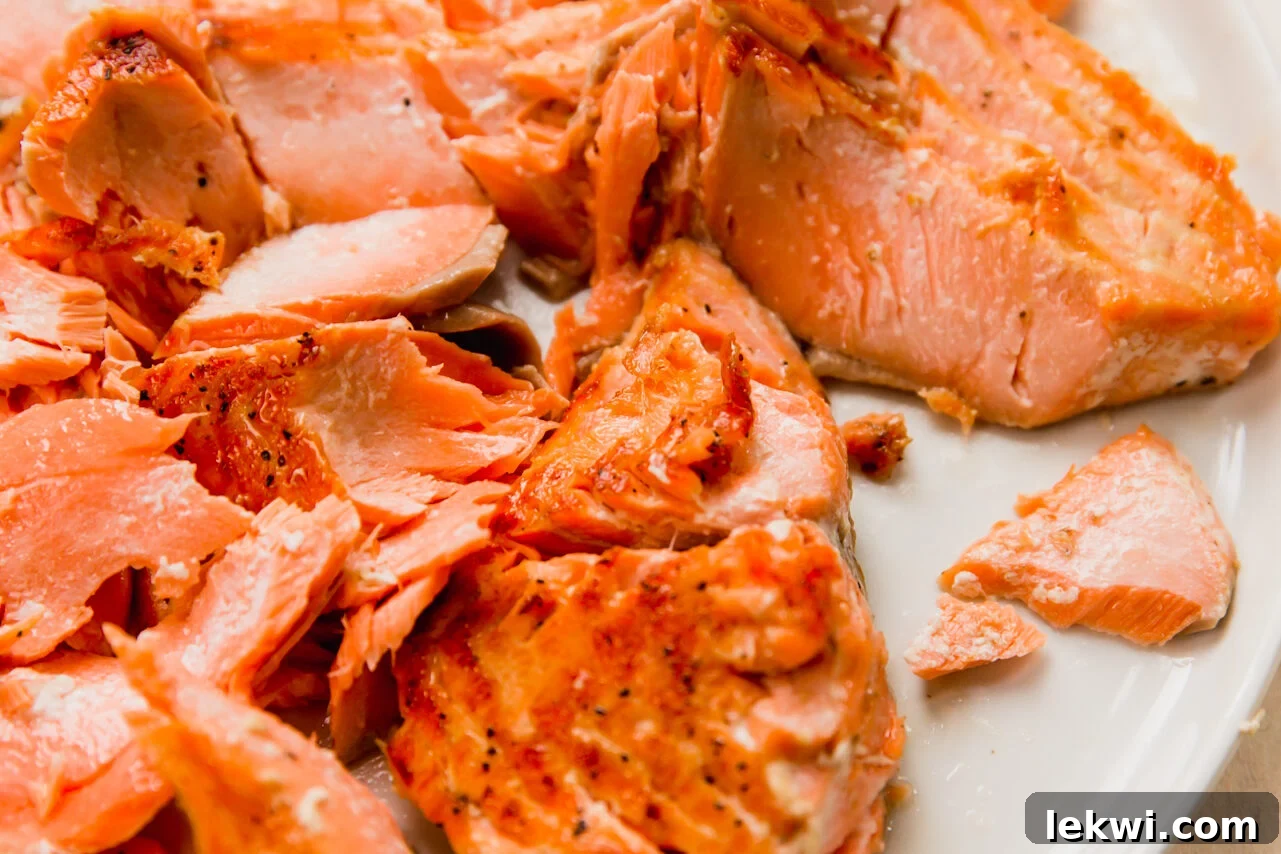
Step Two: Deglaze the pan and sauté aromatics. Using the same pan (no need to clean it yet!), set to medium heat. Add the white wine (or white wine vinegar) to deglaze the pan, scraping up any delicious browned bits from the bottom. This adds incredible depth of flavor. Once deglazed, you can discard any remaining liquid if you prefer a cleaner sauce base, or simply wipe the pan. Add 1 tablespoon of ghee (or olive oil) to the pan and allow it to melt. Then, add the minced garlic and sauté for 3-4 minutes until fragrant but not browned. Stir in the fresh spinach and cook just until it wilts down.
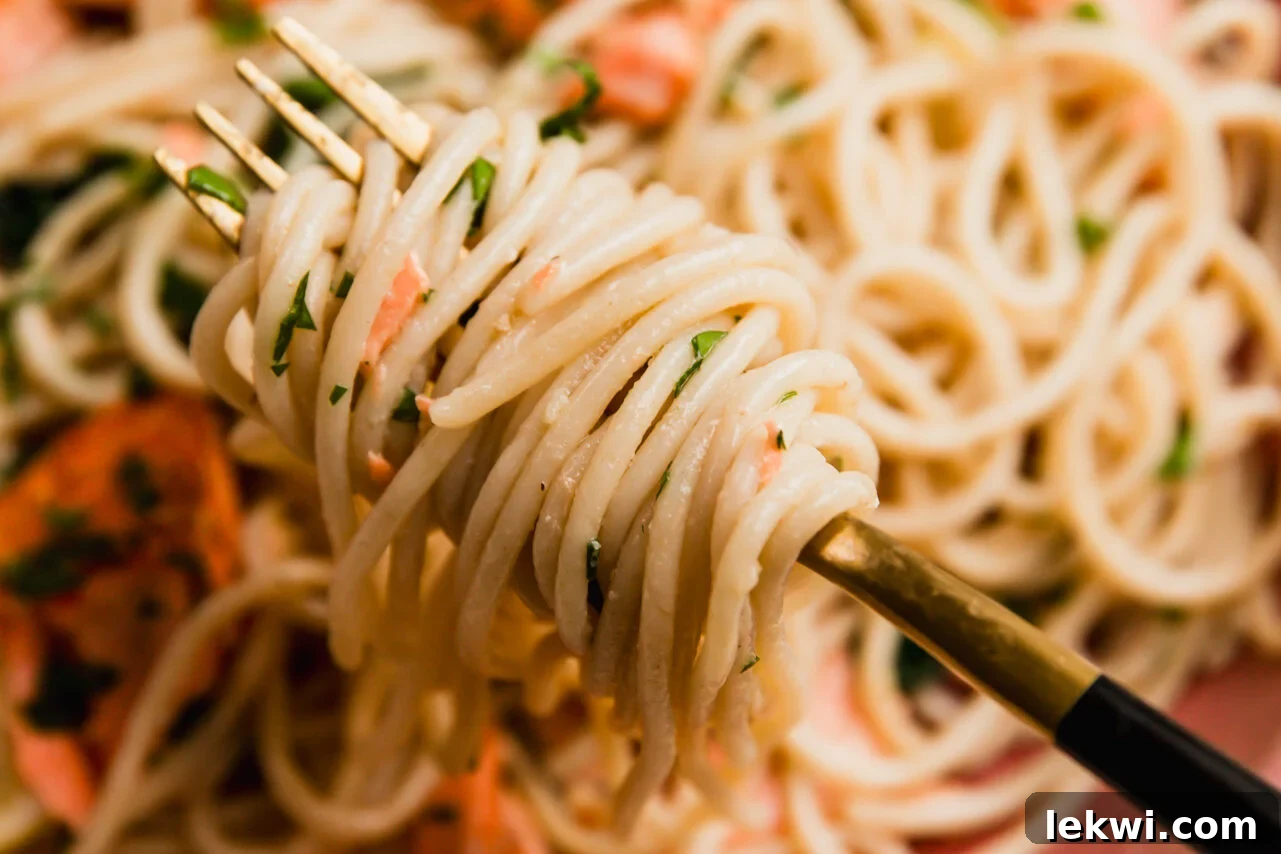
Step Three: Combine and finish. Reduce the heat to low. Add the cooked pasta and the flaked salmon back into the pan with the garlic and spinach. Toss everything gently to combine. Now, pour in the remaining fresh lemon juice, add the second tablespoon of ghee, and a splash of your reserved pasta water. Stir continuously, allowing the pasta water, lemon juice, and ghee to emulsify into a light, glossy sauce that coats every strand of pasta. Season with additional salt and pepper to taste. Serve the pasta immediately in warm bowls, and for that final touch of freshness and aroma, generously top with fresh lemon zest and chopped parsley.
Expert Tips for Perfection
Even though this recipe is straightforward, a few expert tips can elevate your Lemon Salmon Pasta from great to absolutely unforgettable:
- Prioritize Freshness: The quality of your main ingredients truly shines through in this simple dish.
- Use Fresh Salmon if Possible: While frozen salmon is convenient and often of good quality (especially flash-frozen varieties), fresh salmon from your local fish counter will undoubtedly offer a much fresher, more vibrant flavor and often a better texture. If you’re able to, splurge on high-quality, wild-caught salmon for the best results.
- Don’t Skip the Fresh Lemon: This is a “Lemon Salmon Pasta” for a reason! Bottled lemon juice pales in comparison to the bright, zesty punch of freshly squeezed lemon. You’ll want both the juice for acidity and the zest for those concentrated aromatic oils that are crucial to the dish’s strong lemon flavor profile. Zest your lemon before you juice it – it’s much easier!
- The Magic of Pasta Water: That reserved ¼ cup of starchy pasta water isn’t just a suggestion; it’s the secret to a perfectly emulsified and silky sauce. The starches in the water help bind the lemon juice and ghee, creating a light yet cohesive coating for your pasta. Add it gradually, a tablespoon at a time, until you reach your desired consistency.
- Perfectly Cooked Salmon: Overcooked salmon can be dry and unappealing. Aim for salmon that is cooked through but still moist and flaky. Depending on thickness, this usually takes 3-5 minutes per side. You’ll know it’s ready when it easily flakes with a fork.
- Taste and Adjust Seasoning: Always taste your food as you go! Before serving, take a moment to taste the pasta and adjust the salt, pepper, and even a bit more lemon juice if needed. Different brands of pasta and salmon can absorb flavors differently, so trust your palate.
- Maximize Flavor with Deglazing: Don’t skip the deglazing step with white wine or vinegar. Those browned bits left in the pan after cooking the salmon are packed with flavor. Scraping them up and incorporating them into your sauce adds an incredible depth that a clean pan simply wouldn’t provide.
Can You Make This Pasta Creamier?
This Lemon Salmon Pasta is fundamentally a “Pasta al Limone” style dish, which means its sauce is traditionally light, built primarily on the emulsification of butter (or ghee), lemon, and starchy pasta water. The result is a buttery, zesty, and incredibly fresh experience that highlights the natural flavors of the salmon and lemon, rather than a heavy, rich, and creamy sauce.
However, if you’re truly craving a more decadent and creamy texture, it’s absolutely possible to adapt this recipe! To transform it into a creamy lemon salmon pasta, you can incorporate a dairy or dairy-free cream into the sauce at the final step:
- For a Dairy-Based Creaminess: After adding the lemon juice and the second tablespoon of ghee, stir in about ¼ to ½ cup of heavy cream or half-and-half. Gently heat and stir until the sauce thickens slightly and coats the pasta beautifully. Be careful not to boil it vigorously once the cream is added.
- For a Dairy-Free Creaminess: A great dairy-free option is full-fat coconut cream (from a can, often found separated at the top). Add ¼ to ½ cup of coconut cream along with the lemon juice and ghee. Stir gently over low heat until it combines into a luscious, dairy-free creamy sauce. Be aware that coconut cream might impart a very subtle sweetness or coconut flavor, though it’s usually masked by the strong lemon and garlic. Alternatively, you can use a plain, unsweetened dairy-free culinary cream or cashew cream if you have access to those.
Adding cream will, of course, change the overall profile of the dish, making it richer and less lemon-forward than the original “al Limone” style. It’s a fantastic variation if you’re in the mood for something more indulgent!
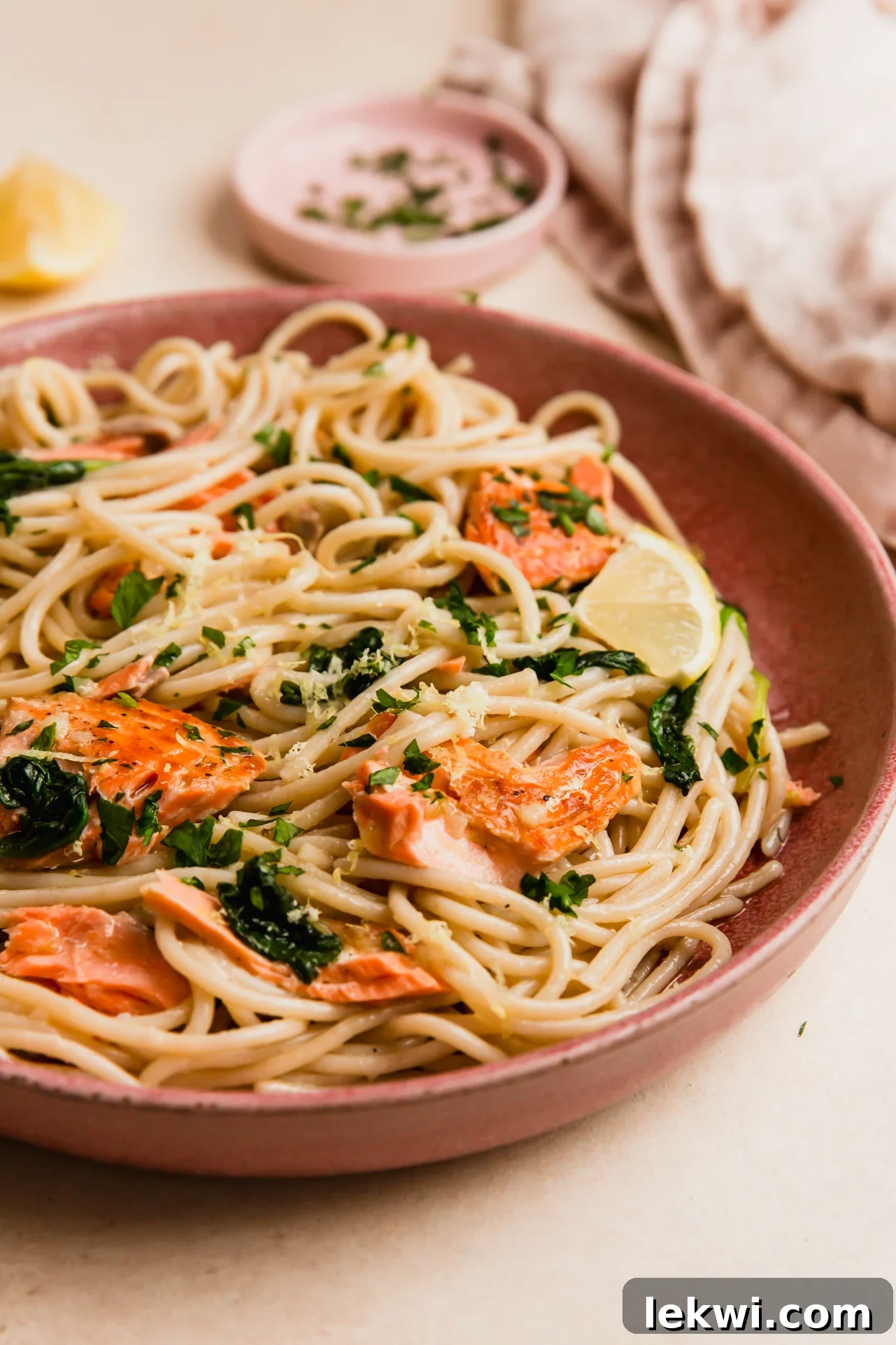
The Wholesome Goodness: Health Benefits
Beyond being incredibly delicious, this Lemon Salmon Pasta is a nutritional powerhouse. Each ingredient contributes to a meal that not only tastes good but also does good for your body:
- Rich in Omega-3 Fatty Acids: Salmon is renowned for being an excellent source of EPA and DHA, two types of omega-3 fatty acids crucial for heart health, brain function, and reducing inflammation throughout the body. Regular consumption of salmon can support cardiovascular wellness and cognitive function.
- High-Quality Protein: Salmon provides a significant amount of lean protein, essential for muscle repair, growth, and overall bodily functions. Protein helps keep you feeling full and satisfied, aiding in weight management and preventing energy crashes.
- Vitamin and Mineral Boost:
- Salmon: Is a great source of B vitamins (especially B12, niacin, and B6), vitamin D, and minerals like selenium and potassium. These nutrients support energy production, bone health, immune function, and thyroid health.
- Spinach: Loaded with vitamins K, A, C, and folate, as well as iron and calcium. Spinach supports bone health, vision, immune function, and red blood cell production.
- Lemon: A fantastic source of Vitamin C, a powerful antioxidant that boosts immunity, supports skin health, and aids in iron absorption.
- Garlic: Contains compounds known for their immune-boosting and anti-inflammatory properties.
- Naturally Gluten-Free & Dairy-Free: For individuals with gluten sensitivity, celiac disease, or dairy intolerance, this recipe offers a delicious and worry-free meal option. Choosing gluten-free pasta and ghee (or olive oil) ensures that everyone can enjoy this vibrant dish without discomfort.
- Fiber-Rich: Depending on the type of gluten-free pasta you choose (e.g., brown rice, lentil, or chickpea pasta) and the addition of spinach, this dish can provide a good amount of dietary fiber, important for digestive health and satiety.
In essence, this Lemon Salmon Pasta isn’t just a delightful culinary experience; it’s a smart choice for a balanced and health-conscious diet.
Serving Suggestions for a Complete Meal
This Lemon Salmon Pasta is quite a complete meal on its own, offering protein, healthy fats, and carbohydrates. However, if you’re looking to round out your plate or simply add more fresh flavors and textures, here are some excellent serving suggestions:
- Crisp Green Salad: A simple mixed green salad with a light vinaigrette dressing would be a perfect complement. The freshness of the greens would cut through the richness of the salmon and butter, creating a balanced meal.
- Roasted Asparagus or Broccolini: Quickly roasted or grilled vegetables like asparagus, broccolini, or green beans would add another layer of nutrients and a pleasing texture contrast. A squeeze of lemon juice over the veggies would tie them into the main dish’s flavor profile.
- Crusty Gluten-Free Bread: Serve with a side of warm, crusty gluten-free bread to soak up any remaining delicious lemon-garlic sauce. You could even rub it with a clove of garlic and a drizzle of olive oil before toasting.
- Tomato and Cucumber Salad: A light and refreshing tomato and cucumber salad, perhaps with some fresh dill or mint, would offer a cool counterpoint to the warm pasta.
- White Wine Pairing: For adult diners, a crisp, dry white wine like Sauvignon Blanc, Pinot Grigio, or a light Chardonnay would beautifully complement the lemon and salmon flavors in the pasta.
Storing and Reheating Your Leftovers
One of the beauties of this Lemon Salmon Pasta is that it makes for fantastic leftovers, perfect for a quick lunch the next day. Proper storage and reheating will ensure your meal remains delicious:
- Storage: Allow the pasta to cool completely before transferring it to an airtight container. Store it in the refrigerator for up to 2-3 days.
- Reheating:
- Stovetop (Recommended): This method best preserves the texture of the pasta and salmon. Place the desired portion in a pan over medium-low heat. Add a splash of water, chicken broth, or even a little extra lemon juice or olive oil to help moisten the pasta and re-create a light sauce. Stir gently until heated through.
- Microwave: While convenient, the microwave can sometimes dry out the salmon or make the pasta a bit chewy. If using, heat in short intervals (30-60 seconds), stirring in between, until warmed through. Adding a tablespoon of water or broth before microwaving can help keep it moist.
- Note on Salmon Texture: Cooked salmon, when reheated, can sometimes lose some of its original flakiness and become a little drier. This is normal. The good news is that the lemon-garlic sauce still tastes wonderful!
More Gluten-Free Pasta Recipes to Explore
If you loved this Lemon Salmon Pasta and are looking for more delicious gluten-free pasta inspiration, here are a few other fantastic recipes to add to your culinary repertoire:
- Easy Avocado Pesto Pasta
- One Pot Lemon Chicken Pasta
- Chicken Alfredo No Boil Pasta Bake
If you tried this Lemon Salmon Pasta or any other recipe on my blog, please leave a 🌟 star rating and let me know how it went in the 📝 comments below. Your feedback means the world! Thanks for visiting!
Want to save this for later?
Just drop your name and email below. Then we’ll email it right to your inbox. ✉️
The Easiest Lemon Salmon Pasta
This lemon salmon pasta is buttery, garlicky, and incredibly wholesome! It’s gluten and dairy-free, and easy to make with minimal ingredients.
Yield: 2 servings
Prep Time: 10 mins
Cook Time: 20 mins
Total Time: 30 mins
Author: Michelle
Ingredients
- 6 oz gluten-free spaghetti (sub grain-free spaghetti)
- ½ lb salmon (sockeye or coho)
- Salt and pepper to taste
- Juice of two small lemons
- 1 tbsp olive oil
- 1-2 tbsp white wine (sub white wine vinegar)
- 2 tbsp ghee, divided (sub olive oil)
- 3 cloves garlic, minced
- 1 cup spinach
- Zest of one lemon
- 2 tbsp parsley, chopped
Instructions
- Cook the pasta as directed until al dente, reserving about 1/4 cup of pasta water. Strain and set aside, coating with olive oil to avoid sticking.
- While the pasta cooks, prepare the salmon by patting dry and seasoning the flesh with salt, pepper, and juice of half a lemon. Heat the olive oil over medium heat in a pan. Once the oil is shimmering, add the salmon, flesh side down. Cook for 3-4 minutes to allow to crisp. Carefully flip and cook on the other side to allow to cook through. Remove from the pan and rest the salmon for a few minutes before flaking and setting aside.
- Using the same pan set to medium heat, deglaze the pan with white wine by adding the wine and scraping up any bits stuck to the pan. Discard to clean out the pan.
- Add 1 tbsp of ghee to the pan and allow to melt before adding the garlic. Saute for 3-4 minutes, and add the spinach, sauteeing until wilted.
- Reduce the heat and add the cooked pasta and salmon to the pan. Toss to combine and add the lemon juice, 1 tbsp of ghee, and salt and pepper. Stir to combine, adding a bit of pasta water.
- Serve the pasta in bowls and top with lemon zest and parsley.
Notes
To make AIP (Autoimmune Protocol friendly):
- Omit black pepper
- Swap ghee for olive oil
- Use grain-free pasta
All nutrition facts are estimated and will vary.