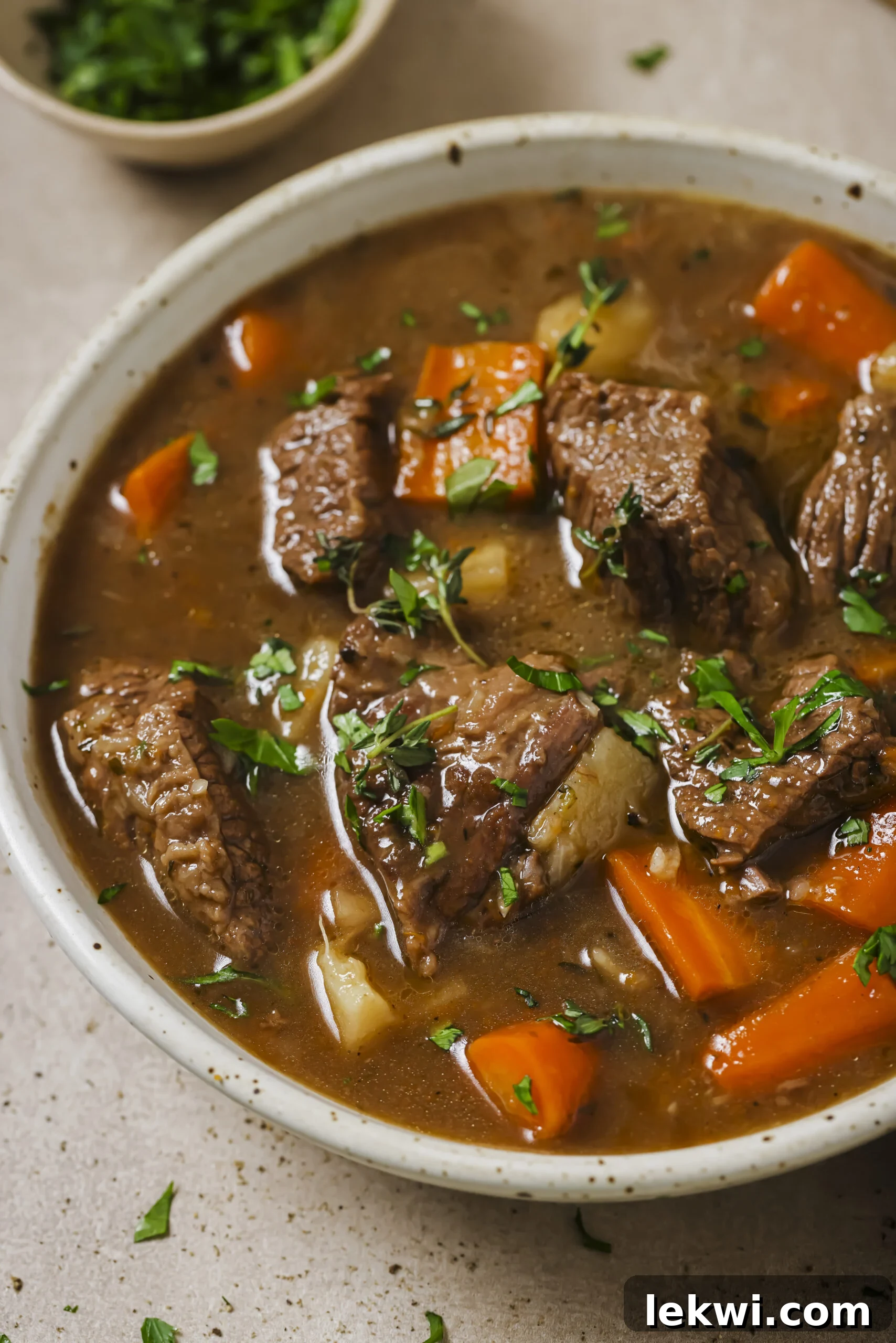
Welcome to the ultimate guide for crafting the most comforting and flavorful Dutch Oven Beef Stew you’ll ever taste! This recipe is a true culinary masterpiece, where succulent beef chuck roast and an abundance of hearty vegetables are slow-braised to perfection in your oven. It’s the ideal easy dinner, especially as the cooler evenings draw in, promising warmth, richness, and an unforgettable depth of flavor that a simple slow cooker often can’t match.
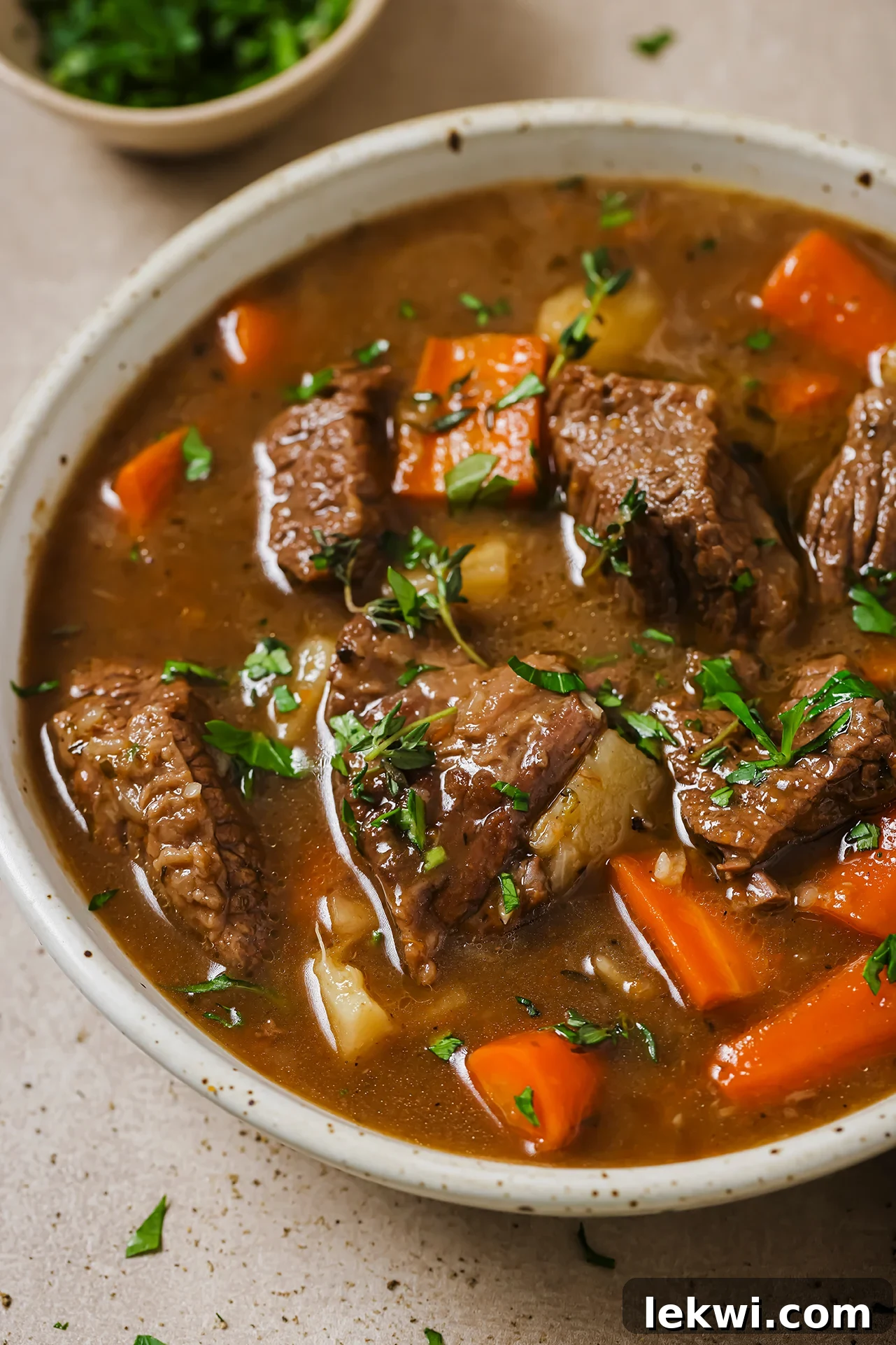
Beef stew holds a cherished spot in my family’s recipe rotation. We often find ourselves preparing this nourishing dish multiple times throughout the autumn and winter months, sometimes even on a weekly basis. While the convenience of a slow cooker is undeniable, there’s a distinct advantage to preparing beef stew in a Dutch oven. The Dutch oven method, with its precise temperature control and superior heat retention, coaxes out a richness and tenderness from the beef that elevates this classic comfort food to new heights. The results are consistently more robust, more deeply flavored, and undeniably more satisfying. And the best part? Achieving this culinary excellence is surprisingly straightforward!
Our Dutch oven beef stew recipe embraces the time-honored technique of slow braising in the oven. This allows the beef chuck to become incredibly tender, practically melting in your mouth, while absorbing the magnificent flavors of a robust red wine and savory beef broth base. The stew becomes wonderfully thick, deeply aromatic, and packed with an array of nutrient-rich vegetables, creating a wholesome and incredibly satisfying meal that truly nourishes the soul.
Why This Dutch Oven Beef Stew Will Become Your Go-To Recipe
- Unrivaled Comfort for Cooler Seasons: There’s nothing quite like a steaming bowl of beef stew to banish the chill on a crisp autumn or cold winter evening. This recipe provides that heartwarming comfort in every spoonful.
- Superior Tenderness and Flavor: The controlled environment of a Dutch oven in the oven ensures that your beef braises slowly and evenly, resulting in meat that is incredibly tender and infused with complex flavors, far beyond what rapid cooking methods can achieve.
- Effortless Elegance: Despite its gourmet taste, this stew is remarkably easy to prepare. After an initial stovetop sear, the oven takes over, allowing you to relax while the magic happens.
- Nutrient-Packed Goodness: Loaded with wholesome vegetables and rich beef, this stew offers a balanced and nourishing meal that’s perfect for the entire family.
- Make-Ahead & Freezer Friendly: This stew tastes even better the next day, and it freezes beautifully, making it an excellent option for meal prep and future quick dinners.
The Dutch Oven Advantage: Why It Outshines a Slow Cooker for Beef Stew
When it comes to crafting the perfect beef stew, the Dutch oven isn’t just a preference; it’s a strategic culinary choice that significantly impacts the final taste and texture. While slow cookers offer undeniable convenience, a Dutch oven brings a level of versatility and control that truly elevates the dish.
A primary benefit of the Dutch oven is its exceptional ability to transition seamlessly from the stovetop to the oven. This dual functionality is crucial for beef stew. On the stovetop, you can achieve a deep, rich sear on the beef, a vital step known as the Maillard reaction. This browning creates incredible depth of flavor and caramelization that cannot be replicated in a slow cooker, which generally lacks the high, direct heat needed for searing. Once seared, the Dutch oven then moves to the oven, where it excels at long, slow braising.
Furthermore, Dutch ovens are renowned for their superior heat retention and even heat distribution. Made from heavy cast iron, they maintain a consistent temperature throughout the cooking process, ensuring the beef and vegetables cook uniformly without scorching. This steady, gentle heat is key to breaking down tough cuts of meat like chuck roast, transforming them into fork-tender morsels. Other pots simply don’t retain heat as efficiently, often leading to uneven cooking or a less rich stew. The tight-fitting lid of a Dutch oven also traps moisture, creating a self-basting environment that keeps the meat moist and flavorful, and concentrates the aromatic steam back into the stew.
While I certainly appreciate the ease of slow cooker recipes for dishes like Slow Cooker Greek Chicken and Slow Cooker Apple Sauce, for a truly rich, deeply flavored, and perfectly tender beef stew, the controlled, oven-braised environment of a Dutch oven is simply unmatched. It provides that extra hearty, comforting essence that makes all the difference on a chilly evening.
Essential Ingredients for a Perfect Dutch Oven Beef Stew
Creating an exceptional beef stew begins with selecting quality ingredients. Each component plays a vital role in building the layered flavors and comforting texture of this classic dish.
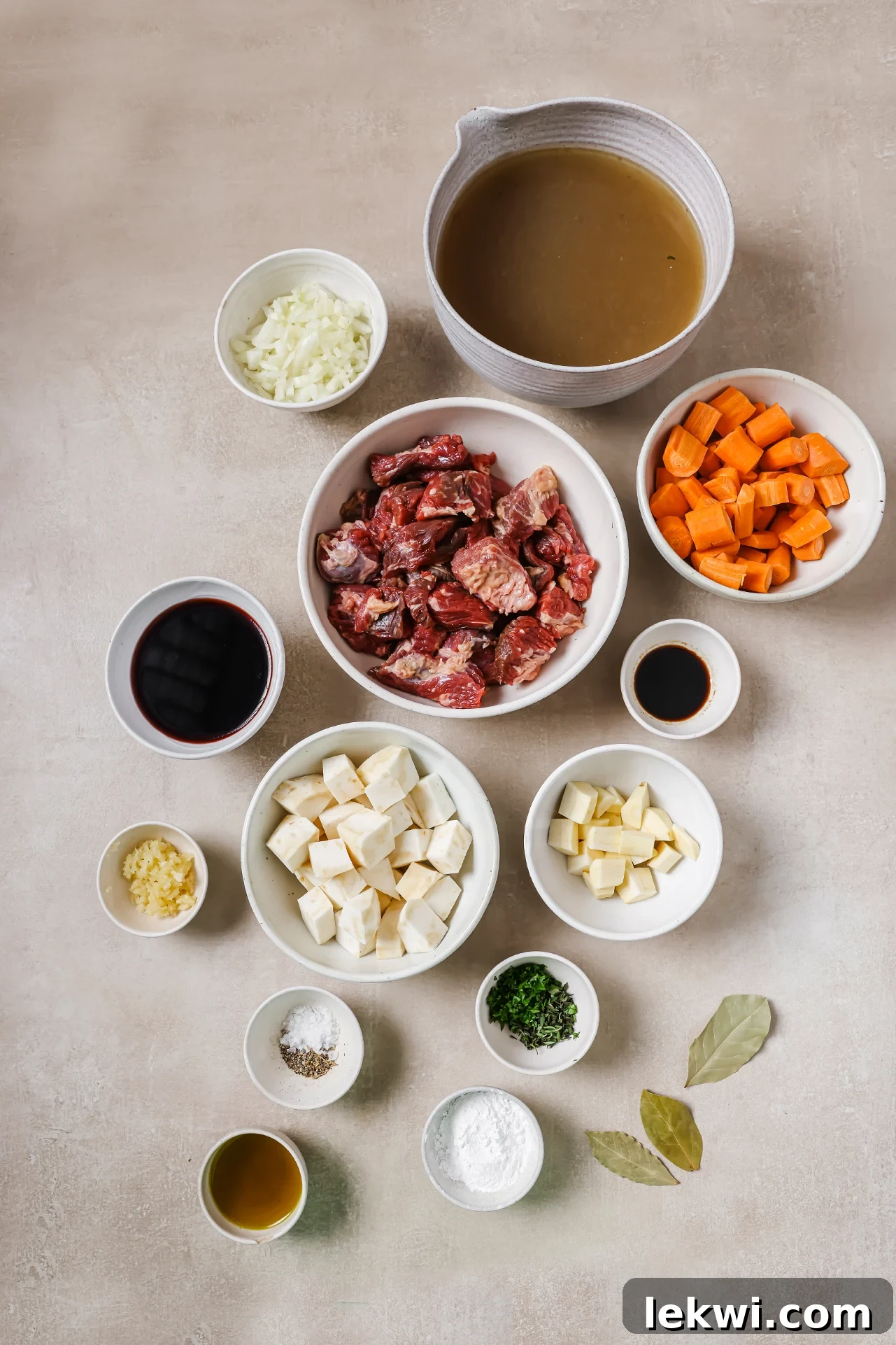
- Beef Chuck Roast: This is the star of our stew. While you can use pre-cut “beef stew meat,” I highly recommend starting with a whole beef chuck roast. This allows you to control the size of your cubes (aim for 1.5-2 inch pieces) and trim any excess fat yourself, ensuring a cleaner, richer stew. Chuck roast is ideal for braising because its marbling and connective tissues break down beautifully over low, slow heat, resulting in incredibly tender and flavorful meat.
- Coconut Aminos: This ingredient is a fantastic secret weapon, used here to deglaze the pot. It adds a savory, slightly sweet, and umami depth that mimics the flavor profile of Worcestershire sauce, but is often a preferred alternative for those seeking soy-free or gluten-free options.
- Arrowroot Starch: Essential for thickening the stew, arrowroot starch creates a silky, glossy consistency without the cloudiness or gluten often associated with flour. It’s also excellent for achieving a light crust on the beef during searing.
- Avocado Oil: A high smoke point oil, avocado oil is perfect for searing the beef without burning. Its neutral flavor ensures it won’t interfere with the rich taste of your stew.
- Aromatics (Garlic and Onion): The foundation of flavor for many savory dishes, diced yellow onion and minced garlic add essential sweetness, pungency, and aromatic complexity that deepens as the stew simmers.
- Beef Bone Broth: A high-quality beef bone broth is critical for a rich stew. It contributes not only liquid but also a wealth of savory flavor and beneficial nutrients. You can adjust the amount based on your preference for a thicker or more broth-heavy stew.
- Seasonings (Salt, Pepper, Bay Leaves, Thyme, and Parsley): These herbs and spices are carefully selected to complement and enhance the beef and vegetables. Bay leaves add an herbal, slightly medicinal note; thyme provides an earthy, peppery warmth; and fresh parsley offers a bright, herbaceous finish. Don’t be shy with salt and freshly ground black pepper to taste.
- Red Wine: A dry red wine, such as Cabernet Sauvignon or Merlot, adds incredible depth, complexity, and a subtle tang to the stew. While the alcohol will mostly cook out during the long braising process, leaving behind only its flavor, you can substitute additional beef broth if you prefer to avoid alcohol.
- Hearty Root Vegetables (White Sweet Potato, Parsnip, and Carrots): These robust vegetables not only add vibrant color and essential nutrients but also absorb the rich broth, becoming tender and sweet. White sweet potatoes offer a milder sweetness than orange varieties, parsnips add an earthy, slightly spicy note, and carrots provide classic sweetness and texture.
Mastering the Art of Dutch Oven Beef Stew: A Step-by-Step Guide
Follow these detailed steps to create a truly unforgettable Dutch oven beef stew that will impress even the most discerning palates.
- Step One: Prepare and Season the Beef. Begin by preheating your oven to 325°F (160°C). Cut your beef chuck roast into uniform 1.5 to 2-inch cubes, trimming any significant pieces of excess fat. Place the beef pieces in a large bowl, generously season them with salt and freshly ground black pepper, then toss them thoroughly with arrowroot starch until each piece is lightly coated. This coating will help create a beautiful sear and thicken the stew later.
- Step Two: Sear the Beef to Golden Perfection. Heat two tablespoons of avocado oil in your large Dutch oven over medium-high heat on the stovetop. Once the oil is shimmering and hot, carefully add about half of the seasoned beef chuck, ensuring not to overcrowd the pot. Overcrowding can steam the meat instead of searing it. Cook for 3-4 minutes on each side, or until the beef develops a rich, golden-brown crust. This crucial step, known as the Maillard reaction, builds incredible flavor. Remove the browned beef and set it aside, repeating with the remaining beef until all pieces are seared.
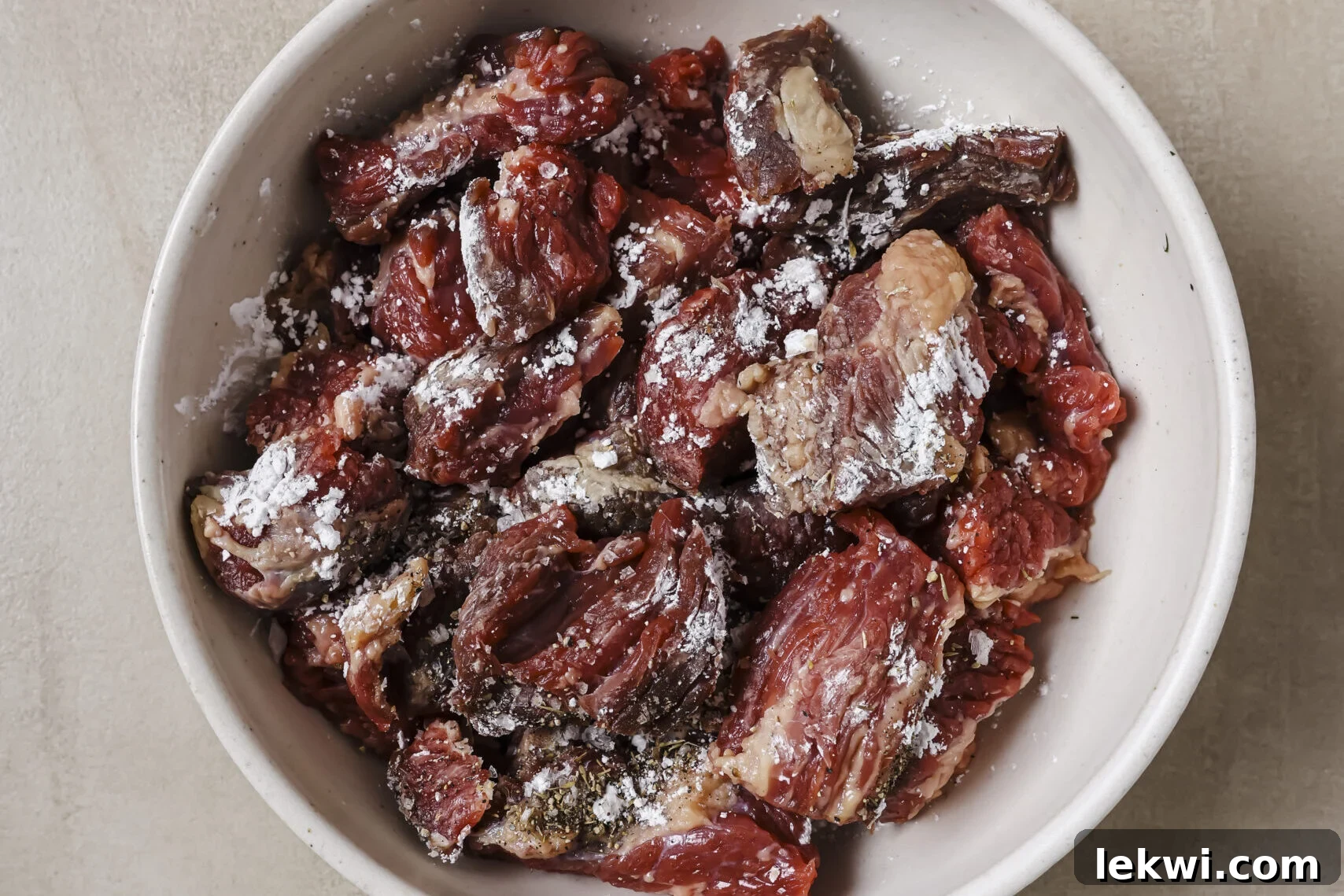
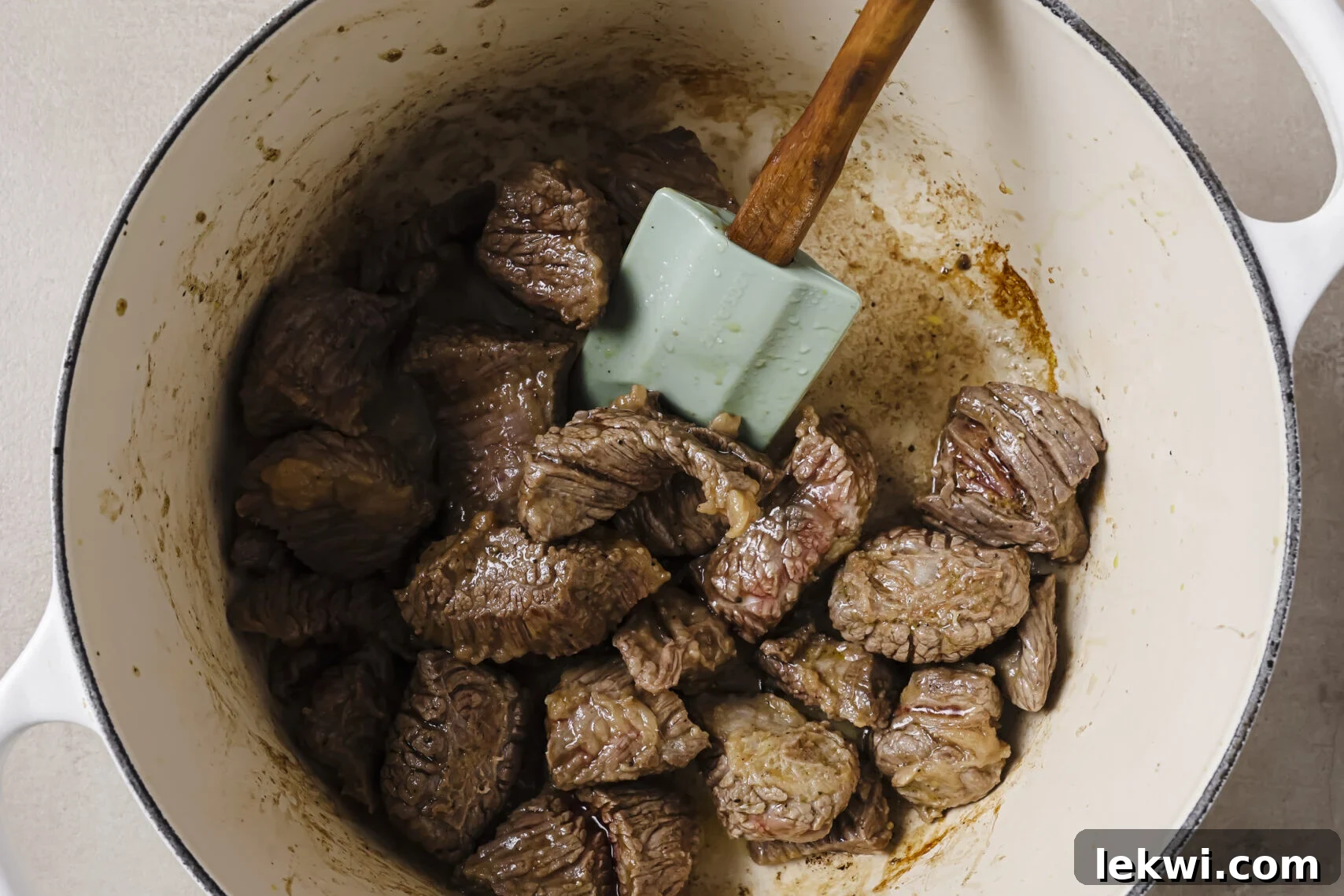
- Step Three: Deglaze the Pot. Reduce the stovetop heat to medium. Pour in the coconut aminos into the hot Dutch oven. Use a wooden spoon to vigorously scrape up any browned bits (fond) from the bottom of the pot. These flavorful bits are packed with concentrated beef and seasoning essences and will dissolve into the liquid, adding immense depth to your stew.
- Step Four: Sauté the Aromatics. Add the diced yellow onion to the pot and sauté for 3-4 minutes, or until it softens and becomes lightly translucent. Then, add the minced garlic and continue to sauté for another 2-3 minutes until fragrant, being careful not to burn the garlic.
- Step Five: Combine and Simmer. Return all of the seared beef back to the Dutch oven. Pour in the red wine (if using) and beef broth. Bring the mixture to a gentle boil on the stovetop. Once boiling, add the bay leaves, dried thyme, and more salt and pepper to season the broth. Stir everything together, then reduce the heat to low, cover the pot with its tight-fitting lid.
- Step Six: Initial Braise in the Oven. Carefully transfer the covered Dutch oven to your preheated oven. Allow the stew to braise for 2 hours, stirring occasionally to ensure even cooking and prevent sticking. This initial slow cook will begin to tenderize the beef.
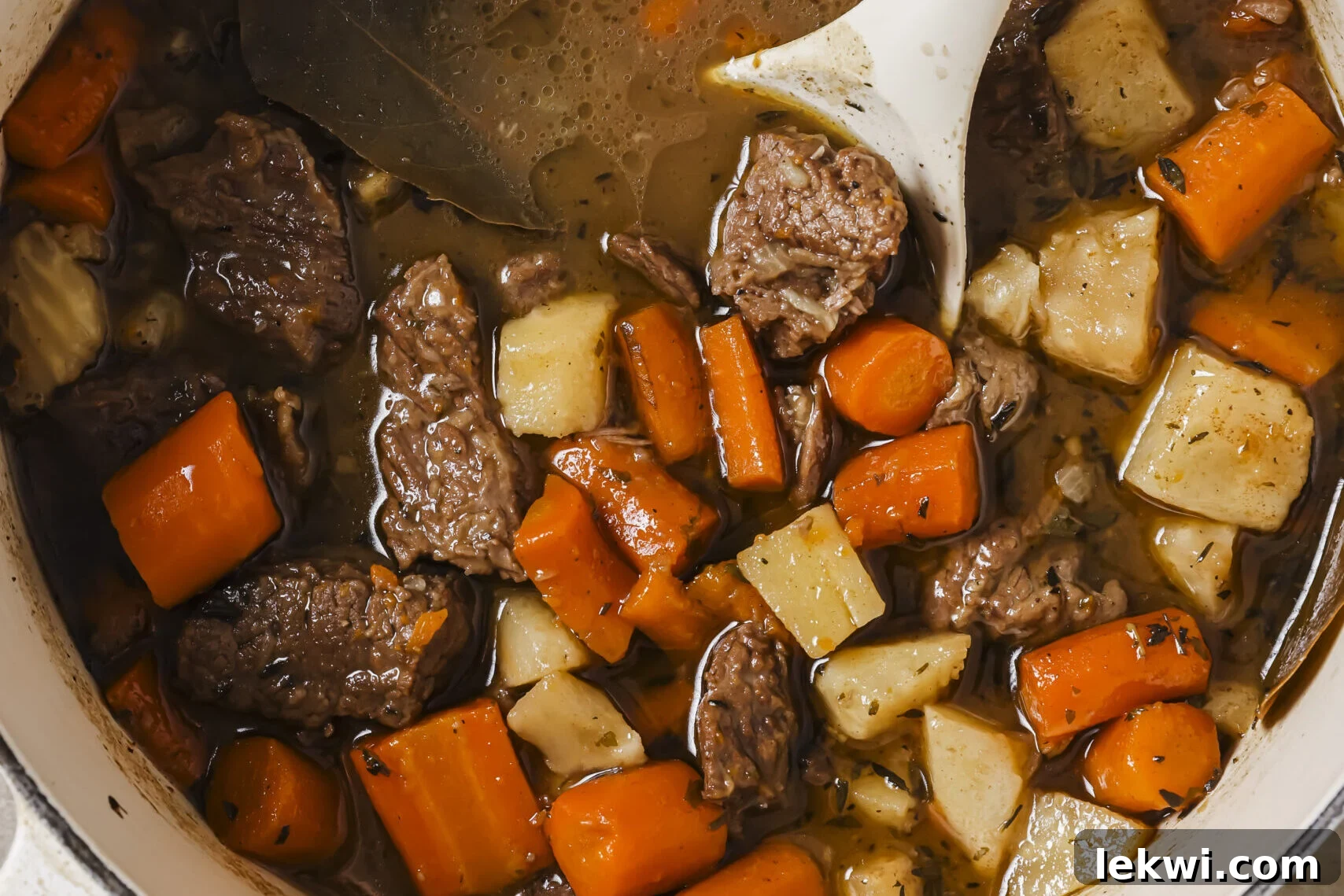
- Step Seven: Add Vegetables and Continue Braising. After 2 hours, remove the Dutch oven from the oven. Increase the oven temperature to 350°F (175°C). Carefully remove the lid from the pot and add the chopped white sweet potato, carrots, and parsnips. Stir them into the stew to ensure they are submerged in the liquid. Replace the lid. Transfer the Dutch oven back to the oven and allow it to braise for another 1 hour and 15 minutes, or until the vegetables are fork-tender.
- Step Eight: Final Check and Serve. Remove the stew from the oven. Carefully use a fork to test the tenderness of both the beef and the vegetables. If needed, return it to the oven for a short period until desired tenderness is achieved. Before serving, remember to remove and discard the bay leaves. Ladle the hot, aromatic Dutch Oven Beef Stew into bowls and enjoy immediately! Garnish with fresh parsley for a touch of color and freshness.
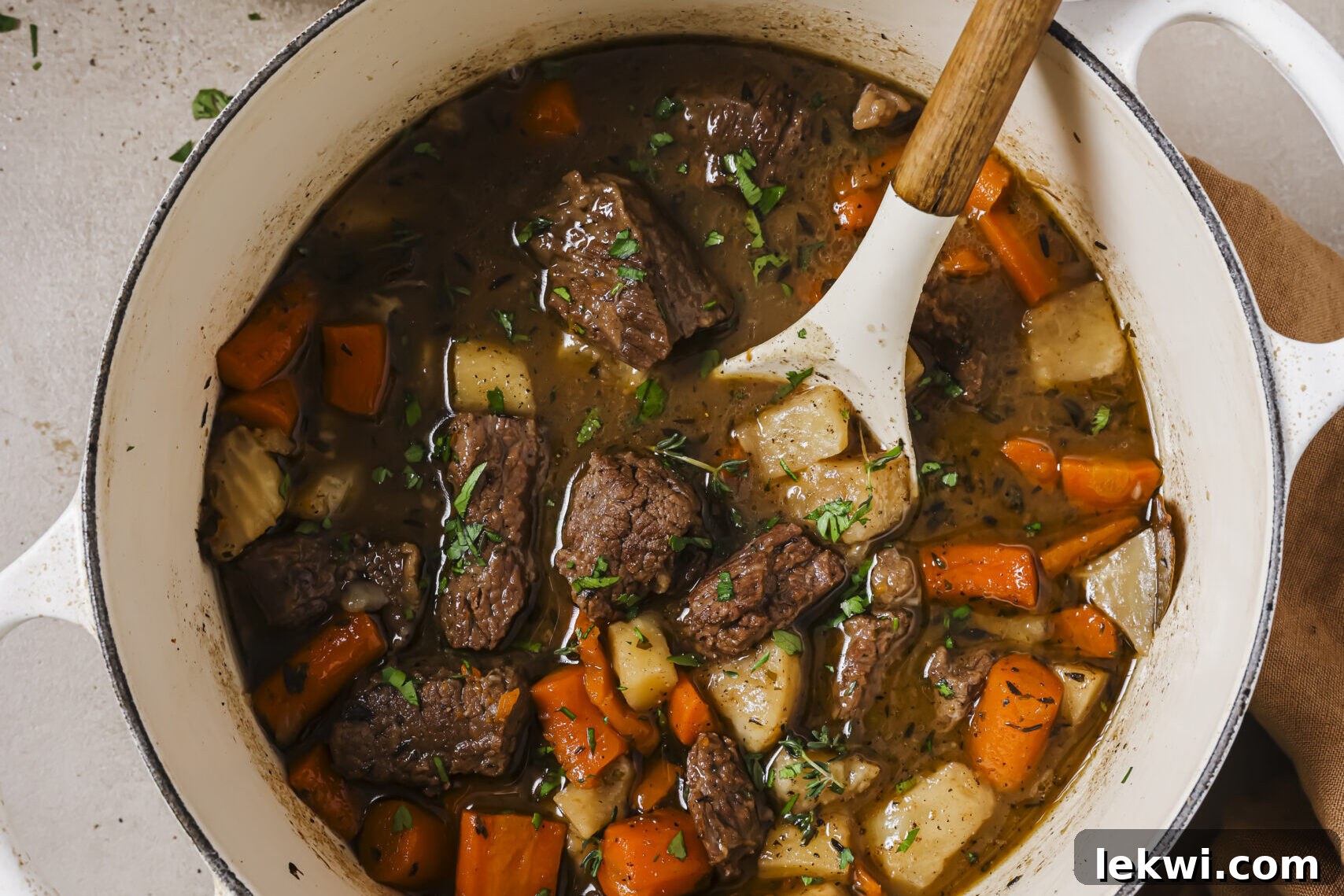
Expert Tips & Tricks for the Best Dutch Oven Beef Stew
- Adjust Broth for Desired Thickness: I typically prefer a beef stew that is hearty and thick, with just enough liquid to coat the meat and vegetables. If you find you prefer a thinner, more broth-heavy stew, feel free to add more beef broth at any point during the cooking process. Conversely, if you desire an even thicker stew, you can whisk a tablespoon of arrowroot starch with a tablespoon of cold water, then stir it into the hot stew during the last 30 minutes of cooking.
- Red Wine is Optional, but Recommended for Depth: The red wine truly enhances the complexity and richness of this stew. While the alcohol will mostly cook out during the long braising, leaving behind only its deep flavor, you can certainly substitute an equal amount of beef broth if you prefer to omit alcohol entirely. The stew will still be delicious, but the wine adds an undeniable layer of gourmet taste.
- Don’t Skimp on Searing: The browning of the beef in the initial step is non-negotiable for maximum flavor. Take your time to achieve a good sear on all sides; this creates a flavorful crust and deepens the overall taste of the stew.
- Taste and Adjust Seasoning: Always taste your stew before serving and adjust the salt and pepper as needed. The flavor will intensify as it cooks, but a final seasoning check ensures perfect balance. Remember that different broths have varying sodium levels, so adjust accordingly.
- Chop Vegetables Uniformly: Aim for roughly uniform sizes for your vegetables (sweet potato, carrots, parsnips). This ensures they cook evenly and become tender at the same rate.
Can You Freeze Dutch Oven Beef Stew? Absolutely!
One of the many benefits of this hearty Dutch oven beef stew is how wonderfully it freezes. It’s perfect for meal prepping and ensures you always have a comforting meal on hand for busy days. To freeze, allow the stew to cool completely to room temperature. Then, transfer it to freezer-safe bags or airtight containers. For space-saving, you can freeze it flat in large freezer bags. Specialized molds like Souper Cubes are also fantastic for freezing individual portions. Properly stored, beef stew can be frozen for approximately 2-3 months without a significant loss in quality or flavor.
Simple Reheating Instructions
When you’re ready to enjoy your delicious leftover beef stew, gentle reheating is key to maintaining its texture and flavor. The best method for reheating this recipe is in a pot on the stovetop. Simply transfer the desired amount of stew to a heavy-bottomed pot and warm it over low heat. Stir frequently to prevent sticking and ensure even heating. Simmer gently for about 5-10 minutes, or until the stew is heated through to your desired temperature. If the stew seems too thick, you can add a splash of extra beef broth or water to achieve the perfect consistency.
Serving Your Perfect Beef Stew
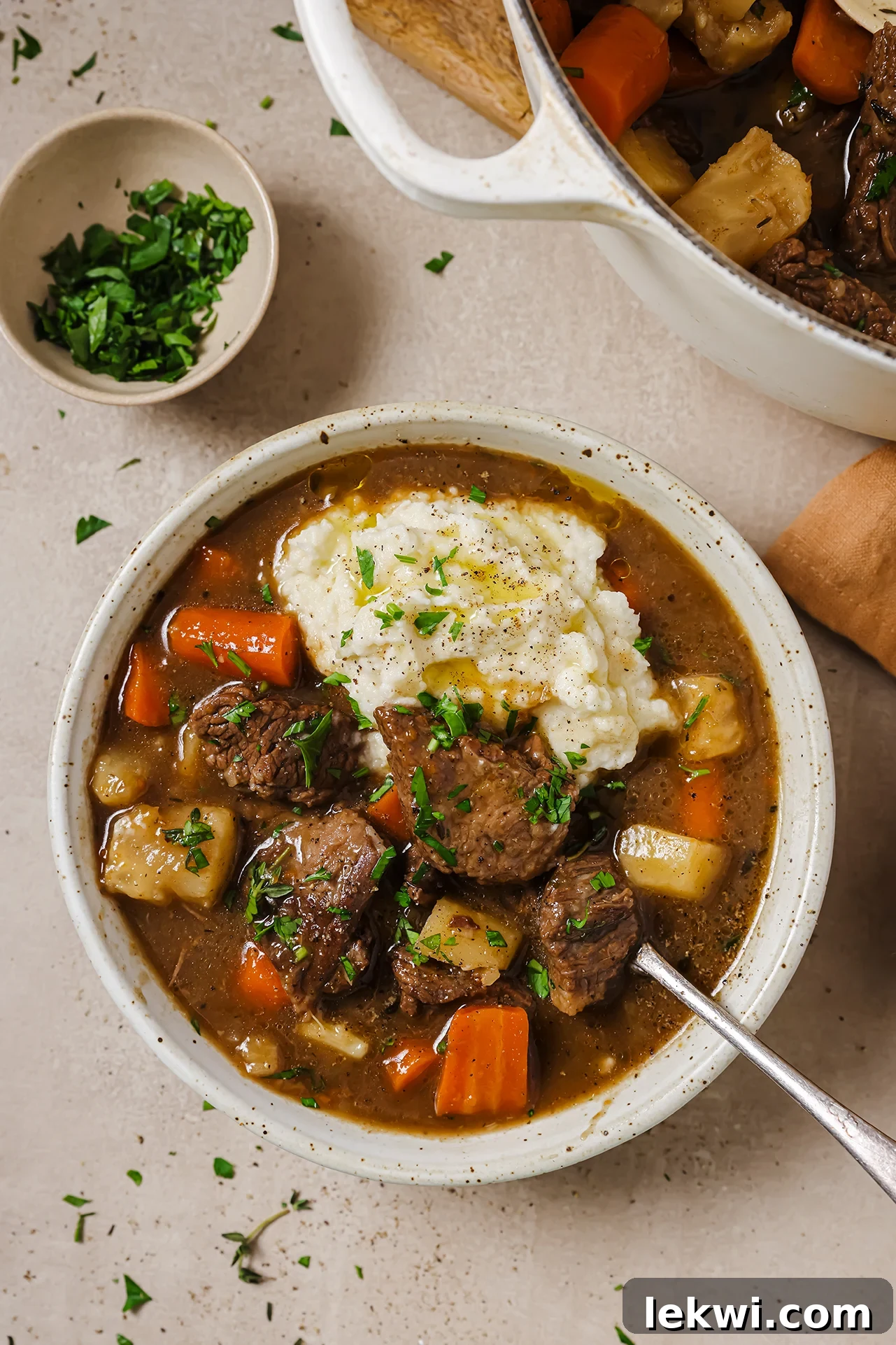
This Dutch Oven Beef Stew is a complete meal on its own, packed with protein and vegetables. However, it pairs beautifully with a variety of sides to round out your dinner. Consider serving it over creamy mashed potatoes, fluffy rice, or with a side of crusty bread to soak up every last drop of the rich gravy. A simple green salad or roasted root vegetables make excellent accompaniments. For an extra touch of freshness, a sprinkle of chopped fresh parsley just before serving is always a good idea.
More Hearty Beef Stew Recipes to Explore
If you’ve fallen in love with the comforting flavors of beef stew, you might enjoy exploring some other variations:
- Greek Inspired Tomato Beef Stew
- Slow Cooker Beef Bourguignon
- Paleo Slow Cooker Beef Stew
Frequently Asked Questions About Dutch Oven Beef Stew
Q: Can I use a different cut of beef?
A: While beef chuck roast is highly recommended for its flavor and tenderness when braised, you could also use beef round or short ribs. Just be aware that cooking times and the final texture might vary slightly. Always choose a cut suitable for slow cooking.
Q: My stew is too thin. How can I thicken it?
A: If your stew isn’t as thick as you’d like, you have a few options. You can continue to simmer it uncovered on the stovetop for a bit longer to allow some of the liquid to evaporate. Alternatively, create a slurry by whisking 1-2 tablespoons of arrowroot starch (or cornstarch for non-AIP/Paleo) with an equal amount of cold water. Stir this mixture into the simmering stew and cook for a few more minutes until thickened. The initial arrowroot starch on the beef should help considerably.
Q: My beef isn’t tender enough. What went wrong?
A: The most common reason for tough beef in stew is not cooking it long enough. Braising tough cuts like chuck roast requires patience. If your beef isn’t fork-tender, simply return the Dutch oven to the oven and continue cooking at a low temperature (e.g., 300°F or 150°C) until it reaches the desired tenderness. The longer and slower it cooks, the more tender it will become.
Q: Can I add other vegetables?
A: Absolutely! Beef stew is incredibly versatile. Feel free to add other root vegetables like rutabaga, celery, or mushrooms. For softer vegetables like peas or green beans, add them during the last 15-20 minutes of cooking to prevent them from becoming mushy.
Q: How can I make this recipe AIP-friendly?
A: The current recipe is largely AIP-compliant. To ensure it’s fully AIP, you must omit the red wine and use additional beef broth in its place, as alcohol is not permitted on the AIP diet. All other ingredients listed, including arrowroot starch and avocado oil, are generally AIP-friendly.
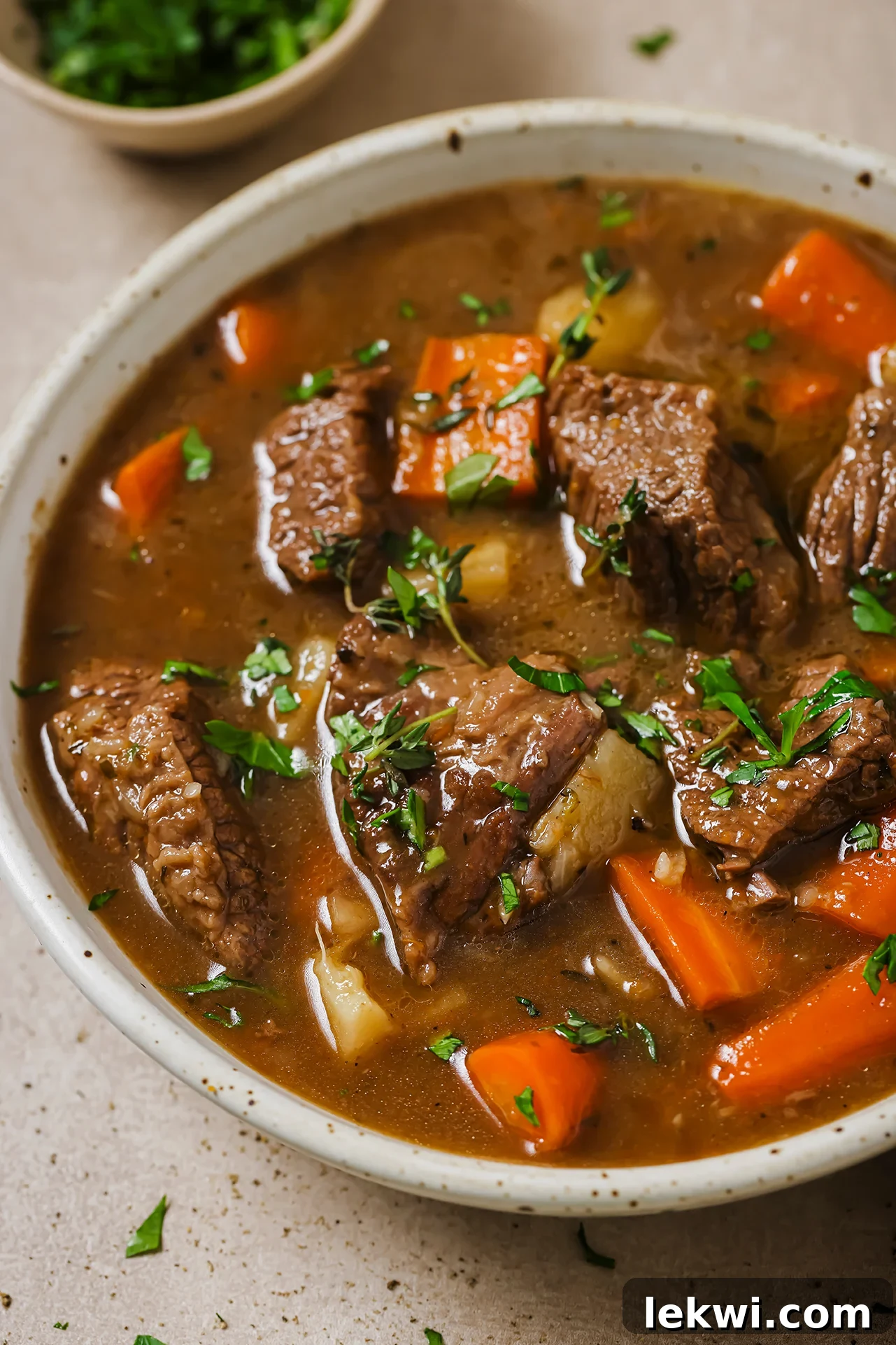
Dutch Oven Beef Stew (Gluten Free)
Leave a Review
Pin Recipe
Ingredients
- 2 ½ lbs beef chuck, cut into 1.5-2″ cubes (fat trimmed)
- 2 tbsp arrowroot starch
- Salt and pepper
- 2 tbsp avocado oil
- 1 tbsp coconut aminos
- 1 yellow onion, diced
- 3 cloves garlic, minced
- ½ cup red wine, cabernet or similar, see notes for AIP
- 5 cups beef broth
- 3 bay leaves
- 2 tsp thyme
- 1 tsp parsley
- 1 white sweet potato, peeled and chopped
- 1 parsnip, peeled and chopped
- 2 large carrots, peeled and chopped
Instructions
-
Preheat the oven to 325°F (160°C).
-
Add the beef chuck pieces to a bowl and generously season with salt and pepper. Toss with arrowroot starch.
-
Using a large Dutch oven, heat the avocado oil over medium-high heat on the stove. Once the oil is shimmering, add about half of the beef chuck, being careful to not overcrowd the pan. Cook for 3-4 minutes on each side or until lightly crisp and browned. Set aside, repeating with all of the beef.
-
Reduce the heat to medium and pour in the coconut aminos to deglaze the pot. Use a wooden spoon to scrape off any burnt bits from the bottom of the pot (leaving them in the pot).
-
Add the onion and sauté for 3-4 minutes or until lightly translucent. Add the garlic and sauté for another 2-3 minutes.
-
Add the beef back to the pot along with broth and wine. Bring to a boil and add the bay leaves, thyme, and more salt and pepper to season the broth. Turn the heat down and place the lid on the pot. Transfer to oven and allow to cook for 2 hours, stirring occasionally.
-
Remove from the oven and turn the heat up to 350°F (175°C). Carefully remove the lid from the pot and add the sweet potato, carrots, and parsnip. Stir to combine and return the lid to the pot. Transfer to the oven and braise for another 1 hour and 15 minutes.
-
Remove from the oven and carefully use a fork to test the vegetables for tenderness. Return to the oven if needed. Remove the bay leaves.
-
Serve fresh with extra seasonings to taste, or store in the fridge for 3-4 days or freeze for up to 2-3 months.
Notes
A note on salt: Depending on the type of broth you use, you’ll need more or less salt. Take the sodium content of your broth into account and then salt accordingly.
This recipe was published in 2023 and updated in 2024. Photos by Modern Food Stories