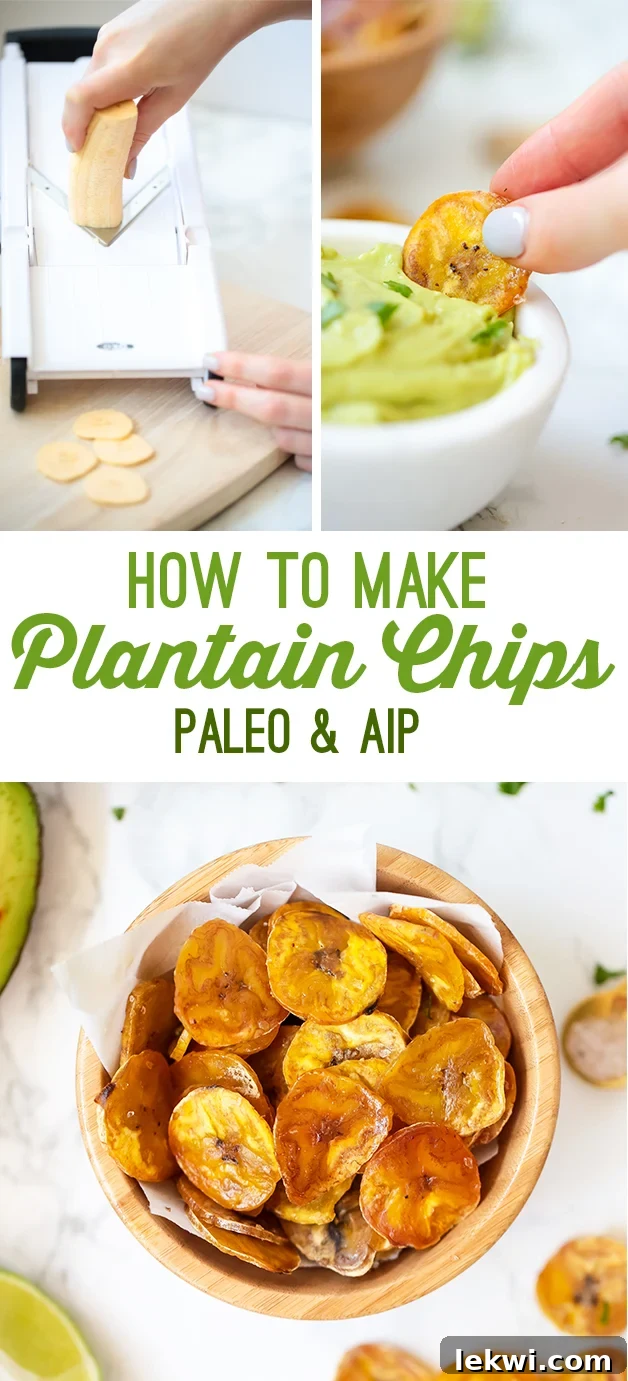
Craving a wholesome, crispy snack that truly satisfies? Look no further than these incredible homemade baked plantain chips! Perfectly crunchy, delightfully salty, and bursting with natural flavor, they offer a guilt-free indulgence. This recipe isn’t just delicious; it’s also a healthy, paleo, and AIP (Autoimmune Protocol) compliant snack, making it suitable for a wide range of dietary preferences. Best of all, they are remarkably simple to prepare in your own kitchen, allowing you to enjoy a fresh batch whenever the craving strikes.
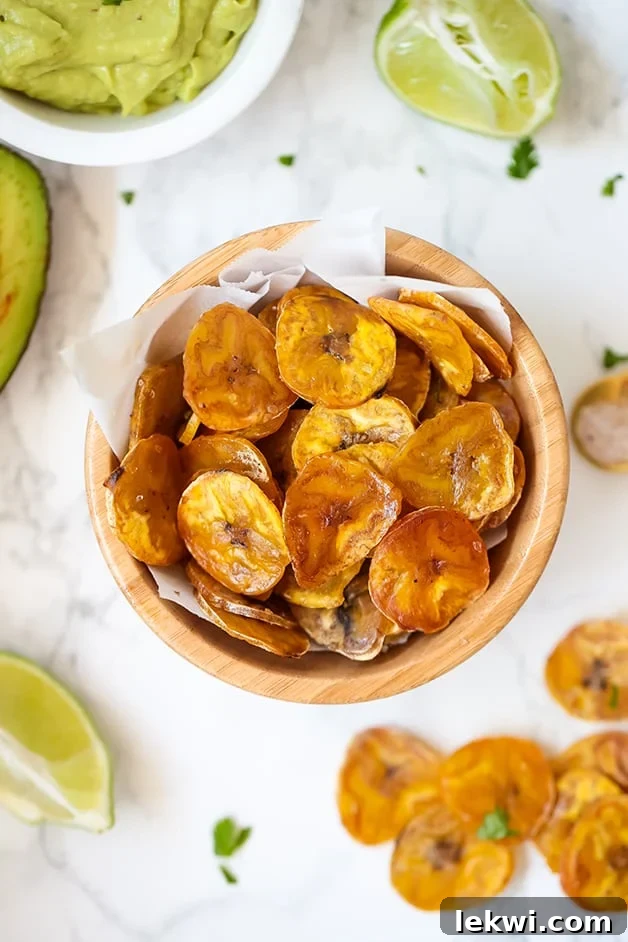
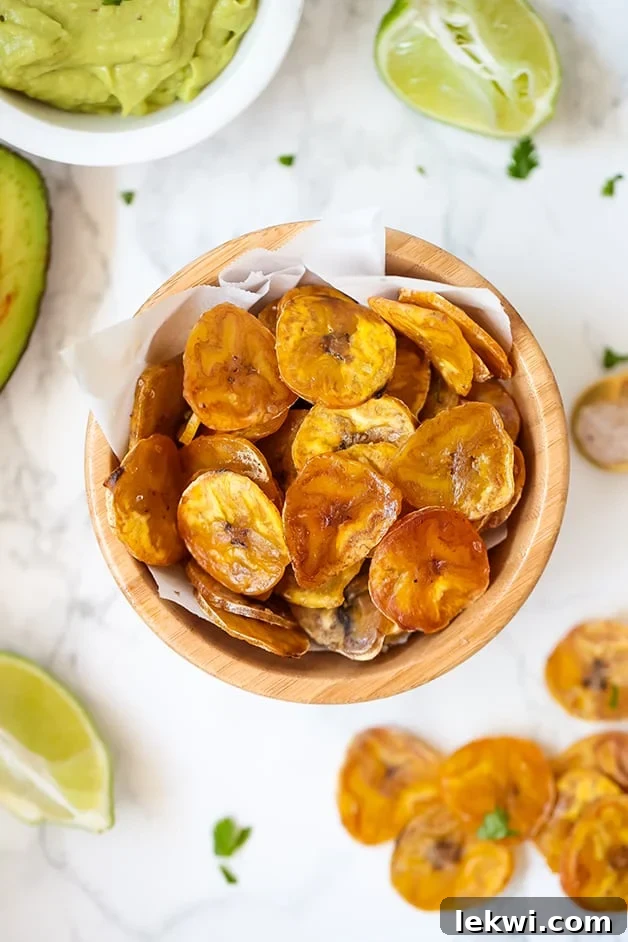
Before discovering the world of paleo eating, plantain chips were a complete mystery to me. I had never encountered them, nor did I fully grasp the immense culinary significance of plantains in Latin American culture. What an eye-opening and delicious revelation that was! These humble chips quickly became a beloved staple, offering a fantastic alternative to traditional potato chips. Many would even argue they are superior in taste and texture. While there’s certainly no shortage of excellent store-bought plantain chip brands available today, the satisfaction and benefits of making them from scratch are unparalleled. Homemade allows for complete control over the ingredients, ensuring a cleaner snack free from unwanted additives and unhealthy oils. It also makes portion management much easier, helping you stay on track with your health goals.
Unlock the Potential of Plantains: Your Guide to the Perfect Chip
For those unfamiliar with this versatile fruit, plantains can be thought of as a starchier, less sweet cousin to the banana. Though they share a similar appearance, their culinary applications are vastly different. Plantains behave more like a starchy root vegetable, which is precisely what makes them ideal for crafting crunchy, savory chips. The key to successful plantain chips lies in selecting the right stage of ripeness.
For this recipe, we specifically use **green plantains**. At this stage, they are firm, starchy, and possess a neutral flavor that crisps up beautifully when baked. As plantains ripen, their peels turn yellow and eventually black, indicating a significant increase in sweetness and a softer texture. While ripe plantains are wonderful for other dishes, like sweet fried plantains, they are not suitable for making savory chips as they will caramelize rather than crisp. You’ll typically find green plantains in the produce section of most large grocery stores, health food stores like Whole Foods or Sprouts, and especially in ethnic markets or Latin American grocery stores. Availability can vary by region, so a little exploration might be necessary to find your local source.
Mastering the Art of Baked Plantain Chips: A Step-by-Step Guide
Creating perfectly crispy, flavorful baked plantain chips at home is an achievable feat with just a few simple steps. Follow this detailed guide to transform humble green plantains into an irresistible snack:
- **Preheat and Prepare:** Begin by preheating your oven to 375°F (190°C). Line a large baking sheet with parchment paper. This crucial step prevents sticking and ensures easy cleanup, contributing to evenly baked chips.
- **Peel with Precision:** Green plantains can be a bit challenging to peel compared to ripe bananas. To make the process smoother, carefully cut off both ends of the plantain. Then, make a shallow, lengthwise slice through the peel along one side of the plantain, being careful not to cut too deeply into the flesh. Use your thumbs or a spoon to gently pry the peel back and remove it entirely. If the peel is stubborn, you can cut it into two or three segments first, then peel each segment.
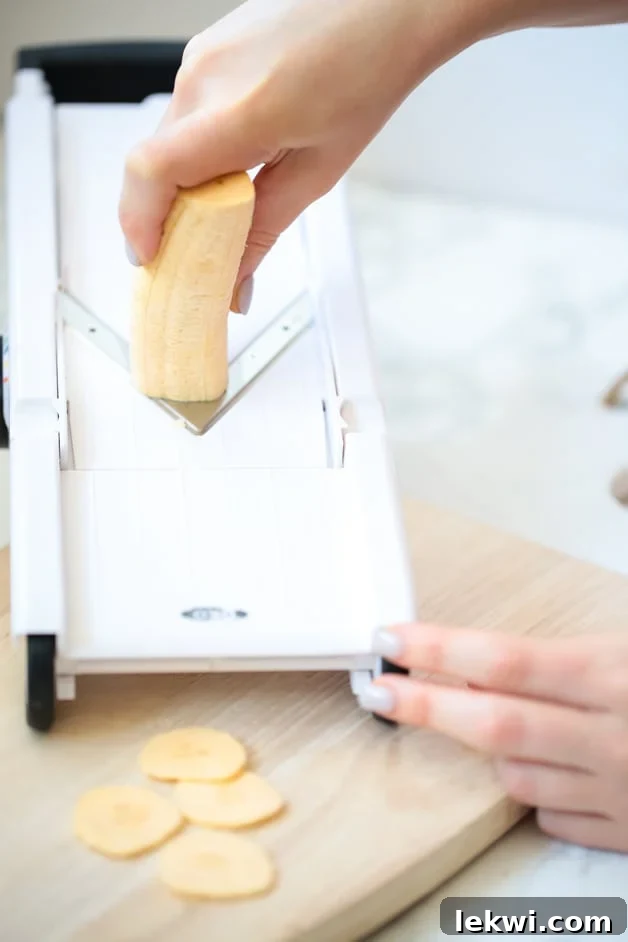
- **Slice for Success:** Achieving uniform slices is paramount for even baking and maximum crispiness. The ideal thickness is about 1/8 inch. A mandoline slicer is highly recommended for this task, as it ensures consistent thickness, which is difficult to achieve with a knife alone. If using a mandoline, always exercise extreme caution and consider using a cut-resistant glove or the safety guard to protect your fingers. If you don’t have a mandoline, a very sharp knife and a steady hand can work, but aim for the thinnest, most uniform slices possible.
- **Season and Arrange:** Place the thinly sliced plantains in a large bowl. Drizzle generously with avocado oil, ensuring each slice is lightly coated. Then, sprinkle with salt, garlic powder, and a squeeze of fresh lime juice. Toss gently to distribute the seasonings evenly. Arrange the seasoned plantain slices in a single layer on your prepared baking sheet. Overlapping slices will steam rather than crisp, so give them plenty of space. You may need to use two baking sheets or bake in batches.
- **Bake to Crispy Perfection:** Transfer the baking sheet to the preheated oven. Bake for 15-20 minutes, or until the chips are golden brown and wonderfully crispy. Halfway through the baking time, typically around the 8-10 minute mark, carefully flip each chip to ensure even browning and crispiness on both sides. Keep a close eye on them, as baking times can vary slightly depending on your oven and the thickness of your slices.
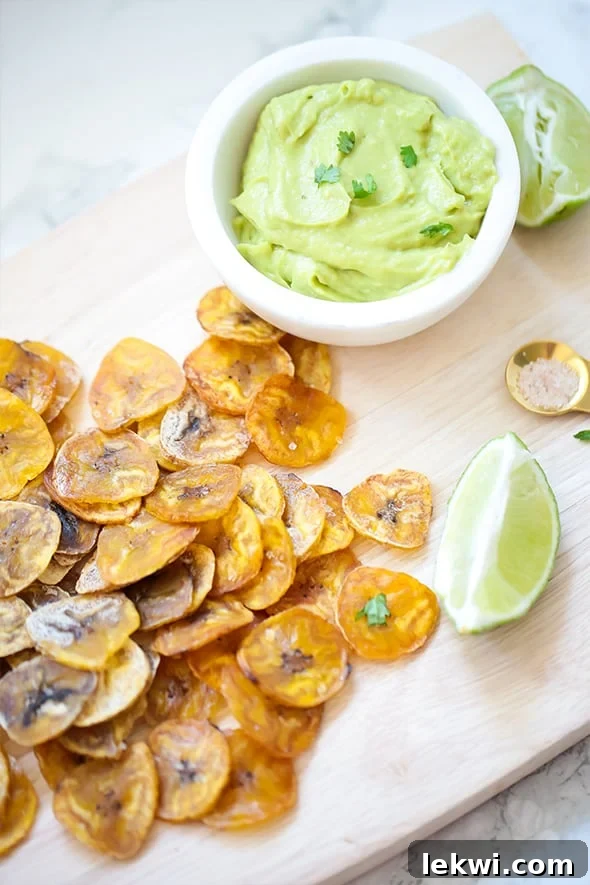
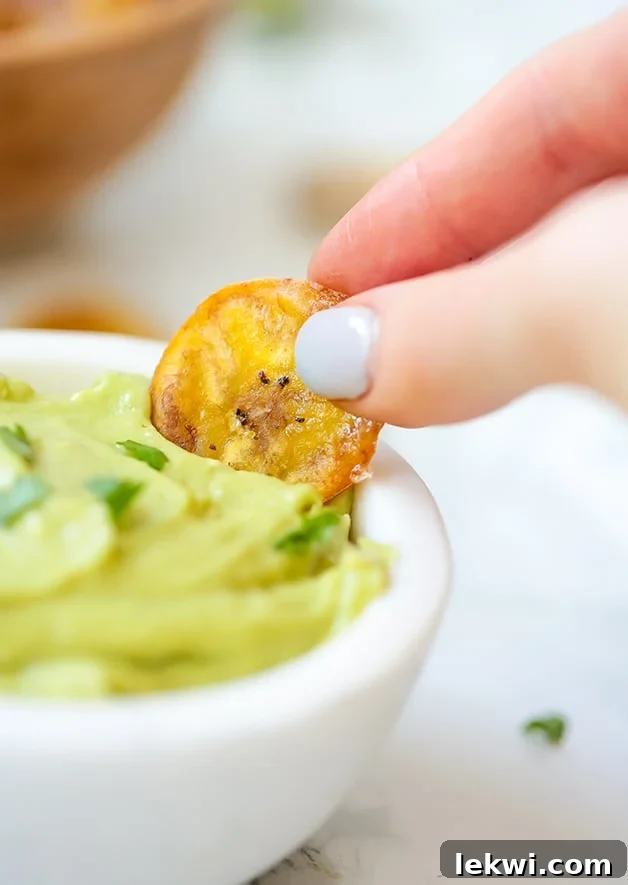
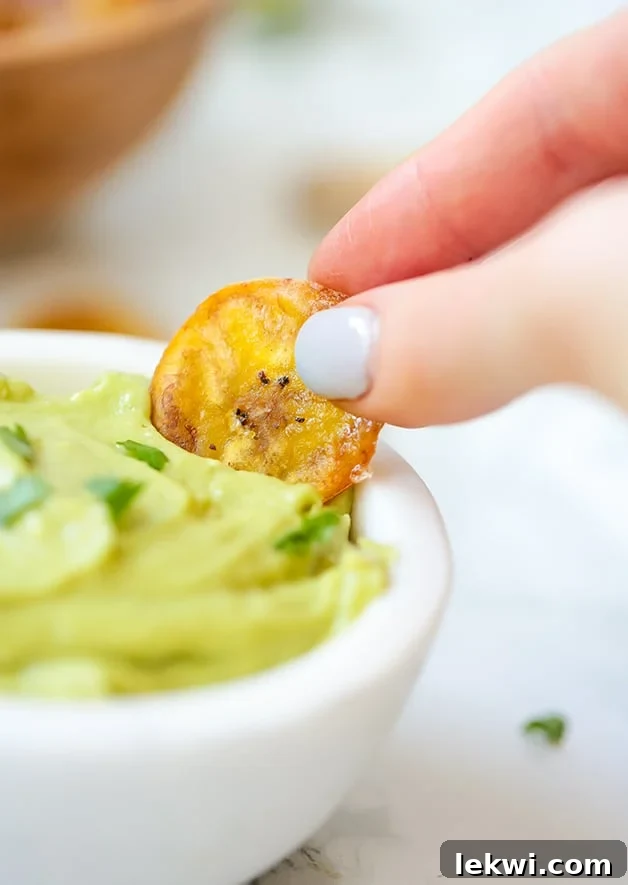
- **Cool and Serve:** Once baked, remove the chips from the oven and let them cool completely on the baking sheet. They will continue to crisp up as they cool. Serve these delightful homemade plantain chips warm or at room temperature. They are fantastic on their own, or paired with a vibrant salsa, a creamy cilantro avocado lime sauce, or a chunky guacamole.
The Essential Ingredients & Tools for Your Plantain Chip Adventure
Crafting these exceptional baked plantain chips requires a concise list of high-quality ingredients and a few key tools to ensure the best results. Each component plays a vital role in achieving that perfect crispy texture and balanced flavor.
Key Ingredients:
- Green Plantains: As discussed, green plantains are the star of this recipe. Their high starch content and firm texture are non-negotiable for achieving that desirable chip-like crunch. Look for plantains that are firm to the touch with vibrant green skin, free from any yellowing or black spots.
- Avocado Oil: This is our preferred fat for baking. Avocado oil boasts a very high smoke point, meaning it can withstand the oven’s heat without breaking down and producing off-flavors or unhealthy compounds. Its neutral flavor also allows the natural taste of the plantains and seasonings to shine through beautifully. Healthy fats are crucial for flavor and nutrient absorption, making avocado oil an excellent choice for a paleo and AIP-friendly snack.
- Salt: A fundamental seasoning that elevates all the other flavors. Use a good quality sea salt or Himalayan pink salt, adjusting the amount to your personal preference. Salt not only enhances taste but also aids in drawing out moisture, contributing to crispiness.
- Fresh Lime Juice: Just a touch of fresh lime juice makes a world of difference. It adds a bright, tangy counterpoint to the starchy plantains and salty seasoning, lifting the overall flavor profile and preventing the chips from tasting flat. It’s a simple addition that takes these chips to the next level.
- Garlic Powder: While optional, garlic powder adds a subtle savory depth that complements the plantains perfectly. It contributes to a more complex and satisfying flavor without being overpowering.
Recommended Tools:
- Mandoline Slicer: While a sharp knife is technically an option, a mandoline slicer is highly recommended for consistently thin, even slices (approximately 1/8 inch). This uniformity is critical for all chips to bake at the same rate and achieve an even crispiness. Trying to slice plantains evenly with a knife can be time-consuming and often results in varying thicknesses, leading to some chips burning while others remain soft. A mandoline, set to a low thickness, makes this process quick and ensures perfect results every time. Remember to use the safety guard or a cut-resistant glove when operating a mandoline to protect your hands. Plantains are generally easier and safer to slice with a mandoline compared to harder vegetables like potatoes.
- Large Baking Sheets: Essential for spreading the plantain slices in a single layer, preventing overcrowding, and allowing for optimal air circulation during baking.
- Parchment Paper: Lining your baking sheets with parchment paper prevents sticking, ensures easy removal of the chips, and simplifies cleanup.
- Large Mixing Bowl: For tossing the plantain slices with oil and seasonings.
Why Homemade Plantain Chips are a Game Changer
Opting for homemade baked plantain chips over their store-bought counterparts offers numerous advantages that extend beyond just taste. It’s a choice that empowers you with control over your diet and enhances your overall well-being.
Uncompromised Ingredient Control
One of the primary benefits of making plantain chips at home is the complete control you have over the ingredients. Many commercial plantain chips, while seemingly healthy, often contain unhealthy oils (like sunflower or canola oil), artificial flavors, or excessive amounts of sodium. By making your own, you can confidently choose high-quality fats like avocado oil, precisely measure your salt, and add natural seasonings like garlic powder and fresh lime juice, avoiding any unwelcome additives or preservatives. This makes them perfectly align with specific dietary needs such as Paleo, AIP, or Whole30.
Customizable Flavor Profiles
The beauty of homemade snacks lies in their adaptability. While this recipe provides a fantastic base, you’re free to experiment with a myriad of flavor combinations. Craving something spicy? Add a pinch of chili powder or cayenne pepper. Looking for an earthy note? A dash of cumin or smoked paprika would be delightful. A hint of onion powder can also complement the garlic powder beautifully. This level of customization is simply not possible with store-bought options, allowing you to tailor the chips exactly to your palate.
Superior Freshness and Taste
There’s an undeniable difference in taste and texture between freshly baked goods and their packaged equivalents. Homemade plantain chips emerge from the oven warm, fragrant, and with an unparalleled crispness that store-bought versions often lack. The vibrant flavor of fresh plantains, enhanced by simple seasonings, truly shines through, offering a more satisfying and authentic snacking experience.
Mindful Portion Control
When you prepare snacks at home, you inherently become more aware of what and how much you’re consuming. Instead of mindlessly finishing a large bag of chips, you’re more likely to portion out a sensible serving from your homemade batch. This awareness can be incredibly helpful for managing caloric intake and adhering to dietary goals, making healthy eating feel more natural and sustainable.
Cost-Effective Snacking
While the initial cost of a mandoline slicer might seem like an investment, in the long run, making your own plantain chips is often more economical than regularly purchasing specialty health snacks. Green plantains are generally affordable, and a few basic pantry staples are all you need. This makes healthy snacking more accessible and budget-friendly.
The Health Powerhouse: Why Plantain Chips are Good for You
Beyond their delicious taste and satisfying crunch, baked plantain chips offer a wealth of nutritional benefits, particularly for those following specific dietary protocols like Paleo and AIP.
Understanding Paleo and AIP
The **Paleo diet** (Paleolithic diet) is based on the premise of eating foods presumed to have been available to our Stone Age ancestors. It emphasizes whole, unprocessed foods like lean meats, fish, fruits, vegetables, nuts, and seeds, while excluding grains, legumes, dairy, refined sugar, and processed foods. Plantains, as an unprocessed fruit, fit perfectly into this framework.
The **Autoimmune Protocol (AIP)** is an elimination diet designed to help manage autoimmune conditions. It builds upon the Paleo framework by further restricting certain foods believed to trigger inflammation or immune responses, such as nightshades, eggs, nuts, and seeds (in some phases). Green plantains are considered AIP-compliant, making these chips a safe and enjoyable snack for individuals on this protocol.
Nutritional Profile of Plantains
Plantains are nutrient-dense and offer several health advantages:
- Complex Carbohydrates: Unlike simple sugars, the carbohydrates in green plantains are complex, providing sustained energy release without causing rapid spikes in blood sugar. This makes them an excellent choice for maintaining energy levels throughout the day.
- Rich in Fiber: Plantains are a good source of dietary fiber, which is crucial for digestive health. Fiber promotes regularity, aids in satiety (helping you feel fuller for longer), and contributes to a healthy gut microbiome. A robust gut is fundamental for overall health and immune function.
- Vitamins and Minerals: These versatile fruits are packed with essential micronutrients. They are particularly high in Vitamin C, an antioxidant vital for immune support and skin health, and Vitamin B6, which plays a role in metabolism and brain function. Plantains also provide significant amounts of potassium, an electrolyte important for heart health and blood pressure regulation, and magnesium, essential for muscle and nerve function, blood sugar control, and bone health.
- Healthy Fats from Avocado Oil: By using avocado oil, these chips incorporate monounsaturated fats, which are considered heart-healthy and can help improve cholesterol levels. Avocado oil also aids in the absorption of fat-soluble vitamins found in plantains.
By choosing baked rather than fried, you further reduce the fat content and avoid the potentially harmful compounds that can form during deep-frying, making these chips a genuinely healthy and nourishing snack option.
Serving Suggestions and Creative Dips
These homemade baked plantain chips are incredibly versatile and can be enjoyed in many ways. While fantastic on their own, pairing them with the right dip can elevate your snacking experience to gourmet levels.
Classic Dipping Companions:
- Guacamole: The creamy, rich texture and vibrant flavor of fresh guacamole provide a perfect contrast to the crispy, salty plantain chips. The healthy fats in avocado complement the plantains beautifully.
- Salsa: Whether you prefer a mild pico de gallo, a zesty salsa verde, or a fiery habanero salsa, the fresh, tangy notes of salsa make an excellent partner for plantain chips.
- Avocado Cilantro Lime Sauce: This specific sauce, often featured in paleo/AIP recipes like the one linked (Avocado Cilantro Lime Sauce), combines creamy avocado with bright cilantro and zesty lime, creating a refreshing and flavorful dip that is perfectly suited for these chips.
Creative Serving Ideas:
- As a Side Dish: Replace traditional potato chips or fries with baked plantain chips alongside your favorite burgers, sandwiches, or grilled meats.
- In Grain-Free Bowls: Crumble them over healthy bowls for an added crunch and burst of flavor. They work wonderfully with roasted vegetables, protein, and fresh herbs.
- Plantain “Nachos”: Use these chips as the base for a grain-free nacho experience. Top with seasoned ground meat, salsa, guacamole, and a dairy-free “cheese” sauce for a fun and satisfying meal, inspired by recipes like Plantain Nachos.
- With Soups and Stews: Enjoy them as a crunchy accompaniment to your favorite hearty soups or stews, adding texture and flavor.
Don’t be afraid to experiment with other AIP-friendly dips like a simple cashew cream sauce, a homemade basil pesto, or even a spicy cashew queso. The possibilities are endless when you have such a versatile and delicious base.
Troubleshooting Common Plantain Chip Challenges
Even with a straightforward recipe, small issues can sometimes arise. Here are solutions to common problems you might encounter while making baked plantain chips:
“My Chips Aren’t Crispy!”
- **Slice Thinner and More Uniformly:** This is the most common culprit. If your slices are too thick or uneven, they won’t crisp up properly. Re-evaluate your slicing technique. A mandoline is truly your best friend here.
- **Avoid Overcrowding:** Spreading the plantains in a single layer with space between each chip is vital. If they’re too close together, they’ll steam instead of roast, leading to soft chips. Use multiple baking sheets if necessary.
- **Bake Longer (and Flip!):** Sometimes, chips just need a little more time in the oven. Keep baking until they are visibly golden and feel firm. Don’t forget to flip them midway through for even cooking.
- **Check Oven Temperature:** Ensure your oven is accurately calibrated. An oven thermometer can help verify the actual temperature inside. Too low a temperature will result in soft chips.
“My Chips Are Burning!”
- **Monitor Closely:** Plantain chips can go from perfectly golden to burnt quickly, especially towards the end of the baking time. Stay near the oven and check them frequently, particularly after the first 10-12 minutes.
- **Rotate the Pan:** If your oven has hot spots, rotating the baking sheet halfway through baking can help prevent uneven burning.
- **Adjust Temperature (if needed):** If your chips are consistently burning before crisping, try reducing the oven temperature by 25°F (15°C) and extending the baking time slightly.
“The Flavor Isn’t Quite Right.”
- **Adjust Seasoning:** Taste a chip after it’s baked and adjust the salt or other seasonings for the next batch. Remember, flavors can concentrate during baking.
- **Fresh Lime is Key:** Don’t skip the fresh lime juice; it brightens the flavor considerably. Bottled lime juice won’t have the same impact.
- **Consider Additional Spices:** If you prefer more robust flavors, experiment with a pinch of smoked paprika, onion powder, or a dash of cayenne for a subtle kick.
Storing Your Homemade Plantain Chips
To keep your baked plantain chips fresh and crispy, proper storage is essential. Once they have cooled completely to room temperature (this is important to prevent condensation), transfer them to an airtight container. A glass jar with a tight-fitting lid or a resealable plastic bag works well. Store them at room temperature in a cool, dry place. They will typically retain their crispness for 3-5 days. If they lose some of their crunch over time, you can easily re-crisp them by spreading them on a baking sheet and toasting them in a preheated oven at 300°F (150°C) for about 5-10 minutes, or until desired crispiness is restored. Allow them to cool again before serving.
Beyond the Chip: More Paleo/AIP Delights
If you’re enjoying the journey of exploring healthy, delicious, and diet-friendly recipes, there are many more culinary adventures awaiting you. These chips are just a taste of what’s possible within the Paleo and AIP frameworks. Consider expanding your repertoire with other flavorful options that are equally wholesome and satisfying:
- Mexican Chicken Poppers
- Avocado Cilantro Lime Sauce (a perfect dip for these chips!)
- Plantain Nachos (a creative way to use plantains as a base for a hearty meal)
How To Make Baked Plantain Chips (Paleo, AIP)
Leave a Review
Pin Recipe
Ingredients
- 2 green plantains
- 2 tbsp avocado oil
- Salt to taste (1/2 tsp-1 tsp)
- 1 tsp garlic powder
- Juice of 1/2 lime
Instructions
- Preheat the oven to 375 F and line a baking sheet with parchment paper.
- Carefully remove the peels from the plantains by cutting off the ends, making a slice into the center of the plantain peel, and peeling it back.
- Using a mandolin slicer (or a sharp knife) carefully slice the plantains into 1/8″ slices.
- Lay the plantain slices onto the baking sheet and coat with avocado oil, salt, garlic powder, and lime juice.
- Bake in the oven for 15-20 minutes, or until crispy. Rotate once or twice to cook evenly.
- Serve with a salsa, cilantro avocado lime sauce, or guacamole.
Notes