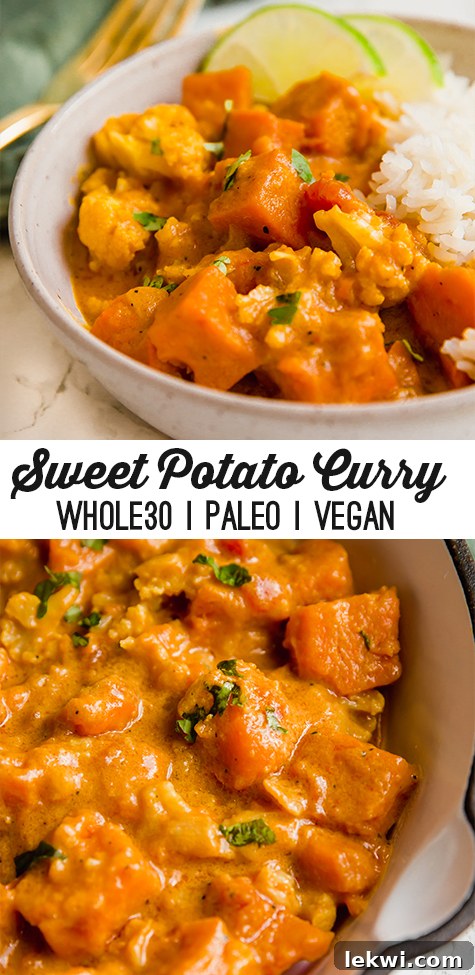
Welcome to a truly exceptional culinary experience! This sweet potato and cauliflower curry isn’t just a meal; it’s a vibrant celebration of flavor, texture, and wholesome goodness. Crafted to be incredibly versatile, this veggie-packed dish effortlessly caters to a range of dietary preferences, proudly standing as a delicious option for those following Paleo, Whole30, Vegan, and Vegetarian lifestyles. Its rich, aromatic sauce and tender vegetables create a comforting yet invigorating dish perfect for any day of the week, proving that healthy eating can be utterly delightful and satisfying.

The Ultimate Sweet Potato Cauliflower Curry: A Wholesome & Flavorful Vegan Delight
There’s an undeniable magic in a warm bowl of curry—a symphony of spices and textures that can transport you to a state of pure comfort. While many curries rely on meat, this particular recipe shines a spotlight on the incredible versatility and hearty nature of vegetables. Our Sweet Potato Cauliflower Curry offers a deeply flavorful and nourishing experience, proving that plant-based meals can be just as, if not more, satisfying than their meat-centric counterparts. It’s a perfect illustration of how simple, fresh ingredients can come together to create something truly extraordinary. Whether you’re new to plant-based cooking or a seasoned enthusiast, this curry promises a delightful journey for your taste buds, enveloping them in a rich, creamy, and subtly sweet sauce that will leave you wanting more.
Why This Sweet Potato Cauliflower Curry Will Become Your Go-To Recipe
This curry isn’t just another meal; it’s a testament to the power of wholesome ingredients and thoughtful preparation. It offers a multitude of benefits that make it a standout choice for anyone looking for a nutritious, flavorful, and adaptable dish.
Unbeatable Flavor Profile
The beauty of this curry lies in its meticulously balanced flavor profile. The natural sweetness of the sweet potatoes beautifully complements the earthy notes of the cauliflower, all harmonized by a vibrant blend of aromatic spices. Ginger and onion form a fragrant base, while turmeric and red curry paste infuse the dish with warmth and depth. The creamy richness of full-fat coconut milk brings everything together, creating a luxurious sauce that clings to every tender piece of vegetable. A final garnish of fresh cilantro and a squeeze of lime brighten the entire composition, adding a refreshing zest that elevates each spoonful. It’s a complex dance of sweet, savory, and spicy notes that will awaken your palate.
Packed with Nutrients
Beyond its incredible taste, this curry is a nutritional powerhouse. Sweet potatoes are a fantastic source of fiber, vitamins A and C, and antioxidants, contributing to overall well-being and sustained energy. Cauliflower adds an abundance of vitamin C, vitamin K, and various B vitamins, along with a satisfying texture. Ginger and turmeric are renowned for their anti-inflammatory properties and numerous health benefits. Combined with healthy fats from avocado oil and coconut milk, this meal provides a holistic boost to your health, supporting everything from digestion to immunity. It’s comfort food that truly nourishes your body from the inside out.
Perfect for Every Dietary Lifestyle
One of the most appealing aspects of this Sweet Potato Cauliflower Curry is its impressive adaptability to various dietary needs. This recipe is naturally:
- Paleo-friendly: Free from grains, legumes, dairy, and refined sugars, aligning perfectly with the Paleo diet’s emphasis on whole, unprocessed foods.
- Whole30 compliant: Adheres to the strict Whole30 guidelines, making it a fantastic option for a reset or clean eating period, free from added sugars, alcohol, grains, and legumes.
- Vegan & Vegetarian friendly: Completely plant-based, making it a delicious and fulfilling choice for those avoiding animal products. It proves that plant-based meals can be incredibly rich and satisfying.
- AIP (Autoimmune Protocol) adaptable: With simple modifications (detailed below), this curry can be made suitable for the Autoimmune Protocol, making it accessible to individuals with specific sensitivities. This flexibility ensures that virtually everyone can enjoy a hearty bowl of this delightful curry.
Essential Ingredients for a Masterpiece Curry
The success of any great curry lies in the quality and combination of its ingredients. This recipe uses readily available components that, when combined, create a harmonious and deeply satisfying flavor. Let’s explore what makes each element indispensable:
- Onion & Ginger: These form the aromatic foundation of the curry. Sautéing the diced yellow onion until translucent releases its sweet notes, while grated fresh ginger adds a warm, pungent zing and numerous digestive benefits. They create a fragrant base that sets the stage for the other flavors.
- Sweet Potato: The star of the show! Cubed sweet potato brings natural sweetness and a creamy texture as it cooks down in the sauce. It’s rich in beta-carotene, fiber, and essential vitamins, making the curry hearty and nutritious.
- Cauliflower: Adding florets of cauliflower contributes a subtle earthiness and a wonderful texture contrast to the soft sweet potato. Cauliflower is also a low-carb, nutrient-dense vegetable that absorbs the curry flavors beautifully.
- Coconut Milk: Full-fat canned coconut milk is crucial for achieving the rich, creamy consistency and authentic taste of this curry. It provides a luxurious mouthfeel and balances the spices perfectly. Look for varieties with minimal additives for the best results.
- Canned Diced Tomato: Diced tomatoes introduce a bright, slightly tangy acidity that cuts through the richness of the coconut milk and adds depth to the sauce. (Note: If following an AIP diet, this ingredient must be omitted and substituted.)
- Turmeric & Curry Paste: These are the heart and soul of the curry’s flavor and color. Turmeric offers its distinctive earthy flavor and vibrant golden hue, along with powerful anti-inflammatory properties. Red curry paste provides a complex blend of spices and a mild heat. (Note: For AIP, curry paste, which often contains nightshades, should be replaced with additional turmeric and ginger.)
- Fresh Cilantro and Lime: These finishing touches are non-negotiable! Freshly chopped cilantro adds a burst of herbaceous freshness, while a squeeze of lime juice brightens the entire dish, enhancing all the flavors and providing a tangy counterpoint to the richness.
- Avocado Oil: Used for sautéing, avocado oil is a stable, neutral-tasting oil with a high smoke point, making it ideal for creating the initial aromatic base.
- Sea Salt & Black Pepper: Essential for seasoning, these bring out and enhance all the individual flavors within the curry. (Note: Black pepper should be omitted for strict AIP.)
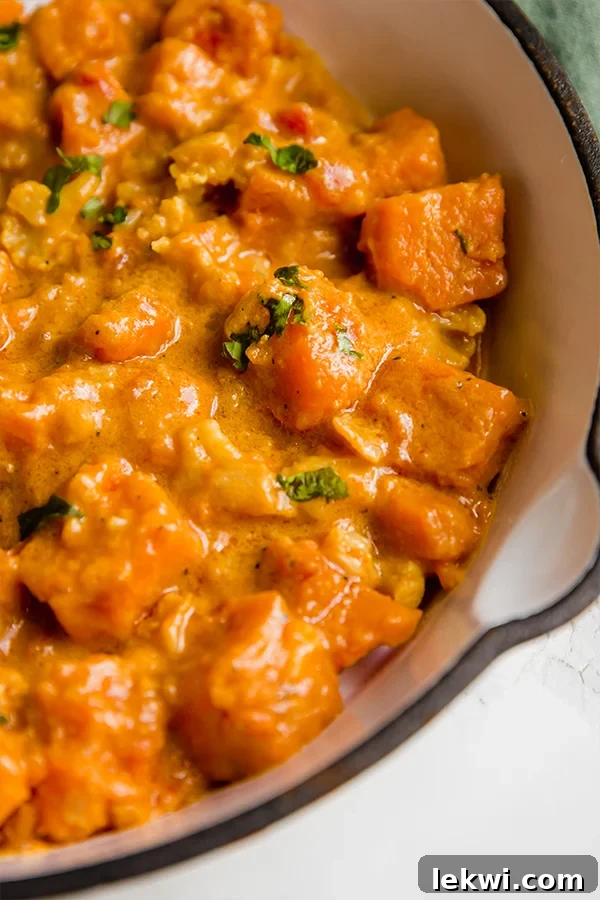
Crafting Your Perfect Sweet Potato Cauliflower Curry: A Step-by-Step Guide
Making this flavorful curry is surprisingly straightforward. Follow these steps to create a truly delicious and satisfying meal in your own kitchen:
Preparation is Key
Before you begin cooking, ensure all your ingredients are prepped and ready. Dice your yellow onion, grate the ginger, cube the sweet potato, and separate the cauliflower into florets. Having everything measured and chopped beforehand will make the cooking process smooth and enjoyable.
- Sauté the Aromatics: In a large, deep pan or Dutch oven, heat two tablespoons of avocado oil over medium heat. Once shimmering, add the diced onion and grated ginger. Sauté for 3-4 minutes, stirring occasionally, until the onion becomes soft and translucent and the aromatics are wonderfully fragrant. This step is crucial for building the foundational flavor of your curry.
- Add the Vegetables: Introduce the cubed sweet potato and cauliflower florets to the pan. Sauté for an additional 5 minutes, stirring frequently, to lightly soften the vegetables and allow them to absorb some of the aromatic flavors. This pre-sauté helps prevent them from becoming mushy later.
- Incorporate the Liquid & Spices: Pour in the full-fat canned coconut milk and diced tomato (or nomato sauce for AIP). Add the turmeric, red curry paste (or additional turmeric and ginger for AIP), sea salt, and black pepper (omit pepper for AIP). Stir everything thoroughly to combine, ensuring all the vegetables are well coated in the vibrant sauce and spices.
- Initial Simmer: Bring the mixture to a gentle simmer over medium heat. Once simmering, reduce the heat to low, cover the pan with a lid, and let it cook for 10 minutes. This initial simmering period allows the sweet potatoes and cauliflower to begin softening and the flavors to meld beautifully.
- Uncovered Simmer & Reduce: After 10 minutes, remove the lid from the pan. Increase the heat slightly to a low-medium simmer and continue cooking for another 5 minutes, or until the liquid has slightly reduced and the vegetables are fork-tender. Keep an eye on the consistency; you want a rich, thickened sauce, not watery.
- Serve & Garnish: Once the curry has reached your desired consistency and the vegetables are perfectly cooked, remove the pan from the heat. Ladle generous portions into bowls and top with a sprinkle of fresh chopped cilantro and a few lime wedges. The fresh herbs and citrus add a burst of flavor that truly completes the dish.
Tips for the Best Sweet Potato Cauliflower Curry
Achieving curry perfection is easier than you think with a few helpful tips:
- Don’t Overcrowd the Pan: When sautéing the onion, ginger, and vegetables, ensure your pan is large enough. Overcrowding can steam the vegetables instead of searing them, leading to a less desirable texture and less flavor development.
- Adjust Spice Level: Red curry paste varies in heat. If you prefer a milder curry, start with less and add more to taste. For an extra kick, a pinch of cayenne pepper or fresh chili can be incorporated.
- Don’t Overcook Vegetables: Sweet potatoes and cauliflower should be tender but still retain a slight firmness. Overcooking can turn them mushy, diminishing the overall texture of the curry. Keep an eye on them during the simmering stages.
- Taste and Adjust Seasoning: Always taste your curry before serving. Add more salt, a little more lime juice, or an extra pinch of turmeric if needed. Flavors can develop and change as the curry simmers.
- Quality of Coconut Milk Matters: Opt for full-fat, good-quality canned coconut milk for the creamiest and most flavorful sauce. Shaking the can well before opening helps integrate the cream.
- Fresh Herbs are Key: While optional, fresh cilantro and lime truly elevate the dish, adding a crucial layer of brightness and freshness that dried herbs cannot replicate.
Dietary Adaptations and Variations
This curry is incredibly forgiving and easily adaptable to suit various tastes and dietary requirements.
Making it AIP (Autoimmune Protocol) Friendly
The Autoimmune Protocol is a stricter dietary approach that eliminates potential inflammatory foods, including nightshades. To make this curry fully AIP compliant:
- Omit Diced Tomato: Replace canned diced tomatoes with an equal amount of “nomato” sauce, a nightshade-free tomato alternative typically made from carrots, beets, and other vegetables. Alternatively, you can simply increase the amount of sweet potato or add some pureed carrots for sweetness and body.
- Omit Red Curry Paste: Most commercial red curry pastes contain nightshades (like chilies) and other non-AIP ingredients. Instead, boost the flavor profile by increasing the amount of fresh grated ginger and turmeric. You can also experiment with AIP-compliant spices like ground ginger, cinnamon, or cardamom for depth.
- Omit Black Pepper: Black pepper is also a nightshade. Simply leave it out of the recipe. You can use a pinch of sea salt for seasoning.
While these substitutions will alter the traditional curry flavor, the result will still be a delicious, comforting, and AIP-friendly meal that is packed with nutrients.
Adding Protein
While this curry is wonderfully hearty on its own, you can easily boost its protein content:
- Chicken: Cook diced chicken breast or thighs separately and stir into the curry during the last 5 minutes of simmering. Alternatively, you can sauté the chicken with the onions and ginger before adding the other vegetables. Ensure extra sauce is available if incorporating a lot of protein.
- Chickpeas: For an extra plant-based protein boost, add a can of drained and rinsed chickpeas along with the coconut milk and spices. They will warm through and absorb the delicious curry flavors. (Note: Chickpeas are not Paleo/Whole30 compliant.)
- Lentils: Red or green lentils can be added for increased fiber and protein. Cook them separately or add them uncooked with extra liquid, allowing them to simmer and soften in the curry. (Note: Lentils are not Paleo/Whole30 compliant.)
- Tofu or Tempeh: Cubed and pan-fried tofu or tempeh can be gently folded into the curry at the end, providing a satisfying texture and protein.
Other Vegetable Additions
Feel free to experiment with other vegetables based on what you have on hand or what’s in season:
- Spinach or Kale: Wilt in a generous handful of fresh spinach or kale during the last few minutes of simmering for extra greens.
- Bell Peppers: Sliced bell peppers (any color) add sweetness, crunch, and extra vitamins. Add them with the sweet potato and cauliflower. (Note: Bell peppers are nightshades, so omit for AIP.)
- Zucchini or Green Beans: Cut into bite-sized pieces, these vegetables can be added during the last 10 minutes of simmering.
Serving Suggestions: What to Pair with Your Curry
This Sweet Potato Cauliflower Curry is incredibly versatile and pairs wonderfully with a variety of sides, enhancing the overall dining experience:
- Basmati Rice: The classic pairing! Fluffy basmati rice is perfect for soaking up every drop of the rich, aromatic curry sauce, creating a deeply satisfying meal.
- Cauliflower Rice: For a low-carb, grain-free, Paleo, Whole30, or AIP-friendly option, serve this curry over a bed of steamed or sautéed cauliflower rice. It keeps the meal light yet fulfilling.
- Quinoa: A protein-rich and gluten-free grain, quinoa offers a slightly nutty flavor and a great textural contrast. It’s a nutritious alternative to rice.
- Chickpeas or Lentils: If you’re looking to boost the protein and fiber content further (and are not following strict Paleo/Whole30), a side of simply prepared chickpeas or lentils can be a fantastic addition.
- Fresh Naan Bread or Gluten-Free Flatbread: Perfect for scooping up the creamy curry, a warm piece of naan (or a gluten-free equivalent) adds another layer of comfort and enjoyment.
- Simple Green Salad: A light, refreshing green salad dressed with a vinaigrette can provide a crisp contrast to the rich curry.

Storage and Meal Prep Tips
This curry is an excellent candidate for meal prepping, as its flavors often deepen and improve overnight.
- Refrigeration: Store leftover curry in an airtight container in the refrigerator for up to 3-4 days.
- Freezing: This curry freezes beautifully. Allow it to cool completely, then transfer it to freezer-safe containers or bags. It can be frozen for up to 2-3 months. Thaw overnight in the refrigerator before reheating.
- Reheating: Gently reheat the curry on the stovetop over medium-low heat, stirring occasionally, until warmed through. If it seems too thick, add a splash of water or vegetable broth to reach your desired consistency. Microwaving is also an option, stirring midway through.
Frequently Asked Questions (FAQ) About Sweet Potato Cauliflower Curry
Is this curry spicy?
The level of spiciness depends largely on the red curry paste you use. Most varieties offer a mild to medium heat. If you prefer it milder, use less curry paste. For more heat, you can add a pinch of cayenne pepper or a chopped fresh chili along with the ginger and onion.
Can I make this curry ahead of time?
Absolutely! This curry often tastes even better the next day as the flavors have more time to meld and deepen. It’s a fantastic option for meal prepping throughout the week.
What kind of sweet potato should I use?
Any variety of sweet potato will work well in this recipe. Orange-fleshed sweet potatoes (like Beauregard or Jewel) are most common and will provide a vibrant color and natural sweetness. Purple sweet potatoes could also be used for a unique visual twist.
Can I use frozen vegetables?
Yes, you can use frozen sweet potato and cauliflower florets. There’s no need to thaw them beforehand; simply add them to the pan as directed. Keep in mind that frozen vegetables might release more water, so you might need to simmer the curry a bit longer uncovered to achieve the desired consistency.
What if my curry is too thick or too thin?
If your curry is too thick, stir in a little water or vegetable broth until it reaches your preferred consistency. If it’s too thin, let it simmer uncovered for a few extra minutes, allowing more liquid to evaporate. A cornstarch slurry (for non-Paleo/Whole30) or arrowroot powder slurry (for Paleo/Whole30) can also be used as a thickening agent.
We hope this comprehensive guide inspires you to create your own unforgettable Sweet Potato Cauliflower Curry. It’s a dish that truly nourishes the body and soul, bringing vibrant flavors and healthy ingredients together in a comforting embrace. Enjoy the process of cooking and the delight of sharing this wonderful meal!
Discover More Wholesome Recipes You’ll Love…
- Turmeric Chicken Curry
- Mango Lassi
- Paleo Slow Cooker Indian Butter Chicken
- Cauliflower Pumpkin Risotto
Recipe Card: Sweet Potato Cauliflower Curry

Sweet Potato Cauliflower Curry
This sweet potato cauliflower curry is a flavorful veggie-packed meal. It’s paleo, whole30, vegan, and vegetarian friendly!
Yield: 4 servings
Prep Time: 10 mins
Cook Time: 25 mins
Author: Michelle
Actions: Print Recipe | Leave a Review | Pin Recipe
Ingredients
- 2 tbsp avocado oil
- ½ yellow onion, diced
- 1 tbsp ginger, grated
- 3 cups sweet potato, cubed
- 2 ½ cups cauliflower florets
- 2 ⅔ cups coconut milk, canned & full fat
- ½ cup diced tomato, omit for AIP, see notes
- 1 tsp turmeric
- 2 tsp red curry paste, omit for AIP, see notes
- 1 tsp sea salt
- ¼ tsp black pepper, omit for AIP
- 1 lime, sliced
- 1 tbsp cilantro, chopped
Instructions
- Using a large, deep pan, heat the avocado oil over medium heat. Add the onion and ginger and saute for 3-4 minutes or until the onion is slightly translucent.
- Add the sweet potato and cauliflower and saute for about 5 minutes to lightly soften.
- Pour in the coconut milk, diced tomato, turmeric, curry, salt and pepper, and stir to combine and coat the vegetables.
- Bring to a low simmer and cover. Add a lid to the pan and simmer for 10 minutes.
- Remove the lid from the pan and allow to simmer for another 5 minutes.
- Once the liquid is reduced and the vegetables are soft, remove from the heat.
- Serve topped with cilantro and lime wedges.
Notes
For AIP, use nomato sauce and extra turmeric and ginger to taste in place of the tomato and curry powder. It will change the flavor of traditional curry, but it’s still a delicious meal!
All nutritional information is an estimation and will vary. Estimations do not include optional ingredients.
Nutrition Information
Serving: 1 serving, Calories: 477kcal, Carbohydrates: 31.5g, Protein: 6.4g, Fat: 39.5g, Fiber: 5.1g
All nutrition facts are estimated and will vary.
Did you Make this Recipe?
Tag @unboundwellness on Instagram and hashtag #unboundwellness!