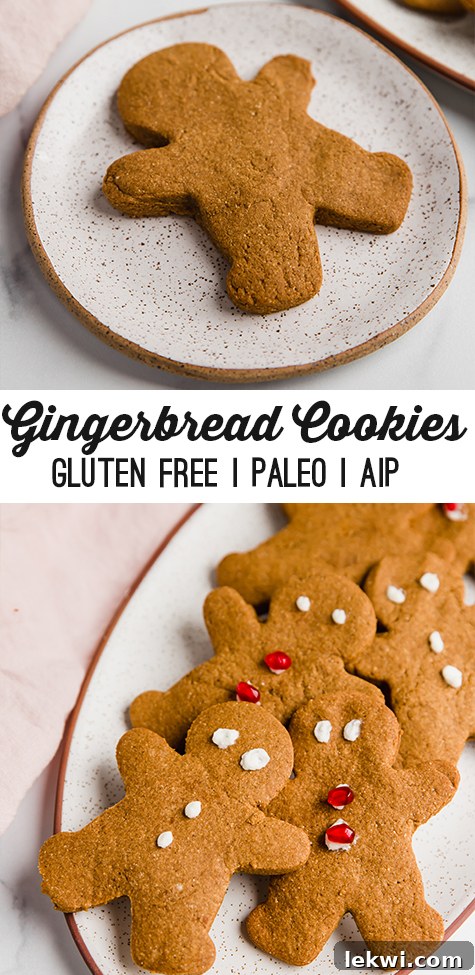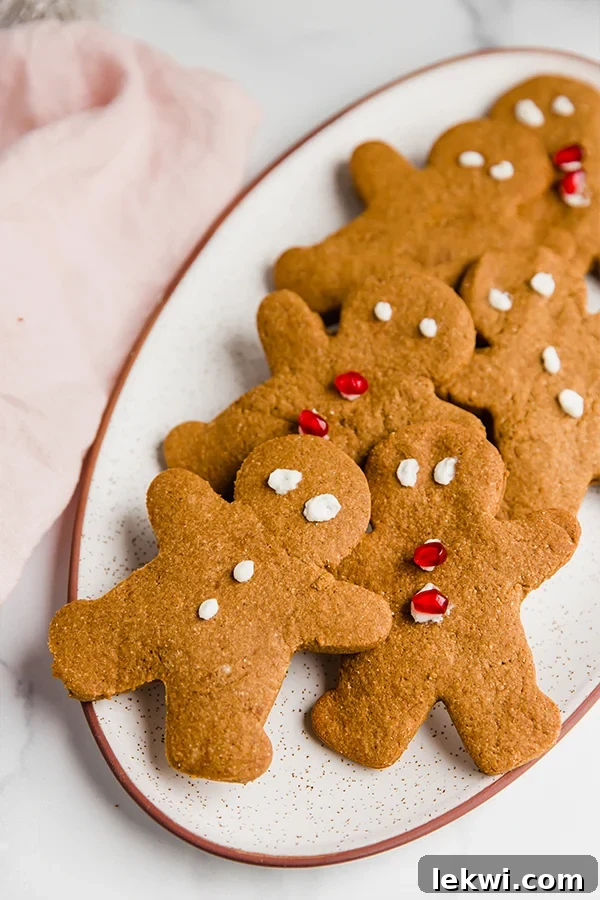
The holiday season is synonymous with warmth, joy, and the irresistible aroma of freshly baked goods. Among these festive delights, gingerbread cookies hold a special place, evoking nostalgic memories and spreading cheer. However, for those navigating dietary restrictions like the Autoimmune Protocol (AIP) or a Paleo lifestyle, enjoying these traditional treats can often feel like an impossible dream. This is where our incredible AIP Gingerbread Cookies come in – a game-changer for your holiday baking! These delightful cookies offer the perfect alternative, ensuring everyone can partake in the joy of gingerbread without compromising their health goals. They are meticulously crafted to be paleo, AIP compliant, completely gluten-free, and made entirely without refined sugar, proving that wholesome ingredients can deliver extraordinary flavor and texture.
Delicious AIP Gingerbread Cookies: A Holiday Must-Have
For many, the holidays simply aren’t complete without the spicy, sweet, and comforting taste of gingerbread cookies. But if you’re on a strict dietary protocol like AIP or follow a Paleo diet, finding a recipe that truly replicates that classic gingerbread experience can be a significant challenge. The quest for cookies that are free from gluten, dairy, grains, and eggs, yet still boast the signature flavor, perfect texture, and charming look of traditional gingerbread, often feels daunting. Fortunately, with this carefully developed recipe, that quest ends here!
These AIP Gingerbread Cookies are not just “good for being AIP” – they genuinely taste like the real deal, ready to take their rightful place on your holiday cookie platter. Each bite offers a rich, deep gingery flavor that is both wonderfully light and satisfyingly crisp. You’ll find yourself reaching for another without a second thought, marveling at how a cookie so clean can be so utterly delicious. This isn’t just a recipe; it’s an invitation to rediscover the magic of holiday baking, adapted for a healthier lifestyle.
In fact, this beloved recipe is a special preview from my comprehensive print cookbook, The Autoimmune Protocol Comfort Food Cookbook! This book is brimming with nourishing and delicious recipes just like this one, designed to bring comfort and joy back to your kitchen, even while adhering to the Autoimmune Protocol. It makes an ideal holiday gift for anyone embracing a healthier lifestyle, whether it’s a loved one or a well-deserved treat for yourself. Click here to explore the cookbook and grab your copy!

Understanding the Autoimmune Protocol (AIP) and Why These Cookies Fit
The Autoimmune Protocol (AIP) is a dietary approach focused on reducing inflammation and supporting healing in individuals with autoimmune conditions. It eliminates common dietary triggers such as grains, legumes, dairy, eggs, nightshades, nuts, seeds, and refined sugars. While this might sound restrictive, it encourages a rich and varied intake of nutrient-dense foods like fruits, vegetables, quality meats, and healthy fats. Creating delicious baked goods that adhere to AIP guidelines can be challenging, but this gingerbread cookie recipe proves it’s entirely possible to enjoy festive treats without deviating from your healing journey. By using compliant flours, natural sweeteners, and specific binding agents, we’ve crafted a cookie that is not only safe for AIP but also genuinely enjoyable for everyone.
Essential Ingredients for Your AIP Gingerbread Cookies
Crafting the perfect AIP gingerbread cookie requires a thoughtful selection of ingredients that deliver on both flavor and compliance. Here’s a closer look at the key components that make these cookies truly special:
- Tapioca Starch & Tigernut Flour: These two flours form the foundation of our gluten-free, grain-free, and AIP-compliant flour blend. Tapioca starch provides a chewy texture and helps bind the dough, while tigernut flour, derived from a small tuber, adds a subtle sweetness and a wonderfully soft crumb. This combination is crucial for achieving a texture reminiscent of traditional gingerbread. While I haven’t experimented with other flours extensively for this specific recipe, arrowroot starch is a common AIP-friendly alternative to tapioca starch and should likely work if you need to substitute, though it might slightly alter the final texture.
- Gelatin: A vital ingredient in this recipe, gelatin acts as a powerful binder and helps create the desired crisp-yet-tender texture without the use of eggs. It provides structure and stability to the cookies. It’s important to use high-quality gelatin powder, such as Vital Proteins gelatin. Please note that collagen powder, while also derived from animal protein, has different gelling properties and will not function as a direct substitute in this recipe.
- Palm Shortening: This is our primary fat source, chosen for its solid consistency at room temperature and neutral flavor, which allows the gingerbread spices to shine. Palm shortening is an excellent alternative to butter or other solid fats not permitted on AIP, contributing to a rich and tender cookie. We’ll address potential substitutions later, but for best results, palm shortening is highly recommended.
- Maple Syrup & Blackstrap Molasses: These natural sweeteners work in harmony to create the signature flavor profile of gingerbread. Maple syrup provides a gentle sweetness, while blackstrap molasses is absolutely essential for the deep, robust, and slightly bitter notes that give gingerbread its characteristic richness and color. Do not substitute blackstrap molasses with extra maple syrup if you desire an authentic gingerbread taste.
- Ground Cinnamon & Ground Ginger: These warming spices are the heart and soul of gingerbread. High-quality, fresh spices are key to achieving a vibrant and aromatic cookie. You can adjust the quantities slightly to suit your preference for more or less spice.
- Baking Soda: A leavening agent that helps the cookies rise slightly and contributes to their light texture.
- Vanilla Extract: While traditionally made with alcohol, AIP-compliant alcohol-free vanilla extracts are available or you can omit if preferred.
How to Craft Your Perfect AIP Gingerbread Cookies
Making these AIP gingerbread cookies is a straightforward and enjoyable process. Follow these detailed steps to create a batch of festive treats that everyone will adore.
- Prepare Your Workspace: Begin by preheating your oven to 350°F (175°C). Line a large baking sheet with a clean piece of parchment paper and lightly grease it. This prevents sticking and makes cleanup a breeze.
- Combine Dry Ingredients: In a spacious mixing bowl, thoroughly combine the tapioca starch, tigernut flour, gelatin, baking soda, ground ginger, and ground cinnamon. Whisk them together to ensure an even distribution of all ingredients, preventing lumps and ensuring consistent flavor throughout the dough.
- Prepare Wet Ingredients & Form Dough: In a separate, medium-sized bowl, cream together the palm shortening, maple syrup, and blackstrap molasses until smooth and well combined. This creamy base will be infused with the rich, deep flavors that define gingerbread. Pour this wet mixture into the bowl of dry ingredients. Add the vanilla extract and stir well, using a spatula or your hands, until all ingredients are fully blended and form a cohesive dough. The dough should be firm enough to handle but still pliable. Transfer the dough onto a clean piece of parchment paper.
- Roll and Cut Cookies: Now comes the fun part! Take about half a cup of the prepared dough and place it on another piece of parchment paper or a lightly floured surface (using extra tapioca starch to prevent sticking). Using a rolling pin, flatten the dough evenly to approximately ¼ inch thick. This thickness is ideal for achieving cookies that are crisp on the edges and slightly chewy in the center. Use your favorite gingerbread cookie cutter (or any other cookie cutter you prefer!) to cut out shapes. Carefully pull away the excess dough from around the cut shapes with your fingers. Gather any excess dough, combine it with the remaining unrolled dough, and set it aside to be re-rolled. Gently transfer the formed cookies onto your prepared baking sheet, ensuring they are evenly spaced to allow for proper air circulation during baking. Repeat this process until all the dough is used. You should yield around 6 cookies, depending on the size of your cutter.
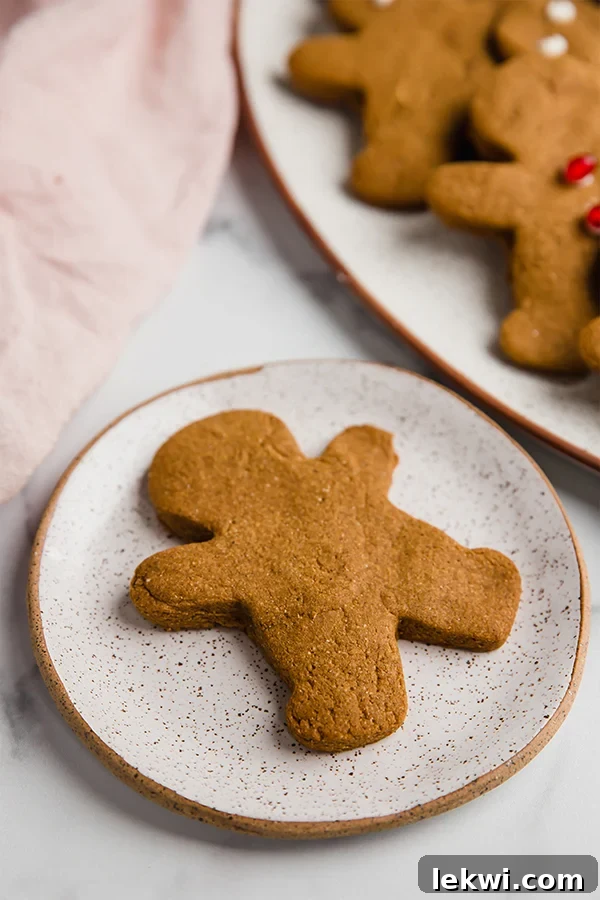
- Bake to Perfection: Place the baking sheet into your preheated oven and bake for approximately 12 minutes. Keep a close eye on them; the cookies are done when they turn a light golden brown around the edges. Baking times can vary slightly depending on your oven, so monitor closely. Once baked, carefully remove the baking sheet from the oven and transfer the hot cookies to a wire cooling rack. Allow them to cool completely before attempting to decorate them. This step is crucial, as warm cookies will cause frosting to melt and decorations to slide.
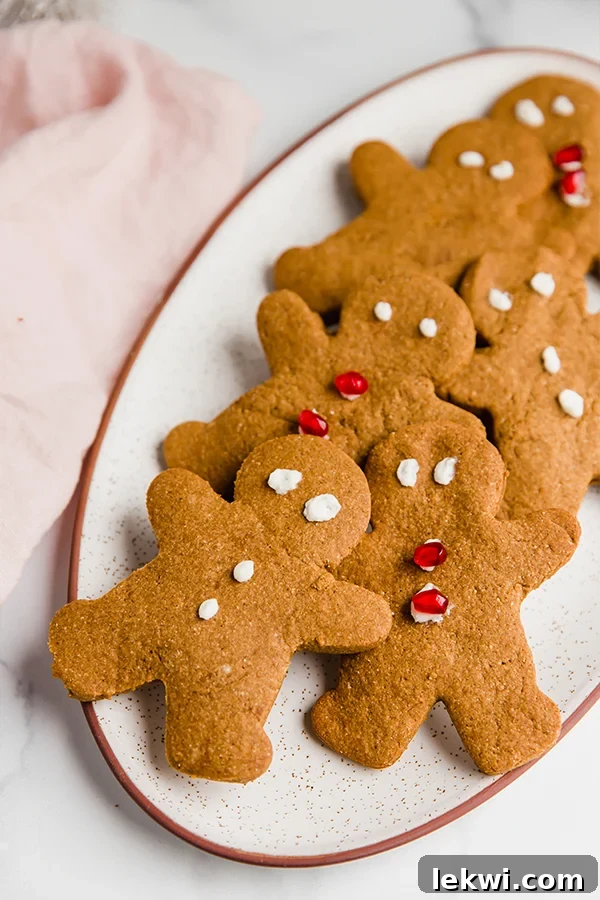
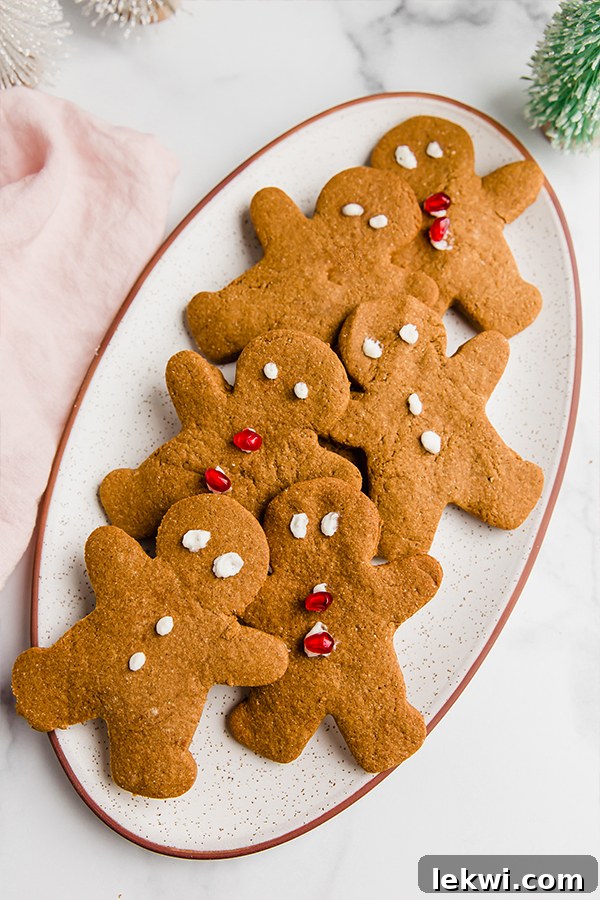
- Decorate Your Masterpieces: Once the cookies are entirely cool, it’s time to bring them to life with frosting and decorations! For the frosting, combine the ¼ cup of palm shortening and 1 tablespoon of light-colored honey in a small bowl. Mix until smooth and creamy. Transfer this frosting to a piping bag (or a ziploc bag with a small corner snipped off). Pipe eyes, mouths, buttons, and other fun features onto your gingerbread people. For an extra festive touch, use vibrant pomegranate seeds as buttons – their bright color and slight tartness provide a beautiful contrast. Get creative and have fun with it!
Frequently Asked Questions About AIP Gingerbread Cookies
Baking for dietary restrictions often brings up specific questions. Here are some common queries about this AIP gingerbread cookie recipe:
Can you make these cookies without palm shortening?
Palm shortening is specifically chosen for this recipe due to its stable, solid consistency at room temperature and its neutral flavor, both of which are critical for achieving the desired gingerbread texture and allowing the spices to truly shine. While I haven’t personally tested alternative fat sources for this specific recipe, substituting palm shortening can significantly alter the cookie’s final texture and consistency. For example, coconut oil, which is also AIP-compliant, melts at a lower temperature and might result in a more crumbly or harder cookie once cooled. If you choose to experiment with an alternative fat like refined coconut oil (which has a more neutral flavor than unrefined), be prepared for potential adjustments in flour quantities or dough handling to achieve a similar consistency. I’d love to hear about your results if you try it!
Can you leave out the blackstrap molasses?
The short answer is: I strongly advise against it if you’re aiming for authentic gingerbread flavor! Blackstrap molasses is more than just a sweetener in this recipe; it’s the secret ingredient that imparts that unmistakable deep, rich, slightly smoky, and complex flavor that you know and love in traditional gingerbread. It also contributes significantly to the characteristic dark brown color. Swapping it out for extra maple syrup, while still providing sweetness, will result in a cookie that lacks the signature depth and warmth of true gingerbread. For legitimate, flavorful AIP gingerbread cookies, blackstrap molasses is truly irreplaceable.
Can you use different cookie cutters for this recipe?
Absolutely! While the classic gingerbread man shape is undeniably charming and iconic for holiday cookies, feel free to let your creativity soar! This dough is versatile and holds its shape well, making it suitable for a variety of cookie cutters. You can use stars, hearts, festive animals, or any other shapes you prefer. Just ensure that you use a cutter that is not overly intricate, as the dough can be a little delicate. This allows you to personalize your holiday baking and create a unique assortment of delicious treats.
How should I store these AIP Gingerbread Cookies?
Once completely cooled, store your AIP Gingerbread Cookies in an airtight container at room temperature for up to 3-4 days. If you’ve decorated them with frosting, it’s best to store them in a single layer or separate them with parchment paper to prevent sticking. For longer storage, you can freeze the undecorated cookies in an airtight container for up to 1-2 months. Thaw them at room temperature before frosting and serving.
Discover More AIP-Friendly Holiday Delights
If you’ve enjoyed these delicious gingerbread cookies, you’ll be thrilled to explore other AIP-friendly recipes that bring festive flavors to your table without compromising your dietary needs. The holiday season is full of opportunities to create nourishing and satisfying treats. Here are a few more recipes you’ll also love:
- Paleo Sweet Potato Gingerbread
- Gluten-Free Gingerbread French Toast
- Paleo Gingersnap Cookies
- Caramel Apple Cookies
Recipe: AIP Gingerbread Cookies
These AIP gingerbread cookies are the perfect alternative for the holidays! They’re paleo, AIP, gluten-free, and made without any refined sugar.
Yield: 6 servings
Prep Time: 20 mins
Cook Time: 12 mins
Author: Michelle
Print Recipe | Leave a Review | Pin Recipe
Ingredients
- ¾ cup tapioca starch
- ½ cup tigernut flour
- 1 tbsp gelatin
- ½ tsp baking soda
- 1 tsp ground ginger
- ½ tsp ground cinnamon
- ⅓ cup palm shortening
- 3 tbsp maple syrup
- 2 tbsp blackstrap molasses
- ½ tsp vanilla extract
- For the frosting & decorations:
- ¼ cup palm shortening
- 1 tablespoon light-colored honey
- 1-2 tbsp pomegranate seeds
Instructions
- Preheat the oven to 350°F & line a baking sheet with lightly greased parchment paper.
- In a large bowl, combine the dry ingredients (tapioca starch, tigernut flour, gelatin, baking soda, ground ginger, ground cinnamon).
- In a medium bowl, cream together the palm shortening, maple syrup, and molasses. Add the wet mixture to the dry ingredients. Stir in the vanilla extract and combine well until all ingredients are blended and form a dough. Transfer the dough to a clean piece of parchment paper.
- Working with about ½ cup of dough at a time, flatten it to about ¼ inch thick. Use a gingerbread cookie cutter (or another cookie cutter of your choice) to cut the dough and pull away from the excess dough around the cookie cutter with your fingers. Return any excess dough to the bowl. Transfer the formed cookies onto the prepared baking sheet. Repeat the process with the remainder of the dough, evenly spacing the cookies on the baking sheet. You should have 6 cookies.
- Bake for 12 minutes, or until the cookies are a light golden brown. Carefully transfer to a cooling rack and let cool completely before decorating.
- To make the frosting & decorations combine the palm shortening and honey in a bowl and transfer to a piping bag. Pipe eyes and other features onto the gingerbread people. Use pomegranate seeds for buttons.
Notes
All nutritional information is an estimation and will vary. Estimations do not include optional ingredients.
Nutrition Information
Serving: 1 serving, Calories: 290kcal, Carbohydrates: 22.6g, Protein: 1.7g, Fat: 23.5g, Fiber: 3.5g
All nutrition facts are estimated and will vary.
Did you Make this Recipe?
Tag @unboundwellness on Instagram and hashtag #unboundwellness!