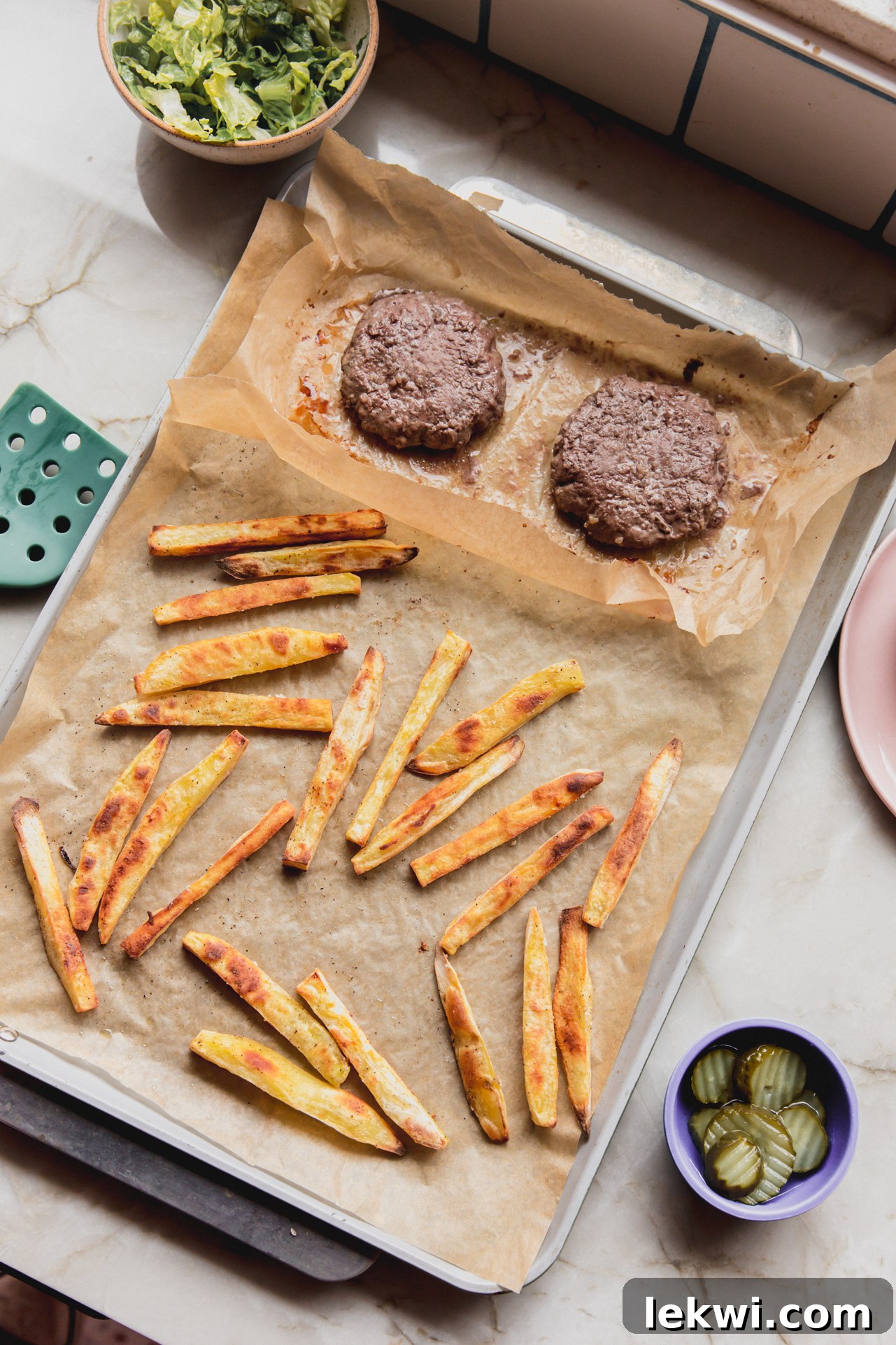
Welcome to the ultimate solution for a delicious and hassle-free meal: the Sheet Pan Burger and Fries! Forget the stacks of greasy pans and the tedious process of frying; this revolutionary recipe brings your favorite comfort food straight to the oven, delivering perfectly crispy fries and wonderfully juicy burgers, all on a single sheet pan. Not only is this method incredibly convenient, but this particular version is also crafted to be naturally gluten-free and dairy-free, making it a fantastic option for those with dietary sensitivities or anyone looking for a lighter take on a classic.
For families constantly seeking quick yet satisfying dinner ideas, this sheet pan approach is a game-changer. It transforms a beloved diner staple into an effortlessly prepared homemade meal that minimizes cleanup and maximizes flavor. Whether you’re hosting a casual get-together, feeding a busy family on a weeknight, or simply craving a classic burger and fries without the fuss, this recipe is designed to impress with its simplicity and delicious results.
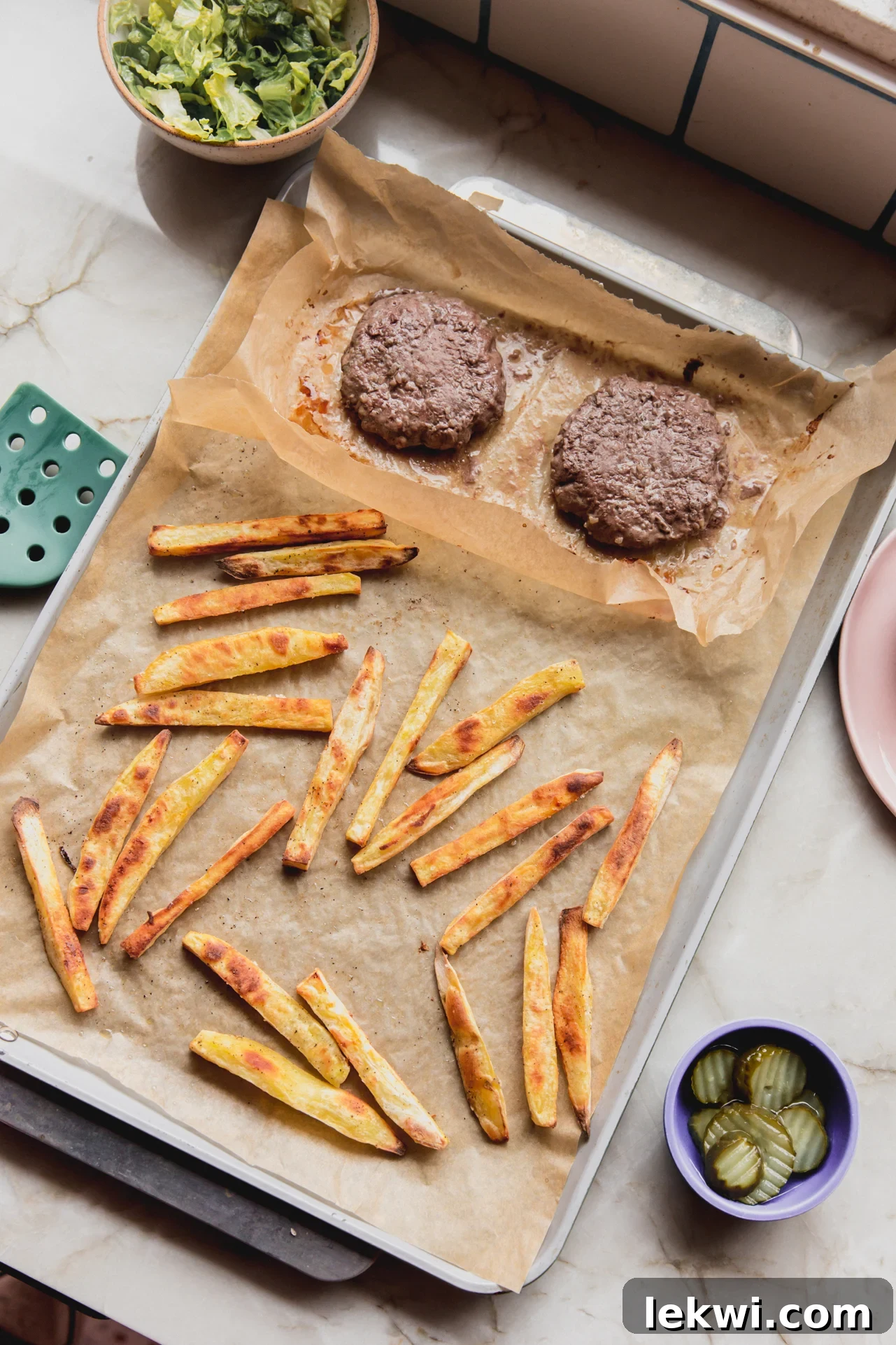
My family has recently fallen in love with burgers and fries, and honestly, I can’t blame them! While I appreciate speedy culinary shortcuts like my popular bun-less burger bowls, sometimes you just crave the authentic experience of a burger paired with crispy fries. The traditional way of preparing them often involves multiple cooking vessels, demanding significant kitchen space and leaving behind a mountain of dishes. This is precisely why I developed this ingenious method: combining both components onto a single sheet pan to create the ultimate streamlined dinner.
This sheet pan burger and fries recipe is the definitive answer for an uncomplicated, delicious dinner made entirely in your oven! Say goodbye to deep-frying and outdoor grilling; with just one pan, you can achieve perfect results with minimal effort and maximum satisfaction.
Can You Really Cook Burgers and Fries in the Oven Simultaneously?
Absolutely, you can! This is one of the most frequently asked questions, and the answer is a resounding yes. The common hurdle people face is that burgers and fries typically require different cooking times and, often, different temperatures to achieve their ideal textures. Fries need longer to crisp up, while burgers can dry out if overcooked. The secret to success lies in a clever technique: staggering the cooking process. By giving your fries a head start in the oven, you ensure they reach that coveted golden crispness. Then, you introduce the burgers to the pan for the remainder of the cooking time, allowing them to cook through perfectly, staying wonderfully juicy without becoming dry or overdone. This method guarantees both components are ready at the same time, maintaining their individual optimal textures.
Table of Contents
- Can You Really Cook Burgers and Fries in the Oven Simultaneously?
- Why You’ll Love This Sheet Pan Burger & Fries Recipe
- The Oven Advantage: Healthier and Easier
- Essential Ingredients for Perfect Sheet Pan Burgers and Fries
- Essential Equipment for Success
- Modifications and Variations for Every Palate
- Step-by-Step Guide: How to Make Sheet Pan Burger and Fries
- Expert Tips & Tricks for the Best Results 🤓
- Recipe Frequently Asked Questions (FAQs)
- Storage and Reheating Tips
- Explore More Delicious Burger Recipes…
Why You’ll Love This Sheet Pan Burger & Fries Recipe
- Effortless One-Pan Wonder: The convenience of preparing an entire meal—burgers AND fries—using just one baking sheet cannot be overstated. This genius method drastically simplifies both the cooking process and, more importantly, the cleanup afterward. Imagine enjoying a hearty meal without the dread of a sink full of dishes!
- A Universal Crowd-Pleaser: Who can resist the classic appeal of a perfectly cooked burger with a side of crispy fries? This meal is universally loved, making it an ideal choice for picky eaters, family dinners, casual entertaining, or simply satisfying your own cravings. It’s guaranteed to be a hit with anyone you’re cooking for!
- Healthy and Delicious: By baking instead of frying, you reduce the overall fat content without sacrificing flavor or texture. This approach allows the natural goodness of the ingredients to shine through, offering a healthier alternative to traditional fried versions.
- Quick Weeknight Solution: Designed for efficiency, this recipe minimizes prep time and active cooking, making it perfect for busy weeknights when you need a satisfying meal on the table fast.
- Customizable to Your Taste: Whether you prefer a specific type of potato, different burger seasonings, or a variety of toppings, this recipe offers endless possibilities for customization to suit your personal preferences.
The Oven Advantage: Healthier and Easier
Opting for the oven over traditional frying or grilling brings a host of benefits. Baking provides a more even and consistent heat, reducing the risk of burning and ensuring your food cooks thoroughly. For the fries, oven baking allows them to develop a beautiful golden crisp exterior without absorbing excess oil, resulting in a lighter, healthier crunch. For the burgers, the oven gently cooks them through, locking in moisture and ensuring they remain tender and juicy. This method also eliminates the need for constant monitoring, freeing you up to prepare toppings, sides, or simply relax while your dinner cooks itself.
Essential Ingredients for Perfect Sheet Pan Burgers and Fries
Below you’ll find the core ingredients for this incredibly simple yet flavorful meal. For precise measurements and quantities, please refer to the comprehensive recipe card located at the end of this article.
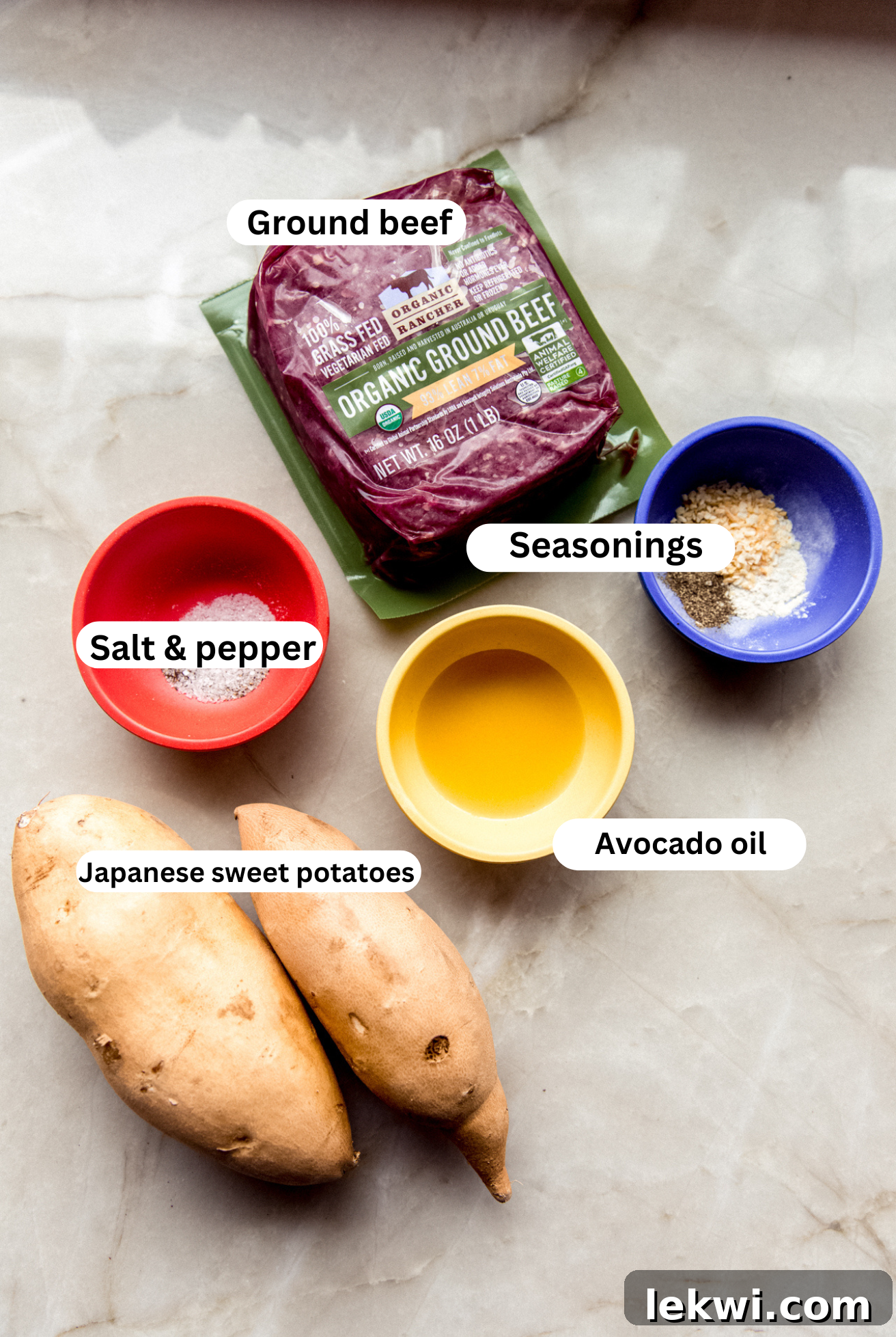
- Japanese Sweet Potatoes: These are my absolute go-to for oven fries! Unlike their orange counterparts, Japanese sweet potatoes boast a naturally starchier texture and a slightly drier flesh, which translates to superior crispiness when baked. Their subtle sweetness also complements the savory burgers beautifully, creating a balanced flavor profile. If you’ve never tried them, you’re in for a treat!
- High-Quality Ground Beef: For the best flavor and juiciness, I highly recommend using 100% grass-fed ground beef. Grass-fed beef often has a richer taste and can be a good source of omega-3 fatty acids. Aim for a lean-to-fat ratio that allows the burgers to retain moisture without being overly greasy on the sheet pan, typically an 80/20 blend works wonderfully.
- Simple Seasonings: We keep it straightforward yet impactful for both the fries and the burgers.
- For the Fries: A good quality avocado oil helps achieve crispiness and adds a healthy fat. Generous dashes of salt and freshly ground black pepper are all you need to enhance the natural flavor of the sweet potatoes.
- For the Burgers: Beyond salt and pepper, we incorporate garlic powder and dried onion flakes. These foundational spices provide a depth of savory flavor that makes each bite irresistible, elevating a simple burger to something truly special.
Essential Equipment for Success
While this recipe is designed for simplicity, having the right tools can make the process even smoother:
- Large Sheet Pan: A full-size or half-size sheet pan (approx. 18×13 inches) is crucial to avoid overcrowding, which can lead to soggy fries. If you only have smaller pans, consider using two.
- Parchment Paper: Non-negotiable! It prevents sticking, makes cleanup a breeze, and, most importantly, helps create a barrier between the burger fat and the fries.
- Sharp Knife and Cutting Board: For safely slicing your sweet potatoes into even fries.
- Large Mixing Bowl: For seasoning your ground beef.
- Meat Thermometer: The most reliable tool for ensuring your burgers are perfectly cooked to your desired doneness.
Modifications and Variations for Every Palate
One of the best aspects of this sheet pan recipe is its flexibility. Feel free to experiment with these suggestions to make it your own:
- Alternative Potatoes: If Japanese sweet potatoes aren’t available or you prefer a different flavor, traditional white potatoes (like Russets or Yukon Golds) are an excellent substitute, provided you can tolerate them. You can also try other sweet potato varieties, just note that the crispiness might vary. For extra flavor, consider seasoning with paprika or a sprinkle of rosemary.
- Custom Burger Seasoning: While our basic seasoning blend is fantastic, don’t hesitate to use your favorite burger seasoning blend. Chili powder, smoked paprika, a dash of Worcestershire sauce (if dairy-free), or even a touch of your preferred BBQ rub can elevate the flavor profile of your burgers. Feel free to get creative!
- Different Meats: Ground turkey or chicken can be used as a leaner alternative to ground beef. Adjust cooking times slightly as poultry typically cooks faster. Remember to season these well as they can be milder in flavor.
- Veggie Burger Option: For a plant-based twist, pre-made veggie burgers can be added to the sheet pan alongside the fries for the last 10-15 minutes of cooking, depending on package instructions.
- Spice It Up: Add a pinch of cayenne pepper or red pepper flakes to your fries or burger mixture for a subtle kick.
- Herb Infusion: Fresh herbs like finely chopped rosemary or thyme can be mixed with the avocado oil for the fries, or into the burger patties for an aromatic boost.
Step-by-Step Guide: How to Make Sheet Pan Burger and Fries
Achieving perfectly cooked burgers and crispy fries on one pan is simpler than you think! Follow these easy steps, accompanied by photos, to create this fantastic meal. Full, detailed instructions can be found in the recipe card below.
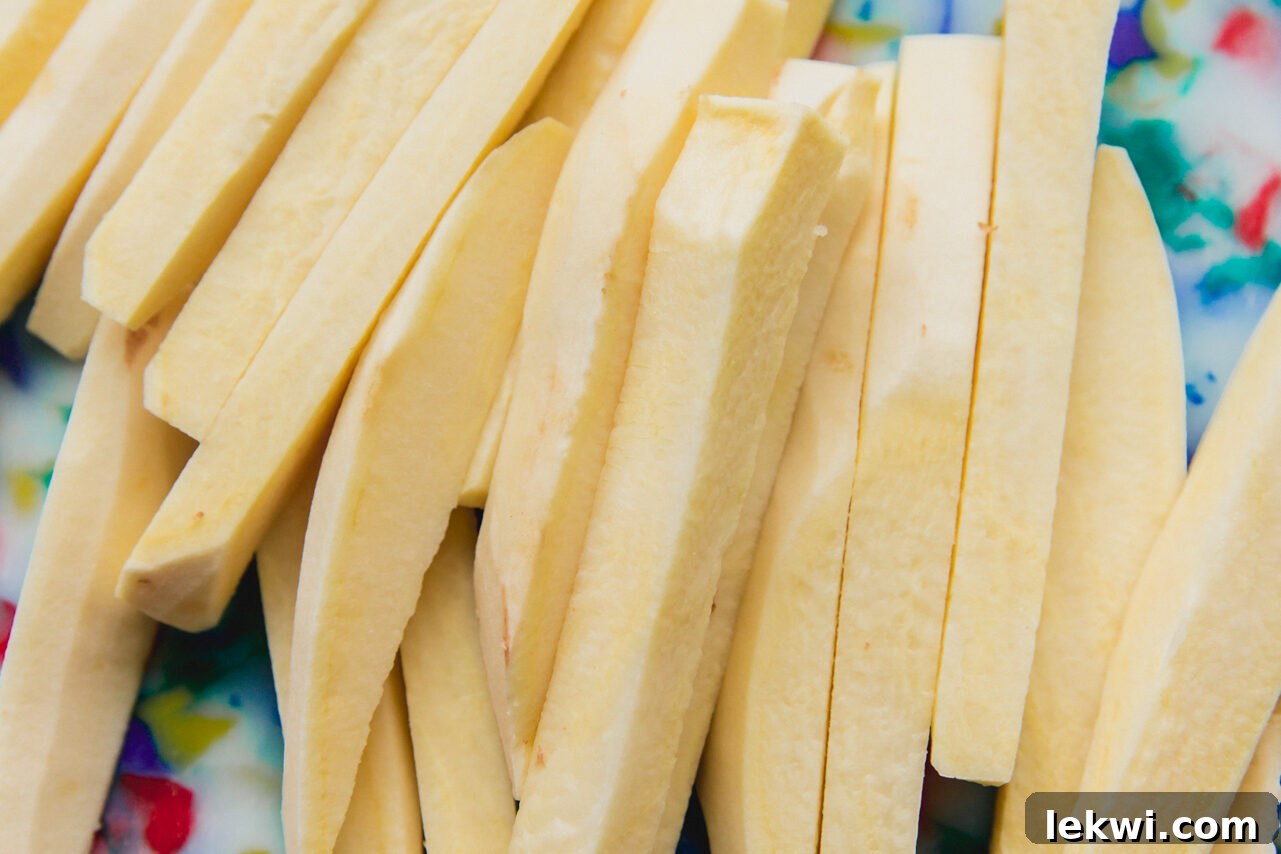
Step One: Prepare the Fries. Begin by preheating your oven to 400°F (200°C). Line a large baking sheet with parchment paper to prevent sticking and simplify cleanup. Peel your Japanese sweet potato, then slice it into even 1/3-inch thick fries. Aim for uniformity to ensure even cooking. Transfer the sliced sweet potatoes to the prepared baking sheet, drizzle generously with avocado oil, and season with salt and pepper. Toss everything together until the fries are well coated, then spread them out in a single layer, ensuring no pieces are overlapping. Bake for 20 minutes to give them a head start on crisping up.
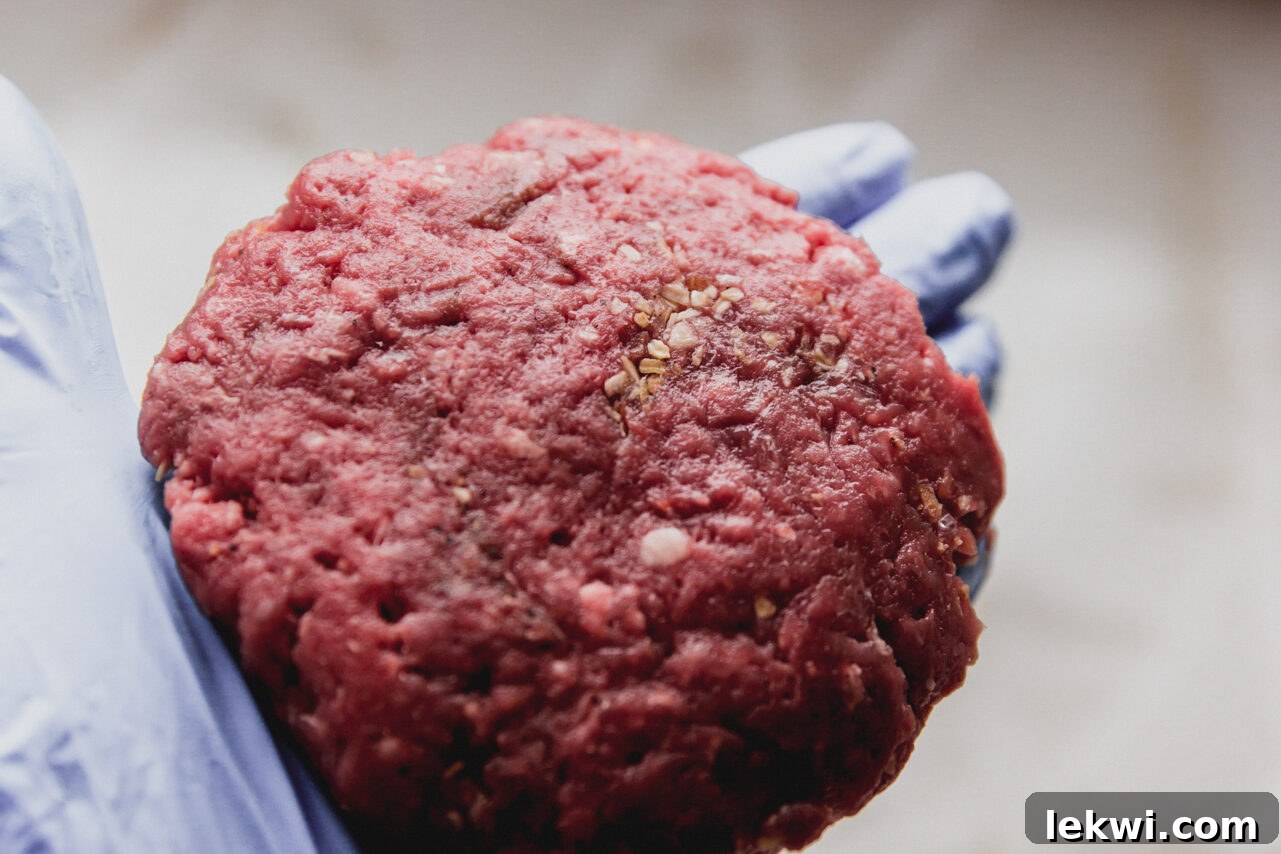
Step Two: Form the Burgers. While your fries are baking, prepare your burger patties. In a mixing bowl, combine the ground beef with salt, pepper, garlic powder, and dried onion flakes. Using clean hands, gently fold the seasonings into the meat. It’s crucial not to overmix the meat, as this can lead to tough burgers. Once combined, divide the seasoned ground beef into two equal portions and carefully form them into patties, about 1-inch thick. Create a slight indentation in the center of each patty to prevent them from puffing up while cooking.
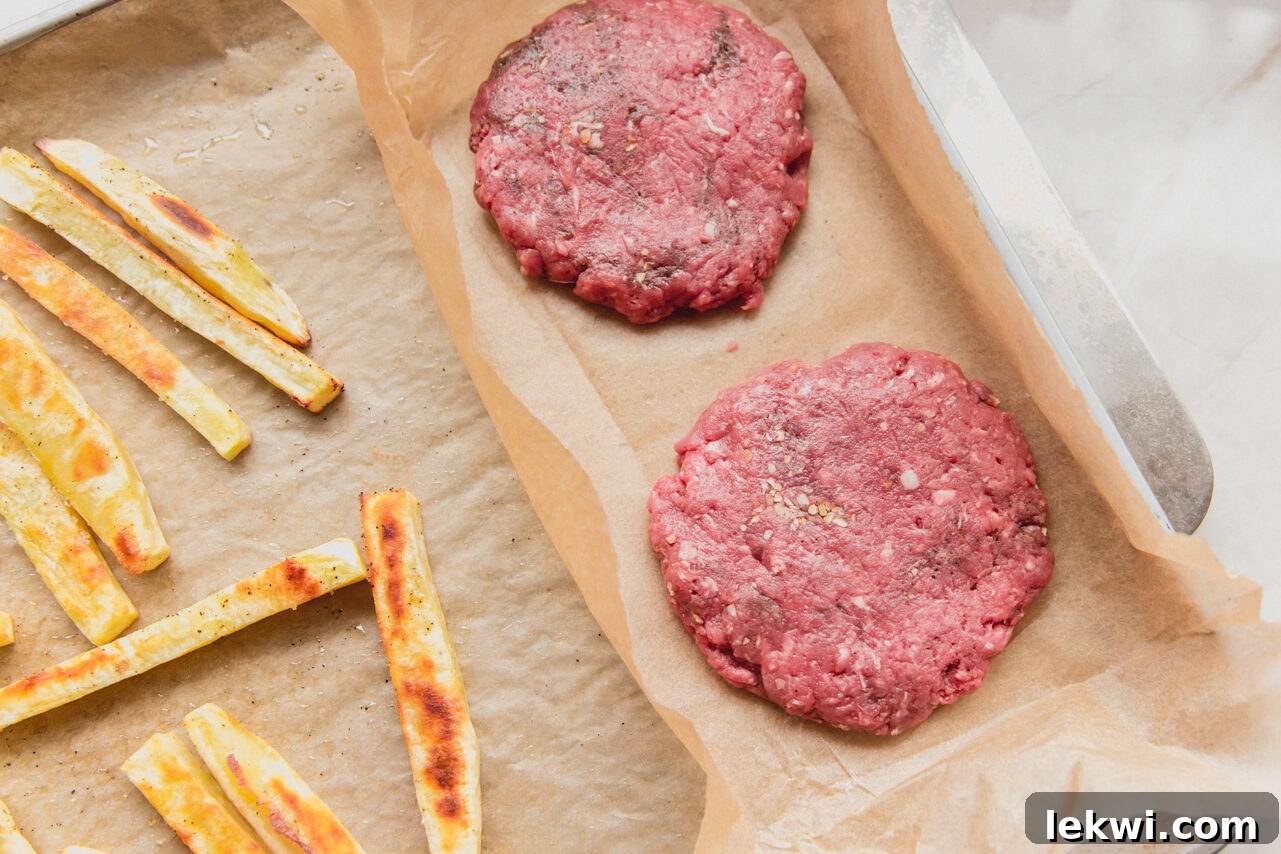
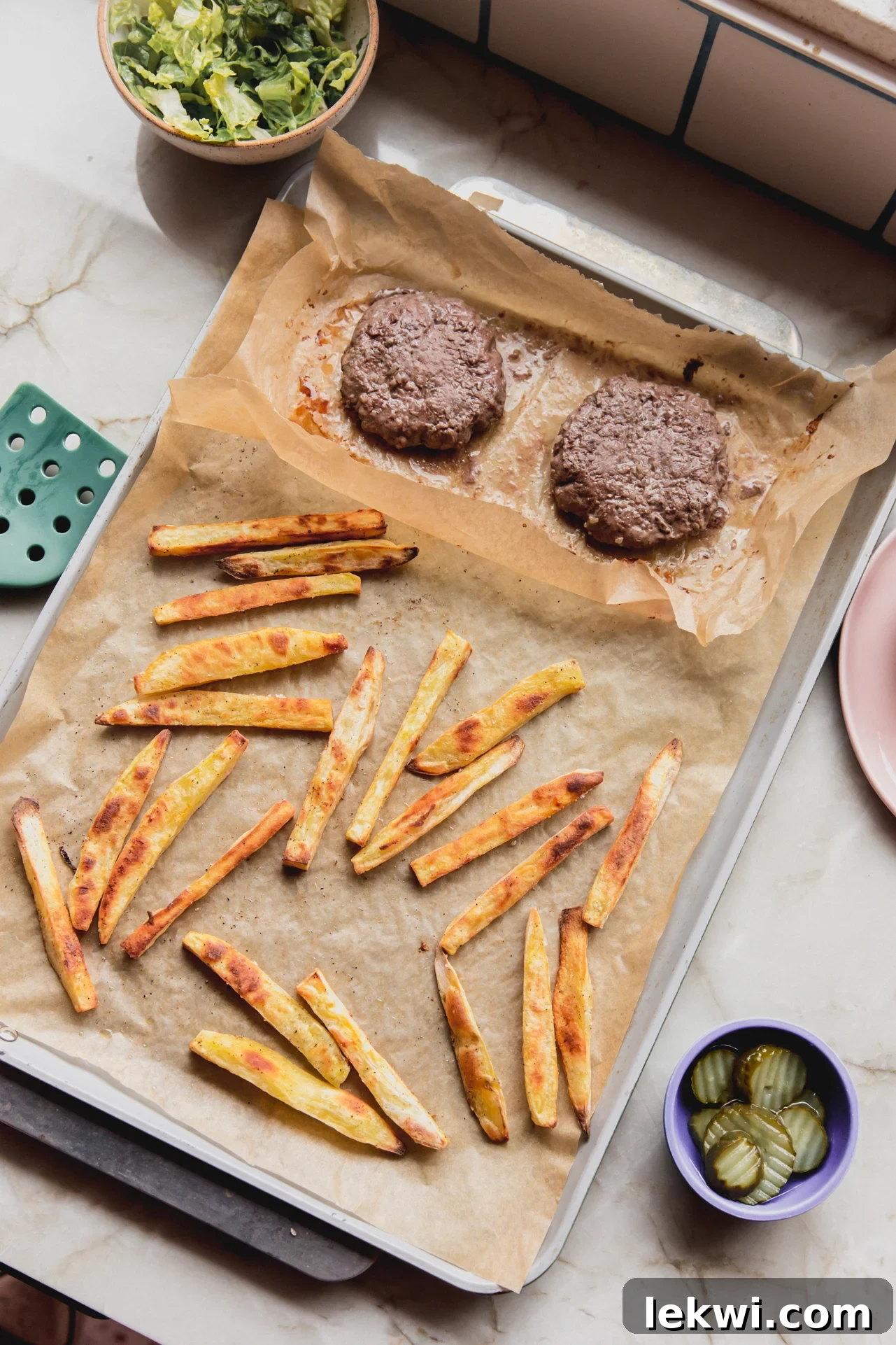
Step Three: Combine and Continue Cooking. After the fries have baked for 20 minutes, carefully remove the sheet pan from the oven. Using a spatula, gently scoot the partially cooked fries over to one side of the pan, creating enough clear space for your burger patties. To maintain separation and prevent the fries from becoming greasy from burger fat, take a small piece of parchment paper, fold it into a rectangle with slightly raised edges, and place it in the cleared space. This creates a helpful barrier. Place your formed burger patties onto this sectioned-off parchment paper. Return the entire sheet pan to the oven.
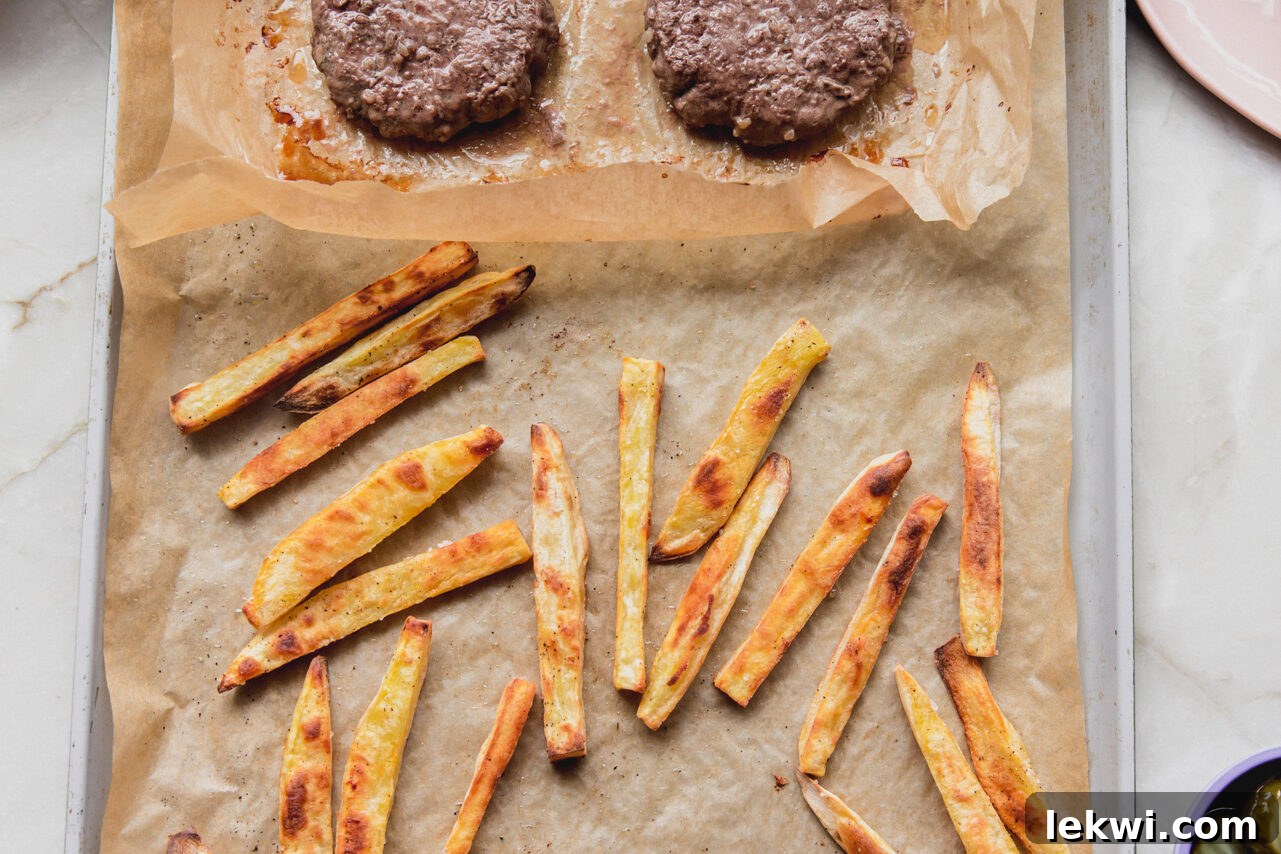
Step Four: Finish Baking and Serve. Continue baking for an additional 18-20 minutes. About halfway through this final baking period (around 9-10 minutes in), carefully flip the burgers to ensure even cooking on both sides. The meal is ready when the fries are perfectly crisp and golden brown, and the burgers are cooked through to your desired doneness (160°F/71°C for well-done, or lower for medium/medium-rare). Serve your sheet pan burger and fries immediately! You can enjoy them as a hearty deconstructed bowl, or on a gluten-free bun with your favorite toppings for a traditional burger experience.
Expert Tips & Tricks for the Best Results 🤓
- Invest in a Meat Thermometer: This is truly the best tool for ensuring your burgers are cooked to perfection every single time. It takes the guesswork out of determining doneness and guarantees safety. For ground beef, 160°F (71°C) is recommended for well-done, but you can pull them off earlier for medium or medium-rare if you prefer.
- Handle the Meat Gently: The secret to truly juicy burgers lies in not overworking the ground beef. When mixing in your seasonings, be gentle and fold them in rather than vigorously kneading the meat. Overmixing can compact the protein fibers, resulting in a dense, tough burger. Form the patties just enough to hold together.
- Do Not Skip the Parchment Paper! This is a critical step for the success of this recipe. The parchment paper serves as a vital barrier, preventing the fat rendered from the burgers from seeping into the fries and making them greasy and soggy. While foil can be used, I consistently find parchment paper yields superior results for crispiness and ease of cleanup. For an even more defined barrier, you can create a small ‘dam’ or ‘wall’ of folded parchment paper between the burgers and fries.
- Avoid Overcrowding the Pan: For truly crispy fries and evenly cooked burgers, ensure there’s ample space between each item on the sheet pan. If the pan is too crowded, steam will be trapped, preventing browning and crisping. If necessary, use two sheet pans to give everything enough breathing room.
- Slice Fries Evenly: Uniformly cut fries are key to even cooking. If some are thin and others thick, you’ll end up with a mix of burnt and undercooked pieces.
- Preheat Your Oven Thoroughly: Always allow your oven to fully preheat to the specified temperature before adding any food. This ensures a consistent cooking environment from the start, which is essential for proper browning and crisping.
- Experiment with Toppings: While the core recipe is simple, don’t forget the fun of toppings! Consider fresh lettuce, tomato slices, onion, pickles, your favorite dairy-free cheese, or a variety of sauces like ketchup, mustard, or a special burger sauce.
Recipe Frequently Asked Questions (FAQs)
Yes, absolutely! Just like on a grill or stovetop, flipping your burgers halfway through the oven cooking process ensures that both sides cook evenly, resulting in a perfectly browned exterior and a juicy interior.
For most standard-sized burger patties, 18-20 minutes at 400°F (200°C) should be sufficient. However, cooking times can vary based on patty thickness and your oven. Always use a reliable meat thermometer to confirm internal doneness – 160°F (71°C) for ground beef.
While this recipe focuses on fresh sweet potato fries, you can adapt it for store-bought frozen fries. Follow the package instructions for cooking time and temperature for the fries, adjusting the burger addition time to ensure both finish together. Frozen fries often need a higher temperature or longer cooking time than fresh ones.
Several factors contribute to crispy oven fries: a high oven temperature (400°F/200°C), slicing them evenly and not too thick, tossing them thoroughly with oil, spreading them in a single layer without overcrowding the pan, and a head start in cooking before adding the burgers.
While best enjoyed fresh, you can prep components in advance. Slice the sweet potatoes and store them in cold water in the fridge for up to a day. Form the burger patties and refrigerate them. Cooked burgers and fries can be stored and reheated, but fresh is always recommended for optimal texture.
Yes, it can be. Cooked burgers and fries can be portioned into meal prep containers. Be aware that the fries might lose some of their crispness upon reheating, but the flavor will still be excellent. It’s a convenient option for healthy lunches or dinners throughout the week.
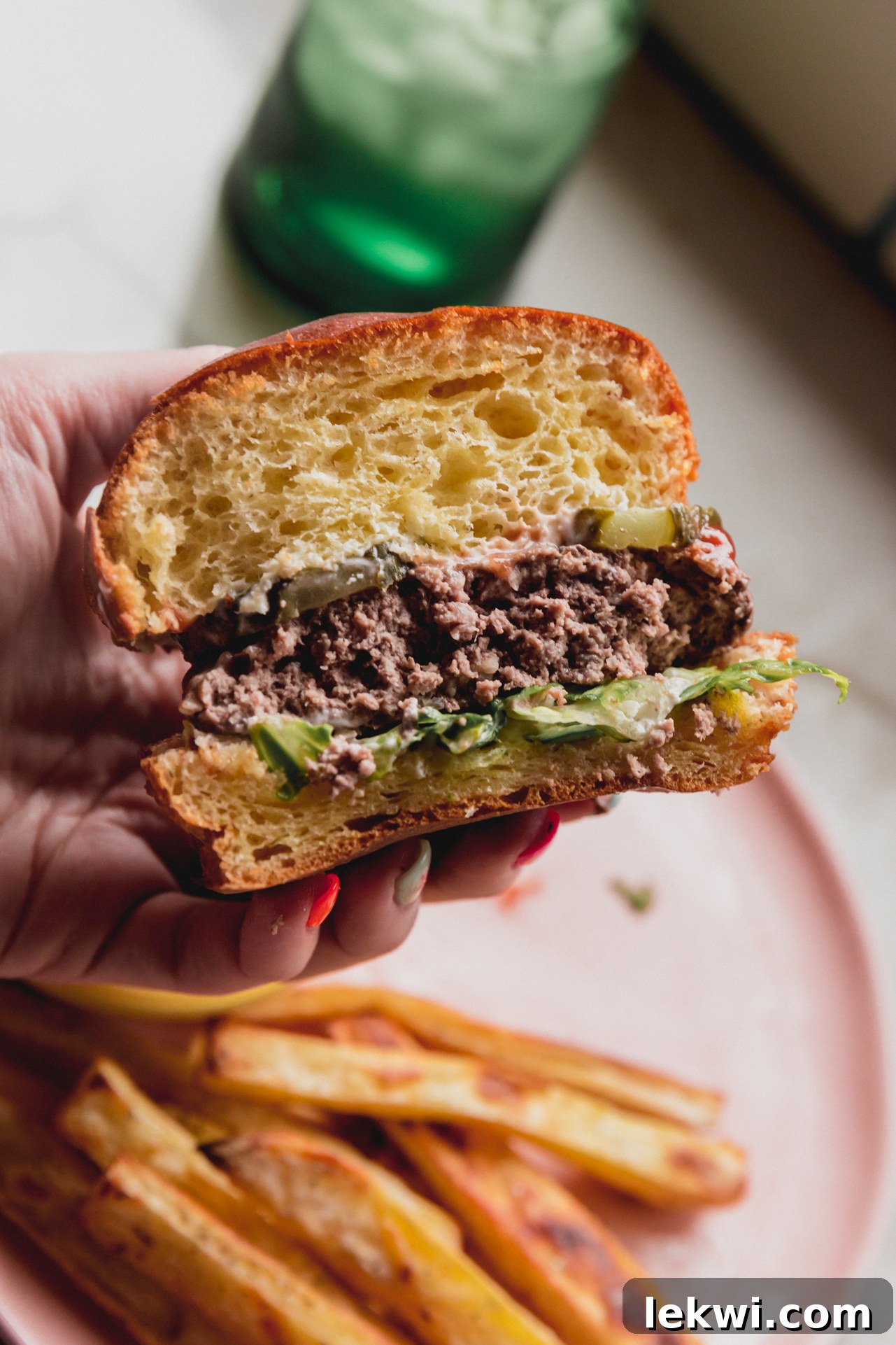
If you tried this Sheet Pan Burger & Fries or any other recipe on my blog, please consider leaving a 🌟 star rating and sharing your experience in the 📝 comments below. Your feedback is truly appreciated! Thanks for visiting and happy cooking!
Storage and Reheating Tips
Should you have any delicious leftovers, proper storage and reheating can ensure you enjoy them later. Store cooked burgers and fries in separate airtight containers in the refrigerator for up to 3-4 days. To reheat, place burgers on a baking sheet and warm in a preheated oven at 300°F (150°C) until heated through, about 10-15 minutes. For fries, spreading them on a baking sheet and reheating at 375°F (190°C) for 5-8 minutes or until crispy can help restore some of their texture. Avoid the microwave for fries, as it tends to make them soggy.
Explore More Delicious Burger Recipes…
- Air Fryer Burger
- French Onion Burger
- Loaded Bun-less Burger Bowl
Sheet Pan Burger and Fries
Pin Recipe
Want to save this recipe for later?
Drop your name and email below to have the full recipe emailed directly to your inbox. ✉️
Ingredients
For the crispy sweet potato fries
- 1 large Japanese sweet potato, peeled and sliced into 1/3-inch thick fries
- 1 ½ tbsp avocado oil
- Salt and freshly ground black pepper, to taste
For the juicy beef burgers
- ½ lb ground beef, preferably 100% grass-fed
- Salt and freshly ground black pepper, to taste
- 1 tsp garlic powder
- 1 tsp onion flakes
Instructions
-
Preheat your oven to 400°F (200°C). Line a large, rimmed baking sheet with parchment paper, ensuring it covers the entire surface to prevent sticking and make cleanup effortless.
-
Prepare the sweet potato fries: Peel the Japanese sweet potato and slice it into uniform 1/3-inch thick sticks. Place the sliced potatoes onto the prepared baking sheet. Drizzle with avocado oil, then sprinkle generously with salt and pepper. Toss the fries thoroughly to ensure they are evenly coated. Spread them out in a single layer, making sure no pieces overlap. Bake in the preheated oven for 20 minutes. After this time, remove the pan from the oven and let the fries cool slightly before gently flipping them with a spatula.
-
While the fries are initially baking, prepare the burger patties. In a medium mixing bowl, combine the ground beef with salt, pepper, garlic powder, and dried onion flakes. Using clean hands, gently fold the seasonings into the meat mixture. Be careful not to overmix, as this can make the burgers tough. Divide the seasoned ground beef into two equal portions and form each into a 1-inch thick patty. Create a slight indentation in the center of each patty; this helps prevent the burgers from puffing up into a dome shape during cooking.
-
Once the fries have had their initial 20 minutes of baking, carefully scoot them over to one side of the sheet pan, leaving enough open space for your two burger patties. To prevent the burger fat from making the fries soggy, fold a small piece of parchment paper into a rectangle with slightly raised edges and place it in the cleared space on the baking sheet. This acts as a barrier. Place the formed burger patties onto this sectioned-off parchment paper. Return the entire sheet pan to the oven.
-
Continue baking for another 18-20 minutes. Approximately halfway through this secondary baking period (around 9-10 minutes), carefully flip the burgers using a spatula to ensure they cook evenly on both sides. Continue baking until the fries are beautifully crisp and golden brown, and the burgers are cooked through to your desired doneness (an internal temperature of 160°F/71°C for ground beef is recommended).
-
Serve your delicious sheet pan burger and fries immediately! You can enjoy them deconstructed in a bowl with your favorite toppings, or serve them on a gluten-free bun for a classic burger experience.
Notes
The strategic use of parchment paper is crucial for the success of this recipe. It’s the key to preventing the rendered fat from the burgers from mixing with the fries, which could otherwise make them overly greasy and diminish their crispiness. While aluminum foil can be an alternative, I consistently find that parchment paper provides a superior non-stick surface and better overall results for both taste and texture.