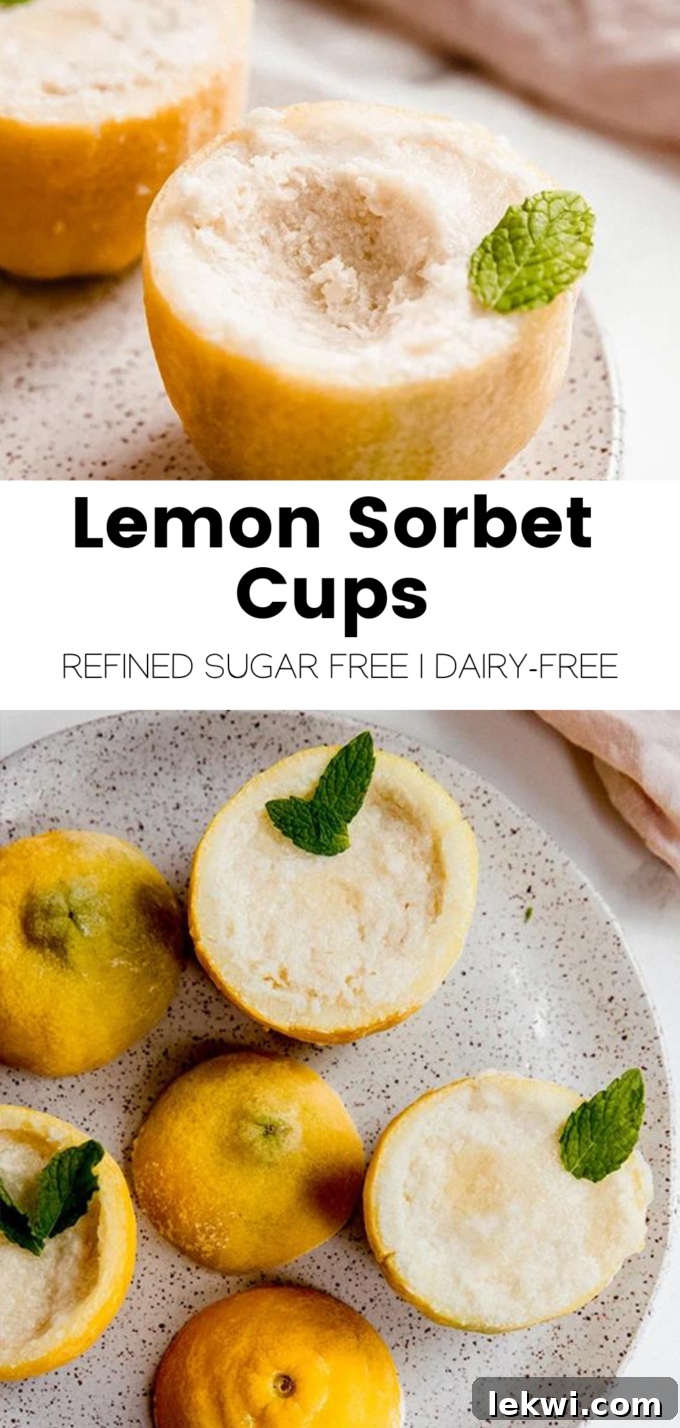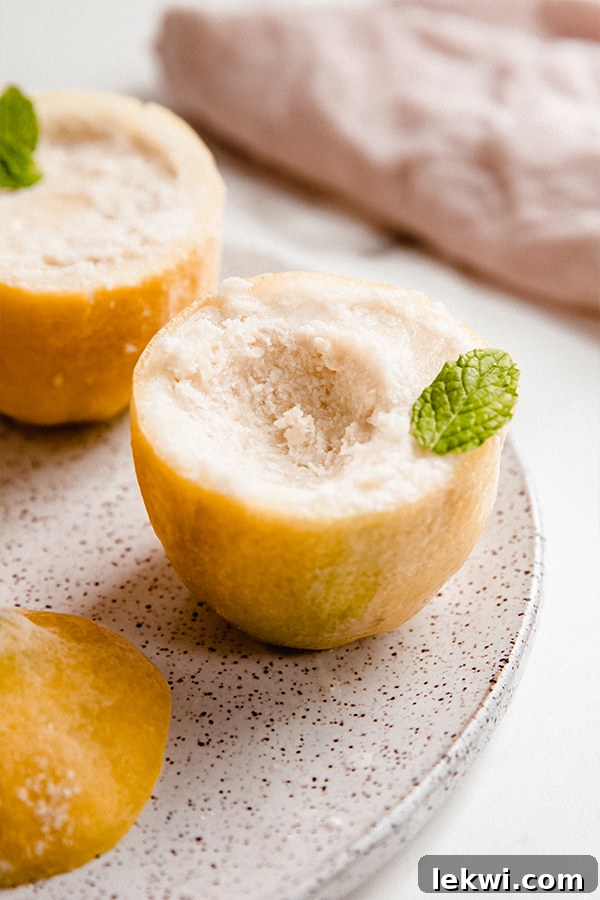
Prepare to tantalize your taste buds with these exquisite lemon sorbet cups! This recipe offers a truly unique and delightful dessert experience, featuring a creamy, tangy, and utterly refreshing lemon sorbet, beautifully served within hollowed-out lemon shells. What makes this treat truly special is its commitment to healthy indulgence: it’s entirely dairy-free, refined sugar-free, and surprisingly simple to create. Each cup is not just a dessert, but a miniature work of art, perfect for impressing guests or simply enjoying a moment of elegant, guilt-free pleasure during warmer months.
Experience Ultimate Summer Refreshment with Dairy-Free Lemon Sorbet Cups
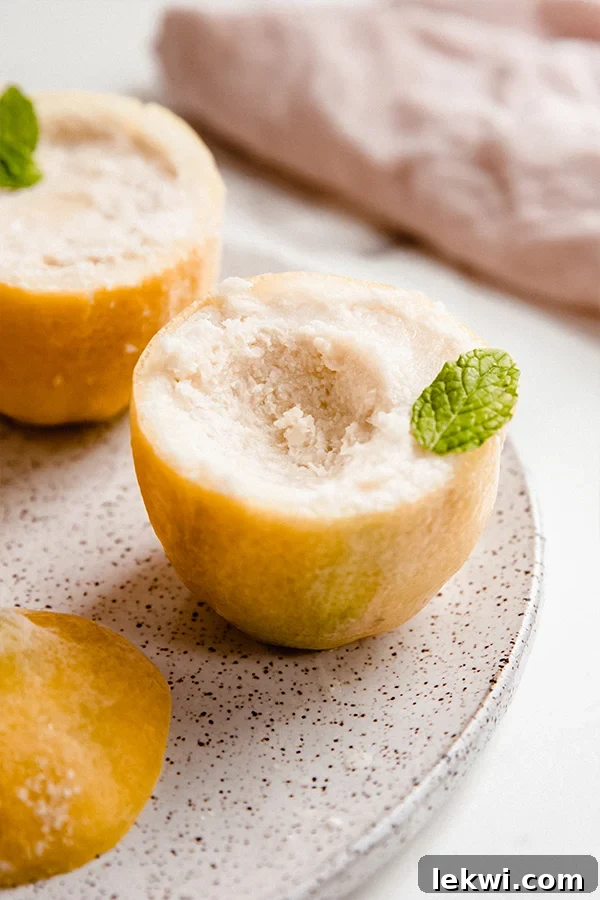
There’s an undeniable magic to the flavor of lemon, especially when the summer heat calls for something vibrantly refreshing. This recipe captures that magic, transforming simple lemons into a frozen dessert that is light, invigorating, and incredibly satisfying. The innovative concept of serving luscious lemon sorbet directly in its own natural rind is not only visually stunning but also deeply embodies the essence of fresh, whole ingredients. While these homemade lemon sorbet cups might appear sophisticated enough for a five-star restaurant, the beauty lies in their simplicity, requiring minimal ingredients and effort to achieve a truly impressive result.
Unlike traditional ice creams or sorbets often weighed down by heavy creams and refined sugars, our rendition champions a healthier approach. We use natural honey to impart a delicate sweetness and rich coconut cream to create an unbelievably smooth, dairy-free texture. This mindful selection of ingredients ensures a dessert that is not only kind to your body but also allows the pure, unadulterated zest of lemon to take center stage. It’s the perfect guilt-free indulgence for anyone seeking delightful, cooling treats that align with dietary preferences without ever compromising on flavor or elegance.
Key Benefits & Highlights of This Lemon Sorbet Recipe:
- Uniquely Refreshing: The intense, zesty citrus flavor provides an instant cool-down on any hot day, making it the ultimate summer dessert.
- Naturally Dairy-Free: Crafted with luxurious full-fat coconut cream, this sorbet is a perfect choice for those with lactose intolerance or individuals following a vegan lifestyle.
- Refined Sugar-Free Sweetness: We opt for pure honey as our sole sweetener, offering a healthier, more complex flavor profile compared to processed sugars.
- Visually Stunning Presentation: Serving the sorbet in the natural lemon shells creates an “ooh-and-aah” moment, turning a simple dessert into an aesthetic masterpiece for any gathering.
- Effortless Elegance: Despite its gourmet appearance, the preparation process is surprisingly straightforward, proving that you don’t need extensive culinary skills to create something extraordinary.
- Wholesome & Minimally Processed: By utilizing the entire lemon—juice, flesh, and rind—we maximize flavor, nutrients, and minimize waste, embracing whole-food goodness.
The Simple Yet Powerful Ingredients for Your Lemon Sorbet Masterpiece
Crafting these delectable lemon sorbet cups requires just a handful of straightforward ingredients, each carefully chosen to play a crucial role in achieving the perfect balance of vibrant flavor and silky-smooth texture. For the most exceptional results, always prioritize fresh, high-quality components. Opting for ripe lemons, premium coconut cream, and pure honey will truly make your homemade sorbet shine.
- Fresh, Ripe Lemons: These are unequivocally the star of our dessert. We’re embracing a “nose-to-tail” approach by utilizing the whole lemon – not just the juice, but also the aromatic zest and the pulpy flesh. This comprehensive use contributes significantly to the sorbet’s robust, authentic lemon flavor and its desirable structure. When you’re at the market, seek out lemons that feel firm and heavy for their size, as these are typically the juiciest. A bright, unblemished yellow skin is also a good indicator of freshness. If possible, choose organic lemons, especially since their rinds will be handled extensively and serve as your beautiful dessert cups.
- Full-Fat Coconut Cream: This ingredient is the secret to achieving a remarkably creamy, luxurious texture in our sorbet without any dairy. It’s crucial to use full-fat coconut cream, which is typically sold in cans. For optimal results, place the can of coconut cream in your refrigerator overnight. This chilling process encourages the thick, rich cream to separate and solidify at the top, making it significantly easier to scoop out the dense cream and leave behind the thinner coconut water. While you might consider substituting heavy cream if you consume dairy, remember that this recipe is specifically formulated to highlight the unique properties and deliciousness of coconut cream.
- Pure Honey: Our natural sweetener of choice, honey, does more than just add sweetness; it contributes a wonderful depth of flavor and plays a vital role in the sorbet’s smooth consistency. Its natural sugars help to prevent excessive ice crystallization, ensuring a delightful mouthfeel. The delicate floral notes found in many types of honey beautifully complement the bright tartness of lemon, creating a harmonious taste. For those strictly following a vegan diet, pure maple syrup can be used as an alternative, though it will introduce a slightly different, warmer flavor profile to the sorbet.
- Fresh Mint Leaves: While optional, a few fresh mint leaves serve as an exquisite garnish, adding a vibrant pop of color and a refreshing aromatic finish to each sorbet cup. This small addition elevates the presentation and offers an additional layer of sensory pleasure with every bite.
Crafting Perfect Lemon Sorbet Cups: A Step-by-Step Guide
Transforming fresh lemons into this unforgettable frozen dessert is a rewarding process. Follow these detailed steps carefully, and with a touch of patience during the freezing phase, you’ll achieve perfectly textured and stunning sorbet cups.
-
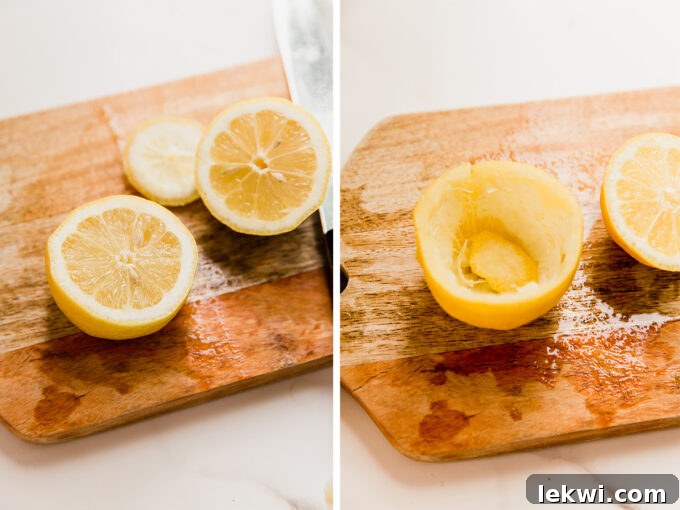
Prepare the Lemon Shells: Begin by thoroughly washing all your lemons under cool running water, as their rinds will be an integral part of your presentation. To create a stable base, carefully slice a very thin piece off the bottom stem end of each lemon. This allows them to sit flat without wobbling. Next, cut off approximately the top quarter of each lemon. This larger bottom half will serve as your elegant sorbet cup.
-
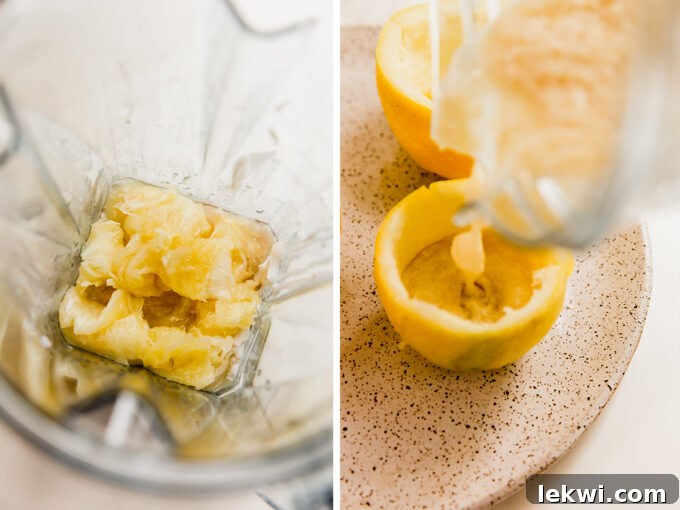
Extract Juice and Pulp: Work methodically with one lemon half at a time. Gently but firmly squeeze the lemon juice into a large measuring cup or bowl. Once the lemon feels softer, use a small, sharp knife or a sturdy spoon to carefully separate the inner flesh and pulp from the white pith of the rind. Take your time to thoroughly scoop out all the pulp and remaining flesh, adding it to the measuring cup with the juice. Your goal is to leave behind a clean, empty lemon shell. Place each hollowed lemon shell on a plate. If the bottom stem slice created a small hole, you can cleverly use that original thin slice to cover it, preventing any sorbet mixture from leaking during the freezing process. Repeat this procedure for all your lemons.

-
Refine Lemon Mixture: Carefully inspect the collected lemon juice and pulp mixture for any seeds. It is paramount to remove every single seed to ensure a smooth and pleasant sorbet texture; discard them completely. From this mixture, measure out approximately 3 tablespoons of the combined lemon juice and pulp, which will be used for your sorbet. If you find yourself with excess lemon juice, don’t let it go to waste! It can be refrigerated and used for other culinary applications, such as making refreshing lemonades, salad dressings, or marinades.
-
Blend the Sorbet Base: Transfer the chilled full-fat coconut cream, the measured lemon juice and flesh mixture, and the honey into a high-speed blender. Blend on high until the mixture is exceptionally smooth and perfectly creamy. It’s essential to ensure there are no discernible lumps of coconut cream or fibrous bits of lemon pulp remaining. This thorough blending step is absolutely crucial for achieving the characteristic silky-smooth texture of a superior sorbet.
-
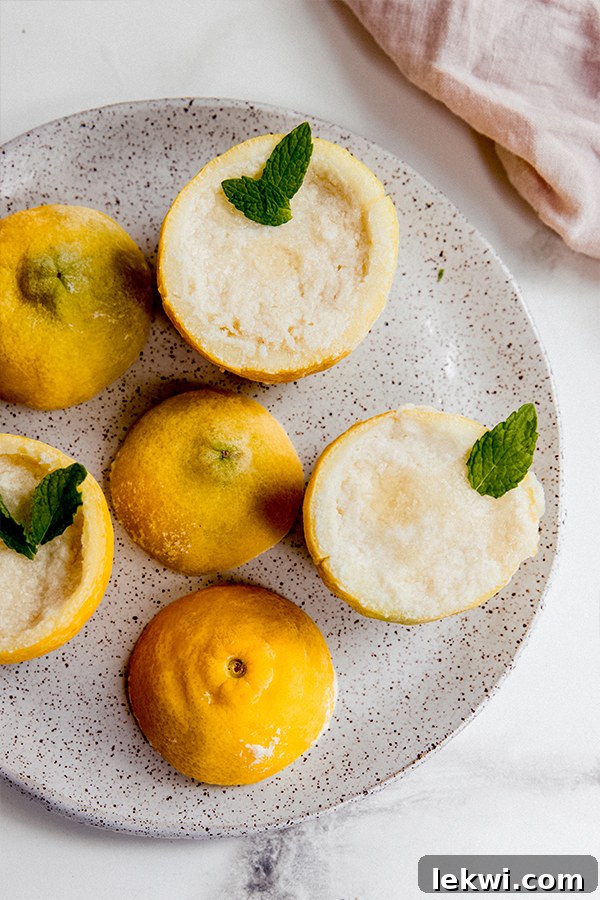
Fill and Initiate Freezing: With precision, carefully pour the freshly blended lemon sorbet mixture into each of your prepared bottom lemon halves. For an extra touch of presentation or to protect the sorbet, you can gently place the top quarters of the lemons back over their filled bottoms, acting like small lids. Once filled, carefully transfer the lemon sorbet cups to the freezer. Ensure they are positioned on a flat, stable surface to prevent any spillage and to allow for uniform freezing.
-
Achieve Optimal Hardness: Allow the lemon sorbet cups to freeze for a minimum duration of 4 to 6 hours, or until they are completely firm to the touch. For the most ideal texture and consistency, freezing them overnight is often recommended. This extended freezing time ensures the sorbet sets perfectly, providing the best possible eating experience.
-
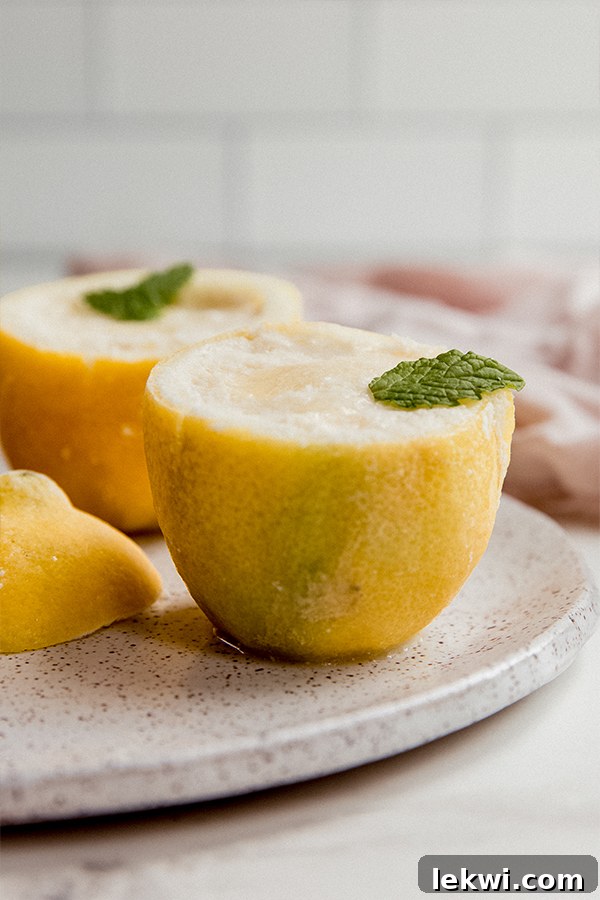
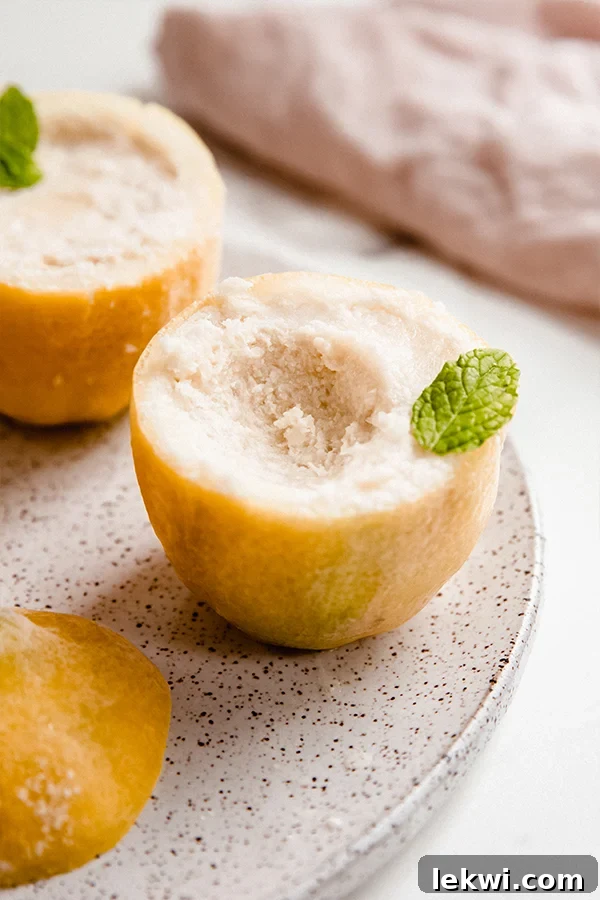
Garnish and Serve with Finesse: Once the lemon sorbet cups are fully frozen and ready, remove them from the freezer. To achieve the perfect scoopable texture, let them sit at room temperature for a few minutes to soften just slightly. Before serving, garnish each cup with a few fresh mint leaves; this adds a vibrant pop of color, an inviting aroma, and an additional layer of refreshing flavor. Serve immediately with a small spoon, inviting everyone to savor this incredibly refreshing, elegant, and wholesome dessert!
Expert Tips & Tricks for the Best Lemon Sorbet Cups
While this recipe is quite straightforward, a few clever tips can elevate your lemon sorbet cups from great to absolutely exceptional. Pay attention to these details for a truly flawless dessert:
- Thorough Seed Removal: This step cannot be overstated. Even a minuscule lemon seed, if left in the mixture and blended, can introduce an unpleasant bitter taste and gritty texture to your otherwise smooth sorbet. Double-check your lemon juice and pulp mixture thoroughly.
- Spotless Lemons are Key: Given that the lemon rinds are both a key ingredient (pulp) and the serving vessel, it’s crucial to wash your lemons meticulously. A good scrub under running water will remove any surface waxes, pesticides, or dirt, ensuring a clean and safe eating experience.
- Mastering the Lemon Shell Technique: Hollowing out the lemon can seem a bit tricky at first glance, but it’s genuinely simple with the right approach. After making your initial cuts, gently squeeze the lemon halves to loosen the inner pulp. Then, use a small, sharp paring knife or a sturdy grapefruit spoon to carefully work along the white pith, separating the flesh from the rind. A careful hand will ensure the shell remains intact and sturdy. For a visual demonstration of a similar process, you might find this video on preparing citrus shells helpful to guide your technique.
- Pre-Chilling Coconut Cream: For the ultimate creamy sorbet consistency, always remember to chill your can of full-fat coconut cream in the refrigerator overnight. This allows the dense, white cream to separate and solidify at the top, which you can then easily scoop out for blending, leaving the thinner liquid behind. Using only the thick cream results in a richer, more luxurious sorbet.
- The Power of a High-Speed Blender: Invest in or borrow a good quality high-speed blender for this recipe. It’s instrumental in ensuring that the lemon flesh, juice, coconut cream, and honey are pulverized and perfectly emulsified into a silky-smooth, homogenous mixture, free of any stringy bits or undissolved elements. This is vital for that signature sorbet texture.
Frequently Asked Questions About Homemade Lemon Sorbet Cups
Here are detailed answers to some common inquiries you might have about preparing and enjoying these delightful dairy-free lemon sorbet cups, providing extra clarity and confidence for your culinary adventure:
Why is it important to use the whole lemon (both juice and flesh) and not just the juice?
This is a fundamental aspect that sets this recipe apart and is key to its success! Without an ice cream maker, which continuously churns to prevent large ice crystals, or the stabilizing properties of traditional refined sugars, relying solely on lemon juice would yield a very different outcome. Pure lemon juice would result in a sorbet that is significantly icier, with a much thinner body and a less satisfying mouthfeel—essentially, a flavored coconut ice block rather than a creamy sorbet. By incorporating the whole lemon flesh and pulp, you introduce natural pectin and fiber into the mixture. These components act as natural stabilizers, contributing significantly to the sorbet’s desirable creamy texture, preventing excessive ice crystallization, and adding an incredible depth and burst of authentic, full-bodied lemon flavor that simply cannot be achieved with juice alone. It truly transforms the sorbet into a rich “flavor punch” with a wonderfully dense yet smooth consistency.
Can this recipe be adapted to be completely coconut-free?
While full-fat coconut cream is the cornerstone of this dairy-free and vegan recipe, providing its unique richness and creaminess, a truly coconut-free version that maintains a similar texture without an ice cream maker can be challenging. If you tolerate dairy, you could likely experiment with substituting well-chilled heavy cream for the coconut cream. Be aware that this would alter the flavor profile and push it more towards a traditional lemon ice cream. However, finding another suitable dairy-free alternative that isn’t coconut-based and can deliver the necessary body and smooth texture for a no-churn sorbet is difficult, as most other dairy-free milks (like almond or oat milk) are typically too thin.
How long do these lemon sorbet cups maintain their quality in the freezer?
For optimal freshness, vibrant flavor, and ideal texture, I highly recommend storing any leftover lemon sorbet cups in an airtight glass container within the freezer. When stored properly, they are best enjoyed within a few weeks. Beyond this timeframe, while still safe to consume, you might notice a subtle change in texture, potentially becoming a bit icier, and the intensity of the flavors might gradually diminish. Always ensure they are well-covered to prevent freezer burn.
Is it possible to use an ice cream maker for this recipe?
Absolutely! If you are fortunate enough to own an ice cream maker, you can certainly incorporate it into this recipe for potentially even creamier results. Simply prepare and blend the sorbet mixture as directed in the instructions. Then, churn the mixture in your ice cream maker according to the manufacturer’s specific guidelines. After churning, the sorbet will be soft-serve consistency. You can then scoop this softened sorbet into your prepared lemon shells and return them to the freezer for a shorter period, perhaps 1-2 hours, until they firm up to your desired consistency.
What if I prefer not to use the lemon shells for serving?
That’s perfectly fine! While the lemon shells undeniably add a stunning and unique aesthetic to the dessert, they are not strictly necessary for enjoyment. If you prefer a more conventional serving method, or if hollowing out the lemons seems like too much effort, you can simply follow the recipe to prepare the sorbet mixture. Once blended, pour the mixture into any freezer-safe container—such as a loaf pan, an airtight plastic container, or individual ramekins—to harden. Once frozen, you can scoop and serve the delicious sorbet into traditional dessert bowls or glasses as desired. The taste will be just as magnificent!
Explore More Refreshing Dairy-Free & Healthy Desserts You’ll Love
If you’ve thoroughly enjoyed the vibrant flavors and wholesome indulgence of these dairy-free and refined sugar-free lemon sorbet cups, you’ll be delighted to discover other fantastic options to expand your repertoire of healthy frozen treats. Continue your journey into delicious, guilt-free desserts with these wonderful recipes:
- Blueberry Lemon Sorbet: A delightful and colorful variation that marries the zesty tartness of lemon with the sweet, juicy burst of blueberries, creating a truly irresistible and refreshing combination.
- Turmeric Mango Coconut Ice Cream: Transport your taste buds to a tropical paradise with this exotic and creamy ice cream. It’s packed with the luscious sweetness of mango, the rich texture of coconut, and a healthy hint of warm, earthy turmeric for a unique flavor twist.
- Mint Chip Banana Ice Cream Cups: Indulge in the refreshing and nostalgic appeal of classic mint chip, but with a healthy twist! This “nice cream” version uses naturally sweet bananas as its base, offering a creamy, guilt-free treat that’s perfect for satisfying those mint chocolate cravings.
Recipe: Dairy-Free Lemon Sorbet Cups
A refreshing, refined sugar-free, and dairy-free lemon sorbet, elegantly served in its own natural lemon shells.
Yields: 3 servings
Author: Michelle
Ingredients
- 3 large, fresh Lemons (for shells, juice, and flesh)
- ½ cup Full-Fat Coconut Cream (chilled overnight in the can)
- 3 tbsp Pure Honey (or maple syrup for strict vegan)
- 3-4 Fresh Mint Leaves (for garnish, optional)
Instructions
- Prepare Lemons: Wash lemons thoroughly. Slice a thin piece off the bottom of each lemon to create a stable base. Cut off the top quarter of each lemon to create a larger bottom half for the cup.
- Extract Lemon Pulp & Juice: Working with one lemon half at a time, gently squeeze out the juice into a large measuring cup. Using a knife or spoon, carefully separate the inner lemon flesh from the rind, adding the flesh to the juice. Ensure only the clean lemon shell remains. Place the shells on a plate. If a hole forms at the bottom, use the initial bottom slice to cover it. Repeat for all lemons.
- Remove Seeds: Carefully remove all seeds from the collected lemon juice and flesh mixture. Discard seeds. Measure out approximately 3 tablespoons of this lemon mixture for the sorbet. Refrigerate any excess lemon juice for other uses.
- Blend Sorbet Mixture: In a high-speed blender, combine the chilled full-fat coconut cream, the 3 tablespoons of lemon juice and flesh, and the honey. Blend on high until the mixture is completely smooth and creamy, with no lumps.
- Fill and Freeze: Carefully pour the blended lemon mixture into the three prepared bottom halves of the lemon shells. You can place the top quarters of the lemons back on as lids. Transfer the filled lemon cups to the freezer, ensuring they are on a flat surface.
- Harden Sorbet: Freeze for 4-6 hours, or ideally overnight, until the sorbet is fully hardened to a firm consistency.
- Serve: Remove from the freezer and let sit at room temperature for a few minutes to soften slightly. Garnish with fresh mint leaves and serve immediately with a spoon.
Notes
All nutritional information provided is an estimation and may vary significantly based on specific ingredients and preparation methods. These estimations do not include optional garnishes.
Nutrition Facts (Estimated per Serving)
- Serving: 1 serving
- Calories: 181 kcal
- Carbohydrates: 28.6g
- Protein: 1.1g
- Fat: 0.4g
- Fiber: 0.5g