This post contains affiliate links, which means I may earn a small commission if you make a purchase through these links, at no extra cost to you.
Embarking on a grain-free journey opens up a world of culinary possibilities, especially in baking and cooking. However, navigating the diverse landscape of grain-free flours can often feel overwhelming, with unique textures, absorption rates, and flavor profiles. This comprehensive guide is designed to demystify grain-free flours, offering clear insights into their best uses, crucial substitution tips, and advice on where to purchase them. Whether you’re new to grain-free living or looking to refine your baking skills, this article will equip you with the knowledge to confidently integrate these versatile flours into your kitchen.
Why Choose Grain-Free Flours?
The decision to go grain-free often stems from various health and dietary considerations. While some individuals tolerate properly prepared grains well, many others find that grains, particularly when consumed in excess or for those with sensitive digestive systems, can exacerbate issues. Grain-free flours provide an excellent alternative for those adhering to specific dietary protocols like the Paleo diet, which emphasizes whole, unprocessed foods. Moreover, popular grain-free options such as coconut flour and almond flour are naturally lower in carbohydrates, making them ideal choices for individuals following low-carb and ketogenic (keto) diets.
Beyond dietary restrictions, many people discover significant health benefits from reducing or eliminating grains. These can include improved digestion, reduced inflammation, more stable blood sugar levels, and enhanced energy. Grain-free flours allow individuals to enjoy their favorite baked goods and comfort foods without compromising their dietary goals or digestive comfort. While they don’t always offer a direct 1:1 substitution for traditional wheat flours, understanding their unique properties unlocks a realm of delicious and healthy culinary creations. My aim is to simplify this process, helping you harness the full potential of each grain-free flour.
Essential Tips for Baking with Grain-Free Flours
One of the most common questions in grain-free baking is about substitutions, and the answer is almost always a resounding “no” for a direct 1:1 swap. This is because grain-free flours possess vastly different characteristics compared to wheat flour and even differ significantly from each other. They vary widely in terms of absorbency, texture, binding capabilities, and flavor. Successfully baking with grain-free flours requires a nuanced understanding of these properties and often calls for recipes specifically developed for them. Here are some general tips to ensure your grain-free baking endeavors are successful:
- Follow Recipes Closely: Grain-free baking is more of a science than an art, especially when starting out. Stick to recipes that have been tested with specific grain-free flours.
- Measure Precisely: Use a kitchen scale for accuracy if possible, or ensure your measuring cups are leveled. Small variations can drastically alter the outcome.
- Understand Absorbency: Some flours, like coconut flour, are incredibly absorbent and require significantly more liquid than others.
- Combine Flours: Many successful grain-free recipes use a blend of two or more flours (e.g., a starch like tapioca with a protein-rich flour like almond) to achieve the desired texture and structure.
- Use Binding Agents: Since grain-free flours often lack gluten, which provides elasticity and structure, additional binding agents like eggs, flax eggs, or psyllium husk are frequently used.
- Sifting: Sifting grain-free flours can help remove lumps and ensure a lighter, more uniform texture in your baked goods.
- Patience is Key: Grain-free doughs and batters can behave differently. Sometimes, allowing them to rest can improve texture and absorption.
With these general principles in mind, let’s dive into the specifics of individual grain-free flours.
Where to Purchase Grain-Free Flours
The availability of grain-free flours has expanded significantly over the years, making them easier to find than ever before. You can typically find a wide selection at:
- Whole Foods Market: Known for its extensive range of organic and specialty products.
- Natural Grocers: Another excellent option for health-conscious shoppers, offering many grain-free ingredients.
- Sprouts Farmers Market: Provides a good variety of natural and organic products, including various grain-free flours.
- Amazon: An unparalleled online resource for a vast selection, often with competitive pricing and bulk options.
- iHerb: A popular online retailer for health products, including a diverse array of flours.
- Thrive Market: A membership-based online store offering natural and organic products at wholesale prices.
- Local Health Food Stores: Don’t overlook smaller, independent health food stores, which often stock unique and high-quality brands.
The Complete Guide to Grain-Free Flours
Cassava Flour
Cassava flour is a cornerstone of grain-free baking, particularly lauded for its resemblance to all-purpose wheat flour. It is derived from the whole cassava or yuca root, a starchy tuber widely cultivated and consumed in Latin American, African, and Asian cuisines. Unlike tapioca starch (which is also from cassava), cassava flour includes the entire peeled root, which is dried and ground into a fine powder. This inclusion of the whole root gives it a more fibrous and less refined quality than pure starch.
Its unique composition allows it to behave similarly to wheat flour in many recipes, making it one of the closest 1:1 substitutes available among grain-free options. However, caution is still advised, especially when swapping in recipes not specifically developed for cassava flour, as it can be quite absorbent and may alter the final texture if not balanced correctly. It’s naturally gluten-free and often enjoyed by those with nut allergies.
Characteristics:
- Starchy and Fibrous: Provides structure and a good binding capacity.
- Slightly Sweet Flavor: A mild, neutral flavor that doesn’t overpower other ingredients.
- Fine, Smooth Texture: Remarkably similar to wheat flour, contributing to soft and pliable baked goods.
- Highly Absorbent: Requires ample liquid to prevent dry results.
What it’s perfect for…
- Creating pliable tortillas, soft pizza crusts, and wraps.
- Baking cakes, cookies, and quick breads where a texture similar to traditional flour is desired.
- Thickening sauces and gravies, offering a smoother finish than some other starches.
- Replacing all-purpose flour in many savory dishes, such as breading for fried foods.
Recommended brand: Otto’s Cassava Flour is widely regarded for its consistent quality and fine texture.
Tapioca Starch (or Tapioca Flour)
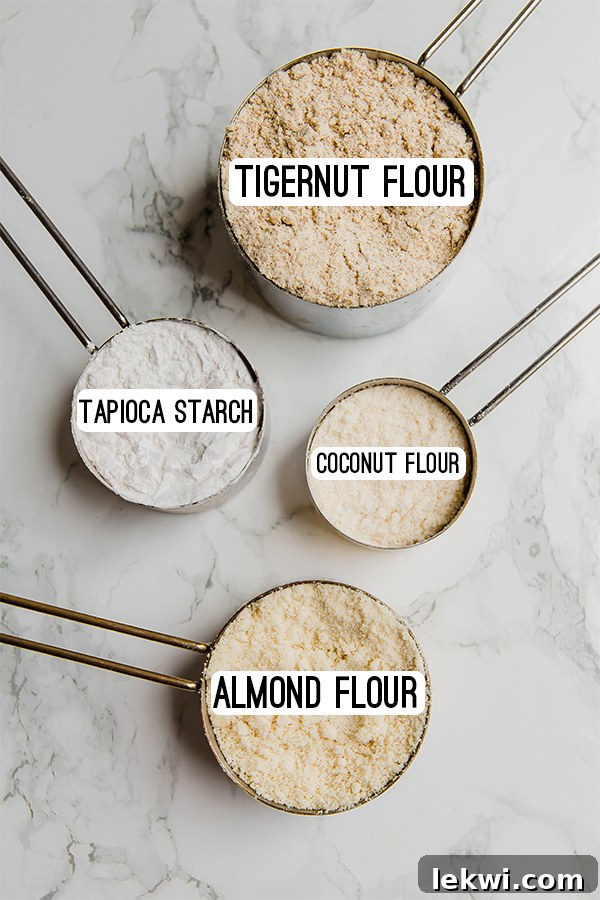
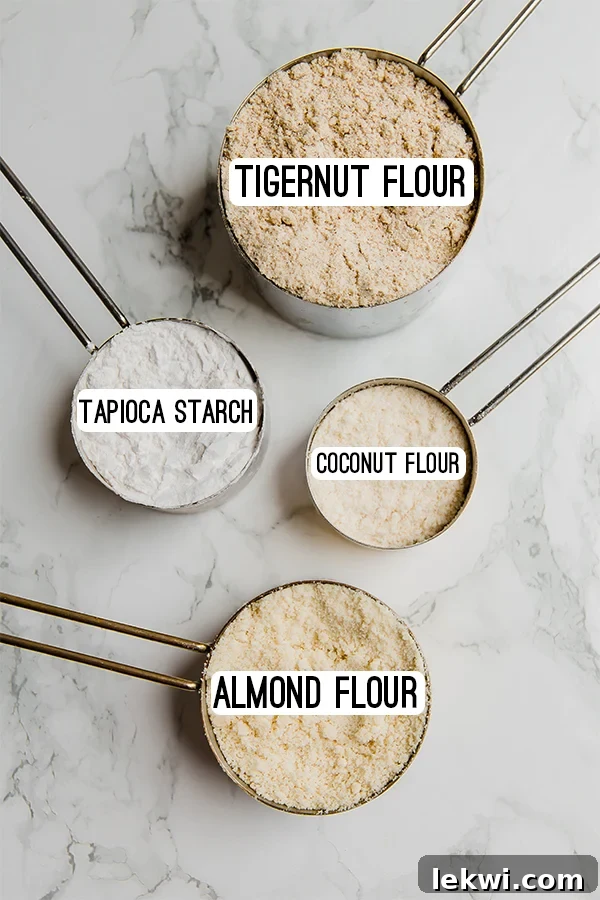
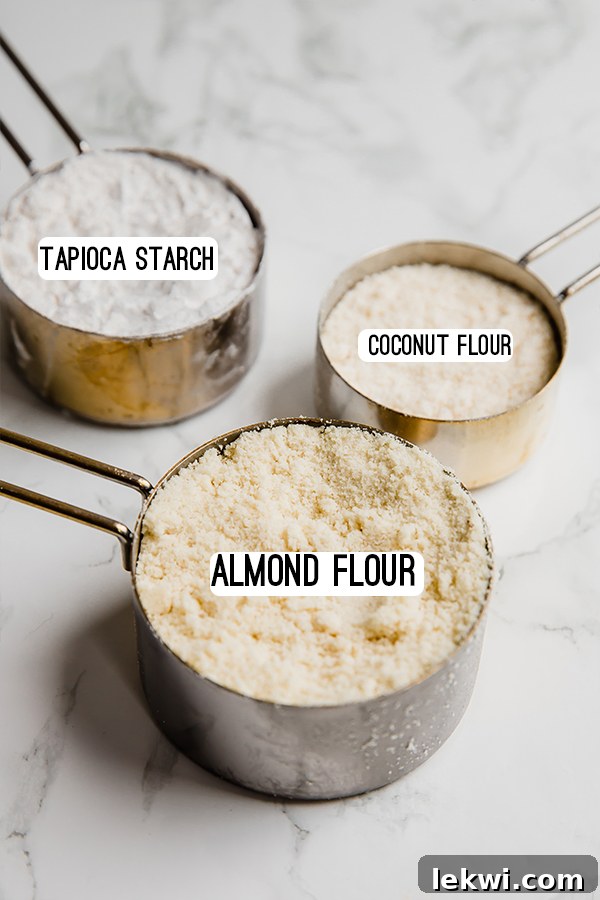
Tapioca starch, often interchangeably called tapioca flour, is another popular grain-free ingredient derived from the cassava root. However, unlike cassava flour, tapioca starch is made from the extracted starch of the root, making it a very pure and refined starch. It is highly similar in properties and uses to corn starch and arrowroot starch, acting as an excellent thickener and binder in various culinary applications. Its slightly sweet taste is usually undetectable in most recipes, allowing it to blend seamlessly.
Characteristics:
- Pure Starch: Highly refined, giving it a very fine, powdery consistency.
- Slightly Sweet Taste: Generally neutral in baked goods, but can add a subtle sweetness.
- Excellent Thickener: Creates clear, glossy sauces and gravies without cloudiness.
- “Stretchy” Quality: Imparts a desirable chewiness and elasticity, especially in baked goods.
What it’s perfect for…
- Achieving a “cheesy” pull and stretchy texture in grain-free breads, pizzas, and strombolis.
- Thickening soups, stews, sauces, and pie fillings without altering their flavor.
- Acting as a crucial binding agent in grain-free baked goods, especially when combined with other flours.
- Creating crispy coatings for fried foods when used in breading mixtures.
Recommended Brand: Anthony’s Tapioca Starch is a reliable choice for its quality and consistency.
Arrowroot Starch (or Arrowroot Flour)
Arrowroot starch, much like tapioca, is a pure starch extracted from the roots of the arrowroot plant. It shares many characteristics with tapioca starch and is often considered a direct substitute for it in most recipes, making them the only two flours on this list that can typically be swapped 1:1 without significant adjustments. However, subtle differences exist; many experienced bakers prefer arrowroot for savory applications due to its slightly less “gummy” texture compared to tapioca when cooled.
Arrowroot starch is prized for its ability to create light, delicate textures in baking and its superior thickening power, particularly at lower temperatures. It’s an excellent alternative for those avoiding corn or potato starches.
Characteristics:
- Pure Starch: Very fine and powdery when raw.
- Neutral Flavor: Completely flavorless, making it versatile for both sweet and savory dishes.
- Excellent Thickener: Produces clear, glistening sauces and glazes.
- Lighter Texture: Often results in a lighter, less gummy texture than tapioca starch, especially in savory dishes.
What it’s perfect for…
- Creating an elastic and “stretchy” quality in baked goods, similar to tapioca starch.
- Thickening gravies, stews, and fruit fillings, particularly at the end of cooking to avoid over-thickening.
- Acting as a binder in grain-free baked goods, especially cookies and crackers.
- Making homemade grain-free puddings and custards.
Recommended brand: Anthony’s Arrowroot Starch or the Thrive Market Brand are excellent options.
Almond Flour
Almond flour is arguably one of the most popular and versatile grain-free flours, widely embraced in low-carb, keto, and paleo diets. It is made from blanched almonds (meaning the skins have been removed) that are then finely ground into a flour. This process yields a light-colored flour with a mild, slightly sweet, and buttery flavor, making it a favorite for a wide range of recipes. It’s important to distinguish blanched almond flour from almond meal, which is typically made from unblanched, skin-on almonds and has a coarser texture, making it less suitable for delicate baking.
Due to its high protein and healthy fat content, almond flour adds richness and moisture to baked goods. It’s also relatively low in carbohydrates and high in fiber, contributing to its popularity among those managing blood sugar or seeking a satiating alternative to grain-based flours.
Characteristics:
- Low Carb & High Protein: Excellent for keto and low-carb diets.
- Buttery, Slightly Nutty Flavor: A pleasant, subtle taste that enhances many recipes.
- Moist Texture: Contributes to tender and moist baked goods.
- Good Source of Healthy Fats: Adds richness and helps with satiety.
What it’s perfect for…
- Creating delicious low-carb and keto-friendly baked goods like muffins, cakes, and cookies.
- Use as a superior breading for meats and vegetables, such as chicken tenders or fish, providing a golden and crispy crust.
- Adding moisture and structure to grain-free baked goods that benefit from a denser crumb, like zucchini muffins or quick breads.
- Making delicate French macarons and other fine pastries.
Recommended brand: Bob’s Red Mill Almond Flour is a widely available and high-quality choice.
Tigernut Flour
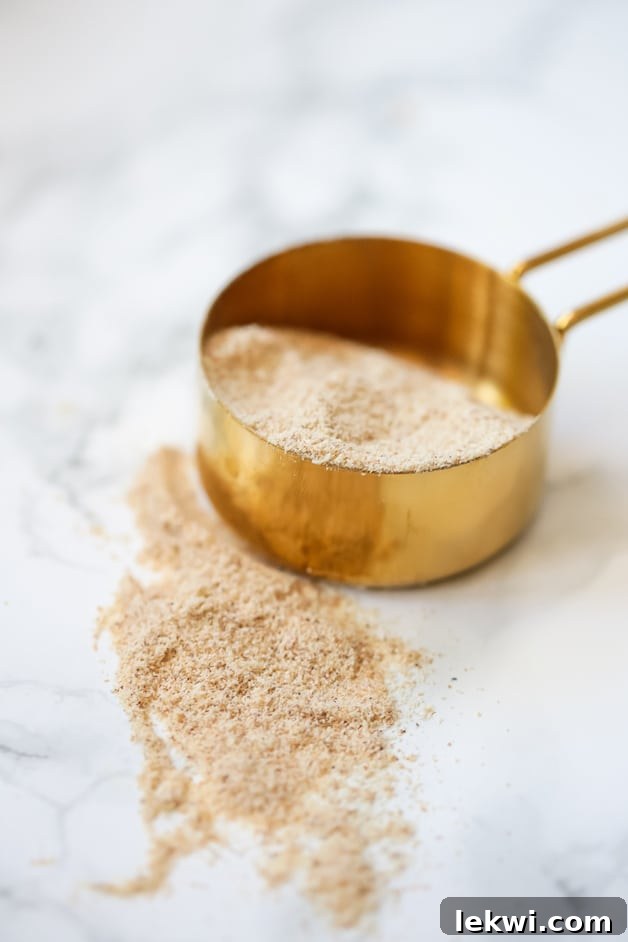
Despite its misleading name, tigernut flour is completely nut-free, making it a fantastic option for individuals with nut allergies. Tigernuts are not nuts at all, but rather small, fibrous tubers or root vegetables. This ancient food has been gaining popularity in modern grain-free and allergy-friendly baking circles for its unique properties and delightful flavor profile. Tigernut flour is often compared to almond flour in its application but offers a sweeter, slightly earthier taste and a starchier texture. It’s naturally sweet, thanks to its high fiber and natural sugar content.
Characteristics:
- Nut-Free Tuber: Safe for those with nut allergies.
- Naturally Sweet Flavor: Adds a pleasant sweetness, reducing the need for added sugars.
- Slightly Gritty/Nutty Texture: Provides a rustic texture that can be appealing in certain baked goods.
- High in Fiber: Promotes digestive health and provides a sense of fullness.
What it’s perfect for…
- Crafting sweet grain-free treats like cookies, muffins, cakes, and quick breads where its natural sweetness can shine.
- Use in paleo and AIP (Autoimmune Protocol) baking as a versatile, allergen-friendly flour.
- Adding a unique flavor and texture to granola bars and energy bites.
- Creating gluten-free and nut-free pie crusts.
Recommended brand: Organic Gemini Tigernut Flour is a popular choice known for its quality.
Coconut Flour
Coconut flour is a unique and incredibly potent grain-free flour, made from the dried and defatted meat of coconuts, ground into a fine powder. Botanically speaking, a coconut is considered a fruit, making coconut flour a fantastic nut-free alternative for individuals with nut allergies. However, it’s widely recognized as one of the trickiest flours to master due to its exceptional absorbency and distinct characteristics.
This flour is a powerhouse of fiber and protein, yet low in digestible carbohydrates, making it highly prized in low-carb and keto diets. Its absorbent nature means a little goes a very long way, and recipes using coconut flour require significantly more liquid and often more eggs to bind and moisten. Understanding its unique properties is crucial for successful baking.
Characteristics:
- Extremely Absorbent: Requires a high liquid-to-flour ratio; typically, you’ll use far less coconut flour than other flours.
- Naturally Sweet & Mild Coconut Flavor: The flavor is subtle but present, best in recipes where a hint of coconut is welcome.
- High in Fiber & Protein: Offers excellent nutritional benefits and contributes to satiety.
- Low Starch & Low Carb: Ideal for ketogenic and low-carb diets.
- Dry Texture: Can lead to dry or crumbly results if not properly balanced with moisture.
What it’s perfect for…
- Creating dense, moist, and low-carb baked goods where its absorbency can be an asset, especially in recipes with excess moisture from fruits or vegetables (e.g., zucchini muffins, carrot cake).
- As a binding agent and thickener in small quantities for soups, stews, and gravies.
- Making grain-free and keto-friendly breading for items like chicken nuggets or fish, providing a crunchy crust.
- Use in small amounts to add fiber and structure to grain-free bread recipes when combined with other flours.
Recommended brand: Anthony’s Coconut Flour is a highly-rated and consistent option for baking.
Conclusion
Navigating the world of grain-free flours might seem daunting at first, but with a foundational understanding of each flour’s unique properties, you can unlock a wealth of delicious and healthy culinary possibilities. From the versatile cassava flour that mimics traditional wheat, to the thickening powers of tapioca and arrowroot, the richness of almond flour, the sweetness of tigernut, and the incredible absorbency of coconut flour – each offers a distinct advantage in the grain-free kitchen.
Remember that successful grain-free baking is a journey of learning and experimentation. Don’t be discouraged by initial trials; instead, embrace the process and enjoy the creative freedom these alternative flours provide. By following tested recipes, understanding the nuances of each ingredient, and choosing high-quality products from reputable brands, you’ll soon be confidently creating delectable grain-free dishes that support your health and tantalize your taste buds. Happy baking!