This post contains affiliate links. Learn what that means, here.
Delightful AIP Carob Easter Bunnies: Your Guide to a Healthy & Delicious Spring Treat
Happy Spring, dear friends! The longer daylight hours, the promise of fresh produce at bustling farmers’ markets, and the joyous anticipation of Easter are all wonderful harbingers of the season. This time of year often brings with it the delightful challenge of holiday treats – and if you’re navigating the Autoimmune Protocol (AIP) or simply seeking healthier alternatives, traditional Easter candy can feel like a minefield. Many of us fondly recall those days of indulging in jelly beans by the handful (even if we didn’t truly love them!) and, of course, the irresistible allure of chocolate Easter bunnies. While those sugary, soy-laden days are behind us, there’s no need for sadness. Instead, let’s embrace a delicious and gut-friendly alternative: homemade AIP “chocolate” Carob Easter Bunnies!
This recipe isn’t just a treat; it’s a celebration of mindful indulgence, crafted to nourish your body without compromising on the festive spirit. Whether you’re strictly adhering to AIP, managing food sensitivities, or simply looking for a cleaner, healthier option for your family this Easter, these adorable carob bunnies are guaranteed to bring smiles and satisfaction. Say goodbye to guilt and hello to wholesome deliciousness!
Why Ditch Conventional Chocolate This Easter? Understanding AIP & Sensitivities
For many, the mention of “chocolate” immediately brings joy and comfort. However, for those following the Autoimmune Protocol (AIP) or dealing with specific food sensitivities and health concerns, conventional chocolate often presents significant challenges. Technically, chocolate, derived from cocoa beans, falls into the legume category, making it a potential irritant for some digestive systems and thus excluded from the strict elimination phase of AIP. This is precisely why our recipe champions carob powder as a fantastic, AIP-compliant alternative that delivers on taste without the dietary compromise.
Beyond the inherent properties of cocoa, the true culprit in many store-bought chocolates often lurks in the ingredient list: soy. You might be surprised to learn that soy is a pervasive ingredient, primarily used as a cheap emulsifier to give chocolate that smooth, melt-in-your-mouth texture. While cost-effective for manufacturers, soy can be profoundly problematic for our health, particularly for those with delicate hormonal balances or autoimmune conditions.
The Soy Dilemma: More Than Just an Allergen for Hormonal and Thyroid Health
The issues with soy extend far beyond basic allergen concerns. Soy is notably phytoestrogenic, meaning it contains compounds that mimic estrogen in the body. This can disrupt the delicate balance of our hormones, potentially causing unwanted side effects ranging from digestive upset to more serious endocrine dysregulation. For individuals with thyroid conditions, such as Hashimoto’s disease, soy can be particularly detrimental. The compounds in soy can interfere with thyroid hormone absorption and function, exacerbating symptoms and making it harder for the body to heal. I speak from personal experience: I know when I’ve accidentally consumed soy, and the negative impact on my well-being is undeniable. Therefore, for anyone managing an autoimmune condition, especially Hashimoto’s, I highly recommend steering clear of soy. The truly great news? With these delectable carob bunnies, you won’t even miss conventional, soy-filled chocolate, proving that healthier choices can be equally, if not more, enjoyable!
Carob: Your Gut-Friendly, Naturally Sweet Chocolate Alternative
Enter carob powder, an unsung hero in the world of healthy eating and a definite staple in my pantry. Derived from the dried, roasted pods of the carob tree (Ceratonia siliqua), carob has a naturally sweet, earthy flavor that beautifully mimics chocolate without any of the potential irritants found in cocoa. Historically, carob has been used for centuries, prized for its nutritional value and versatility. It’s naturally caffeine-free, making it an excellent choice for those sensitive to stimulants. Nutritionally, carob is a powerhouse, rich in beneficial fiber, which supports healthy digestion and gut flora. It’s also packed with essential antioxidants and vital minerals like calcium, magnesium, potassium, and iron. Crucially, it’s naturally gluten-free, dairy-free, and soy-free, making it an ideal choice for a wide range of dietary needs and restrictions, including the Autoimmune Protocol.
You can find carob powder in two main forms: plain (raw) or toasted. For this specific recipe, I used plain carob powder, which offers a milder, slightly sweeter profile, and a lighter color. However, toasted carob powder delivers a deeper, more robust, and distinctly “chocolatey” flavor that many find incredibly satisfying and closer to traditional cocoa. Don’t hesitate to experiment with both to discover your personal preference. Toasted carob can often yield a richer, more complex taste, while plain carob lends itself well to milder, sweeter creations. Its versatility makes it a fast favorite for anything from smoothies to puddings and, of course, these delightful Easter desserts, proving that healthy alternatives can be just as delicious, if not more so, than their conventional counterparts.
Crafting Your Delightful AIP Carob Easter Bunnies: A Step-by-Step Guide
Now that we’ve covered the crucial “why” and delved into the benefits of carob, let’s dive into the fun part: making these adorable and wholesome treats! These bunnies are surprisingly simple to prepare, requiring minimal ingredients and effort, making them perfect for a quick project with or without little helpers. The process is straightforward, ensuring even novice bakers can achieve perfect results.
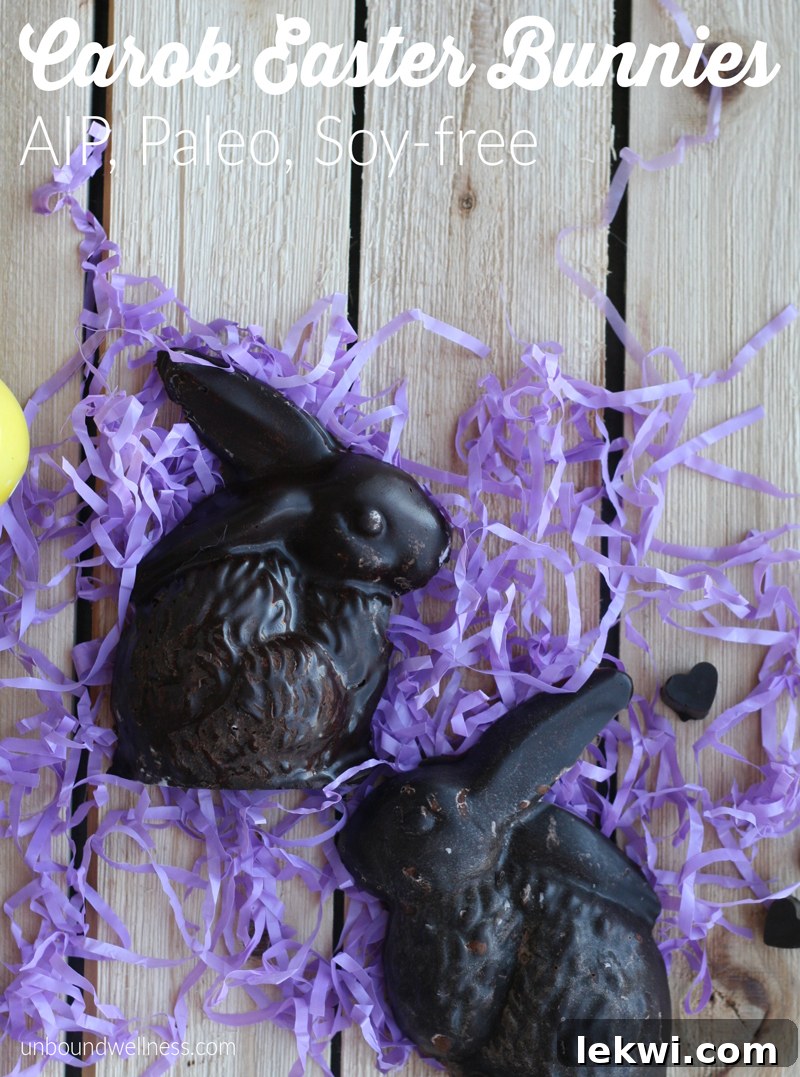
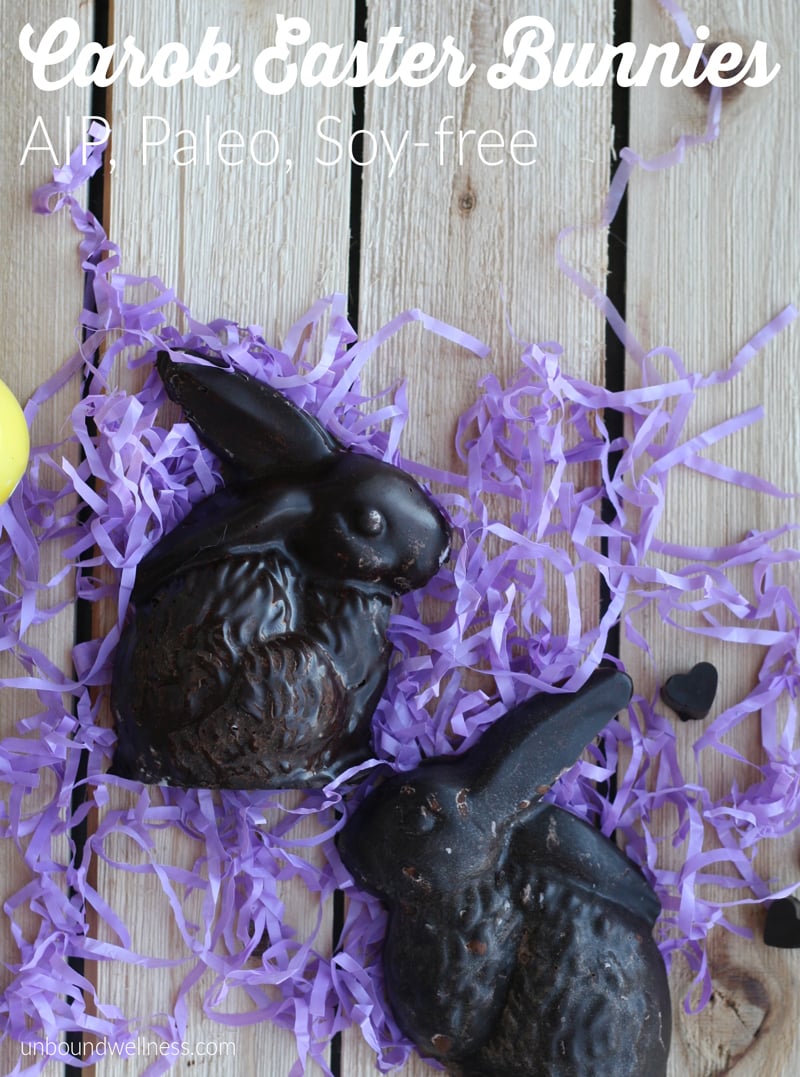
AIP “Chocolate” Carob Easter Bunnies 🐰
Ingredients (makes about two medium bunnies, depending on mold size):
- 1 cup carob powder (plain or toasted, based on your flavor preference)
- 1/2 cup coconut oil (virgin coconut oil will impart a slight coconut flavor, refined is neutral)
- 1 tbsp raw honey (ensure it’s pure and unadulterated; for a strictly vegan option, use pure maple syrup)
- 1 tsp pure vanilla extract (crucially, ensure it’s non-alcoholic for strict AIP compliance)
- Optional: a small pinch of high-quality sea salt (this subtle addition significantly enhances and balances the flavors)
Instructions:
- Begin by gently melting the coconut oil. Place the specified amount of coconut oil in a small saucepan and set it over very low heat on your stovetop. Watch it carefully, as the goal is only to liquefy it, not to allow it to bubble, sizzle, or get excessively hot. Gentle melting preserves its beneficial properties.
- Once the coconut oil is fully liquid and transparent, remove the saucepan from the heat immediately. Prolonged heating is unnecessary and can degrade the oil.
- Add the raw honey (or maple syrup if using) to the warm liquid coconut oil in the saucepan. Stir thoroughly with a spoon or whisk until the honey is completely dissolved and smoothly combined with the oil. This step is crucial for achieving uniform sweetness and texture in your final product.
- In a separate, clean, medium-sized mixing bowl, add the 1 cup of carob powder. Ensure there are no clumps, sifting if necessary.
- Slowly and gradually pour the warm liquid mixture (the combined coconut oil and honey) into the bowl with the carob powder. As you pour, continuously stir the mixture with a spoon or spatula. This slow addition and constant stirring are absolutely key to preventing clumps and achieving a smooth, uniform “chocolate-like” consistency that will be easy to pour into molds.
- Once the mixture is well combined and relatively smooth, add the pure non-alcoholic vanilla extract and, if using, the small pinch of sea salt. Stir again vigorously until all ingredients are fully incorporated and the carob mixture is smooth, glossy, and consistent throughout. The sea salt is optional but highly recommended as it beautifully enhances the natural sweetness and deepens the flavor profile of the carob.
- Carefully pour the prepared carob mixture into your chosen Easter Bunny molds. Silicone molds are highly recommended for their flexibility and ease of release. Gently tap the molds on your countertop a few times to help release any trapped air bubbles and ensure the mixture settles evenly into all the intricate nooks and crannies of the bunny shape. This will give you perfectly formed treats.
- Place the filled molds in the refrigerator for at least one hour. This chilling time is absolutely essential for the coconut oil to solidify completely and for your carob bunnies to firm up thoroughly. Adequate chilling ensures they will hold their shape and be easy to remove from the molds without breaking.
- After an hour (or longer if they still feel soft), carefully remove the solidified carob bunnies from their molds. They should pop out easily if fully chilled and if you are using flexible silicone molds. Store any leftovers properly, and then enjoy your delightful, healthy, and AIP-friendly Easter treats!
Tips for Success & Enjoyment: Making the Most of Your Carob Bunnies
- Mold Selection Matters: While Easter bunny molds are wonderfully festive for the occasion, feel free to use any silicone candy molds you have on hand – hearts, stars, mini-muffin shapes, or even simple squares work beautifully. Silicone molds are highly recommended for their flexibility, which allows for effortless release of the solid treats without damage.
- Optimal Storage: These carob bunnies are best stored in an airtight container in the refrigerator, especially if you live in a warmer climate or during summer months. The coconut oil component will soften significantly at room temperature (above 76°F or 24°C), causing them to lose their firm shape. Properly stored in the fridge, they will last wonderfully for up to two weeks, ensuring you have a steady supply of healthy treats.
- Flavor Variations & Personalization: Feel free to get creative and customize your carob bunnies! A tiny pinch of ground cinnamon or a dash of ginger powder can add a delightful warmth. For an invigorating twist, a single drop of food-grade peppermint extract (ensure it’s AIP-compliant and pure) can be transformative. Always add flavor extracts sparingly and taste as you go.
- Involving Kids in the Kitchen: This recipe is fantastic for involving children in the kitchen. The simple steps and engaging process of pouring the mixture into fun molds are activities kids will love. It’s a wonderful, hands-on way to teach them about healthier food choices and the joy of creating homemade treats. They’ll take pride in their creations and be more inclined to enjoy them!
- Creative Serving Suggestions: Serve these adorable carob bunnies as a standalone healthy treat for Easter gatherings, use them to decorate an AIP-friendly cake or cupcakes, or even pack them in lunchboxes for a special, wholesome surprise. They also make thoughtful, homemade gifts!
These adorable and utterly delicious “chocolate” carob bunnies are a testament to how wonderful and satisfying healthy eating can be. They’re a huge hit with adults seeking cleaner alternatives and, while I don’t have kids myself, I guarantee they’ll be just as popular with the younger crowd. They embody the joy and festive spirit of Easter without any of the usual sugar crash, inflammatory ingredients, or dietary worries. It’s truly a win-win: delicious, fun, and good for you!
So, this Easter, celebrate with peace of mind and a plate full of homemade goodness. Whip up a batch of these AIP Carob Easter Bunnies and experience the delight of a truly nourishing and utterly delicious treat that everyone can enjoy.
Happy Easter, friends! May your holiday be filled with health, happiness, and plenty of delicious, wholesome treats.