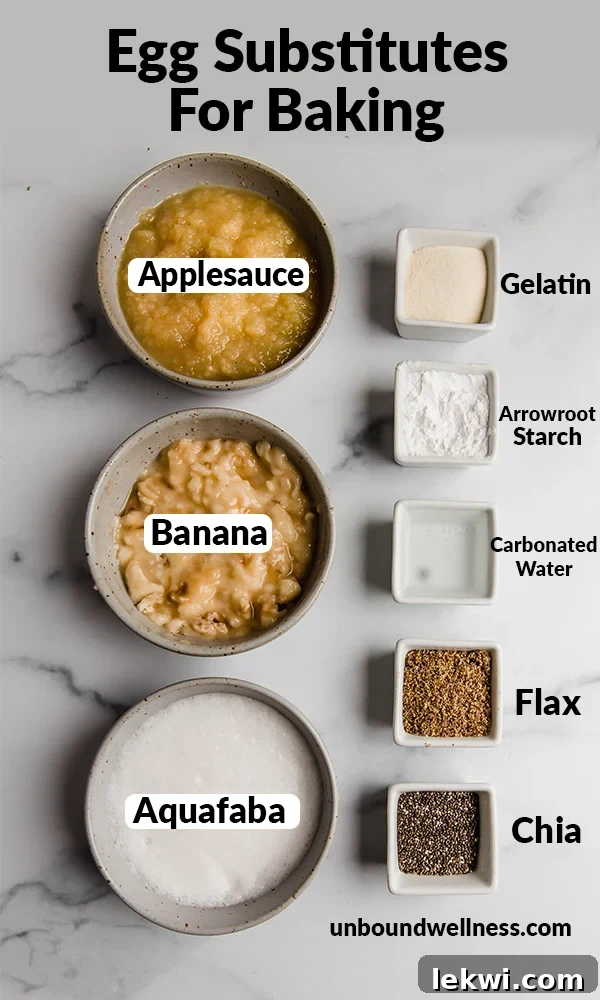
In the vast and exciting world of baking, mastering the art of substitution can be a game-changer. One of the most sought-after baking hacks revolves around finding effective alternatives for eggs. Whether due to dietary restrictions, allergies, or simply running out of this versatile ingredient, knowing how to replace eggs without compromising the integrity of your beloved baked goods is a secret worth sharing. This comprehensive guide will unveil the 8 best egg substitutes for baking, providing you with the knowledge, tips, and tricks to ensure your creations turn out perfectly every time.
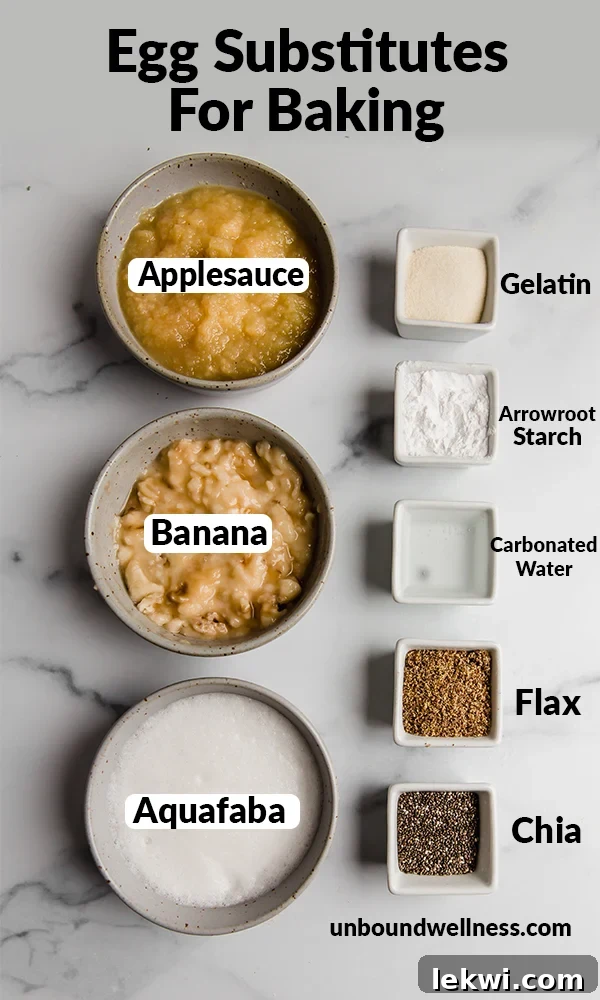
Why Might You Need an Egg Substitute in Your Baking?
Eggs are undeniably a foundational ingredient in countless recipes, celebrated for their nutritional value, versatility, and crucial role in baking. There’s certainly nothing inherently “wrong” with eggs. However, for many bakers and home cooks, reasons arise that necessitate finding a suitable alternative. Understanding these reasons helps in appreciating the importance of effective egg substitutes:
- Embracing a Vegan or Plant-Based Lifestyle: For individuals following vegan or plant-based diets, eggs are explicitly excluded. The demand for delicious egg-free baked goods has led to an explosion of innovative substitutes that seamlessly integrate into recipes, allowing everyone to enjoy treats like cookies, cakes, and muffins. Only one substitute discussed here, gelatin, is not suitable for vegan diets.
- Adhering to the Autoimmune Protocol (AIP) Diet: The Autoimmune Protocol (AIP) diet is a healing diet designed to reduce inflammation and symptoms of autoimmune diseases. During its elimination phase, eggs are typically removed due to their potential to trigger sensitivities in some individuals. Thankfully, several egg substitutes, including banana, applesauce, gelatin, arrowroot, and carbonated water, are AIP-compliant, making it possible to continue baking within these dietary guidelines.
- Managing Egg Allergies or Intolerances: Egg allergies are among the most common food allergies, particularly in children, though they can affect adults too. For those with a diagnosed egg allergy or intolerance, using egg substitutes isn’t a preference but a necessity for safe consumption. These alternatives open up a world of baking possibilities that would otherwise be off-limits.
- The Unexpected Kitchen Shortage: We’ve all been there – you’re halfway through preparing a delicious batch of brownies or a decadent cake, only to realize your egg carton is empty. In these moments, knowing reliable egg substitutes can be a true lifesaver, preventing a trip to the grocery store and keeping your baking plans on track.
- Exploring New Textures and Flavors: Beyond dietary needs, some bakers experiment with egg substitutes to achieve unique textures or introduce subtle new flavors. For instance, mashed banana not only acts as a binder but also adds natural sweetness and a distinct fruity note to baked goods.
Why Are Eggs So Important in Baking, and Can’t They Just Be Omitted?
To truly understand how to effectively substitute eggs, it’s crucial to grasp the multifaceted roles they play in baking. Eggs are far more than just an ingredient; they are a fundamental component that contributes to the final product’s structure, texture, moisture, and even flavor. Simply leaving them out without a proper substitute often leads to disappointing results:
- Binding, Texture & Structure: Eggs act as the glue that holds baked goods together. The proteins in eggs coagulate when heated, creating a strong matrix that binds ingredients, preventing crumbling. This binding power is vital for items like cookies, loafs, and casseroles. Without eggs or an effective substitute, cookies might spread excessively and crumble apart, and cakes could lack cohesion, resulting in a dense, brick-like texture instead of a tender crumb.
- Leavening: Eggs contribute significantly to the rise and aeration of baked goods. When egg whites are whipped, they trap air, creating a foam that expands in the oven, giving muffins, cakes, and soufflés their characteristic lightness and volume. Whole eggs also contain moisture which, when heated, produces steam, further aiding in leavening. Omitting eggs without considering their leavening function will likely result in flatter, denser baked goods.
- Moisture & Emulsification: Eggs contain a high percentage of water and fat, both of which are essential for adding moisture and richness to baked goods. The fat in egg yolks also acts as an emulsifier, helping to blend fats and liquids evenly throughout the batter, leading to a smoother, more uniform texture. Without this moisture and emulsifying action, baked goods can turn out dry, crumbly, and less palatable.
- Flavor and Color: While often subtle, eggs contribute a distinct richness and depth of flavor to many baked goods. The yolks, in particular, lend a beautiful golden hue to batters and crusts. Substitutes that are flavorless might require slight adjustments to other ingredients to compensate for this aspect, or flavorful substitutes might be chosen intentionally for their taste contribution.
Can Any Egg Substitute Be Used Interchangeably in Any Recipe?
The short answer is not always. While many egg substitutes are incredibly versatile, successful substitution requires careful consideration of several factors:
- Dietary Compliance is Key: First and foremost, you must ensure the chosen substitute aligns with your specific dietary needs. For example, gelatin is an excellent binder but is not suitable for vegan diets. Similarly, some AIP-compliant substitutes may not be readily available or ideal for every recipe. Always double-check the suitability of an ingredient for your diet.
- Recipe Specifics and Existing Substitutions: The complexity of a recipe heavily influences the success of an egg swap. If you’re working with a standard recipe where eggs are the primary binder and leavening agent, swapping them out might be relatively straightforward. However, for recipes that are already grain-free, gluten-free, or dairy-free, replacing eggs becomes significantly more challenging. These recipes often rely on eggs to provide much of their structure and texture, and an improper substitute can cause the entire dish to collapse or turn out unappetizing. In such cases, it’s always best to follow the recipe developer’s specific recommendations for egg alternatives or consult them directly if unsure.
- Impact on Flavor and Texture: Each substitute brings its unique properties. Some, like flax eggs or gelatin, are largely flavor-neutral, making them suitable for a wide range of recipes. Others, such as mashed banana or applesauce, introduce distinct flavors and sweetness, which must be considered in the context of the recipe’s desired outcome. Similarly, substitutes can affect the final texture – some may yield a denser product, while others contribute to a lighter crumb.
- Number of Eggs to Be Substituted: Most substitutes work best when replacing 1 to 2 eggs. Replacing three or more eggs can be trickier, as the substitute may not be able to fully replicate all the functions of so many eggs. For recipes requiring a large number of eggs, it might be more effective to seek out recipes specifically designed to be egg-free.
Which Egg Substitute is Truly the Best for Baking?
There’s no single “best” egg substitute that fits all scenarios; it truly depends on the specific recipe, your dietary needs, and the desired outcome. However, personal preferences often emerge based on experience. For vegan recipes, a flax egg is frequently a top choice due to its neutral flavor, excellent binding capabilities, and added nutritional benefits. For those following an AIP diet, the gelatin egg consistently proves to be the most effective. I find both of these methods to offer superior binding, a good rise, and a minimal impact on flavor, leading to the most consistent and satisfying results in a wide array of baked goods.
How to Confidently Choose the Right Egg Substitute for Your Recipe
Making an informed decision about which egg substitute to use can significantly impact the success of your baking project. Here are key guidelines to help you:
- Prioritize the Recipe Developer’s Guidance: When using a recipe from a blog, cookbook, or other source, always check if the creator has already provided suggestions for egg swaps (e.g., “can be made with a chia or flax egg”). Following their specific recommendations is almost always the safest bet for achieving the best results, as they have likely tested these alternatives.
- Evaluate the Primary Function of Eggs in Your Recipe: Consider what the eggs are mainly contributing to your specific dish. Is it primarily for binding (like in cookies or meatballs)? For leavening and structure (like in a fluffy cake or muffins)? Or for moisture and richness (like in a dense brownie)? Choosing a substitute that excels in that particular function will yield better results.
- Consider Flavor and Moisture Profile: If your recipe has delicate flavors, opt for a neutral-tasting substitute like flax, chia, arrowroot, or gelatin. If a fruity flavor and added sweetness would complement the dish (e.g., banana bread or muffins), then mashed banana or applesauce could be excellent choices.
- Assess the Recipe’s Overall Complexity: As mentioned, highly specialized recipes (e.g., gluten-free, grain-free, dairy-free) are more sensitive to egg substitutions. In these cases, it might be better to use a substitute known for its strong binding and structural properties, like gelatin or flax, or to find a recipe specifically formulated to be egg-free from the start.
- Refer to the Detailed Tips Below for Each Substitute: This guide provides specific instructions, ideal uses, and critical tips for each of the 8 egg substitutes. Use these individual profiles as a quick reference to match the best substitute to your current baking needs.
8 Best Egg Substitutes for Baking: A Detailed Guide
1. Flax Egg (Ground Flaxseed + Water)
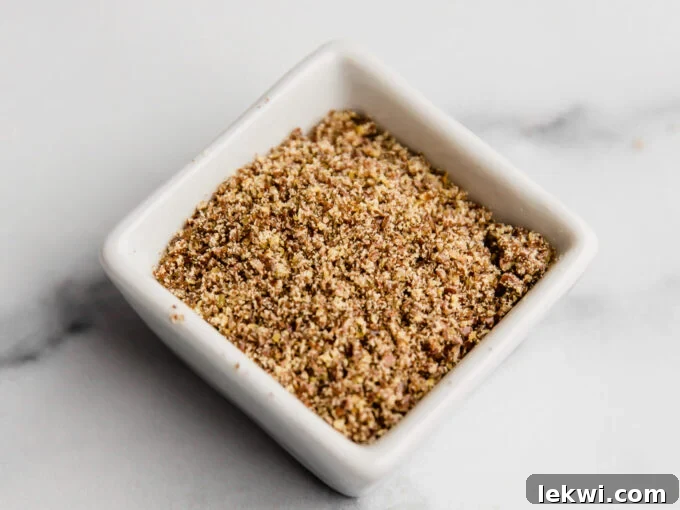
The flax egg is a beloved staple in vegan baking, renowned for its simplicity, effectiveness, and nutritional benefits. It acts as an excellent binder and is virtually flavorless, making it suitable for a wide range of recipes where you want the original flavors to shine through.
How to Make It:
- To substitute 1 Egg: Combine 1 tablespoon of finely ground flaxseed meal with 3 tablespoons of water.
- Whisk them together thoroughly in a small bowl. Allow the mixture to sit undisturbed for at least 5 minutes (or up to 15 minutes) until it thickens into a gel-like consistency, similar to a raw egg. The longer it sits, the thicker it will become.
Where to Use It:
- Vegan Recipes: This is a go-to for almost any vegan baking recipe requiring an egg.
- Cookies: Provides excellent binding to prevent crumbling.
- Muffins and Quick Breads: Helps hold the structure and adds a slight chewiness.
- Pancakes and Waffles: Contributes to a good texture without imparting flavor.
- Burgers and Meatless Loafs: Functions as a binder for veggie patties and loafs.
Tips & Tricks for the Perfect Flax Egg:
- Grind Your Own: For the freshest and most effective flax egg, grind whole flaxseeds in a coffee grinder or spice grinder just before use. Pre-ground flaxseed meal can also work, but its binding properties might be slightly reduced if it’s not fresh.
- Finely Ground is Key: Ensure the flaxseed is finely ground to achieve the best gel consistency. Coarsely ground flax won’t absorb water as effectively.
- Allow Adequate Time: Don’t rush the thickening process. Giving it the full 5-15 minutes ensures maximum binding power.
- Adds Nutrients: Flaxseeds are rich in omega-3 fatty acids and fiber, subtly boosting the nutritional profile of your baked goods.
- Consider Color: Darker flaxseeds will create a slightly darker flax egg, which might be noticeable in very light-colored baked goods. If this is a concern, opt for golden flaxseeds.
2. Chia Egg (Chia Seeds + Water)
Similar to the flax egg, the chia egg is another powerhouse in vegan baking. It’s incredibly easy to make, flavorless, and packs a nutritional punch with healthy fats, fiber, and protein. Its gel-forming properties make it an excellent binder.
How to Make It:
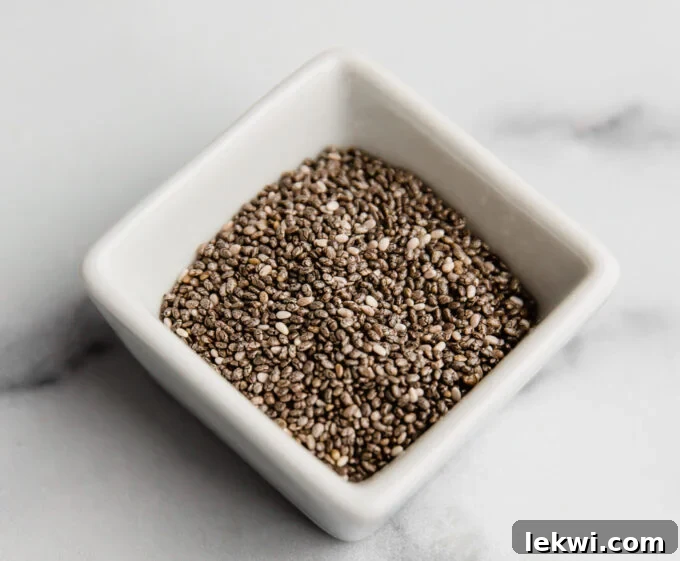
- To substitute 1 Egg: Combine 1 tablespoon of whole chia seeds with 3 tablespoons of water.
- Stir well and let the mixture sit for about 5 to 10 minutes, or until it forms a thick, gelatinous consistency, similar to tapioca pudding.
Where to Use It:
- Vegan Baking: An excellent alternative for recipes that need an egg for binding.
- Cookies: Helps keep cookies from falling apart and adds a slightly chewy texture.
- Muffins and Quick Breads: Provides structure and moisture.
- Granola Bars: A fantastic binder for homemade granola bars and energy bites.
- Pancakes: Contributes to a good texture without altering the flavor significantly.
Tips & Tricks for the Perfect Chia Egg:
- Whole vs. Ground: While the recipe uses whole chia seeds, you can also use ground chia seeds, similar to flax. However, whole chia seeds are often preferred for their slightly more robust gel.
- Hydration is Key: Ensure the chia seeds have fully absorbed the water and formed a thick gel before adding them to your batter. Undernourished chia eggs won’t bind as effectively.
- No Distinct Flavor: Chia eggs are largely flavor-neutral, making them adaptable to most recipes.
- Added Texture: Unlike flax eggs (which are smooth if ground), whole chia seeds will add tiny specks and a subtle, slightly seedy texture to your baked goods. This is usually fine for muffins or quick breads but might be less desirable in delicate cakes.
- Nutrient Boost: Like flaxseeds, chia seeds are a good source of fiber, protein, and omega-3 fatty acids.
3. Arrowroot Starch (Arrowroot Powder + Water)
Arrowroot starch, also known as arrowroot powder, is a versatile, gluten-free, and grain-free thickening agent that can double as an egg substitute. It’s particularly useful for binding and thickening and is a popular choice for those on the AIP diet. It works well in a pinch to provide structure.
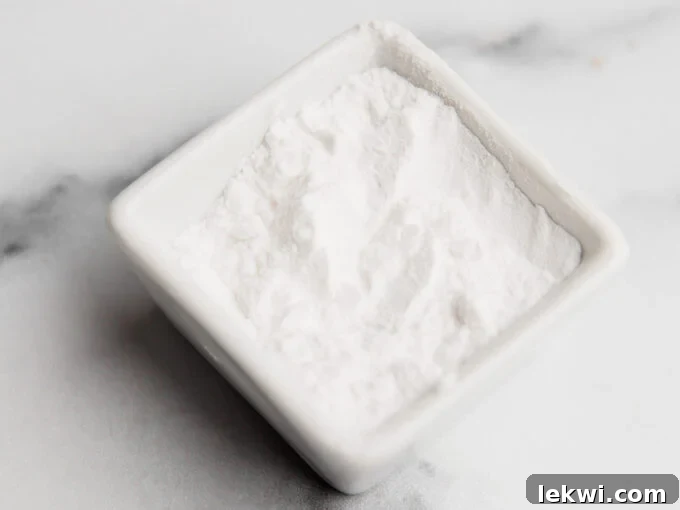
How to Make It:
- To substitute 1 Egg: Whisk together 2 tablespoons of arrowroot starch with 3 tablespoons of water.
- Mix until a smooth, milky slurry forms. Use this mixture immediately as an egg substitute.
Where to Use It:
- Vegan and AIP Recipes: A suitable binder for both dietary needs.
- Thickening Sauces and Gravies: Its primary function is thickening, which makes it excellent for gravies, fruit fillings, and glazes.
- Crispier Coatings: Can be used in dredging for fried foods to achieve a crispier texture.
- Muffins and Quick Breads: Helps with structure, especially in recipes that aren’t overly complex.
- Cookies: Can contribute to a slightly chewier texture.
Tips & Tricks for Using Arrowroot Starch:
- Not a Primary Binder for Complex Recipes: While it binds, arrowroot is best as an egg substitute in recipes that already have decent structure or only require one egg. It’s generally not strong enough as a sole binder for complex grain-free or egg-heavy recipes, especially those that already use arrowroot as a main flour.
- Flavor-Neutral: Arrowroot starch has no discernible flavor, making it versatile.
- Avoid High Heat for Too Long: When used as a thickener, arrowroot can break down if subjected to prolonged high heat. Add it towards the end of cooking for sauces. For baking, this is less of an issue as it’s incorporated into a batter.
- Mix Thoroughly: Always mix arrowroot with a cold liquid first to create a slurry before adding to other ingredients to prevent lumps.
- Light and Airy: It can contribute to a lighter, airier texture compared to some denser substitutes.
4. Carbonated Water (Sparkling Water)
Carbonated water might seem like an unusual egg substitute, but its effervescence can cleverly mimic some of the leavening properties of eggs, adding lightness and moisture to baked goods. It’s a simple, flavorless, and AIP-compliant option that’s particularly effective in certain situations.
How to Make It:
- To substitute 1 Egg: Use 1/4 cup of fresh carbonated water.
- Simply measure and add it directly to your wet ingredients.
Where to Use It:
- Quick Breads: Excellent for recipes like banana bread, zucchini bread, or simple muffins made with regular wheat flour. The bubbles help with the rise.
- Pancakes and Waffles: Can contribute to a lighter, fluffier texture.
- Simple Cakes: Works well in basic cake recipes where the primary need for eggs is for leavening and a bit of moisture.
Tips & Tricks for Using Carbonated Water:
- Freshly Opened is Best: For maximum effervescence, always use carbonated water from a freshly opened bottle or can. Flat sparkling water will not provide the desired leavening effect.
- Avoid Flavored Varieties: Stick to plain, unflavored carbonated water unless you specifically want to introduce a particular flavor profile (e.g., lemon sparkling water for a lemon cake, but be cautious).
- Not a Strong Binder: Carbonated water excels at leavening and moisture, but it’s not a strong binder. Therefore, it’s not ideal for recipes that heavily rely on eggs for structure, especially many grain-free or complex AIP recipes that already struggle with binding.
- Use in Moderation: Typically best for replacing 1-2 eggs. Too much can make the batter too wet or lead to an overly crumbly texture as the binding element isn’t strong enough.
- Consider Other Binders: If your recipe also needs a binding element, you might consider pairing carbonated water with a small amount of another binder like arrowroot if your diet allows.
5. Gelatin Egg (Gelatin + Water)
For individuals following the AIP diet, the gelatin egg is often hailed as the gold standard for egg substitution. It provides exceptional binding and structure, mimicking the properties of eggs more closely than many other AIP-compliant options. While the preparation might seem a little more involved than flax or chia eggs, the results are consistently excellent, especially in grain-free and AIP baked goods.
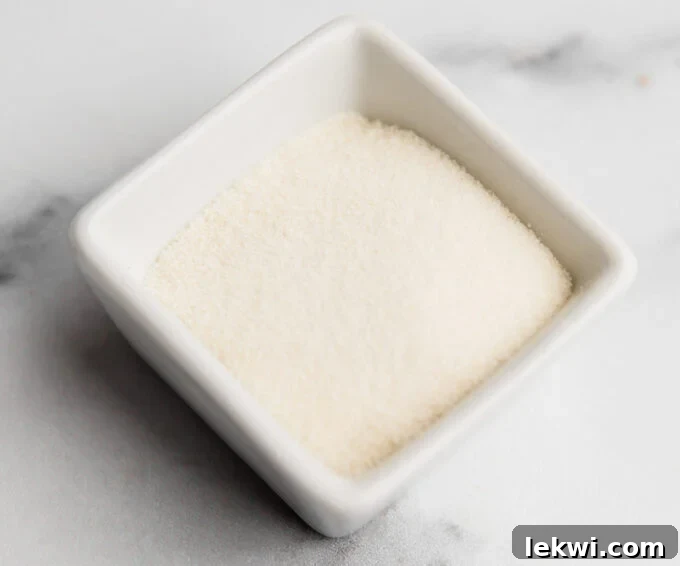
How to Make It:
- To substitute 1 Egg: You will need 1 tablespoon of unflavored gelatin powder and 1/4 cup of cold water.
- Begin by pouring the 1/4 cup of cold water into a small saucepan. Slowly sprinkle the gelatin powder evenly over the cold water. Do not stir initially; allow the gelatin to “bloom” or harden for about 2-3 minutes.
- Once bloomed, place the saucepan on the stove over low heat. Gently melt the gelatin, stirring continuously, until it becomes completely liquid and clear. This usually takes just about a minute; do not allow it to boil.
- Immediately remove from heat. Vigorously whisk the gelatin mixture (or use a milk frother) until it becomes frothy and slightly foamy, resembling beaten egg whites.
- Add this frothy gelatin egg to your batter or dough immediately and combine quickly, as it will start to set as it cools.
Where to Use It:
- AIP Recipes: This is the most effective and reliable egg substitute for a wide range of AIP-compliant baked goods.
- Grain-Free Baking: Particularly excellent for gluten-free and grain-free muffins, cakes, and breads where structural integrity is often a challenge.
- Thickening Sauces: Just like arrowroot, gelatin can also be used to thicken sauces, gravies, and fruit fillings, adding a unique texture.
- Custards and Puddings: Can be used to create smooth, stable custards and puddings.
Tips & Tricks for the Perfect Gelatin Egg:
- Act Fast: The most crucial tip is to use the gelatin egg immediately after it’s frothed. It will start to set as it cools, so incorporate it into your batter or dough without delay.
- Don’t Over-Substitute: While effective, avoid replacing more than 3 eggs with gelatin eggs in a single recipe, as it can sometimes lead to a slightly chewy or rubbery texture if used in excess.
- Milk Frother is a Game-Changer: For the best frothy consistency, a handheld milk frother works wonders and is much more efficient than a whisk.
- Quality Gelatin: Use high-quality, unflavored gelatin powder (e.g., grass-fed bovine gelatin) for the best results and nutritional benefits.
- Temperature Control: Ensure the water is cold for blooming and that you don’t overheat the gelatin when melting; just enough to dissolve it is perfect.
6. Aquafaba (Chickpea Brine)
Aquafaba, the liquid drained from a can of chickpeas or other white legumes, is a truly remarkable discovery in vegan baking. It has an incredible ability to mimic the properties of egg whites when whipped, making it invaluable for light and airy textures. While it has a very subtle chickpea flavor, it’s rarely noticeable in the final baked product.
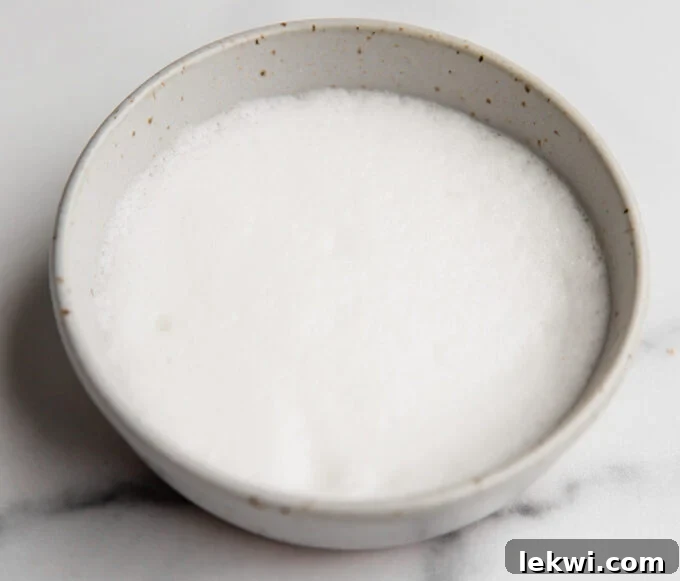
How to Make It:
- To substitute 1 Egg: Use 3 tablespoons of aquafaba.
- For best results, strain the liquid from a can of chickpeas (or other white beans) into a clean, dry bowl.
- Using an electric hand mixer or stand mixer, beat the aquafaba on high speed until stiff peaks form, similar to whipped egg whites. This can take anywhere from 5 to 15 minutes, depending on the aquafaba and your mixer.
- Use the whipped aquafaba immediately in your recipe.
Where to Use It:
- Vegan Meringues and Macarons: Its ability to whip into stiff peaks makes it perfect for these delicate, airy desserts.
- Vegan Mousses and Whipped Toppings: Creates light and fluffy textures.
- Light Cakes and Cupcakes: Contributes to a tender crumb and rise.
- Mayonnaise and Other Emulsified Sauces: Acts as an excellent emulsifier.
- Cocktails: Can create frothy tops for drinks like a vegan whiskey sour.
Tips & Tricks for Using Aquafaba:
- Quality of Aquafaba: Use the liquid from unsalted, additive-free canned chickpeas for the best results. Some brands work better than others; experiment to find your favorite. You can also cook your own chickpeas and reduce the cooking liquid to concentrate the aquafaba.
- Clean Equipment is Crucial: Ensure your bowl and beaters are completely grease-free, just like when whipping egg whites, to achieve stiff peaks.
- Adds Air and Lightness: Aquafaba is more about aeration and creating light textures than it is about strong binding. It’s not the best choice for dense, chewy baked goods where a strong binder is paramount.
- Subtle Flavor: While it can have a very faint beany scent when raw, this typically disappears entirely during baking.
- Sweeteners and Stabilizers: A pinch of cream of tartar or a tiny amount of lemon juice can sometimes help stabilize whipped aquafaba, similar to egg whites. Adding a small amount of sugar gradually during whipping can also aid in stiff peak formation for meringues.
7. Mashed Banana (Ripe Banana)
Mashed banana is a wonderfully natural and effective egg substitute that brings its own distinct flavor, sweetness, and moisture to baked goods. It’s particularly popular in recipes where a fruity, rich taste is welcome, such as various quick breads and muffins. Its natural pectin acts as a binder, while its high water content provides moisture.
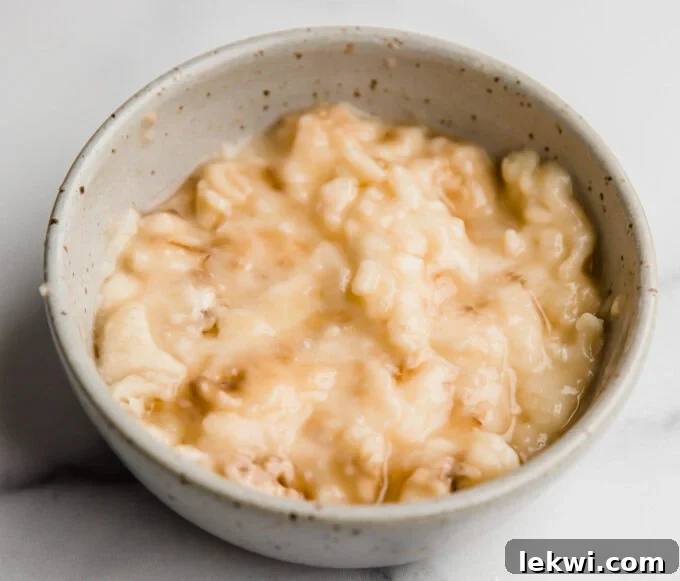
How to Make It:
- To substitute 1 Egg: Use 1/4 cup of finely mashed ripe banana.
- Ensure the banana is thoroughly mashed and free of large lumps for even distribution in your batter.
Where to Use It:
- Pancakes and Waffles: Adds natural sweetness and a moist, tender texture.
- Muffins and Quick Breads: Ideal for recipes like banana bread (naturally!), zucchini bread, or carrot muffins, where the banana flavor is complementary.
- Cookies: Works well in soft, chewy cookie recipes, though it can make them spread slightly more.
- Brownies: Contributes to a fudgy texture and natural sweetness.
- AIP Recipes: A good option for AIP if the banana flavor is desired and suitable for the recipe.
Tips & Tricks for Using Mashed Banana:
- Ripeness Matters: Always use very ripe bananas (those with plenty of brown spots on the peel). Ripe bananas are sweeter, easier to mash, and have a stronger binding capacity due to their higher pectin content.
- Flavor Impact: Remember that banana will impart its flavor to your baked goods. Avoid using it in recipes where a neutral flavor is desired (e.g., vanilla cake, savory dishes).
- Adds Moisture and Sweetness: When using mashed banana, you may need to slightly reduce the amount of other sweeteners (like sugar) and liquid in your recipe to account for the banana’s contributions.
- Denser Texture: Mashed banana tends to create a denser, moister baked good, as it doesn’t offer much leavening. If you want a lighter texture, you might combine it with a small amount of baking soda or baking powder (if diet allows).
- Up to Two Eggs: Generally best for replacing 1-2 eggs. More than that can lead to an overpowering banana flavor and an overly dense, gummy texture.
8. Applesauce (Unsweetened)
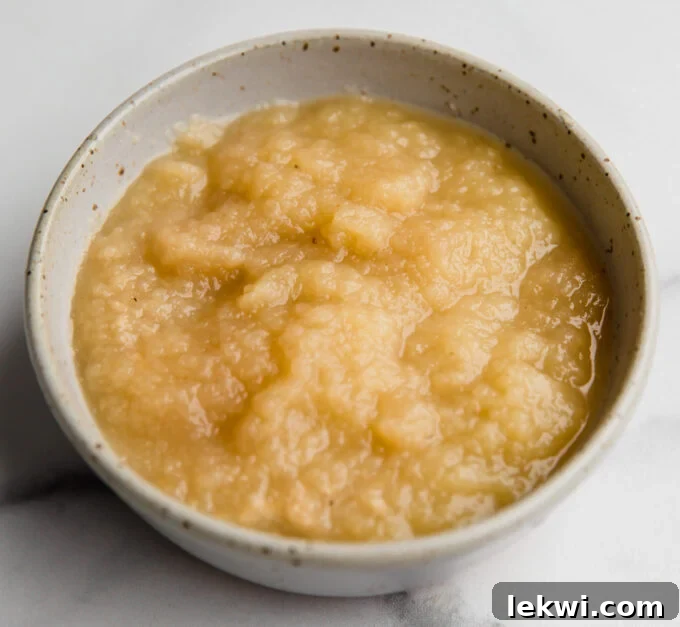
Applesauce is another excellent fruit-based egg substitute, prized for its ability to add moisture and natural sweetness while also acting as a binder. Like mashed banana, it works best in recipes where a subtle fruity flavor is a welcome addition. Opting for unsweetened applesauce gives you more control over the recipe’s overall sugar content.
How to Make It:
- To substitute 1 Egg: Use 1/4 cup of unsweetened applesauce.
- Simply measure and add it directly to your wet ingredients.
Where to Use It:
- Muffins and Quick Breads: Fantastic for adding moisture and tenderness, especially in spiced recipes like apple or pumpkin muffins.
- Pancakes and Waffles: Contributes to a soft texture and natural sweetness.
- Cookies: Works well in soft, cake-like cookies and oatmeal cookies.
- Brownies: Helps create a fudgy, moist texture.
- AIP Recipes: A viable option for AIP-compliant baking, provided the apple flavor is appropriate.
Tips & Tricks for Using Applesauce:
- Unsweetened is Key: Always choose unsweetened applesauce unless the recipe specifically calls for sweetened. This allows you to control the sugar level of your baked goods more precisely.
- Flavor Considerations: Applesauce will lend a mild apple flavor. Ensure this complements the other flavors in your recipe.
- Adds Moisture and Sweetness: Similar to banana, applesauce adds significant moisture and natural sugars. You might need to reduce other liquids and sweeteners in your recipe accordingly.
- Denser Results: Applesauce generally results in denser, moister baked goods, as it doesn’t provide leavening. For a lighter crumb, consider adding a little extra baking powder (if your diet allows) if the recipe originally relied heavily on eggs for rise.
- Texture: It can make baked goods slightly gummier if used in large quantities. It’s typically best for replacing 1-2 eggs.
- Smooth Consistency: Ensure your applesauce is smooth and free of large chunks for an even texture in your final product.
Mastering egg substitutes opens up a world of baking possibilities, making delicious treats accessible to everyone, regardless of dietary restrictions or unexpected pantry shortages. By understanding the unique properties of each alternative and considering the specific needs of your recipe, you can confidently swap out eggs and continue to create culinary masterpieces. Happy baking!