Stepping back in time, a nostalgic glance through old digital memories recently unveiled one of my earliest forays into real food recipes: an Asian noodle bowl. It was a time when my dietary choices were starkly different – I embraced gluten, limited my protein almost exclusively to egg whites, and considered margarine a primary fat source. Looking back, it’s a stark reminder of how far my understanding of nutrition and healthy eating has evolved. Yet, even then, my culinary compass was firmly pointed towards the vibrant, fresh flavors of Asian cuisine. Asian noodle bowls, packed with crisp vegetables and aromatic sauces, were a consistent favorite, offering a delightful escape into flavorful goodness.
That original recipe, created years ago, bears little resemblance to what I would prepare today. It featured soy-based sauces, occasionally rice noodles, and my vegetable chopping skills might best be described as “rustic,” perhaps even “lawnmower-esque.” And yes, some versions might have even included a dollop of processed peanut butter – a testament to my then-limited knowledge. We all start somewhere, and the journey of healthy eating is a continuous learning process. Recognizing the potential of that beloved dish, I knew it was time for a significant upgrade, a complete transformation to align with my current commitment to nutrient-dense, wholesome ingredients.
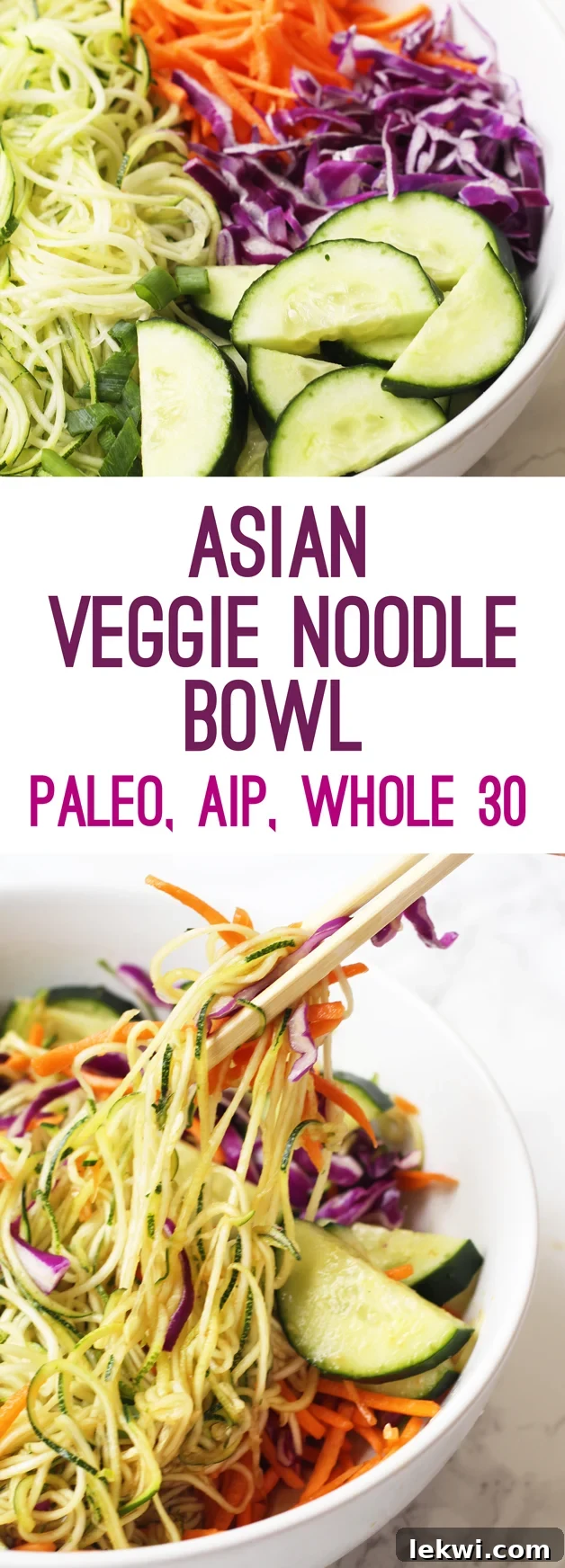
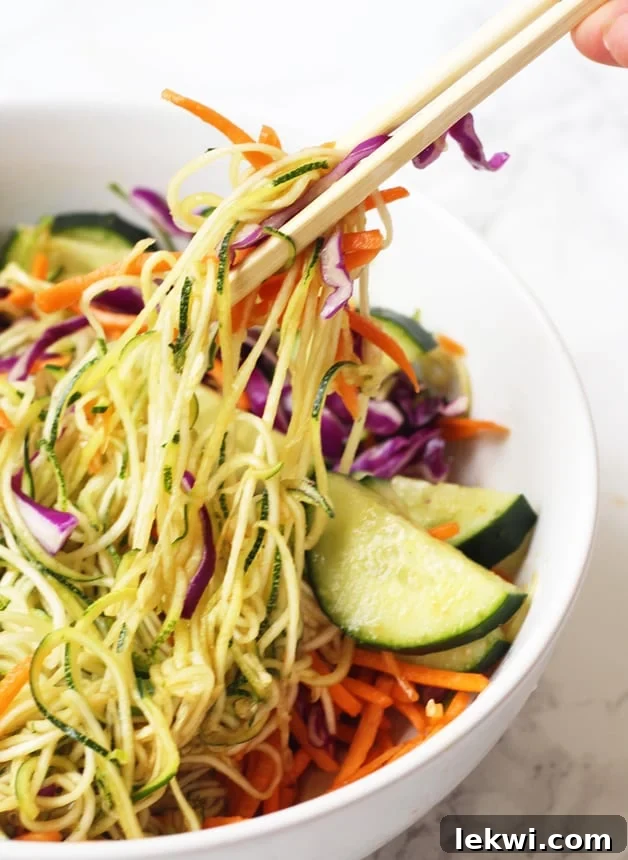
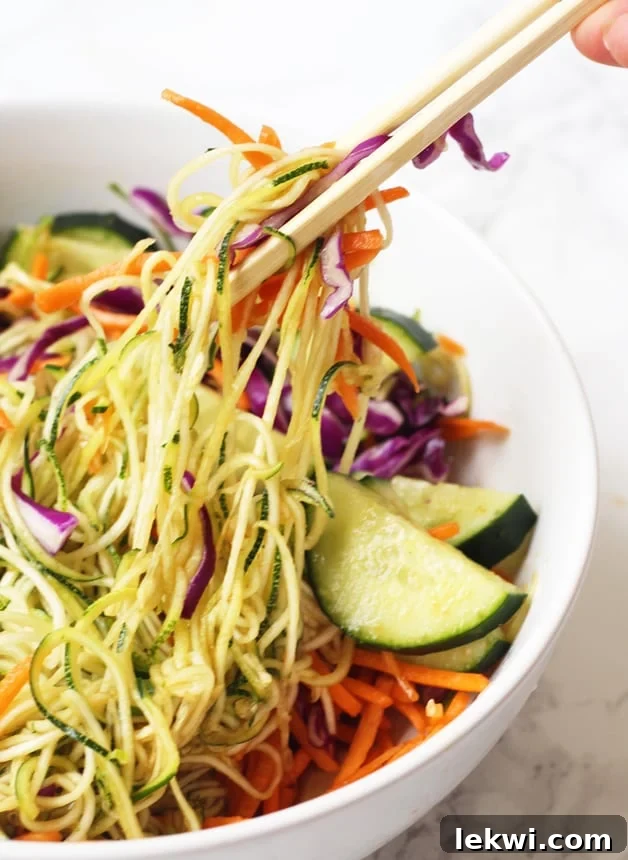
Today, I’m thrilled to present this reimagined Asian Zucchini Noodle Bowl. It’s a fresh, vibrant, and incredibly easy-to-make dish that bursts with flavor while being packed with an abundance of wholesome, health-boosting vegetables. This recipe isn’t just a meal; it’s a celebration of clean eating, designed to be compatible with various dietary needs, including Whole30, Paleo, and AIP (Autoimmune Protocol).
Crafting Your Perfect Asian Zucchini Noodle Bowl: Key Ingredients
The beauty of this Asian Zucchini Noodle Bowl lies in its simplicity and the power of its fresh ingredients. Each component plays a vital role in creating a harmonious blend of textures and flavors, making every bite a delight. While you can certainly customize your bowl based on preference and availability, here’s a closer look at the stars of this nutritious dish:
The Vibrant Vegetable Medley: Zucchini, Carrots, Cabbage, Cucumber, and Green Onion
These five vegetables form the heart of our healthy noodle bowl. They are chosen not only for their complementary flavors and satisfying crunch but also for their impressive nutritional profiles. Each adds its unique touch, contributing to a vibrant, nutrient-rich meal:
- Zucchini: The Star Noodle Replacement. Spiralized zucchini takes center stage, offering a light, low-carb, and gluten-free alternative to traditional noodles. Zucchini is rich in antioxidants like beta-carotene, lutein, and zeaxanthin, which are crucial for eye health. It’s also a good source of Vitamin C, promoting immune function, and provides dietary fiber, aiding in healthy digestion. Its mild flavor makes it an excellent base for absorbing the delicious Asian sauce.
- Carrots: A Touch of Sweetness and Color. Grated carrots introduce a subtle sweetness and a beautiful pop of orange to the bowl. Beyond their aesthetic appeal, carrots are famed for their high content of beta-carotene, which the body converts into Vitamin A, essential for vision, immune function, and skin health. They also provide fiber and a range of other vitamins and minerals.
- Red Cabbage: Crunch and Antioxidant Power. Finely chopped red cabbage adds a fantastic crisp texture and a stunning purple hue. Red cabbage is a powerhouse of nutrients, particularly Vitamin C and Vitamin K. Its vibrant color comes from anthocyanins, powerful antioxidants that may help reduce inflammation and protect against chronic diseases.
- Cucumber: Refreshing Hydration. Sliced cucumber, cut into delicate half-moons, brings a refreshing coolness and a watery crunch to the bowl. Composed mostly of water, cucumbers are incredibly hydrating. They also contain antioxidants, including flavonoids and tannins, and provide a small amount of Vitamin K. Their mild taste balances the stronger flavors of the sauce.
- Green Onion: Aromatic Freshness. Chopped green onions (scallions) serve as a fresh, pungent garnish, adding a mild oniony bite that brightens the entire dish. They are a good source of Vitamin K and Vitamin C, contributing to bone health and immune support.
While these vegetables are highly recommended for the best flavor and nutritional balance in this specific recipe, feel free to explore. If you need to make swaps, ensure they align with your dietary goals. For instance, bell peppers, snow peas, or broccoli florets could make excellent additions or substitutions, though the overall flavor profile might shift slightly.
The Game-Changing Gluten-Free & Soy-Free Sauce Base: Coconut Aminos
Achieving a truly healthy and diet-friendly Asian noodle bowl means carefully selecting the sauce ingredients. This recipe is designed to be both gluten-free and soy-free, making coconut aminos an indispensable component. If you’re new to this ingredient, it’s a fantastic, naturally fermented alternative to soy sauce, made from the sap of coconut blossoms. Despite its name, it doesn’t taste like coconut but offers a savory, slightly sweet, and salty umami flavor profile that beautifully mimics traditional soy sauce.
Coconut aminos are not only soy-free and gluten-free, but they also have a lower sodium content than most soy sauces, making them a healthier choice for many. They are readily available in most health food stores, specialty grocery stores, and are increasingly found in mainstream supermarkets and even chains like Trader Joe’s. While many brands exist, I personally favor this particular brand for its consistent quality and flavor, ensuring your sauce is perfectly balanced.
Essential Kitchen Tool: The Veggie Spiralizer
Transforming ordinary vegetables into delightful, pasta-like noodles is key to this recipe’s appeal, and for that, a vegetable spiralizer is an absolute must. In my early days, I attempted to create veggie noodles by hand – a task that was both frustrating and largely ineffective, often resulting in soggy, unappealing strips rather than firm, uniform noodles.
I initially used a hand-crank spiralizer, which, while functional, often left my vegetables overly wet and lacking the desired texture. Upgrading to a more robust, often electric or sturdier countertop model, made a significant difference. The one I now use (similar to this one) consistently produces perfectly textured zucchini noodles that hold up well in the bowl, providing a satisfying chew without becoming mushy. While any spiralizer will get the job done, investing in a good quality one can truly elevate your experience and the outcome of your dishes. If you don’t own a spiralizer, a mandoline with a julienne setting or even a sharp vegetable peeler can work in a pinch for thinner ribbons, though the “noodle” effect might be less pronounced.
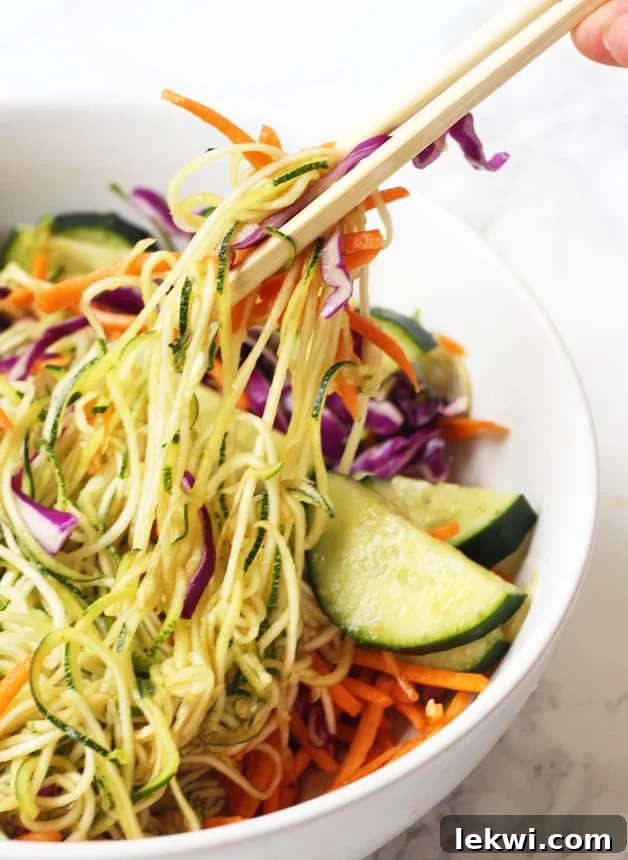
Asian Veggie Noodle Bowl (Whole 30, Paleo, AIP)
Leave a Review
Pin Recipe
Want to save this for later? Save it to your browser’s bookmarks or pin it to your favorite recipe board on Pinterest!
Ingredients
- 2 medium zucchini’s, spiralized
- ¾ cup carrots, grated
- ½ cup red cabbage, chopped
- 1 medium cucumber, chopped into half moons
- 2 sprigs green onion, chopped
- 1 tbsp coconut oil
- FOR THE SAUCE
- 2 tbsp coconut aminos
- 1 tsp ginger paste, or ginger powder
- ½ tsp salt
- ½ tsp onion powder
- 1 tsp garlic powder
Instructions
-
Place a pan on the stove and set to medium/low heat.
-
Melt the coconut oil in the pan.
-
Add the spiralized zucchini to the pan and cook for 2-3 minutes. The goal is to lightly sauté the noodles to aid in digestion, allowing them to soften slightly while still retaining a pleasant crunch. Avoid overcooking to prevent them from becoming soggy.
-
Remove the sautéed zucchini from heat and set it aside to cool. This step is crucial for maintaining the crispness of the other fresh vegetables when combined.
-
Once the zucchini has cooled down, transfer it to a large mixing bowl. Add the remaining raw veggie ingredients: grated carrots, chopped red cabbage, cucumber half-moons, and chopped green onion. Gently toss to combine.
-
In a separate small mixing bowl, combine all the sauce ingredients: coconut aminos, ginger paste (or powder), salt, onion powder, and garlic powder. Whisk thoroughly until well combined and smooth.
-
Pour the prepared sauce generously over the vegetable and zucchini noodle mixture in the large bowl. Toss everything gently to ensure all the ingredients are evenly coated with the flavorful dressing. Serve immediately to enjoy the freshest flavors and textures.
Tips for the Best Asian Zucchini Noodle Bowl
To truly elevate your Asian Zucchini Noodle Bowl experience and ensure perfect results every time, consider these additional tips:
- Don’t Overcook Zucchini Noodles: This is perhaps the most important tip. Zucchini has a high water content, and overcooking it will lead to soggy noodles that release too much moisture into your bowl. A quick sauté of 2-3 minutes is all that’s needed to slightly soften them while retaining their crunch.
- Chill Your Veggies: For a refreshing experience, ensure all your raw vegetables are well-chilled before assembly. This enhances their crispness and makes for a more invigorating meal.
- Customize Your Protein: While this recipe is delicious as a vegetarian dish, feel free to add your favorite protein. Grilled chicken, shrimp, baked salmon, or even pan-seared tofu (if not strictly AIP/Paleo) would be excellent additions. For AIP, consider cooked and shredded chicken or ground pork.
- Make Ahead (Partially): You can spiralize your zucchini and chop all your vegetables a day in advance and store them separately in airtight containers in the refrigerator. Prepare the sauce separately as well. Combine everything just before serving for optimal freshness and texture.
- Experiment with Garnishes: Elevate your bowl with simple garnishes. A sprinkle of sesame seeds (if tolerated and not AIP), chopped fresh cilantro, or a squeeze of lime juice can add extra layers of flavor and visual appeal. For AIP, try a few fresh mint leaves for a burst of flavor.
Why Choose This Healthy Asian Noodle Bowl?
This reinvented Asian Zucchini Noodle Bowl isn’t just a delicious meal; it’s a testament to how vibrant and satisfying healthy eating can be. Here are a few compelling reasons to make this recipe a staple in your kitchen:
- Dietary Friendly: Whether you’re following a Whole30, Paleo, or AIP regimen, this recipe fits perfectly. It’s naturally gluten-free, soy-free, and grain-free, making it accessible to a wide range of dietary needs and sensitivities.
- Nutrient Powerhouse: Packed with a colorful array of fresh vegetables, this bowl delivers a hefty dose of vitamins, minerals, and antioxidants, supporting overall health and well-being. From Vitamin C for immunity to Vitamin K for bone health, you’re getting a broad spectrum of essential nutrients.
- Light & Refreshing: Unlike heavier noodle dishes, this zucchini-based bowl feels incredibly light yet satisfying. It’s perfect for warm weather or when you’re craving a meal that leaves you feeling energized, not weighed down.
- Quick & Easy: With minimal cooking required, this dish comes together rapidly, making it an ideal choice for busy weeknights or a quick, healthy lunch. The prep mostly involves chopping and spiralizing, followed by a simple whisk for the sauce.
- Bursting with Flavor: The combination of fresh vegetables and the savory, umami-rich coconut aminos sauce creates an explosion of authentic Asian-inspired flavors that will tantalize your taste buds without relying on unhealthy additives.
Embracing a healthier lifestyle doesn’t mean sacrificing flavor or excitement in your meals. This Asian Zucchini Noodle Bowl is a perfect example of how wholesome ingredients, thoughtfully combined, can create culinary magic. It’s a delightful journey for your palate and a nourishing treat for your body.