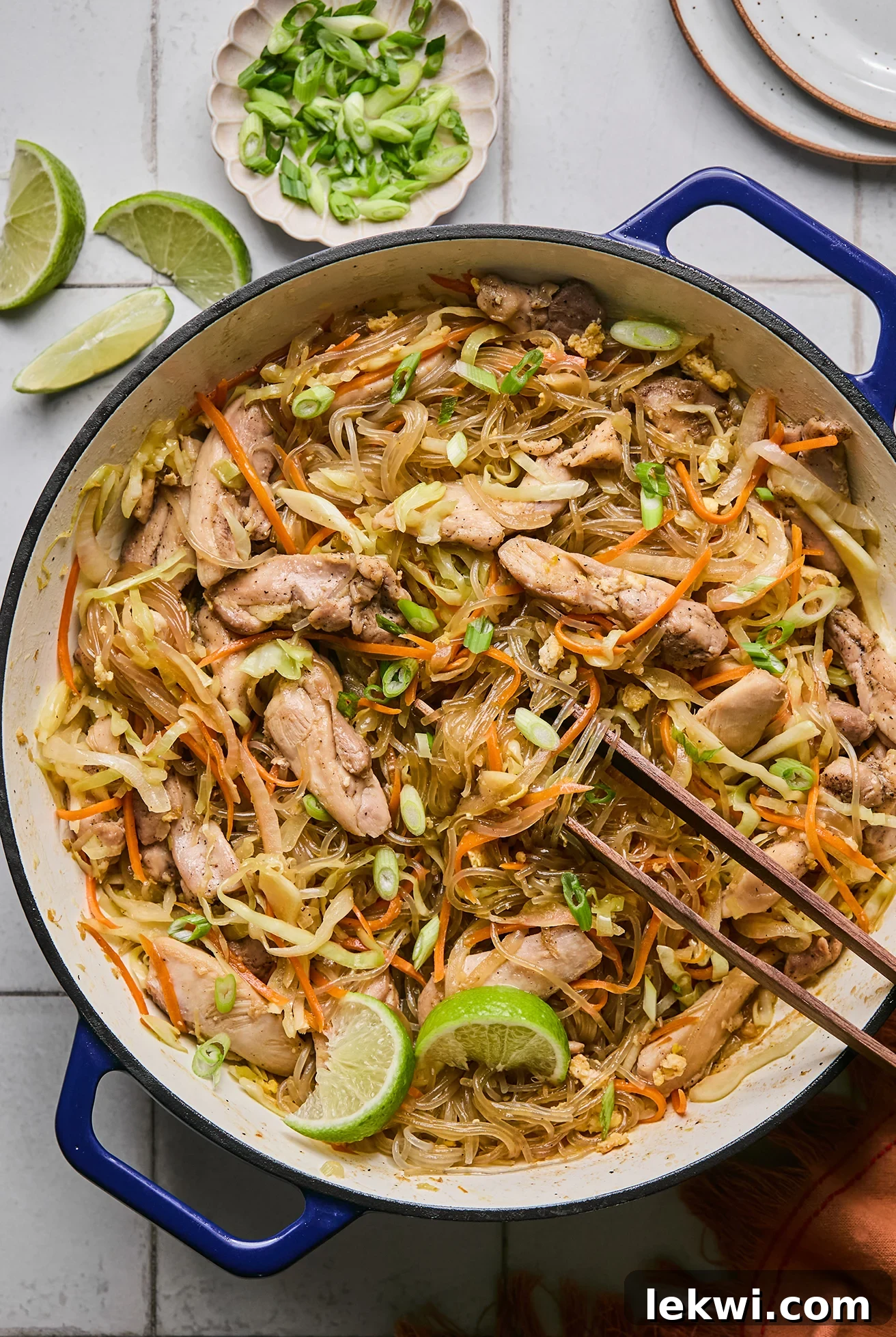
Welcome to a culinary journey into the heart of Thai cuisine with this exquisite recipe for **Pad Woon Sen**, a delightful Thai glass noodle stir fry. This particular rendition elevates the classic with wholesome sweet potato glass noodles, vibrant vegetables, and tender chicken, offering a dish that is not only incredibly simple to prepare but also completely gluten-free and grain-free. Prepare to tantalize your taste buds with a symphony of savory, sweet, and umami flavors, all in one satisfying meal. Whether you’re a seasoned Thai food enthusiast or new to the wonders of glass noodles, this recipe promises a fresh, flavorful, and incredibly healthy experience.
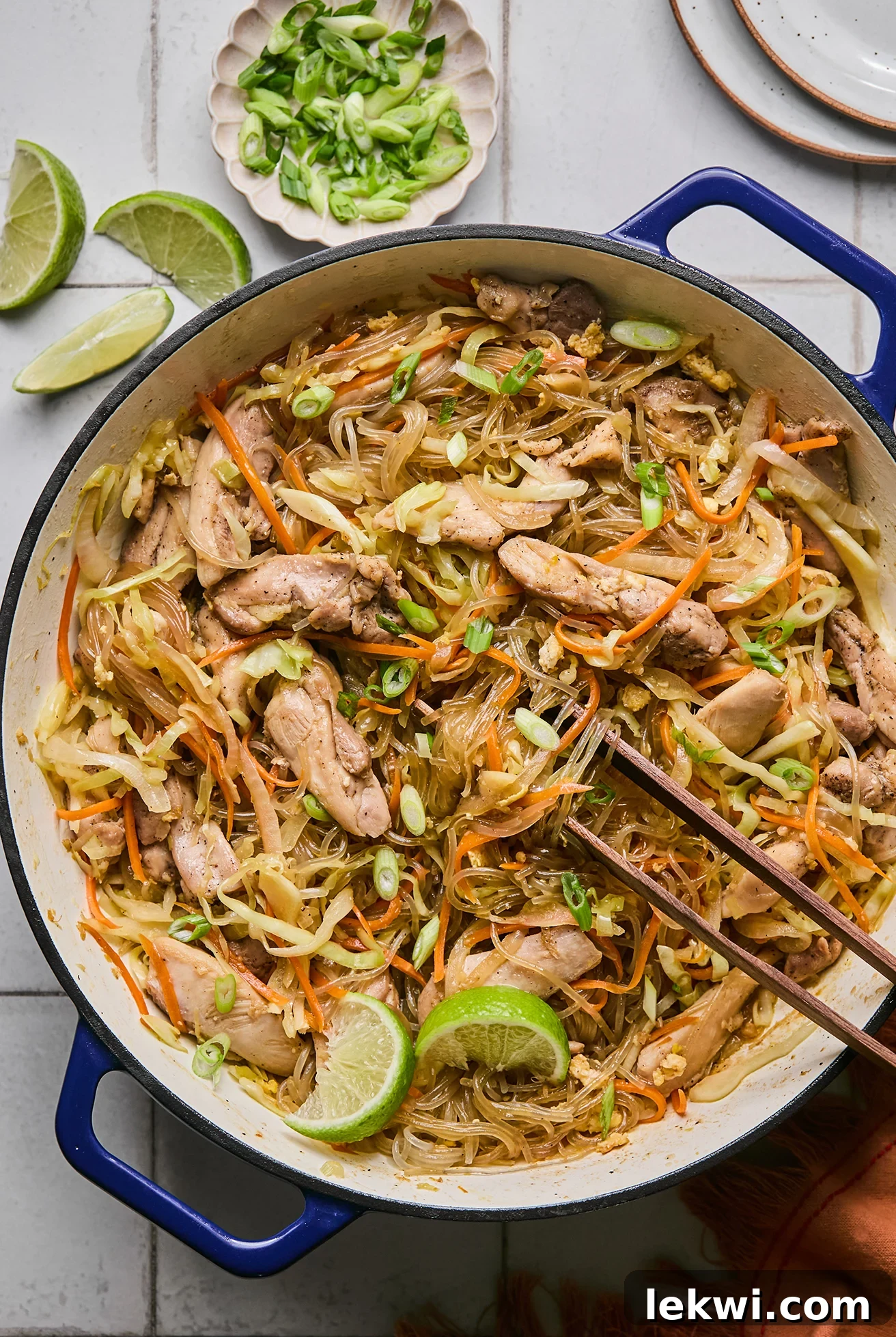
Understanding Pad Woon Sen: A Thai Culinary Gem
Pad Woon Sen is a cherished staple in Thai culinary traditions, renowned for its delicate glass noodles and the harmonious blend of fresh ingredients. At its core, it’s a vibrant stir-fried dish featuring translucent glass noodles, a chosen protein (such as chicken, pork, or egg), and a colorful medley of vegetables like crisp cabbage and juicy tomatoes. Traditionally, the dish is enrobed in a rich sauce crafted from soy sauce, oyster sauce, and a touch of sugar, creating its signature savory-sweet profile. However, this innovative recipe offers a healthier, more inclusive twist, making it entirely gluten-free and soy-free without compromising on its authentic Thai essence.
Unlike some of its heavier noodle counterparts, Pad Woon Sen is celebrated for its lighter texture and ability to absorb the rich flavors of the sauce and accompanying ingredients. The “Woon Sen” in its name specifically refers to the glass noodles, which are typically made from mung bean starch. Our recipe, however, takes a modern approach by using sweet potato glass noodles, enhancing its nutritional value and making it suitable for a wider range of dietary preferences, including grain-free and AIP diets. This adaptation not only maintains the beloved chewy texture but also adds a subtle earthy sweetness that complements the overall dish beautifully.
Pad Woon Sen is the perfect simple stir fry, offering a symphony of textures and flavors with grain-free noodles and an abundance of fresh, wholesome veggies!
The Appeal of Glass Noodles: Texture and Versatility
Glass noodles, also known as cellophane noodles, are a fascinating component of many Asian cuisines. Their name derives from their appearance when cooked – transparent and glistening, almost like glass. These noodles are incredibly versatile, capable of absorbing flavors from the sauces and ingredients they are cooked with, making them an ideal choice for stir-fries, soups, and salads. In this Pad Woon Sen recipe, the sweet potato glass noodles bring a unique chewiness and a slightly firmer bite than traditional mung bean noodles, adding another layer of texture to the dish. They are also naturally gluten-free, providing an excellent alternative for those with sensitivities or seeking a grain-free lifestyle. Their ability to hold up well during stir-frying ensures they don’t become mushy, maintaining their delightful structure throughout the cooking process.
Table of contents
- Understanding Pad Woon Sen: A Thai Culinary Gem
- The Appeal of Glass Noodles: Texture and Versatility
- Why You’ll Adore This Pad Woon Sen Recipe
- Essential Ingredients for Your Pad Woon Sen
- Creative Substitutions and Modifications
- How to Master Pad Woon Sen: Step-by-Step Guide
- Pro Tips for a Perfect Stir Fry
- Exploring the Flavor Profile of Pad Woon Sen
- Pad Woon Sen vs. Pad Thai: What’s the Difference?
- Are Thai Glass Noodles a Healthy Choice?
- Serving Suggestions and Storage Tips
- More Gluten-Free Noodle Dishes to Explore
Why You’ll Adore This Pad Woon Sen Recipe
This Pad Woon Sen isn’t just another stir fry; it’s a testament to how simple, healthy ingredients can come together to create an intensely flavorful and satisfying meal. Here’s why this recipe is destined to become a favorite in your kitchen:
- Naturally Gluten-Free and Grain-Free: One of the standout features of this recipe is its use of sweet potato glass noodles. These innovative noodles are naturally gluten-free and grain-free, making them an excellent choice for individuals with celiac disease, gluten sensitivity, or those following a grain-free lifestyle, such as the AIP (Autoimmune Protocol) diet. You get all the chewy texture and satisfaction of traditional noodles without any of the gluten or grains, ensuring a wholesome and safe dining experience.
- Abundantly Veggie-Packed: We believe in nourishing your body with delicious, nutrient-dense foods. This Pad Woon Sen is loaded with a colorful array of vegetables, including crisp shredded cabbage, sweet carrots, and aromatic onions. Each serving delivers a significant boost of vitamins, minerals, and dietary fiber, contributing to a well-balanced diet. The vibrant vegetables not only add essential nutrients but also bring a delightful crunch and freshness to every bite.
- Effortlessly Simple to Prepare: Don’t let the authentic flavors fool you; this Pad Woon Sen recipe is designed for ease and convenience. With straightforward steps and readily available ingredients, it’s a perfect option for busy weeknights when you crave something delicious without spending hours in the kitchen. The entire dish comes together quickly, making it a fantastic beginner-friendly recipe for anyone looking to expand their repertoire of healthy and flavorful meals.
- Explosion of Authentic Flavors: Despite being gluten-free and soy-free, this Pad Woon Sen delivers a truly authentic Thai flavor profile. The carefully balanced sauce, made with coconut aminos, fish sauce, and a touch of coconut sugar, provides that quintessential savory, slightly sweet, and umami-rich taste that defines great Thai stir-fries. Each ingredient plays a crucial role in building layers of complex flavor, ensuring a gourmet experience from your own kitchen.
- Wholesome and Balanced Meal: This dish offers a complete nutritional package. Lean protein from chicken, complex carbohydrates from sweet potato noodles, and a rich array of vitamins and fiber from the vegetables make it a perfectly balanced meal. It’s light yet filling, ensuring you feel satisfied and energized without feeling heavy.
Essential Ingredients for Your Pad Woon Sen
Crafting the perfect Pad Woon Sen begins with selecting fresh, high-quality ingredients. Here’s a detailed look at what you’ll need and why each component is vital for achieving that authentic, delicious flavor:
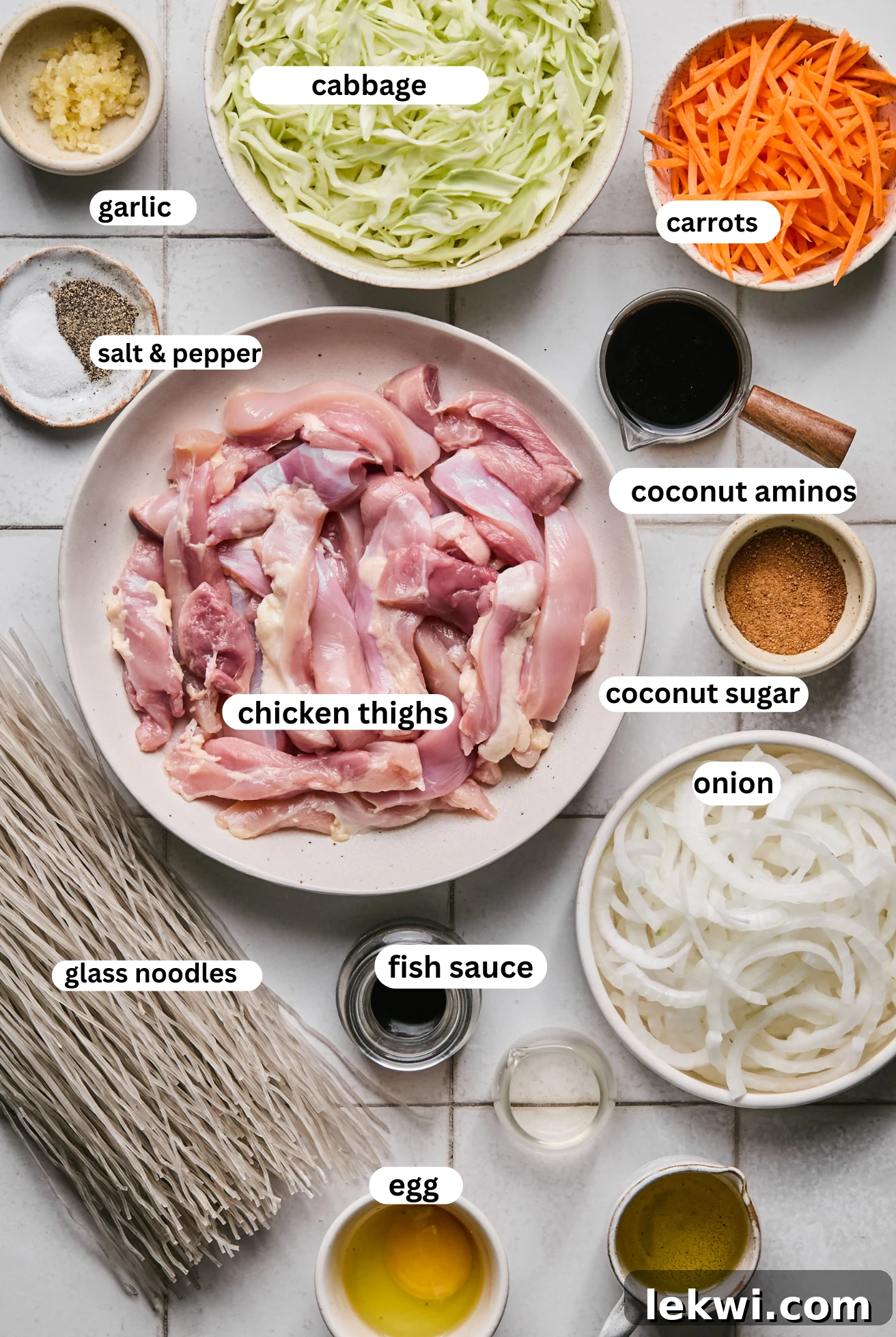
- Thai Glass Noodles (Sweet Potato Starch): These are the star of our dish! Made from sweet potato starch, they offer a wonderfully chewy, translucent texture and are naturally gluten-free and AIP-friendly. They absorb flavors beautifully, making them perfect for this stir fry. When cooked, they become delightfully springy and satisfying.
- Boneless, Skinless Chicken Thighs: Chicken thighs are preferred for their rich flavor and tendency to remain tender and juicy even when stir-fried over high heat. Slicing them into thin strips ensures they cook quickly and evenly, allowing them to meld perfectly with the noodles and vegetables. You can also opt for chicken breast, but thighs offer a more succulent texture.
- White Onion, Fresh Garlic, Shredded Cabbage, and Shredded Carrots: This aromatic and colorful vegetable medley forms the heart of the stir fry.
- White Onion: Provides a foundational sweetness and pungent aroma that mellows during cooking.
- Garlic: Essential for that unmistakable savory depth characteristic of Thai cuisine. Use fresh minced garlic for the best flavor.
- Shredded Green Cabbage: Adds a satisfying crunch and a mild, slightly sweet flavor. It also boosts the fiber content of the dish.
- Shredded Carrots: Contributes natural sweetness, vibrant color, and an extra layer of texture.
- For the Flavorful Sauce: Coconut Aminos, Rice Vinegar, Fish Sauce, Coconut Sugar, Salt, and Pepper: This carefully crafted sauce is what brings all the ingredients together, creating the distinctive Pad Woon Sen flavor.
- Coconut Aminos: A fantastic soy-free and gluten-free alternative to soy sauce, providing a rich, savory, and slightly sweet base. It’s a key ingredient for making this recipe allergen-friendly.
- Rice Vinegar: Adds a subtle tang and brightness, balancing the richness of the other sauce components. For those following an AIP diet, apple cider vinegar can be used as a suitable substitute.
- Fish Sauce: Crucial for imparting that authentic umami depth and savory complexity found in traditional Thai cooking. Choose a high-quality fish sauce for the best results.
- Coconut Sugar: Provides a natural, caramel-like sweetness that balances the savory and tangy notes of the sauce. It’s a less refined sugar option that works wonderfully in this dish.
- Salt and Pepper: To taste, enhancing all the flavors. Remember to omit pepper if strictly following the AIP diet.
Creative Substitutions and Modifications
One of the beauties of stir-fries is their adaptability. This Pad Woon Sen recipe is incredibly versatile, allowing you to tailor it to your dietary needs or simply to incorporate your favorite ingredients. Feel free to experiment with these delicious substitutions and modifications:
- Add More Veggies: While this dish is already packed with vegetables, you can always add more!
- Tomato: Traditionally, Pad Woon Sen often includes fresh tomatoes. If you don’t have a nightshade sensitivity (like me, you can find a nightshade food list here), feel free to add chopped tomatoes for an extra burst of freshness and color.
- Bok Choy: I personally love the addition of chopped bok choy. Its slightly bitter notes and crisp texture complement the cabbage beautifully, adding more green goodness to your stir fry.
- Bell Peppers: For a sweet and crunchy addition, colorful bell peppers (red, yellow, or orange) would be excellent, assuming no nightshade restrictions.
- Mushrooms: Sliced shiitake or cremini mushrooms add a wonderful earthy umami flavor and meaty texture.
- Broccoli or Snap Peas: Quick-cooking florets or pods can be tossed in during the last few minutes of stir-frying for added crunch and nutrients.
- Switch Up the Protein: The chicken thighs are delicious, but you have many other options:
- Pork: Thinly sliced pork loin or shoulder makes a fantastic substitute for chicken.
- Chicken Breast: If you prefer leaner meat, boneless, skinless chicken breast works well, just be careful not to overcook it to keep it tender.
- Shrimp: For a seafood twist, add peeled and deveined shrimp during the last few minutes of cooking, until they turn pink and opaque.
- Tofu or Tempeh: To make this dish vegetarian or vegan, swap chicken for cubed extra-firm tofu or tempeh, pressed and pan-fried until golden before adding to the stir fry.
- Beef: Thinly sliced beef, such as sirloin or flank steak, can also be used for a heartier meal.
- Egg Variations:
- Omit for AIP/Egg-Free: If you don’t tolerate eggs or are strictly following the AIP diet, simply leave it out. The dish will still be incredibly flavorful.
- More Egg: If you love egg in your stir-fries, feel free to add another egg or two, scrambling them into the vegetables as instructed.
How to Master Pad Woon Sen: Step-by-Step Guide
Making this delicious Pad Woon Sen is a straightforward process, designed for efficiency and maximum flavor. Follow these simple steps, accompanied by photos, to create a restaurant-quality meal right in your own kitchen. Full detailed instructions are also available in the recipe card below.
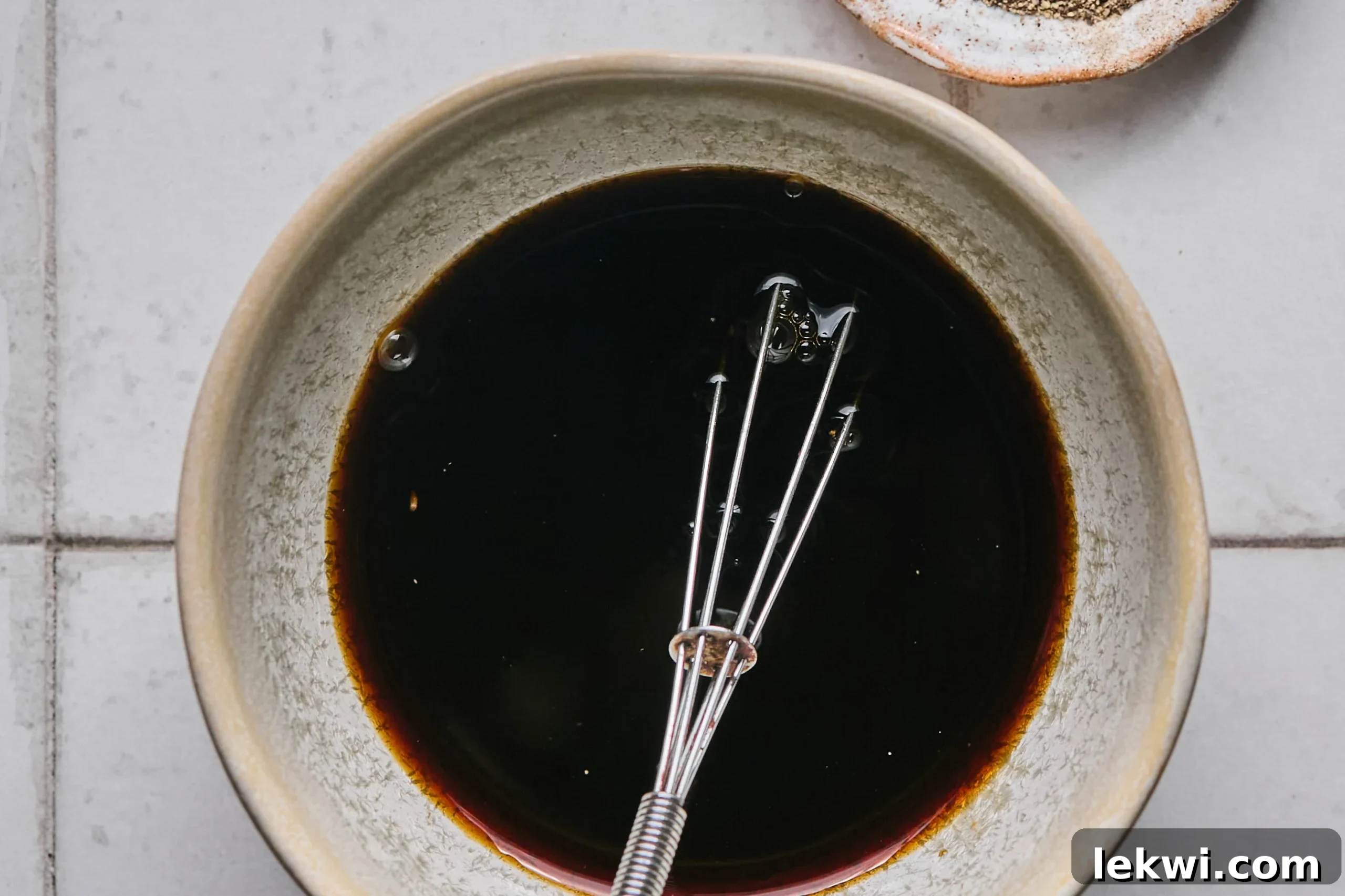
Step one. Prepare the Sauce: In a small bowl, combine the coconut aminos, rice vinegar (or apple cider vinegar for AIP), fish sauce, coconut sugar, and a pinch of salt and pepper (omit pepper for AIP). Whisk well until the sugar dissolves and all ingredients are thoroughly mixed. Set this flavorful sauce aside, as it will be added at the end.
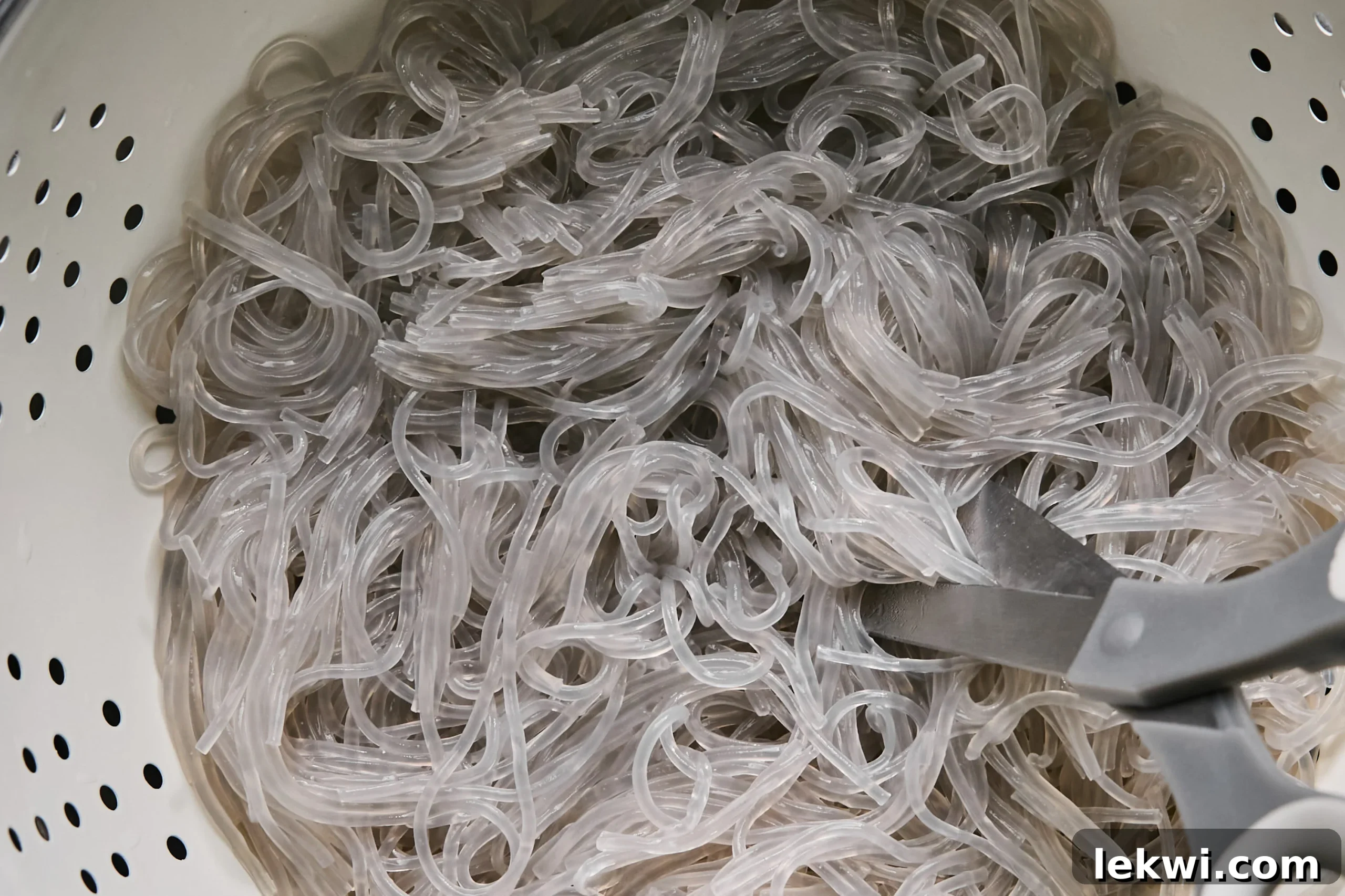
Step two. Prepare the Noodles: Place the dry glass noodles in a large heatproof bowl. Pour hot water over them, ensuring they are fully submerged. Allow the noodles to soak for about 10 minutes, or until they become soft, pliable, and translucent. Once softened, use kitchen scissors to cut the long strands of noodles in half for easier handling in the stir fry. Drain them thoroughly and toss lightly with a small amount of avocado oil to prevent sticking.
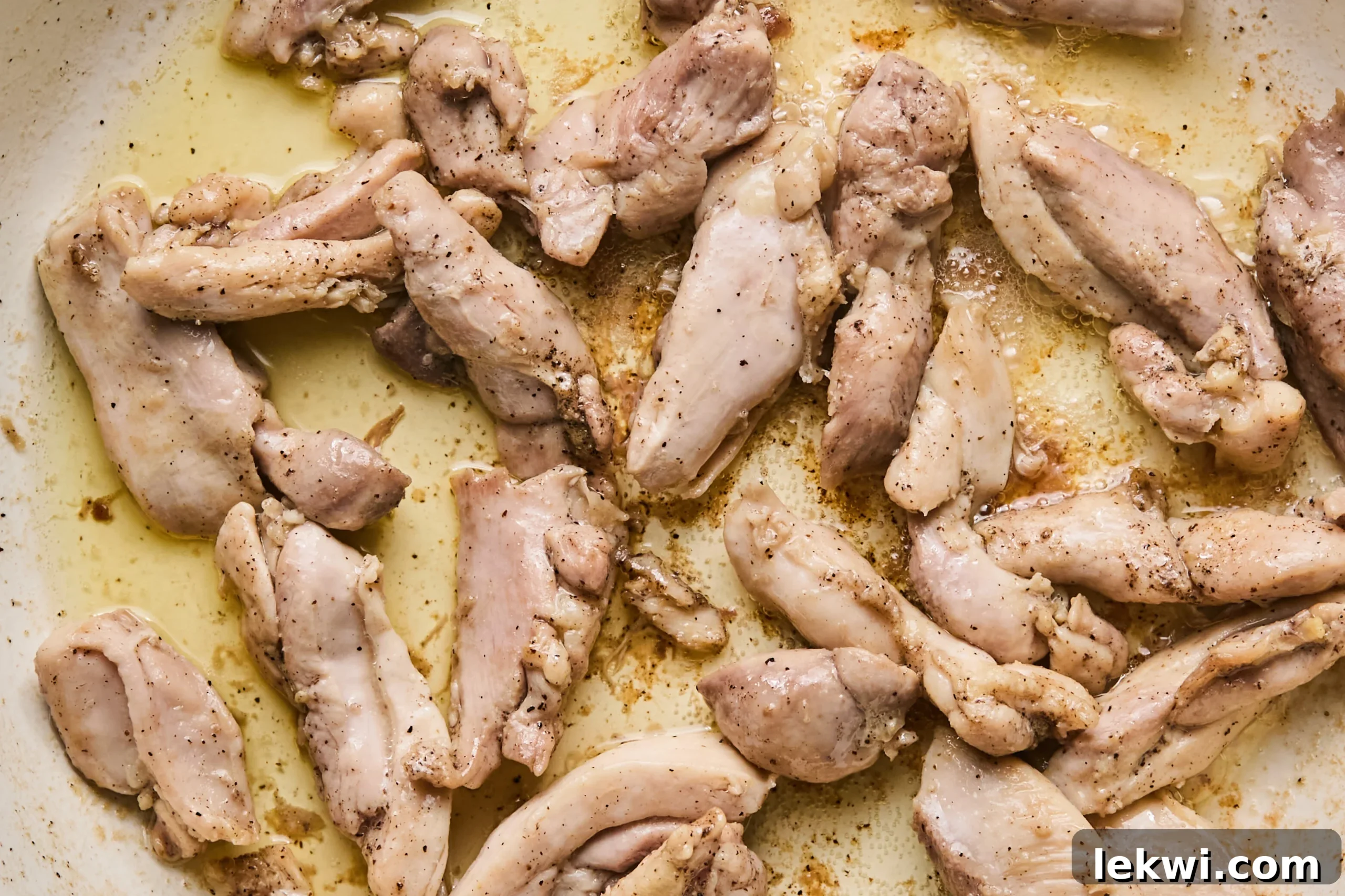
Step three. Cook the Chicken: Heat 1 tablespoon of avocado oil in a large pan or wok over medium-high heat. Add the sliced chicken thighs to the hot pan and season lightly with salt and pepper (if using). Stir-fry for 3-4 minutes on each side, or until the chicken is cooked through and lightly browned. Remove the cooked chicken from the pan and set it aside on a plate.
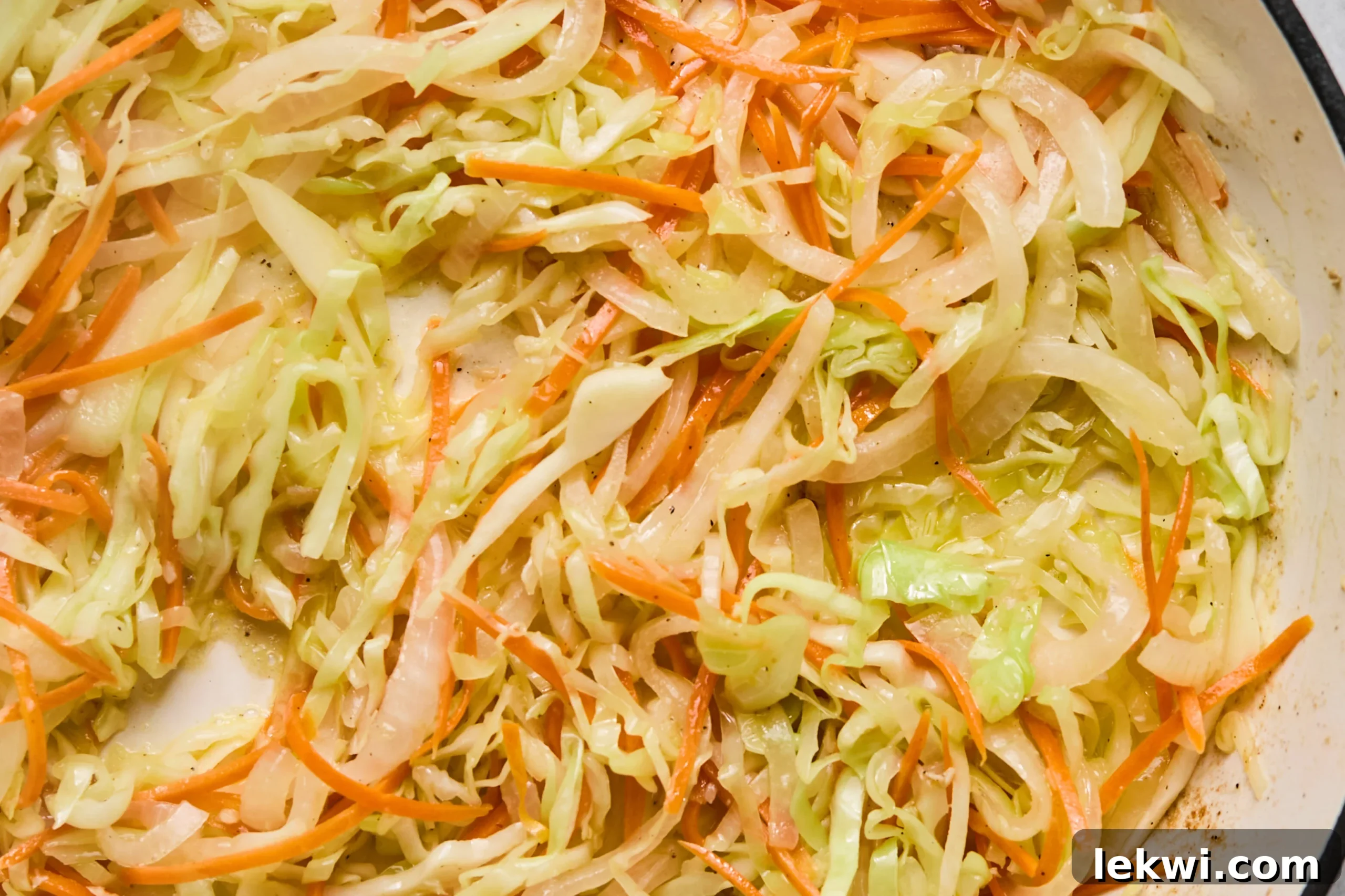
Step four. Sauté the Vegetables: Reduce the heat to medium. Add the remaining 1.5 tablespoons of avocado oil to the pan. Toss in the sliced white onion and minced garlic. Sauté for 3-4 minutes until the onion softens and becomes fragrant. Next, add the shredded green cabbage and shredded carrots to the pan. Continue to sauté for another 5 minutes, stirring occasionally, until the vegetables are tender-crisp.
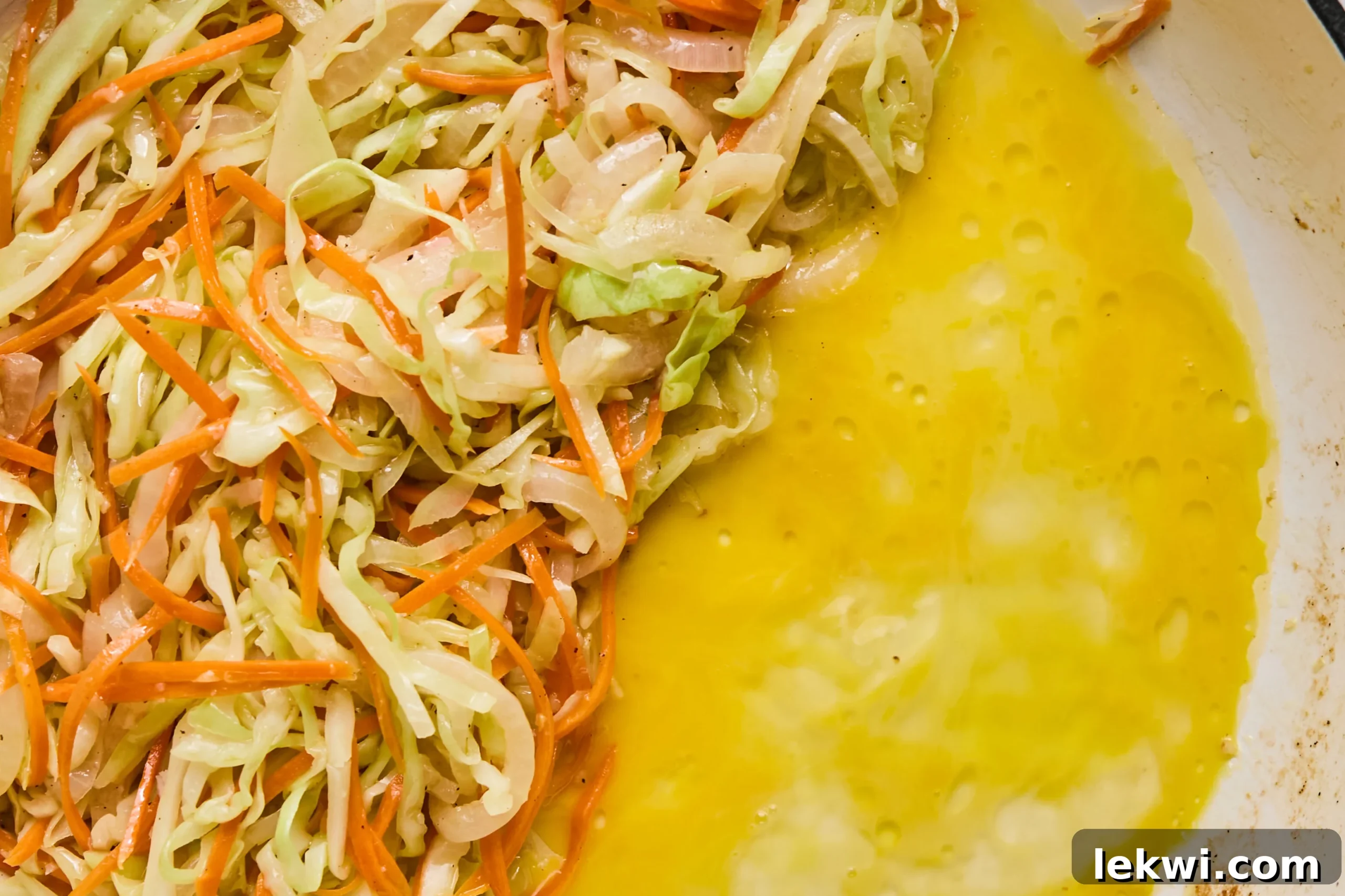
Step five. Scramble the Egg: Gently push the cooked vegetables to one side of the pan, creating an empty space. Add a tiny bit more avocado oil to the empty side if needed. Crack the egg into a small bowl, whisk it lightly, then pour it into the cleared section of the pan. Scramble the egg until it’s fully cooked, breaking it into small pieces. Once cooked, you can mix it gently with the vegetables.
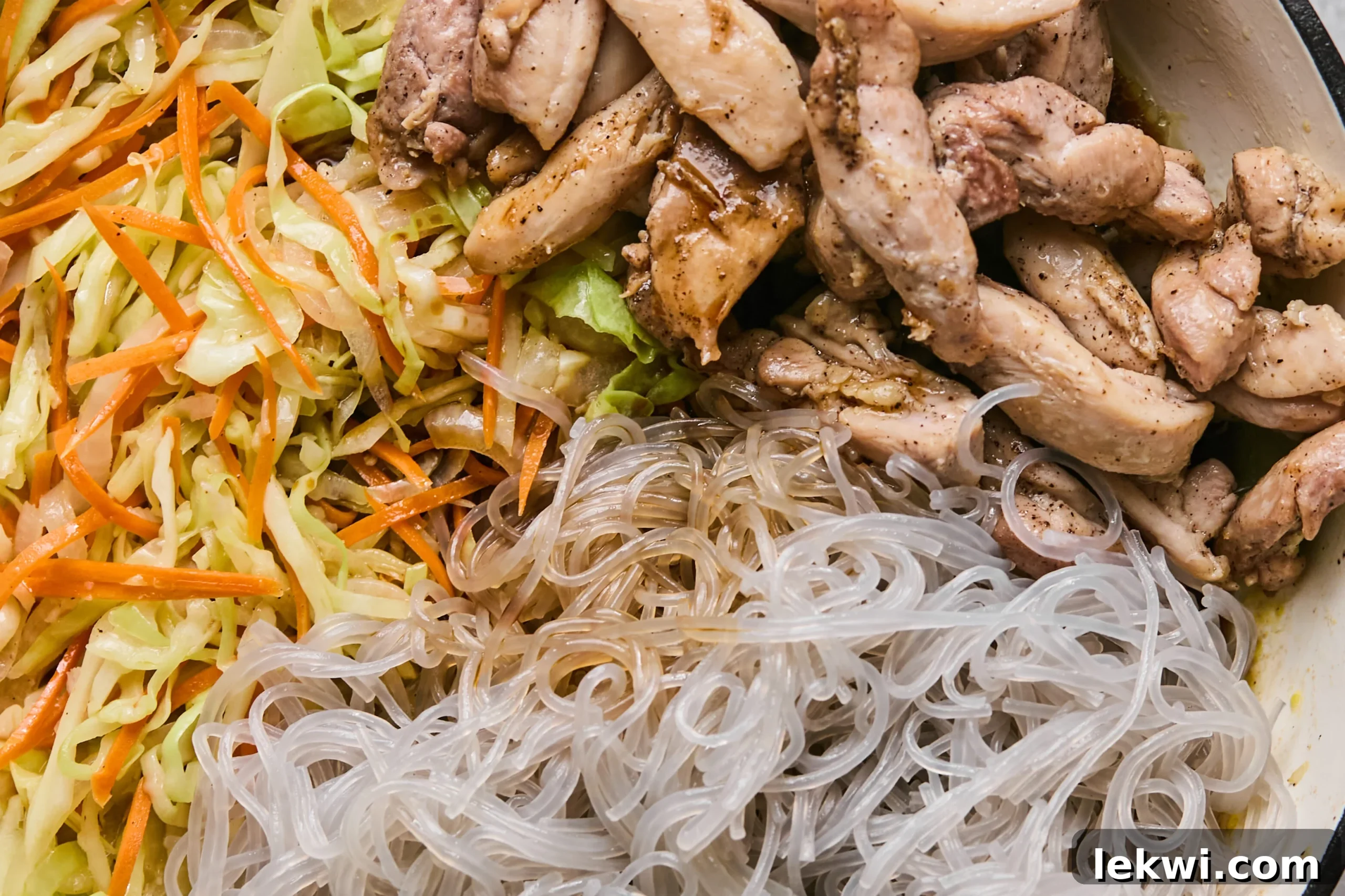
Step six. Combine and Coat: Reduce the heat to low. Return the cooked chicken to the pan with the vegetables and scrambled egg. Add the softened and drained glass noodles, along with the prepared sauce. Toss everything together vigorously, ensuring the sauce evenly coats all the ingredients. Continue stirring for 1-2 minutes until the noodles are fully integrated with the sauce and heated through. Be careful not to overcook the noodles, as they can become mushy.
Pro Tips for a Perfect Stir Fry
Achieving a restaurant-quality Pad Woon Sen at home is easier than you think, especially with a few expert tricks up your sleeve. These tips will help you master the art of stir-frying and ensure your dish is flavorful and perfectly cooked every time:
- High Heat is Key (But Don’t Overcrowd): Stir-frying thrives on high heat. Use a large wok or a heavy-bottomed pan and let it get smoking hot before adding ingredients. However, resist the urge to overcrowd the pan. Cooking ingredients in batches, especially the chicken, allows them to sear beautifully instead of steaming, resulting in better texture and flavor. If your pan is too full, the temperature drops, and ingredients release moisture, making them soggy.
- Prep Everything Ahead of Time (Mise en Place): Stir-fries cook incredibly fast. There’s no time to chop vegetables or mix sauces once the cooking starts. Have all your ingredients prepped, chopped, measured, and laid out within arm’s reach before you turn on the heat. This “mise en place” approach ensures a smooth and stress-free cooking process.
- Noodle Perfection: Don’t over-soak or overcook your glass noodles. Soaking for just 10 minutes in hot water (not boiling) is usually sufficient to soften them to a pliable consistency. Over-soaked noodles can become fragile and break easily in the stir fry. The light coating of avocado oil after draining also prevents them from clumping, ensuring they integrate smoothly into the dish.
- Customize Your Protein: As mentioned in the substitutions, chicken thighs offer great flavor and tenderness. However, you can effortlessly swap them out for other proteins like chicken breast, pork, shrimp, or even tofu. Just adjust cooking times accordingly to ensure your chosen protein is cooked through but not overdone.
- Embrace More Veggies: Stir-fries are a fantastic way to boost your vegetable intake. Feel free to add more of your favorite non-starchy vegetables that cook relatively quickly. Bell peppers, mushrooms, snow peas, or broccoli florets are all wonderful additions. Remember that if you’re adding more dense vegetables, you might need to cook them slightly longer or in a separate batch before combining.
- Balance the Sauce: Always taste your sauce before adding it to the stir fry. Adjust the sweetness (coconut sugar), saltiness (coconut aminos/fish sauce), and acidity (rice vinegar) to suit your preference. A perfectly balanced sauce is the secret to a delicious stir fry.
Exploring the Flavor Profile of Pad Woon Sen
Pad Woon Sen is a delightful exploration of classic Thai flavors, offering a harmonious balance that is both comforting and exciting. When you take your first bite of this stir fry, you’ll immediately notice its intricate layers of taste. It is primarily savory, with deep umami notes derived from the fish sauce and coconut aminos, providing a satisfying richness. This savory base is beautifully complemented by a subtle sweetness, thanks to the coconut sugar, which adds a hint of caramel-like warmth without being overpowering. The rice vinegar introduces a delicate tanginess, cutting through the richness and brightening the overall profile, leaving a clean finish on the palate.
Beyond the primary taste sensations, the dish offers a wonderful textural contrast. The chewy, tender glass noodles are perfectly complemented by the crisp-tender vegetables like cabbage and carrots, while the succulent chicken thighs add a hearty bite. Aromatic garlic and onion infuse the entire dish with a fragrant warmth, making each forkful a sensory experience. If you are a fan of complex, savory-sweet, and veggie-forward noodle stir-fries, Pad Woon Sen is guaranteed to be a new favorite.
Pad Woon Sen vs. Pad Thai: What’s the Difference?
While both Pad Woon Sen and Pad Thai are iconic Thai noodle dishes, they possess distinct characteristics that set them apart. Understanding these differences can help you appreciate each dish for its unique qualities:
- Noodle Type:
- Pad Woon Sen: Made with transparent glass noodles (woon sen), typically derived from mung bean starch or, in our healthier version, sweet potato starch. These noodles are thin, delicate, and become translucent when cooked, offering a chewy and slightly springy texture.
- Pad Thai: Made with flat, wider rice noodles (sen lek). These noodles are opaque and have a softer, slightly chewier consistency, distinct from the gelatinous texture of glass noodles.
- Sauce Base:
- Pad Woon Sen: The sauce is generally lighter in color and flavor, built around a base of soy sauce (or coconut aminos in our GF/SF version), fish sauce, and sugar. It’s savory with a noticeable umami depth and a subtle sweetness.
- Pad Thai: Features a more complex and often sweeter sauce, characterized by a blend of tamarind paste, fish sauce, sugar, and sometimes chili. It also famously incorporates crushed peanuts, giving it a distinctive nutty, tangy, and sweet profile.
- Common Ingredients:
- Pad Woon Sen: Typically includes a protein (chicken, pork, or egg), and vegetables like cabbage, carrots, onion, garlic, and sometimes tomato. It often feels lighter and more “veggie-focused.”
- Pad Thai: Often includes tofu, shrimp or chicken, bean sprouts, chives, radishes, and is almost always garnished generously with crushed peanuts, a lime wedge, and sometimes a sprinkle of chili flakes. It often has a richer, more robust flavor and a more substantial feel due to the peanuts.
Think of these dishes as cousins in the grand family of Thai cuisine. Both offer incredible flavors and textures, but they appeal to slightly different palates. If you enjoy a savory, umami-rich stir fry with delicate, chewy noodles, Pad Woon Sen is your pick. If you prefer a dish with a bolder sweet-sour-nutty profile and broader, softer noodles, then Pad Thai is likely what you crave. Ultimately, if you appreciate one, you’ll very likely appreciate the other!
Are Thai Glass Noodles a Healthy Choice?
The term “healthy” can be subjective, but when it comes to Thai glass noodles, especially those made from sweet potato starch, there are several factors that make them a commendable addition to a balanced diet. Unlike traditional wheat-based noodles, sweet potato glass noodles offer distinct advantages:
- Naturally Gluten-Free and Grain-Free: This is arguably their biggest health benefit. For individuals with celiac disease, gluten sensitivities, or those following a grain-free diet (like AIP), these noodles provide a safe and delicious alternative to conventional pasta and wheat noodles.
- Derived from Vegetables: As their name suggests, these noodles are made from sweet potato starch. While starch-based, they retain some of the benefits of their plant origin. Sweet potatoes themselves are rich in fiber, vitamins (especially Vitamin A and C), and minerals, although the processing into starch noodles will reduce some of these nutrients.
- Allergen-Friendly: Beyond being gluten-free, they are often free from common allergens like soy, dairy, and nuts, making them a suitable choice for a wide array of dietary restrictions.
- Digestibility: For many, starches from vegetables like sweet potato can be easier to digest compared to complex grains, contributing to better gut comfort.
- Low in Fat: Glass noodles are typically very low in fat, making them a good base for dishes where you control the fat content through other ingredients like lean protein and healthy oils.
However, it’s important to remember that while healthy, they are primarily a source of carbohydrates. As with any food, moderation and balance within a diverse diet are key. Paired with lean proteins and a generous amount of fresh vegetables, as in this Pad Woon Sen recipe, sweet potato glass noodles contribute to a wholesome, nutritious, and satisfying meal. They offer a fantastic way to enjoy a beloved noodle dish while adhering to specific dietary needs or simply seeking healthier alternatives.
Serving Suggestions and Storage Tips
Once your delectable Pad Woon Sen is ready, it’s time to enjoy! Here are some suggestions to make the most of your meal, along with practical tips for storing any leftovers:
Serving Suggestions:
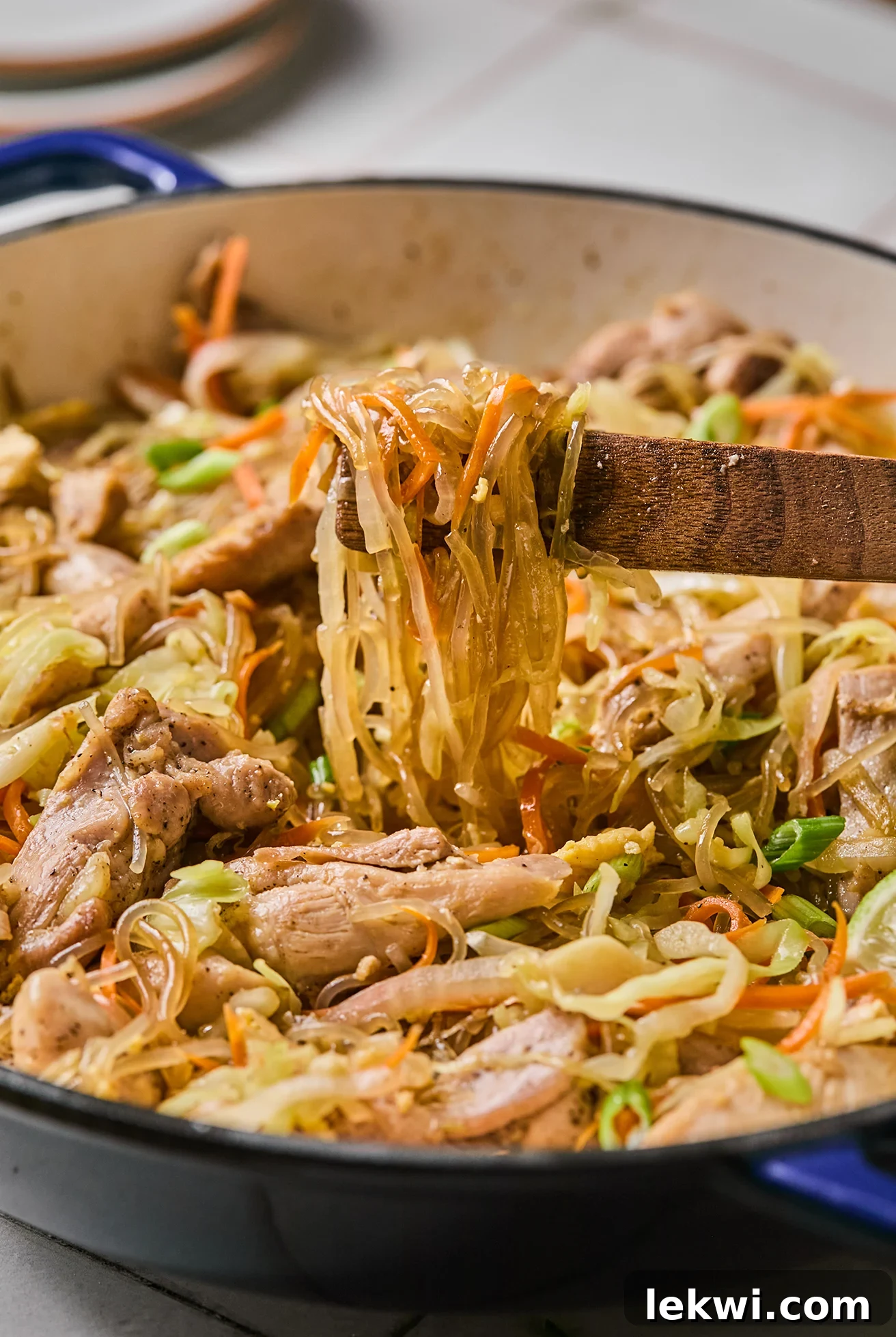
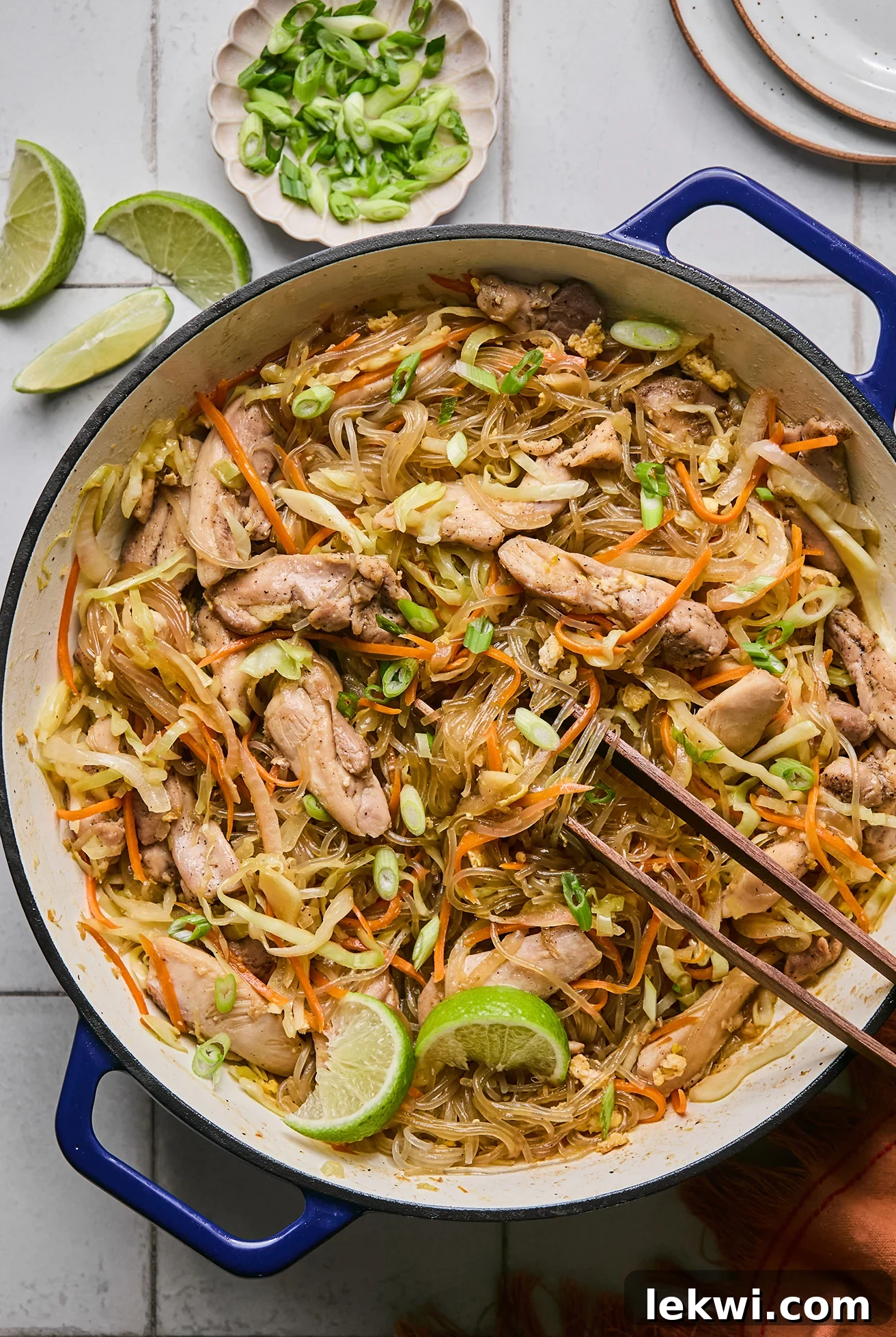
- Garnish Generously: Don’t skip the fresh garnishes! A sprinkle of chopped green onions adds a fresh, mild oniony bite and vibrant color. Fresh lime wedges are also essential; a squeeze of fresh lime juice just before eating brightens all the flavors and adds a zesty finish that truly elevates the dish.
- Spice it Up: If you enjoy a bit of heat, serve with a side of chili flakes, Sriracha sauce, or sliced fresh chilies. This allows everyone to customize their spice level.
- Add Fresh Herbs: Fresh cilantro or Thai basil can be chopped and sprinkled over the top for an extra layer of aromatic flavor.
- As a Main Dish: This Pad Woon Sen is a complete meal on its own, offering a perfect balance of protein, carbohydrates, and vegetables.
- Pair with a Light Side: If you desire a larger meal or want to balance the richness, a simple side salad with a light vinaigrette or some steamed green beans would complement it beautifully.
Storage and Reheating:
- Refrigeration: Store any leftover Pad Woon Sen in an airtight container in the refrigerator for up to 3-4 days. The flavors often meld and deepen overnight, making leftovers just as delicious, if not more so.
- Reheating: To reheat, you can use a microwave or a stovetop.
- Microwave: Place the desired portion in a microwave-safe dish, cover loosely, and heat on medium power for 1-2 minutes, stirring halfway through, until thoroughly warmed. You might need to add a tablespoon of water or broth to prevent the noodles from drying out.
- Stovetop: For best results, reheat in a non-stick pan or wok over medium heat. Add a splash of water or chicken broth to help loosen the noodles and prevent sticking. Stir-fry gently until heated through, about 3-5 minutes.
- Freezing: While technically possible, glass noodles can sometimes change texture after freezing and thawing, becoming a bit softer. It’s best enjoyed fresh or from the refrigerator. If you do freeze, ensure it’s in an airtight, freezer-safe container for up to 2-3 months. Thaw overnight in the refrigerator before reheating as above.
More Gluten-Free Noodle Dishes to Explore
If you’ve enjoyed the delightful experience of this Pad Woon Sen and are keen to explore more gluten-free noodle creations, you’re in luck! The world of allergen-friendly noodle dishes is rich and diverse. Here are a few more recipes that offer fantastic flavors and textures, all while catering to gluten-free dietary needs:
- Gluten Free Pad Thai: Dive into another Thai classic with this vibrant and tangy Pad Thai recipe, made safe for those avoiding gluten. It captures the authentic sweet, sour, and savory balance you love.
- Beef and Broccoli Lo Mein: Craving a comforting Chinese-inspired dish? This gluten-free take on Beef and Broccoli Lo Mein features tender beef, crisp broccoli, and slurpy noodles tossed in a savory sauce.
- Chicken and Ramen Stir Fry: For a quick and incredibly satisfying meal, try this Chicken and Ramen Stir Fry. It’s a creative way to use gluten-free ramen noodles in a flavorful, veggie-packed stir fry.
If you tried this Pad Woon Sen or any other recipe on my blog, please leave a 🌟 star rating and let me know how it went in the 📝 comments below. Your feedback means the world! Thanks for visiting!
Pad Woon Sen {Thai Glass Noodle Stir Fry}
Leave a Review
Pin Recipe
Want to save this for later?
Just drop your name and email below. Then we’ll email it right to your inbox. ✉️
Ingredients
- 3 tbsp coconut aminos
- 2 tsp rice vinegar, sub apple cider vinegar for AIP
- 2 tbsp fish sauce
- 2 tsp coconut sugar
- Salt and pepper, omit pepper for AIP
- 1 7 oz package glass noodles
- 2 ½ tbsp avocado oil, divided
- 1 lb boneless skinless chicken thighs, sliced into strips
- 1 white onion, sliced thin
- 2 cloves garlic, minced
- 1 ½ cups shredded green cabbage
- ½ cup shredded carrot
- 1 egg, omit for AIP
To serve
- 2 tbsp green onion, chopped
- Lime wedges
Instructions
-
Combine the rice vinegar, coconut aminos, fish sauce, coconut sugar and salt and pepper to taste in a small bowl and set aside.
-
Using a large bowl, soak the glass noodles in hot water for 10 minutes or until soft. Use kitchen scissors to cut the glass noodles in half. Strain and set aside. Lightly coat in avocado oil to prevent sticking.
-
Using a large pan, heat the avocado oil over medium-high heat. Add the chicken and lightly season with salt and pepper. Cook for 3-4 minutes on each side or until cooked through. Set aside.
-
Reduce the heat to medium and add the onion and garlic. Saute for 3-4 minutes or until soft and fragrant. Add the cabbage and carrots to the pan and saute for another 5 minutes.
-
Push the vegetables to one side and add a bit more oil to one side of the pan. Crack the egg into a bowl and lightly scramble. Pour into the pan and scramble until cooked.
-
Reduce the heat and add the cooked chicken, softened noodles and sauce. Stir to coat until the sauce is fully coating the stir fry.
-
Serve topped with green onion and lime wedges.
Notes
If you’d like to add more vegetables to the dish, add tomato, bok choy, etc.