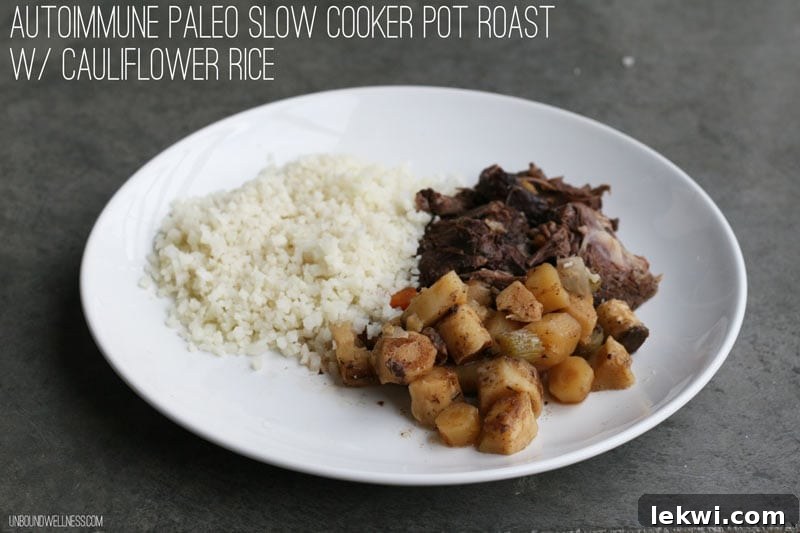
The phrase “snowed in” always conjured images of idyllic days filled with cozy movies, quality time with loved ones, and the delightful aromas of cold-weather comfort foods simmering on the stove. While I might not be experiencing a winter wonderland whiteout myself, the desire to dive into that comforting culinary tradition was irresistible. And what better dish to embrace the spirit of warmth and nourishment than a hearty pot roast?
However, my past experiences with pot roast were often less than inspiring. They frequently involved bland, unwelcome potatoes, an unmemorable stock, and sometimes even sad, underdressed instant rice. It was clear that to truly capture the essence of a perfect pot roast, a significant upgrade was needed. My mission became to transform this classic dish by incorporating AIP (Autoimmune Protocol) and Paleo-friendly swaps, promising not just a healthier version, but one that was bursting with flavor and truly satisfying. The results, I’m thrilled to report, were nothing short of spectacular.
Embracing the Power of Grass-Fed Beef
I’ve often championed the virtues of grass-fed beef on this blog, and for good reason. From my similarly delicious AIP slow cooker beef stew recipe to countless other dishes, I consistently advocate for choosing grass-fed options. This isn’t just a personal preference; it’s a recommendation rooted in significant benefits for your health, animal welfare, and even the environment. If you’re going to enjoy beef, making it grass-fed is arguably one of the best choices you can make.
Why Grass-Fed Beef Makes a Difference
- Superior Nutritional Profile: Grass-fed beef boasts a more balanced fatty acid profile, with a higher concentration of beneficial Omega-3s and a healthier Omega-3 to Omega-6 ratio compared to its grain-fed counterpart. It’s also richer in conjugated linoleic acid (CLA), a fat associated with various health benefits, and contains higher levels of vitamins A and E, and essential antioxidants.
- Ethical and Humane Practices: Animals raised on a diet of natural grasses typically experience a more humane existence. They roam freely, graze as nature intended, and are less likely to be subjected to the crowded, often stressful conditions of conventional feedlots.
- Environmental Sustainability: Sustainable grazing practices associated with grass-fed farming can contribute positively to environmental health. These methods often support soil regeneration, biodiversity, and can even play a role in carbon sequestration, helping to mitigate climate change.
In contrast, grain-fed cows, typically finished on corn and soy, produce meat with an unbalanced fatty acid composition, which can have similar effects on our own bodies when consumed regularly. Choosing grass-fed is a holistic decision that impacts your well-being, supports ethical farming, and benefits the planet.
Crafting Your Own Nourishing Bone Broth
A truly exceptional pot roast requires an equally exceptional broth, and for this recipe, I turned to the magic of grass-fed beef bone broth. Bone broth is far more than just a liquid base; it’s a nutrient-dense elixir packed with collagen, gelatin, amino acids, and essential minerals. It’s renowned for its benefits for gut health, joint support, and skin vitality, making it an ideal choice for an AIP/Paleo lifestyle.
While there are many fantastic store-bought options available, making your own bone broth allows you to control the quality and maximize its nutritional punch. For my broth, I used two pounds of high-quality grass-fed beef shank with marrow and knuckle bone. These specific cuts are rich in collagen and marrow, contributing to a deeply flavorful and gelatinous broth. Simmering these bones for an extended period, often with a splash of apple cider vinegar to help extract minerals, yields a rich liquid gold. In this instance, two pounds of bones produced a generous eight cups of exquisite broth, perfect for this pot roast and other culinary uses.
The Cauliflower Rice Phenomenon
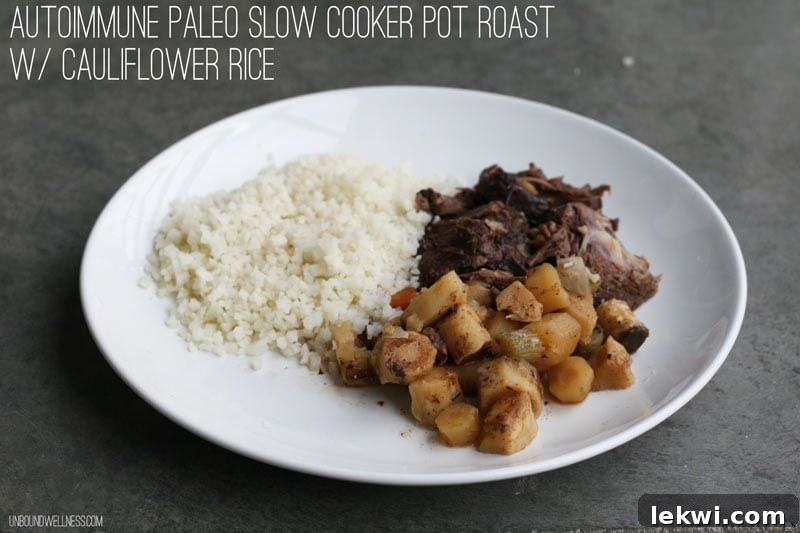
On my plate, you might have also spotted the ever-elusive cauliflower rice, often affectionately known as “caulirice.” This humble vegetable has taken the health food world by storm, becoming a staple in AIP and Paleo kitchens, and for good reason. It’s an incredibly versatile, low-carb, and nutrient-dense substitute for traditional grains and potatoes, making it the perfect companion for a rich pot roast.
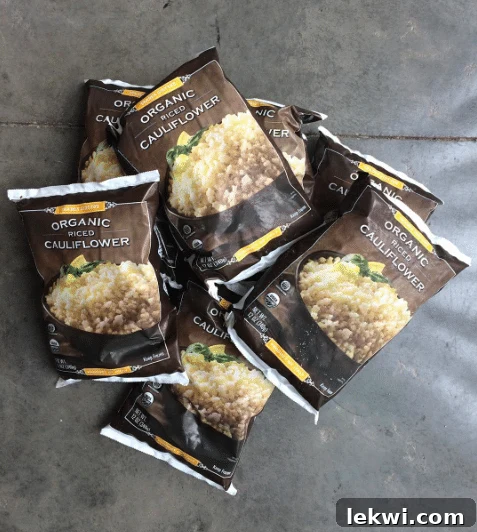
The demand for pre-made cauliflower rice, especially from popular stores like Trader Joe’s, can be legendary. It’s not uncommon for it to fly off freezer shelves within hours of restocking, often fueled by enthusiastic social media posts. I was fortunate enough to snag seven beautiful bags on a recent shopping trip, but don’t fret if you can’t find it! Making your own cauliflower rice at home is incredibly simple and ensures you always have a fresh supply. You can easily grate a head of cauliflower using a box grater or pulse it in a food processor until it resembles rice grains. For a comprehensive guide, you can find a great recipe here.
Now, for all my friends bracing against the cold, whether you’re genuinely snowed in or just craving some nourishing warmth, it’s time to gather your ingredients and dive into this incredible pot roast recipe!
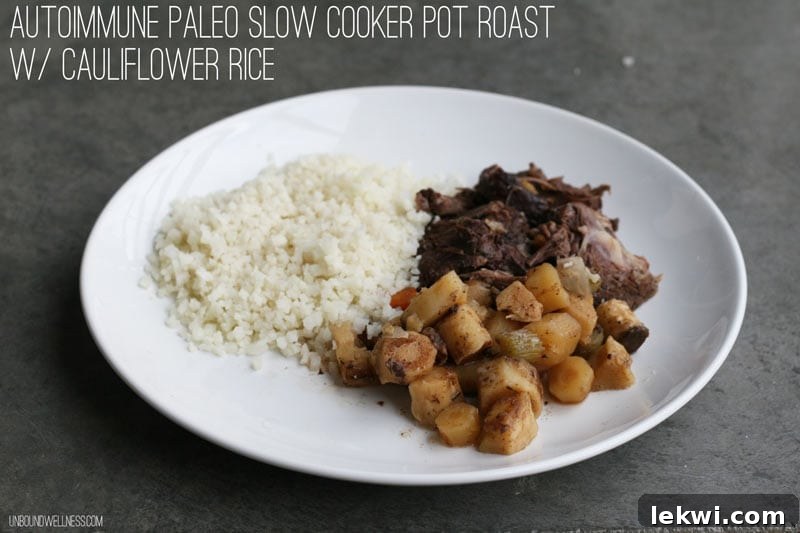
Autoimmune Paleo Slow Cooker Pot Roast with Cauliflower Rice
Author: Michelle
Prep time: 15 minutes
Cook time: 8 hours
Yields: 4-6 servings
Pin Recipe
Ingredients
- 2-2.5 lbs grass-fed chuck roast
- 1 cup grass-fed beef bone broth
- ½ lb parsnips, peeled and chopped
- ½ lb carrots (rainbow carrots recommended), peeled and chopped
- ½ small onion, diced
- 3-4 stalks of celery, chopped
- 1 cup of cauliflower rice
- 1 tsp coconut oil
- 2 bay leaves
- 1 tsp sage
- ½ tsp thyme
- 1 tsp pink salt
Instructions
- If your bone broth is gelled, pour it into the slow cooker and set it to low heat to allow it to melt a bit. (Tip: don’t skim off the healthy fat!)
- Add all the chopped vegetables (parsnips, carrots, onion, celery) to the slow cooker.
- Place the chuck roast in a pan over medium heat with a small amount of cooking fat (like avocado oil or tallow).
- Sear the roast on each side until it is lightly browned, creating a delicious crust.
- Carefully transfer the seared roast to the crock pot, placing it over the vegetables.
- Season the roast generously with bay leaves, sage, thyme, and pink salt, ensuring all sides are coated.
- Keep the crock pot on low and cook for 8 hours. For best results, every two hours or so, spoon some of the rich broth over the roast to ensure it remains incredibly moist and flavorful.
- Once cooking time is complete, turn off the crock pot and let the pot roast cool for about 10-15 minutes before serving.
- In the meantime, heat 1 tsp of coconut oil in a pan over medium heat. Add the cauliflower rice and sauté until tender, about 5-7 minutes.
- Serve the tender pot roast and vegetables alongside the fluffy cauliflower rice and enjoy your deeply satisfying, healthy comfort meal!
All nutrition facts are estimated and will vary.
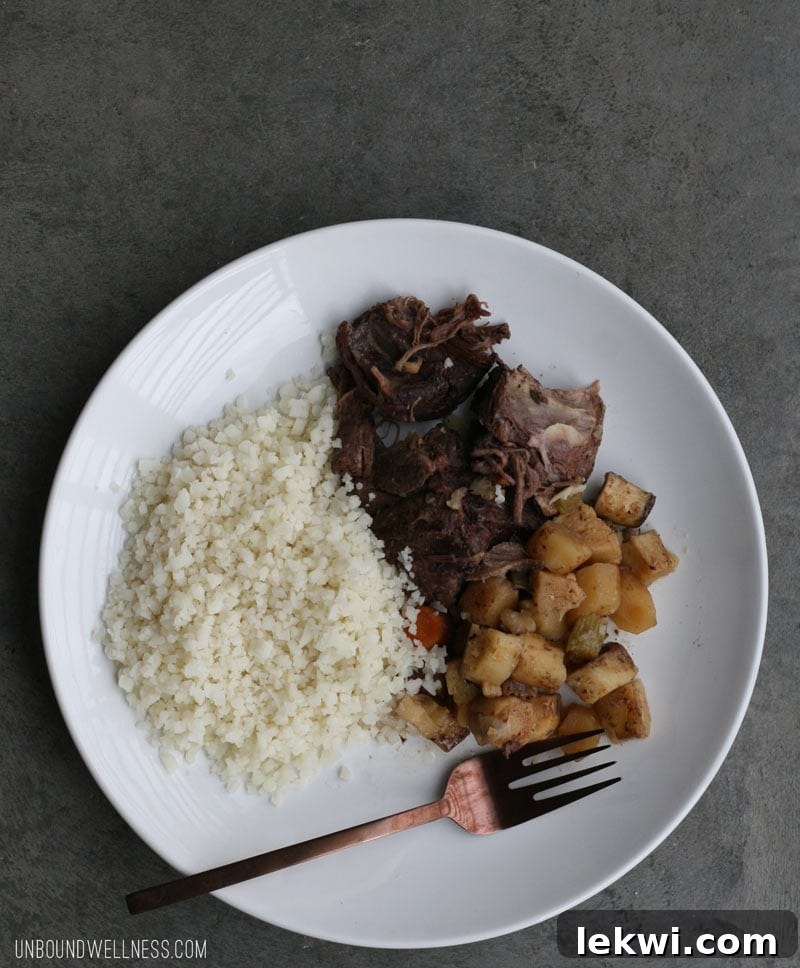
May your pot roast be warm, rich, and soul-satisfying, and may your search for cauliflower rice (or your homemade efforts!) be ever fruitful, dear friends. Enjoy a fantastic weekend, stay cozy, and savor every bite of this wholesome meal!
Did you make this recipe? Tag @unboundwellness on Instagram and use the hashtag #unboundwellness! We’d love to see your delicious creations.
## İşlem Özeti ve Kontrol Listesi:
1. **SEO uyumlu hale getirildi mi?**
* Sayfa başlığı (`