This post contains affiliate links. Learn what that means, here.
Crafting the Perfect Nutrient-Dense Smoothie Bowl: A Guide to Gut-Healing & Low-Sugar Blends
Scrolling through social media, you’ve likely encountered countless images of stunning smoothie bowls – vibrant, overflowing creations adorned with intricate toppings. They exude an aura of health and vitality, promising a nourishing start to the day or a refreshing midday boost. Yet, beneath their picturesque appearance, many of these popular concoctions often hide a less-than-healthy truth. A closer inspection of their recipes frequently reveals a significant flaw: they are typically laden with excessive sugar, severely lacking in essential vegetables, and conspicuously devoid of the healthy fats and quality protein crucial for sustained energy and overall well-being. But the good news is, a truly beneficial smoothie doesn’t have to sacrifice flavor for health. This guide, culminating in a delicious coconut kale smoothie bowl recipe, will show you how to create blends that are packed with all the right stuff, ensuring every sip is as nourishing as it is delicious.
Smoothies and smoothie bowls have garnered a reputation as the epitome of health-conscious eating. They are quick, convenient, and a seemingly effortless way to pack nutrients into your diet. However, this perception can be misleading. When prepared incorrectly, a smoothie can quickly transform into a “pseudo-health food,” delivering a sugar punch equivalent to, or even exceeding, that of a soda. The key to unlocking the true potential of smoothies lies in understanding their fundamental components and consciously choosing ingredients that support, rather than hinder, your health goals. A truly nutrient-dense smoothie is a harmonious blend of carefully selected ingredients designed to fuel your body, stabilize blood sugar, and keep you feeling satiated. So, what exactly goes into crafting such a powerhouse blend?
The Pillars of a Truly Healthy Smoothie: Building a Nutrient-Dense Foundation
1. Emphasize Vegetables: The Unsung Heroes of Your Blend
When it comes to building a truly healthy smoothie, vegetables should take center stage. Leafy greens, in particular, are the MVPs of any nutrient-dense blend. Think beyond just a few spinach leaves; smoothies offer a fantastic opportunity to incorporate a generous serving of greens without overpowering the flavor. Kale, spinach, Swiss chard, and even romaine lettuce can disappear seamlessly into a creamy texture, providing a wealth of vitamins, minerals, and antioxidants. These green powerhouses are rich in Vitamin K, Vitamin A, Vitamin C, folate, and crucial dietary fiber. Fiber is paramount for digestive health, promoting regularity, and feeding beneficial gut bacteria, which in turn supports a robust immune system and even mood regulation.
Incorporating a large handful (or two!) of leafy greens into your daily smoothie can significantly boost your overall nutrient intake, especially for those who struggle to consume enough vegetables throughout the day. Don’t be afraid to experiment with different greens to find your preferred flavor profile. For a milder taste, start with spinach. As your palate adjusts, you can gradually introduce more robust greens like kale. The vibrant chlorophyll in these greens is also believed to have detoxifying properties, further enhancing the health benefits of your smoothie. Remember, the more veggies, the better for your health, making them the most abundant ingredient in your healthy smoothie bowl.
2. Practice Moderate Fruit Consumption: Sweetness with a Purpose
While fruit offers natural sugars and beneficial vitamins, it’s crucial to approach fruit inclusion in smoothies with moderation. The phrase “natural sugar” often leads to the misconception that it can be consumed in unlimited quantities without consequence. However, fruit sugar (fructose) still impacts blood sugar levels. When consumed in excess, especially without adequate fiber or fat to slow absorption, it can lead to rapid blood sugar spikes, followed by energy crashes and increased cravings for more sugar. This cycle can leave you feeling hungry shortly after your “healthy” smoothie and contribute to imbalances over time.
In nature, our ancestors didn’t have access to blenders that could condense multiple servings of fruit into a single, quickly consumable drink. A typical smoothie can easily contain three to four servings of fruit, often combined with sugary fruit juices that lack the essential fiber found in whole fruits. Fiber is vital because it slows down the absorption of sugar into the bloodstream, helping to prevent sharp spikes. To maintain stable blood sugar and promote satiety, aim for just one serving of fruit per smoothie. Excellent choices include a small frozen banana for creaminess or a handful of fresh or frozen berries, which are lower in sugar and rich in antioxidants. This mindful approach ensures you get the benefits of fruit without the sugar overload.
3. Incorporate Healthy Fats: The Secret to Satiety and Brain Power
One of the most commonly overlooked, yet profoundly important, components missing from many popular smoothies is healthy fat. Healthy fats are not just about preventing hunger; they are essential for numerous bodily functions, including hormone production, nutrient absorption (especially for fat-soluble vitamins A, D, E, and K), and brain health. Without sufficient fat, even a smoothie packed with fruits and veggies might leave you feeling unsatisfied and craving something more substantial within an hour or two. This is because fats slow down digestion, providing a steady release of energy and promoting a prolonged feeling of fullness.
Adding a tablespoon of healthy fat can transform your smoothie from a temporary pick-me-up into a genuinely satiating meal or snack. Excellent sources include half an avocado, which provides incredible creaminess and monounsaturated fats; a tablespoon of coconut oil, rich in medium-chain triglycerides (MCTs) known for their energy-boosting properties; or a spoonful of almond butter, cashew butter, or even chia seeds, which offer omega-3 fatty acids and fiber. These fats not only enhance the texture and flavor of your smoothie but also play a critical role in blood sugar management, preventing the post-smoothie crash often associated with high-sugar, low-fat blends. Embrace healthy fats to keep you energized and focused throughout your day.
4. Choose High-Quality Protein: Fueling Your Body, Supporting Your Gut
Protein is another critical macronutrient that is frequently missing or poorly sourced in many smoothie recipes. A good quality protein source is essential for muscle repair and growth, satiety, and stabilizing blood sugar levels. However, it’s crucial to be discerning when selecting protein powders, as many on the market are unfortunately laden with added sugars, artificial flavors, fillers, and inflammatory ingredients like soy protein isolate. These additions can negate the health benefits you’re trying to achieve and potentially trigger digestive issues or allergic reactions.
For a clean and highly beneficial protein boost, I highly recommend incorporating grass-fed collagen hydrolysate into your smoothies. Collagen is a tasteless, odorless powder that blends seamlessly without altering the flavor or texture of your drink. Beyond being an excellent source of protein, collagen derived from grass-fed cows offers profound benefits for gut healing. It contains amino acids like glycine, proline, and glutamine, which are vital for repairing and maintaining the integrity of the intestinal lining, often compromised in conditions like leaky gut. Furthermore, collagen supports healthy skin, hair, nails, and joints, making it a multi-functional addition to your daily routine. If collagen isn’t for you, opt for a clean, unsweetened pea protein, hemp protein, or a high-quality whey protein concentrate (if dairy is tolerated), always checking the ingredient label for purity.
Smoothies vs. Juices: Understanding the Key Difference
It’s also imperative to distinguish between smoothies and juices. While both involve blending or extracting liquid from fruits and vegetables, their nutritional impact can be vastly different. Juices, especially those predominantly made from fruit, often remove the crucial fiber content present in whole produce. This process concentrates the sugars, transforming a seemingly healthy drink into a potent shot to your blood sugar. Without fiber to slow down absorption, the body processes the fruit sugar very quickly, leading to a rapid rise in blood glucose levels and subsequent crash. While vegetable-heavy juices can be beneficial in moderation for concentrated nutrient intake, fruit juices should be approached with caution due to their high sugar and low fiber profile.
Smoothies, on the other hand, retain the entire fruit and vegetable, including all the dietary fiber. This means you consume the whole food, benefiting from the slower sugar release and greater satiety that fiber provides. This critical difference is why smoothies, when crafted mindfully with the right balance of ingredients, are generally a superior choice for daily consumption compared to most fruit juices. Always remember to prioritize whole ingredients to reap the full spectrum of nutritional benefits.
Introducing the Gut-Healing Coconut Kale Smoothie Bowl
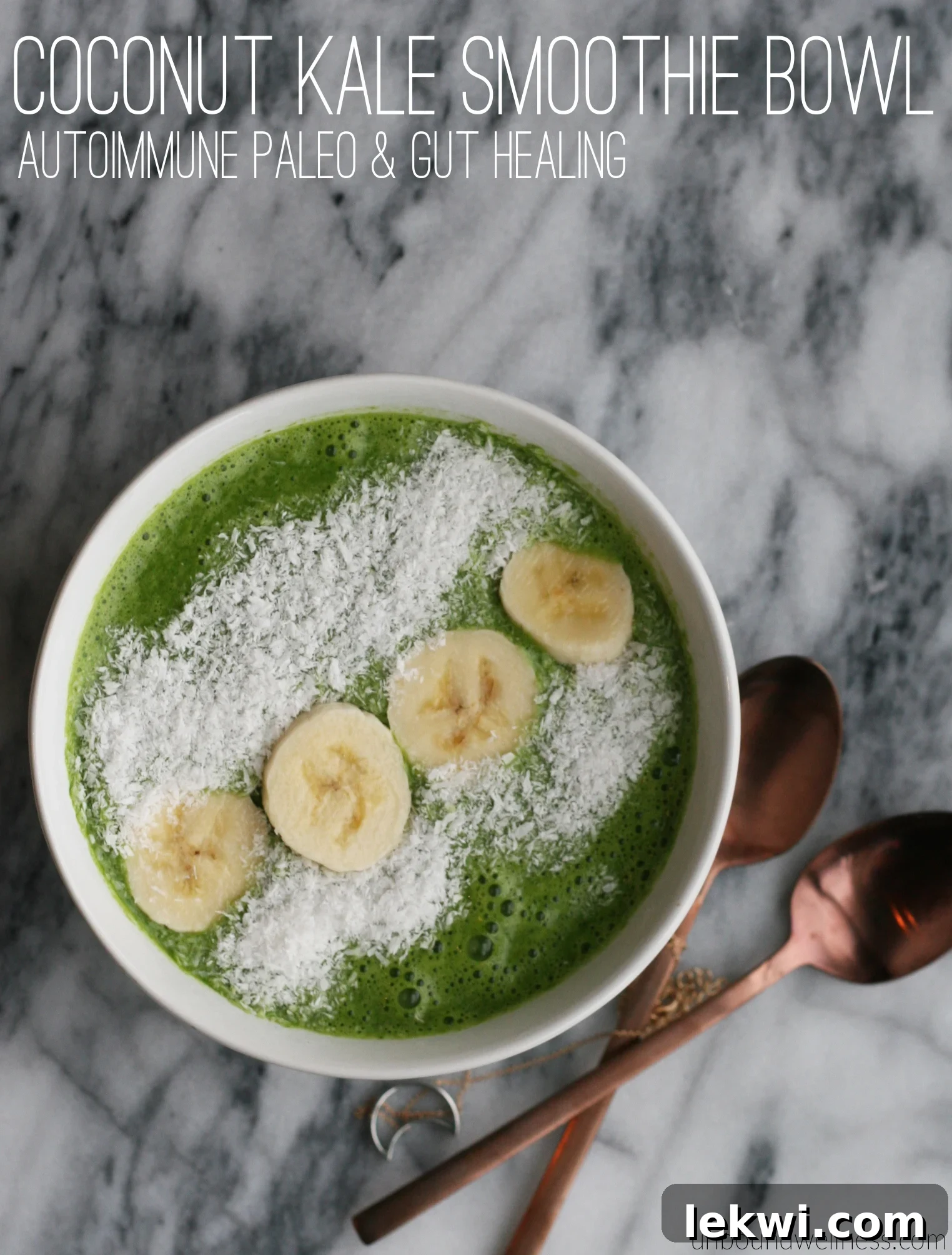
Now that we’ve covered all the essential principles for building a truly nourishing blend, let’s put them into practice! This Coconut Kale Smoothie Bowl is designed to be not only delicious but also incredibly supportive of your gut health, blood sugar balance, and overall vitality. It’s an Autoimmune Paleo-friendly recipe, making it suitable for those following specific dietary protocols. Get ready to enjoy a refreshing, nutrient-packed meal that you can feel good about from the inside out.
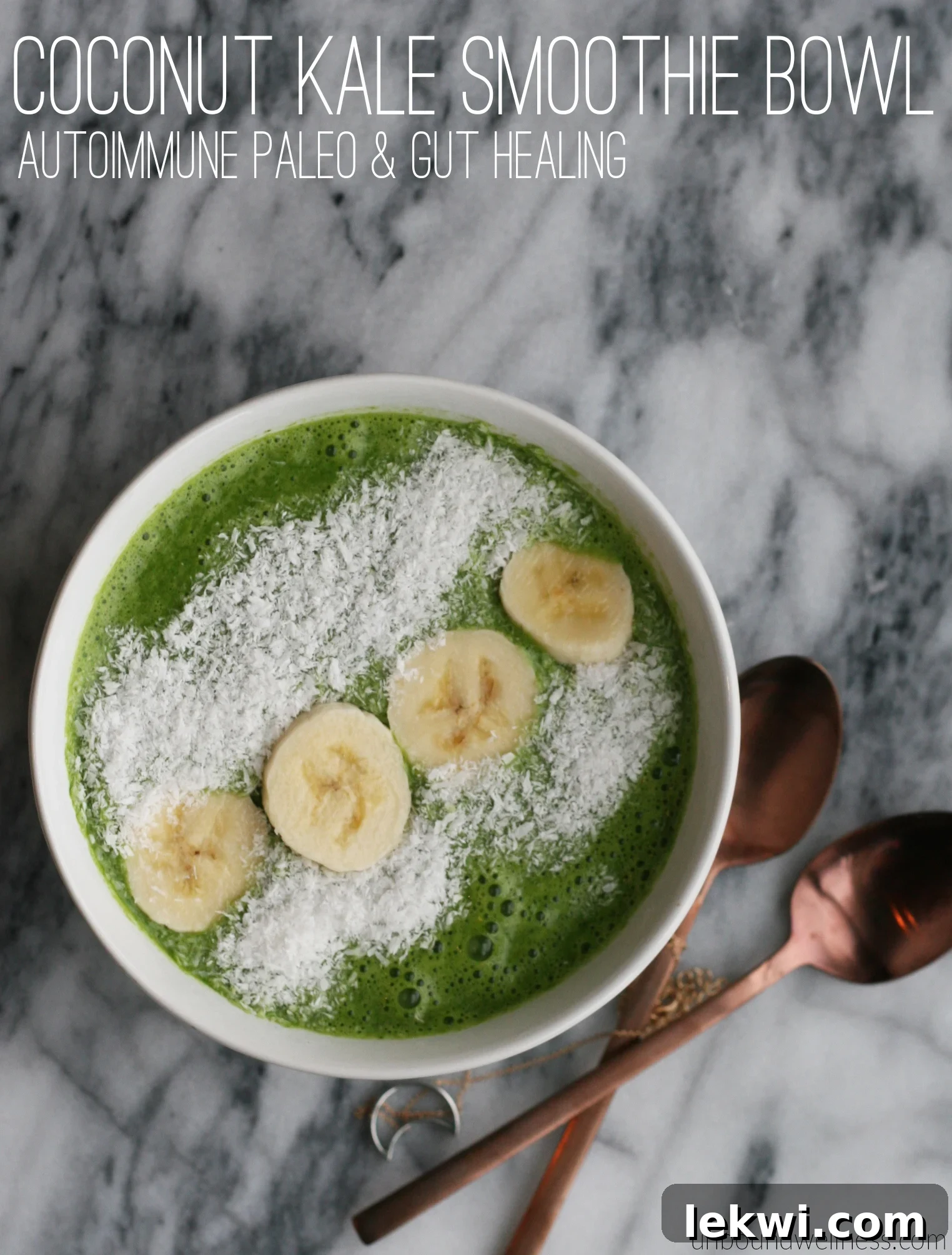
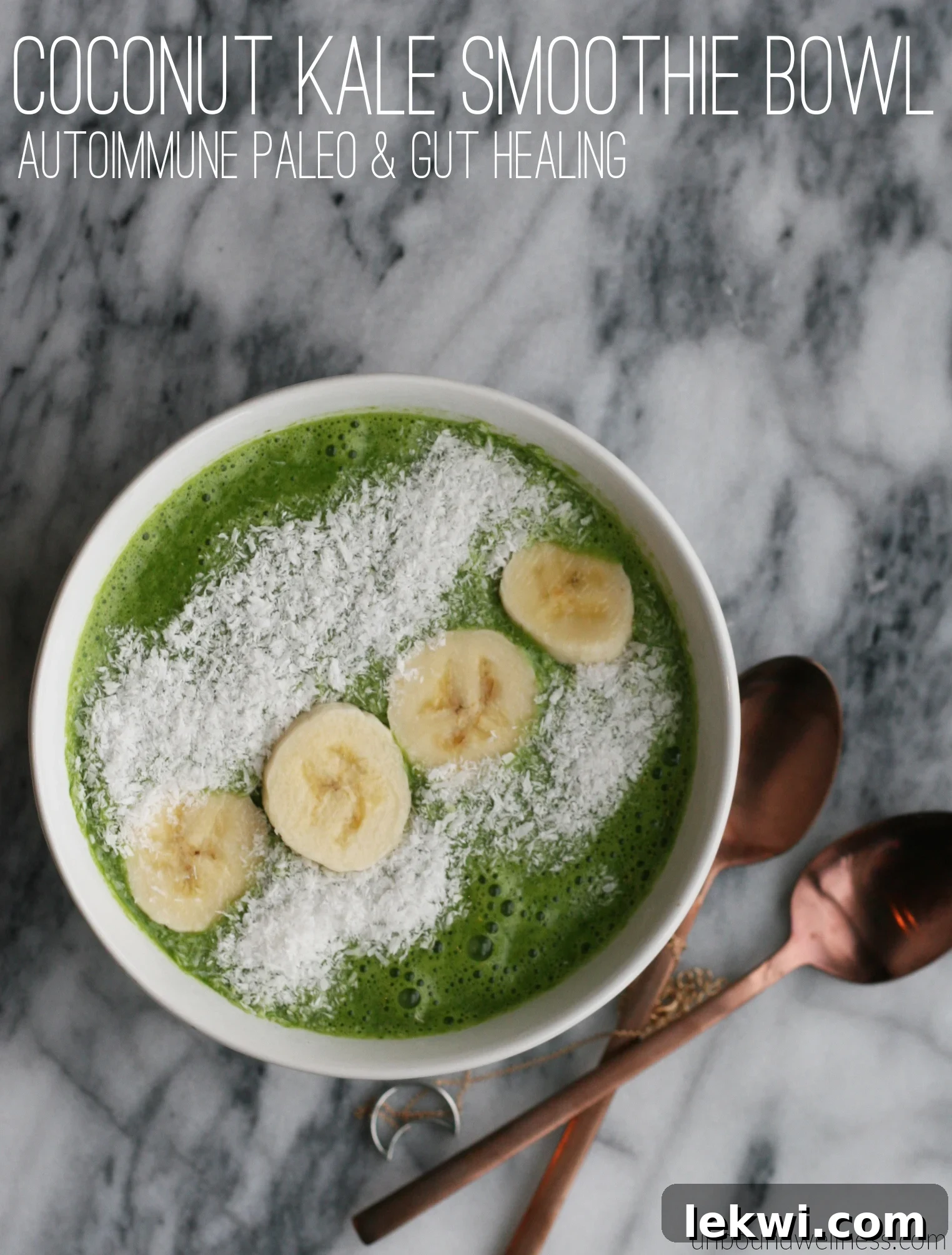
Coconut Kale Smoothie Bowl | Autoimmune Paleo & Gut Healing
Leave a Review
Pin Recipe
Want to save this for later?
Just drop your name and email below. Then we’ll email right to your inbox. ✉️
Ingredients
- 3-4 large kale leaves
- 2 pieces of frozen peach
- 1 tbsp collagen hydrolysate, link to buy above
- 1 tbsp coconut oil
- 1 cup coconut milk
- 2 ice cubes
- Juice of 1/4 lemon
- For topping
- ½ banana
- 1 tbsp coconut flakes
Instructions
-
Wash and destem the kale leaves.
-
Add the kale to a blender of choice with coconut milk and juice of 1/4 lemon.
-
Blend for 20-30 seconds or until very smooth and no longer chunky. Ensure all kale pieces are fully incorporated.
-
Add in the frozen peach pieces and ice cubes, then blend again until the mixture is thick, creamy, and completely smooth. The blender should not be struggling with frozen ingredients.
-
Next, add the collagen hydrolysate and coconut oil. Blend for another 10 seconds to fully combine these beneficial ingredients.
-
Pour your rich, vibrant smoothie into a bowl (or a glass if you prefer a thicker drink).
-
Artfully top with freshly sliced banana and a sprinkle of coconut flakes for added texture and flavor.
-
Grab a spoon and enjoy every delicious, gut-healing bite!
I wholeheartedly encourage you to give this Coconut Kale Smoothie Bowl a try. Whether you’re seeking a genuinely nourishing and satisfying cold treat, or you’re looking for creative ways to incorporate more leafy greens into your daily diet, this recipe is an excellent solution. It’s not just nutrient-dense and supportive of your gut health; it’s also incredibly enjoyable to eat, making healthy living both simple and delicious.
Experiment with your toppings – perhaps a sprinkle of chopped nuts (if tolerated), a few more berries, or a dusting of cinnamon to customize your experience. The beauty of smoothie bowls lies in their versatility and the opportunity to make them truly your own. We’d love to hear from you!
Do you regularly make smoothie bowls as part of your healthy routine? What are your favorite go-to ingredients and toppings that keep you coming back for more? Share your ideas in the comments below!