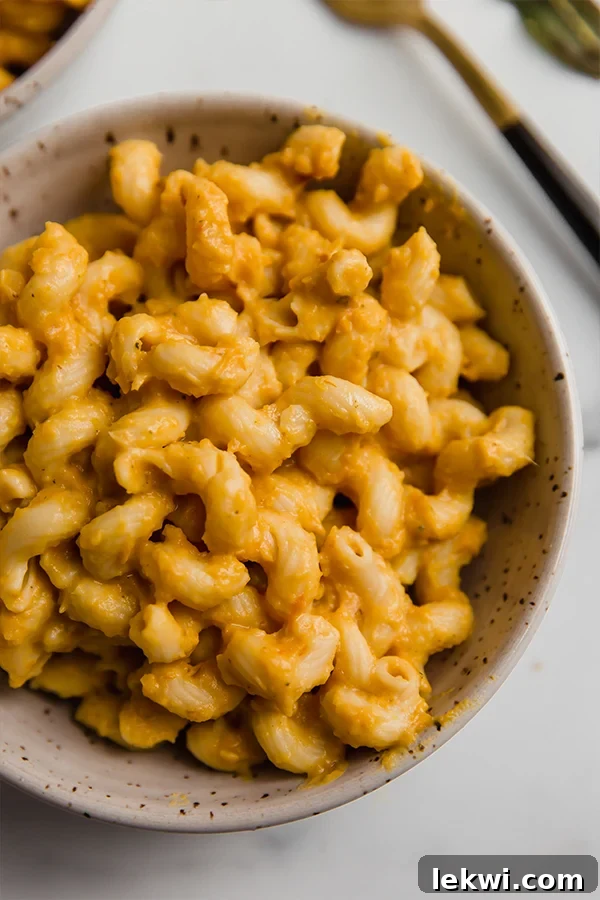
Creamy Dairy-Free Butternut Squash Pasta Sauce: Your Ultimate Healthy Fall Comfort Food
Embrace the vibrant flavors of autumn with this incredibly rich and creamy butternut squash pasta sauce. Wholly dairy-free, this delightful sauce artfully blends the sweetness of roasted butternut squash with aromatic garlic and fresh sage, creating a comforting and healthy meal that’s perfect for any fall evening. This recipe isn’t just delicious; it’s also designed to be paleo, AIP (Autoimmune Protocol), gluten-free, and vegan-friendly, making it an excellent choice for a wide range of dietary needs without compromising on taste or texture.
Forget the notion that a truly satisfying pasta sauce requires cheese or tomatoes. This recipe proves that butternut squash can be the undisputed star, delivering a velvety smooth and deeply flavorful sauce that will surprise and delight even the most skeptical palates. Prepare to transform your weeknight dinners into a gourmet experience with minimal effort.
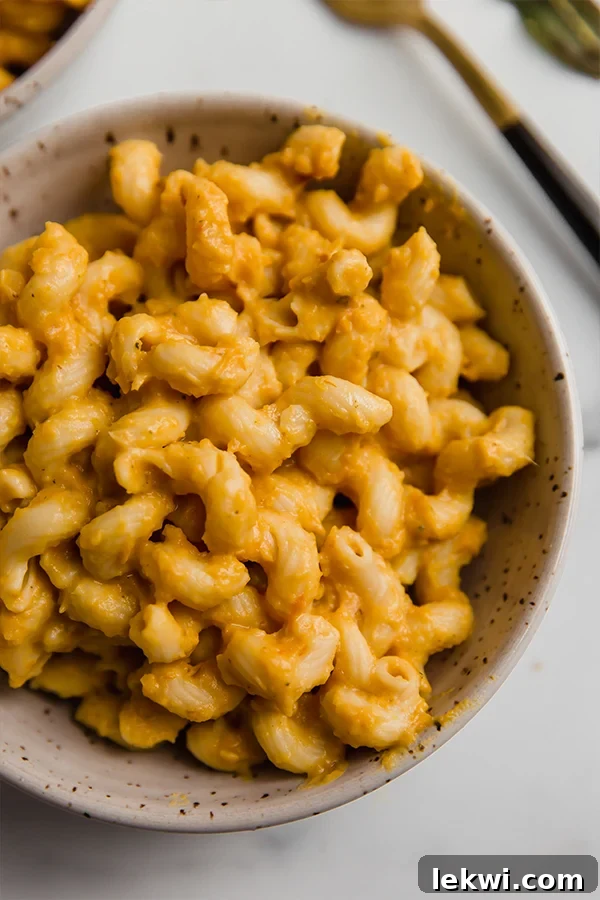
Why Butternut Squash is the Ultimate Fall Ingredient
Butternut squash is more than just a seasonal favorite; it’s a nutritional powerhouse and an incredibly versatile vegetable. Its naturally sweet, nutty flavor and creamy texture make it an ideal base for everything from soups and roasts to, as you’ll discover, an exceptional pasta sauce. This humble squash is packed with essential nutrients, offering a bounty of vitamins A and C, significant amounts of fiber, and vital minerals like potassium and magnesium. These nutrients support immune function, promote healthy digestion, and contribute to overall well-being, making it a fantastic ingredient to incorporate into your diet, especially as the colder months approach.
Beyond its health benefits, butternut squash truly shines in its ability to adapt. When roasted, its sugars caramelize, intensifying its natural sweetness and creating a depth of flavor that is simply unmatched. This roasting process is key to our pasta sauce, as it brings out the best in the squash, providing a rich, savory foundation that is both comforting and sophisticated.
The Magic of Dairy-Free: Catering to Dietary Needs
In today’s diverse culinary landscape, more people are exploring dairy-free, gluten-free, paleo, and AIP diets for various health and lifestyle reasons. This butternut squash pasta sauce proudly caters to these dietary preferences, demonstrating that you don’t need traditional ingredients to create deeply satisfying and flavorful meals.
- Dairy-Free: Many individuals experience lactose intolerance or simply prefer to avoid dairy. This recipe uses rich coconut milk to achieve a luxurious creaminess that rivals any dairy-based sauce, making it stomach-friendly and equally delicious.
- Gluten-Free: By pairing this sauce with your favorite gluten-free pasta (such as rice, corn, or lentil pasta), you can enjoy a comforting pasta dish without any gluten concerns.
- Paleo-Friendly: Adhering to the Paleo diet means focusing on whole, unprocessed foods. This sauce fits perfectly, utilizing fresh vegetables, healthy fats, and compliant herbs.
- AIP (Autoimmune Protocol) Compliant: For those following the AIP diet, ingredients like nightshades (tomatoes, peppers) and certain spices are typically avoided. Our recipe is thoughtfully crafted to be AIP-friendly, omitting black pepper (which is a nightshade) and focusing on healing, nutrient-dense ingredients. Use cassava pasta to keep it strictly AIP.
This sauce isn’t just about what it lacks; it’s about what it offers: pure, wholesome ingredients that nourish your body while tantalizing your taste buds. It’s a testament to how flavorful healthy eating can be.
Key Ingredients for a Superb Butternut Squash Pasta Sauce
Crafting this incredible sauce starts with selecting the right ingredients. Each component plays a vital role in achieving the perfect balance of flavor and texture:
- Butternut Squash: The heart of our sauce! Choose a squash that feels heavy for its size and has firm, unblemished skin. While fresh is ideal for flavor, pre-cut or frozen butternut squash can also be used for convenience, though you might need to adjust roasting times.
- Yellow Onion and Garlic: These aromatic staples form the foundational flavor layer, adding savory depth that complements the sweetness of the squash. Roasting them alongside the squash mellows their intensity and brings out their natural sweetness.
- Fresh Sage Leaves and Fresh Thyme: These herbs are the stars of the seasoning. Sage pairs exceptionally well with butternut squash, imparting an earthy, slightly peppery flavor, while thyme adds a subtle, woody note. Using fresh herbs makes a significant difference in the sauce’s vibrancy. If fresh isn’t available, dried can be used, but use about a third of the amount.
- Olive Oil: A good quality extra virgin olive oil is essential for roasting the vegetables, helping them caramelize and develop rich flavors. It also contributes to the sauce’s smooth texture.
- Salt and Black Pepper: Basic seasonings are crucial for enhancing all the other flavors. Remember to omit black pepper if strictly following the AIP protocol, as it is a nightshade. You can use white pepper as an alternative if desired.
- Pasta: The vehicle for our delicious sauce! Any pasta shape works beautifully. For gluten-free needs, consider options like brown rice, chickpea, or lentil pasta. For a strict AIP diet, cassava pasta is the recommended choice.
- Coconut Milk: This is our dairy-free secret weapon for incredible creaminess. Full-fat canned coconut milk will yield the richest, most luxurious sauce. If you prefer a lighter sauce or need a coconut-free option, you can use plain pasta water, but be aware the flavor and creaminess will be slightly less intense.
- Nutritional Yeast: This optional ingredient is a game-changer for adding a savory, “cheesy” umami flavor without any dairy. It’s deactivated yeast flakes that are a great source of B vitamins. If you’re not keen on the cheesy note or don’t have it on hand, the sauce is still fantastic without it.
Step-by-Step Guide: Crafting Your Butternut Squash Pasta Sauce
Creating this gourmet dairy-free butternut squash pasta sauce is simpler than you might imagine, largely thanks to the magic of sheet pan roasting. Follow these detailed steps for a perfect result every time:
- Prepare for Roasting: Begin by preheating your oven to 400°F (200°C). Line a large baking sheet with parchment paper. This prevents sticking and makes cleanup a breeze.
- Prep the Vegetables: Peel your butternut squash (a vegetable peeler works best) and carefully scoop out the seeds. Cut the squash into roughly 1-inch cubes for even cooking. Slice your yellow onion into wedges. On a separate small square of aluminum foil or parchment paper, place the garlic cloves (no need to peel them if you’re wrapping them, the skins will easily slip off after roasting) and sage leaves.
- Season and Roast: Arrange the butternut squash cubes and onion slices evenly on the prepared baking sheet. Drizzle the entire pan, including the wrapped garlic and sage, generously with olive oil. Wrap the foil around the garlic and sage to create a small packet; this prevents them from burning and steams them slightly, making them incredibly soft and flavorful. Season the squash and onion with salt, black pepper (if using), and fresh thyme. Toss everything gently to ensure an even coating.
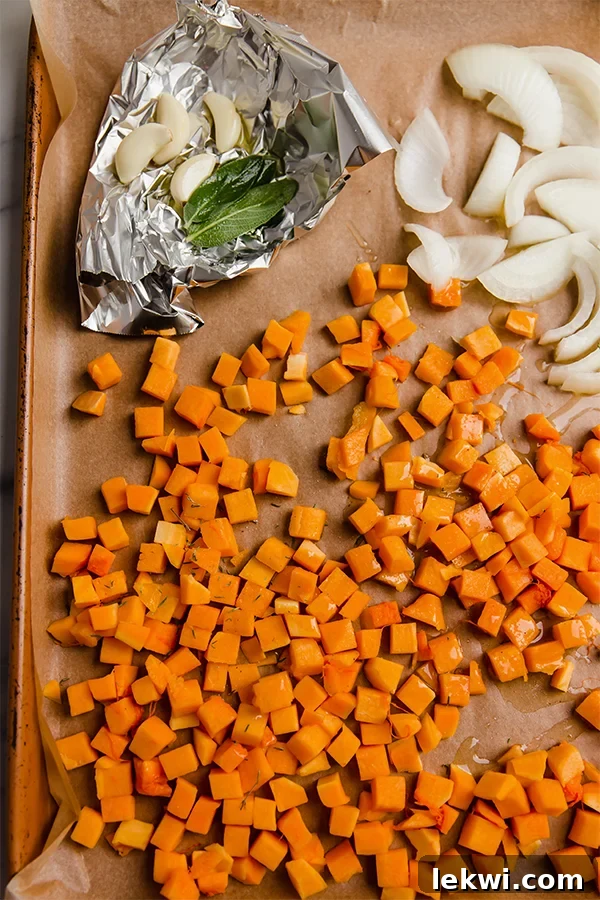
- Bake to Perfection: Transfer the baking sheet to your preheated oven and roast for 30-35 minutes. The squash should be fork-tender and slightly caramelized around the edges, with a beautiful light crispness. Once done, remove from the oven and set aside.
- Cook the Pasta: While the squash is roasting, bring a large pot of salted water to a rolling boil. Add your chosen pasta and cook according to package directions until al dente. Before straining, be sure to reserve about ¾ cup of the starchy pasta water. This liquid is gold for our sauce, helping to achieve the perfect consistency and emulsify the flavors. Strain the cooked pasta and set it aside.
- Blend the Sauce: Carefully unwrap the roasted garlic and squeeze the softened cloves out of their skins into a high-speed blender. Add the roasted butternut squash, onion, and sage leaves from the foil packet. Pour in the reserved pasta water, coconut milk, and nutritional yeast (if using). Blend on high until the sauce is completely smooth and creamy. If you desire a thinner sauce, add 1-2 tablespoons more coconut milk or pasta water until it reaches your preferred consistency.
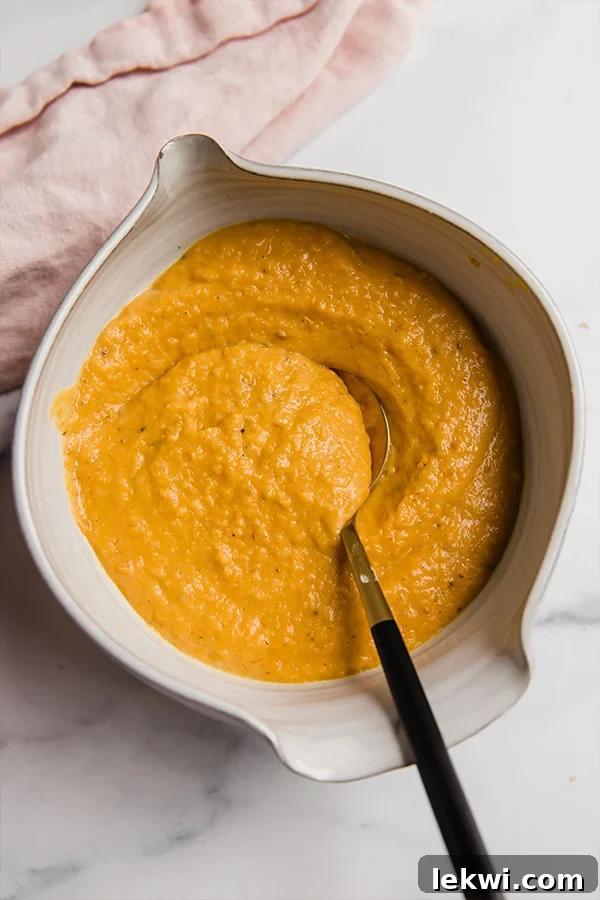
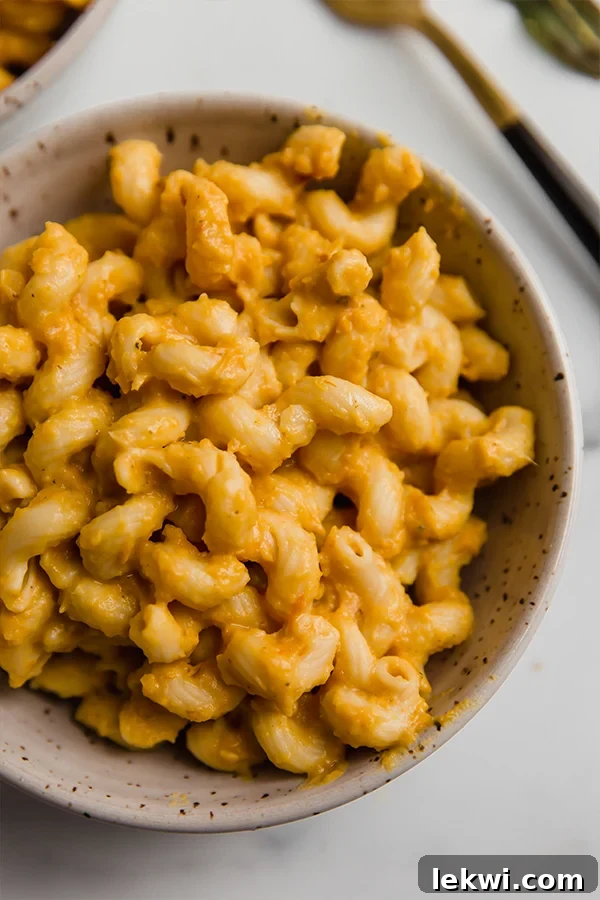
- Combine and Serve: Return the cooked pasta to its pot (or a large serving bowl). Pour the freshly blended butternut squash sauce over the pasta and toss gently to ensure every strand is beautifully coated. Serve immediately, perhaps garnished with extra fresh sage leaves or a sprinkle of nutritional yeast. This dish is wonderful on its own or paired with a protein of your choice, such as grilled chicken, pan-seared shrimp, or crispy bacon for those not on an AIP diet.
Tips for Success & Delicious Variations
- Don’t Rush the Roast: The key to a deeply flavorful sauce is perfectly roasted vegetables. Ensure your squash is tender and slightly caramelized for maximum sweetness and depth.
- Adjust Consistency to Your Liking: The amount of pasta water and coconut milk can be adjusted. For a thicker sauce, use less liquid; for a thinner, looser sauce, add more by the tablespoon until desired consistency is reached.
- Herb Harmony: While sage and thyme are wonderful, feel free to experiment with other herbs. A touch of fresh rosemary or a hint of nutmeg can add an interesting twist. For a sweeter, warmer profile, a tiny pinch of cinnamon could be lovely.
- Spice It Up: If you enjoy a bit of heat, a pinch of red pepper flakes added to the roasting pan or blended into the sauce can provide a delightful kick.
- Perfect Pairings: This sauce is incredibly versatile. Serve it with roasted chicken, pan-seared scallops, or for a vegetarian option, try it with roasted chickpeas or sautéed mushrooms. A side salad with a light vinaigrette would also be a perfect complement.
- Add More Veggies: Stir in some fresh spinach or kale at the end, allowing the residual heat of the pasta and sauce to wilt them slightly for added nutrients and color.
Frequently Asked Questions
Can I use frozen butternut squash?
Absolutely! Frozen butternut squash is a great time-saver. You might need to add an extra 10-15 minutes to the roasting time, as it contains more moisture and starts from a frozen state. Just keep an eye on it until it’s tender and lightly crisp.
Can you make this recipe without nutritional yeast?
Yes, you certainly can! Nutritional yeast provides a distinct cheesy, umami flavor, but the sauce is still wonderfully flavorful and creamy without it. It’s an optional addition, so feel free to omit it if you prefer or don’t have it on hand.
Is it possible to make this recipe coconut-free?
While the coconut milk contributes significantly to the sauce’s creaminess and richness, you can make a coconut-free version by using only reserved pasta water. However, expect a slightly less creamy and subtly different flavor profile. If you have another AIP-compliant, dairy-free milk alternative that you prefer, you could experiment with that, though coconut milk offers the best consistency.
Can I use pre-cut butternut squash?
Yes, pre-cut butternut squash from the grocery store is a convenient option that significantly reduces prep time. Ensure the pieces are roughly the same size for even roasting.
How should I store leftovers?
Leftover butternut squash pasta sauce can be stored separately from the pasta or already combined. Place it in an airtight container in the refrigerator for up to 3-4 days. For best results when reheating, you might need to add a splash of water or coconut milk to thin it out again.
Can I freeze the sauce?
Yes, the sauce freezes beautifully! Allow it to cool completely, then transfer it to freezer-safe containers or bags. It can be stored in the freezer for up to 3 months. Thaw in the refrigerator overnight and reheat gently on the stovetop, adding a little liquid if needed.
What kind of blender is best for this sauce?
A high-speed blender (like a Vitamix or Blendtec) will give you the smoothest, creamiest sauce. If you have a standard blender, you might need to blend for a bit longer and scrape down the sides occasionally to ensure no lumps remain.
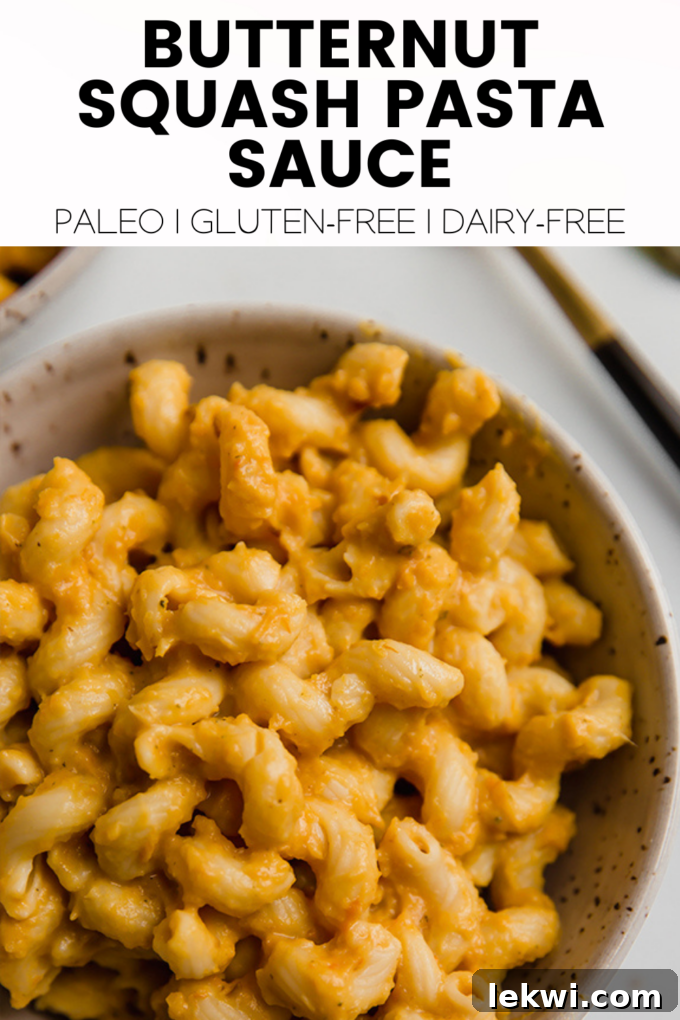
Butternut Squash Pasta Sauce (Paleo, Gluten-free, Dairy-free) Recipe
Yield: 4 servings
Prep Time: 20 mins
Cook Time: 35 mins
Total Time: 55 mins
Author: Michelle
Ingredients
- 1 lb butternut squash, peeled and cubed
- ½ yellow onion, sliced
- 4 cloves garlic
- 3 fresh sage leaves
- 3 tbsp olive oil
- 2 tsp fresh thyme
- ¾ tsp salt
- ¼ tsp black pepper (omit for AIP)
- 12 oz pasta of choice (use a cassava pasta for AIP)
- ½ cup coconut milk (full-fat canned recommended)
- 2 tbsp nutritional yeast (optional, for cheesy flavor)
Instructions
- Preheat the oven to 400°F (200°C) and line a large baking sheet with parchment paper.
- Add the butternut squash cubes and sliced onion to the baking sheet. Place the whole garlic cloves and sage leaves on a small square of foil or parchment paper.
- Drizzle the entire pan with olive oil and wrap the garlic and sage in the foil packet to prevent burning. Season the squash and onion with salt, pepper (if using), and fresh thyme. Toss to coat evenly.
- Bake in the preheated oven for 30-35 minutes, or until the squash is tender and lightly crisp. Set aside.
- While the vegetables roast, cook the pasta according to package directions. Before straining, reserve ¾ cup of the pasta water. Drain the cooked pasta and set aside.
- Transfer the roasted squash, onion, garlic (squeezed from skins), and sage to a high-speed blender. Add the reserved pasta water, coconut milk, and nutritional yeast (if using). Blend until completely smooth and creamy. Add 1-2 tbsp more coconut milk or pasta water if a thinner sauce is desired.
- Add the blended sauce to the cooked pasta and toss to coat evenly. Serve immediately, perhaps with a protein of your choice or a fresh garnish.
Notes
All nutrition facts are estimated and will vary based on specific ingredients and brands used.
Nutrition Information (Estimated per serving):
- Calories: 212 kcal
- Carbohydrates: 17.4 g
- Protein: 2.2 g
- Fat: 16.8 g
- Fiber: 3 g
Did you Make this Recipe? Tag @unboundwellness on Instagram and hashtag #unboundwellness!
You’ll Also Love These Healthy Recipes:
- AIP Mac and Cheese
- No Boil Gluten-Free Pasta Bake
- Healthy Broccoli Cheese Casserole
We hope you enjoy this delightful butternut squash pasta sauce. It’s a testament to how nourishing and flavorful fall cooking can be, offering comfort and health in every bite. Happy cooking!