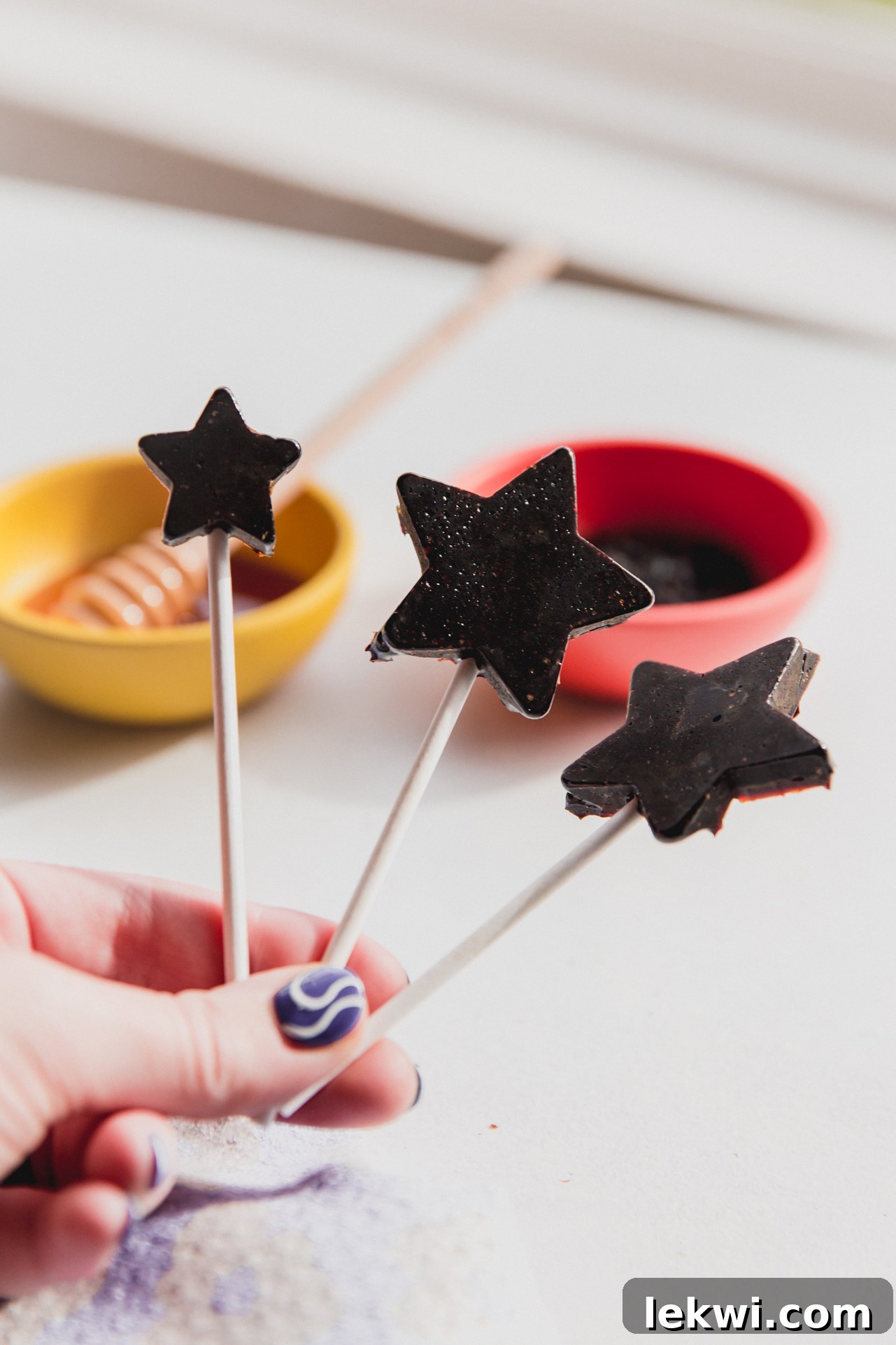
In the heart of winter, when sniffles and sore throats become unwelcome guests, having a natural, comforting remedy on hand can make all the difference. Introducing these delightful homemade elderberry lollipops – a simple yet effective way to bring a little sweetness and immune support into your family’s routine. Crafted with just two wholesome ingredients: nutrient-rich elderberry syrup and golden honey, these lollipops offer a soothing and enjoyable alternative to traditional cold-weather remedies.
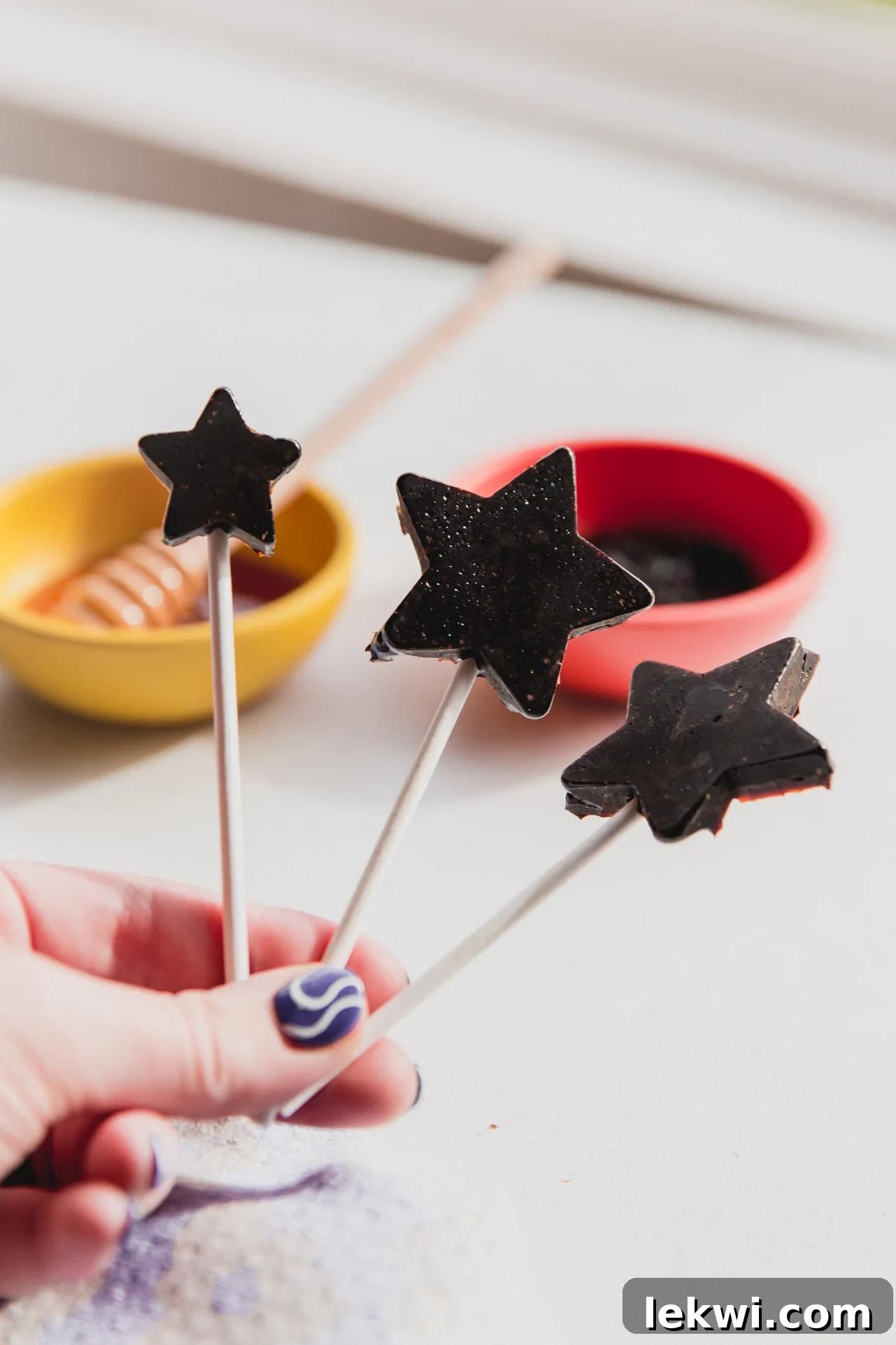
The colder months inevitably bring a host of seasonal bugs, and factors like holiday travel, bustling social gatherings, or children attending school and daycare can further increase exposure. While fundamental health practices like adequate hydration, balanced nutrition, sufficient sleep, and diligent hand washing are paramount, a little extra immune boost can go a long way. Elderberry syrup has long been celebrated for its immune-supporting properties, and transforming it into a fun, edible lollipop makes it an irresistible treat for both kids and adults. These homemade elderberry lollipops are not just a remedy; they’re a comforting, flavorful experience designed to help you and your loved ones navigate winter with greater ease.
Simple to prepare and incredibly convenient, these elderberry syrup lollipops are the perfect natural companion for winter wellness!
Table of Contents
- The Potent Benefits of Elderberry Lollipops
- Essential Ingredients for Your Elderberry Lollipops
- Creative Modifications to Elevate Your Lollipops
- Recommended Tools for Lollipop Making
- Step-by-Step Guide to Making Homemade Elderberry Lollipops
- Pro Tips & Tricks for Perfect Lollipops
- Understanding Elderberry Dosage
- Elderberry and Autoimmune Considerations
- Frequently Asked Questions About Elderberry Lollipops
The Potent Benefits of Elderberry Lollipops
- Aiding in Cold and Flu Recovery: Elderberry (Sambucus nigra) has been a traditional herbal remedy for centuries, revered for its potential immune-modulating properties. Modern research supports its use, with studies indicating that elderberry can help shorten the duration and severity of cold and flu symptoms. For instance, a study involving travelers showed that participants who took elderberry experienced, on average, a two-day shorter cold duration and reduced symptom intensity. For busy individuals, parents, or anyone looking to bounce back faster, elderberry can be a valuable addition to your wellness arsenal. These lollipops make getting that beneficial dose both convenient and enjoyable, especially when you need all the help you can get to power through a cold.
- Effortless and Enjoyable Immune Support: Let’s face it, consuming plain elderberry syrup can sometimes be an acquired taste, especially for children. Lollipops transform this health-boosting ingredient into a delightful treat. The sweet, satisfying experience of a lollipop makes it a far more appealing way to get your daily dose of elderberry, particularly for picky eaters or those who prefer not to drink liquid supplements. It’s a fun and tasty method to ensure your family gets the immune support they need without any fuss.
- Unleash Your Creativity: Unlike mass-produced store-bought options that often come in limited flavors and shapes, making elderberry lollipops at home allows for endless customization. You can experiment with various natural flavor enhancers (which we’ll cover later) to create unique taste profiles that perfectly suit your family’s preferences. Furthermore, choosing fun and exciting molds transforms a simple health remedy into an engaging activity, making wellness feel less like a chore and more like a treat. Imagine star-shaped lollipops or cute animal figures – the possibilities are as boundless as your imagination!
- Packed with Antioxidants and Vitamins: Beyond its direct impact on cold and flu symptoms, elderberry is a powerhouse of antioxidants, including anthocyanins, which give the berries their deep purple color. These antioxidants help protect the body’s cells from damage caused by free radicals. Elderberry also contains essential vitamins like Vitamin C, Vitamin A, and various B vitamins, along with minerals such as potassium, calcium, and phosphorus. These nutrients contribute to overall well-being and can further bolster your body’s natural defenses during challenging seasons.
Essential Ingredients for Your Elderberry Lollipops
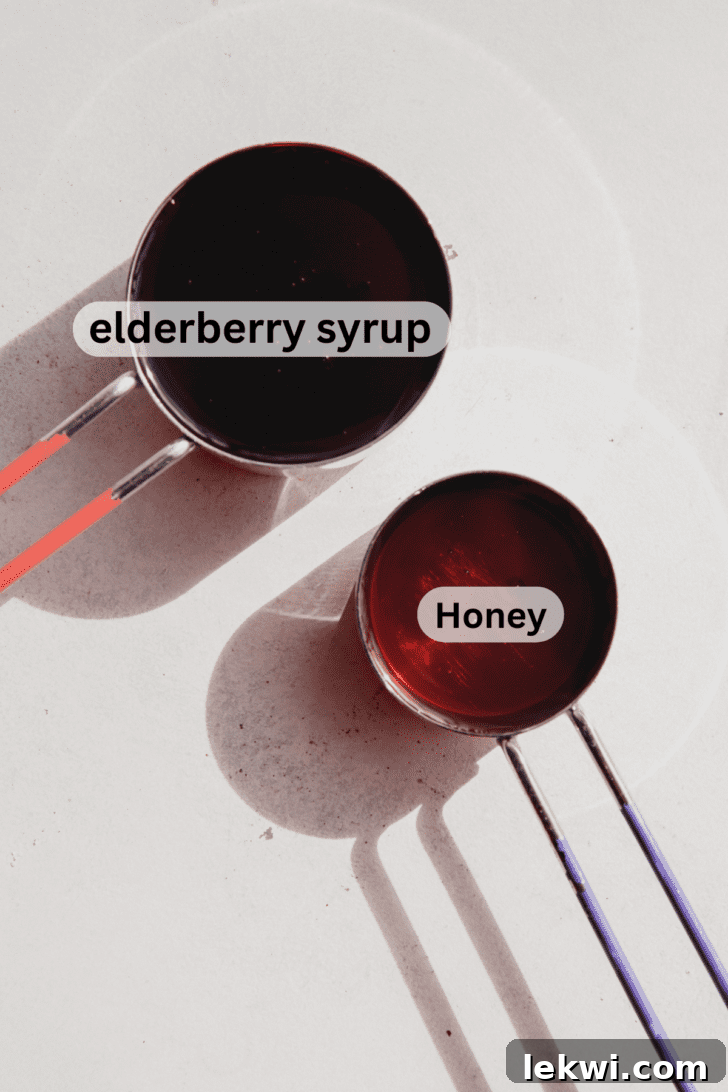
- Elderberry Syrup: This is the star ingredient, providing the foundational immune benefits. You have a couple of options here:
- Premade Elderberry Syrup: For convenience, you can easily find high-quality premade elderberry syrups at health food stores or online. Many of these already include natural flavorings like honey, lemon, or cinnamon, which can add an extra layer of taste to your lollipops. Ensure you choose a reputable brand with minimal added sugars or artificial ingredients. Look for organic options if possible.
- Homemade Elderberry Syrup: If you prefer to control every ingredient, making your own elderberry syrup is a rewarding process. It often involves simmering dried elderberries with water, spices, and then sweetening with honey. You can find excellent recipes online, including those for homemade elderberry syrup or gummies, which can easily be adapted for this lollipop recipe. Homemade syrup can often be more potent and free from unwanted additives.
- Honey: Not only does honey act as the primary sweetener and binding agent for these lollipops, but it also brings its own array of health benefits. Raw, local honey, in particular, is known for its antibacterial and anti-inflammatory properties, making it an excellent natural soothe for sore throats. Its unique flavor complements elderberry beautifully, creating a delicious and therapeutic combination. When choosing honey, opt for high-quality, unpasteurized varieties to retain its beneficial enzymes and nutrients.
Creative Modifications to Elevate Your Lollipops
While delicious on their own, these elderberry lollipops can be customized with additional flavors and beneficial ingredients. Consider these modifications to tailor them to your family’s taste buds and health needs:
- Fresh Grated Ginger: For an extra kick of warmth and additional immune-boosting power, grated fresh ginger is an excellent choice. Ginger is well-regarded for its anti-inflammatory and digestive properties. However, its pungent flavor can be quite strong, so if you’re making these for children, start with a small amount and adjust according to their preference. A little goes a long way to add a zesty, warming note.
- Cinnamon: Adding about 1 teaspoon of ground cinnamon can infuse your lollipops with a wonderfully aromatic and comforting spice. Cinnamon is not only delicious but also known for its antioxidant and anti-inflammatory benefits, making it a perfect companion to elderberry. Its sweet and woody notes create a cozy flavor profile, ideal for a winter treat.
- Orange Zest: For a bright, citrusy twist, zest approximately 1/4th of an orange into your mixture. Orange zest contains essential oils that provide a vibrant burst of flavor and a hint of Vitamin C. This addition can make the lollipops taste fresher and more appealing, especially if you enjoy a tangy counterpoint to the sweetness of honey and elderberry.
- Lemon Juice: A small squeeze of fresh lemon juice (about 1-2 teaspoons) can brighten the flavor, add a touch of tartness, and provide a boost of Vitamin C. Lemon also works synergistically with honey and elderberry for soothing properties.
- Peppermint Extract: For a refreshing and soothing sensation, particularly helpful for nasal congestion, a drop or two of food-grade peppermint extract can be added. Use sparingly, as peppermint can be potent.
- Cloves or Star Anise: A pinch of ground cloves or a whole star anise pod (removed before pouring into molds) can impart exotic, warming flavors that complement elderberry and offer additional antioxidant benefits.
Recommended Tools for Lollipop Making
Having the right tools can make the lollipop-making process smoother and more successful. While some items are essential, others simply make the experience more enjoyable.
- Candy Thermometer: This is arguably the most critical tool for any candy-making endeavor, and these elderberry lollipops are no exception. Achieving the “hard crack” stage (300°F or 149°C) is essential for your lollipops to solidify properly and have the desired texture. A reliable candy thermometer eliminates guesswork, ensuring consistent results every time. It’s a versatile tool that you’ll use for other homemade treats like gluten-free s’mores bars or marshmallows. Investing in a good quality thermometer will save you frustration and wasted ingredients.
- Lollipop Molds: While you could technically free-form small drops on parchment paper, silicone lollipop molds make the process much neater and yield perfectly shaped treats. Silicone molds are non-stick and flexible, making demolding incredibly easy. They also typically come with slots for inserting lollipop sticks. We particularly love using fun star-shaped molds for an extra touch of whimsy, but any shape will do! Ensure your molds are food-grade silicone for safety.
- Lollipop Sticks: Don’t forget the sticks! These are essential for the “lollipop” experience and make them easy to handle and enjoy without sticky fingers. You can find them readily available where candy-making supplies are sold.
- Heavy-Bottomed Pot: A sturdy, heavy-bottomed saucepan is crucial for even heat distribution, which helps prevent scorching the sugar mixture. Stainless steel is an excellent choice.
- Pastry Brush: A small pastry brush dipped in water can be useful for brushing down the sides of the pot to prevent sugar crystals from forming, ensuring a smooth syrup.
Step-by-Step Guide to Making Homemade Elderberry Lollipops
Making these immune-boosting elderberry lollipops is a straightforward process, but precision, especially with temperature, is key to success. Follow these simple steps, complete with visual guidance, to create your own batch of winter wellness treats. You’ll find the full, detailed instructions in the recipe card below.
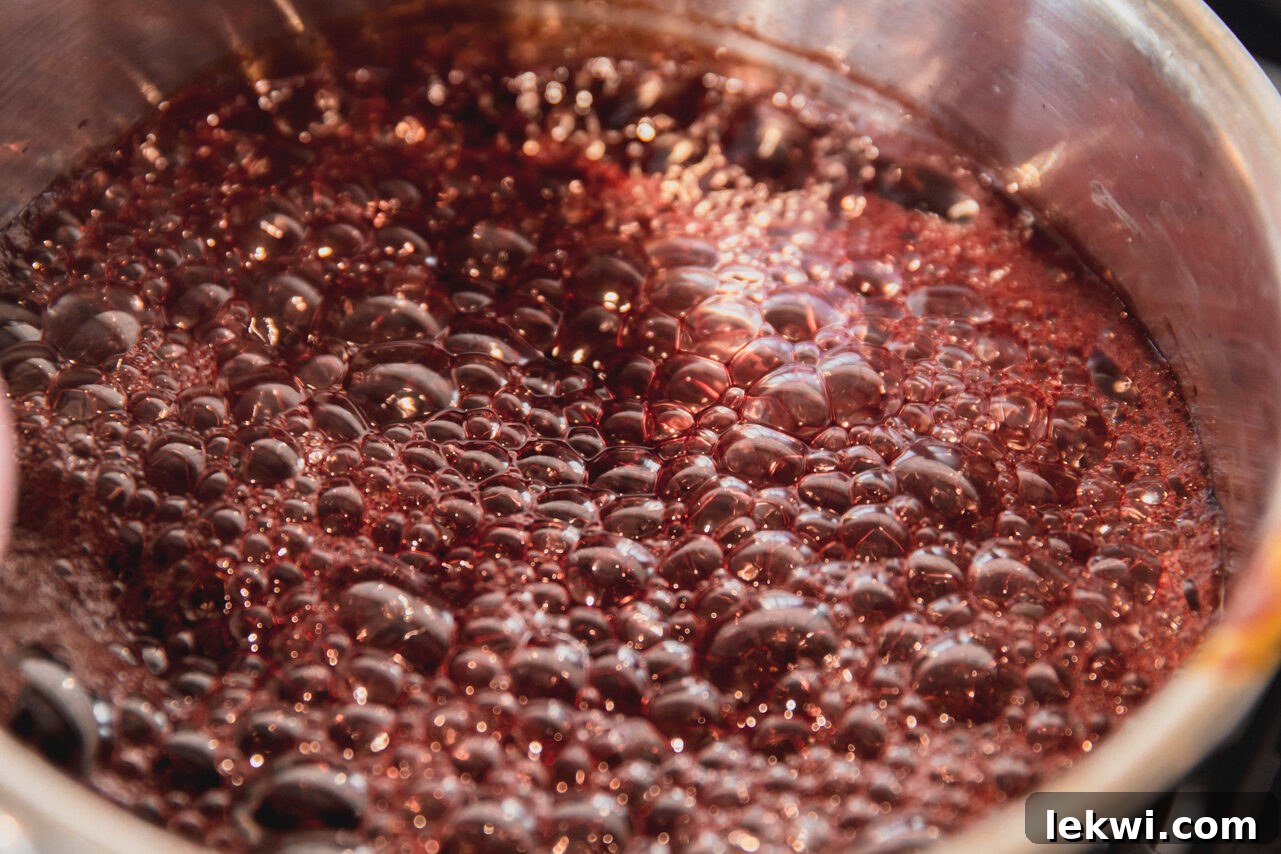
Step One: Combine Ingredients. Begin by carefully combining your chosen elderberry syrup and honey in a heavy-bottomed pot. Stir them gently until they are thoroughly mixed. This ensures an even consistency before the cooking process begins.
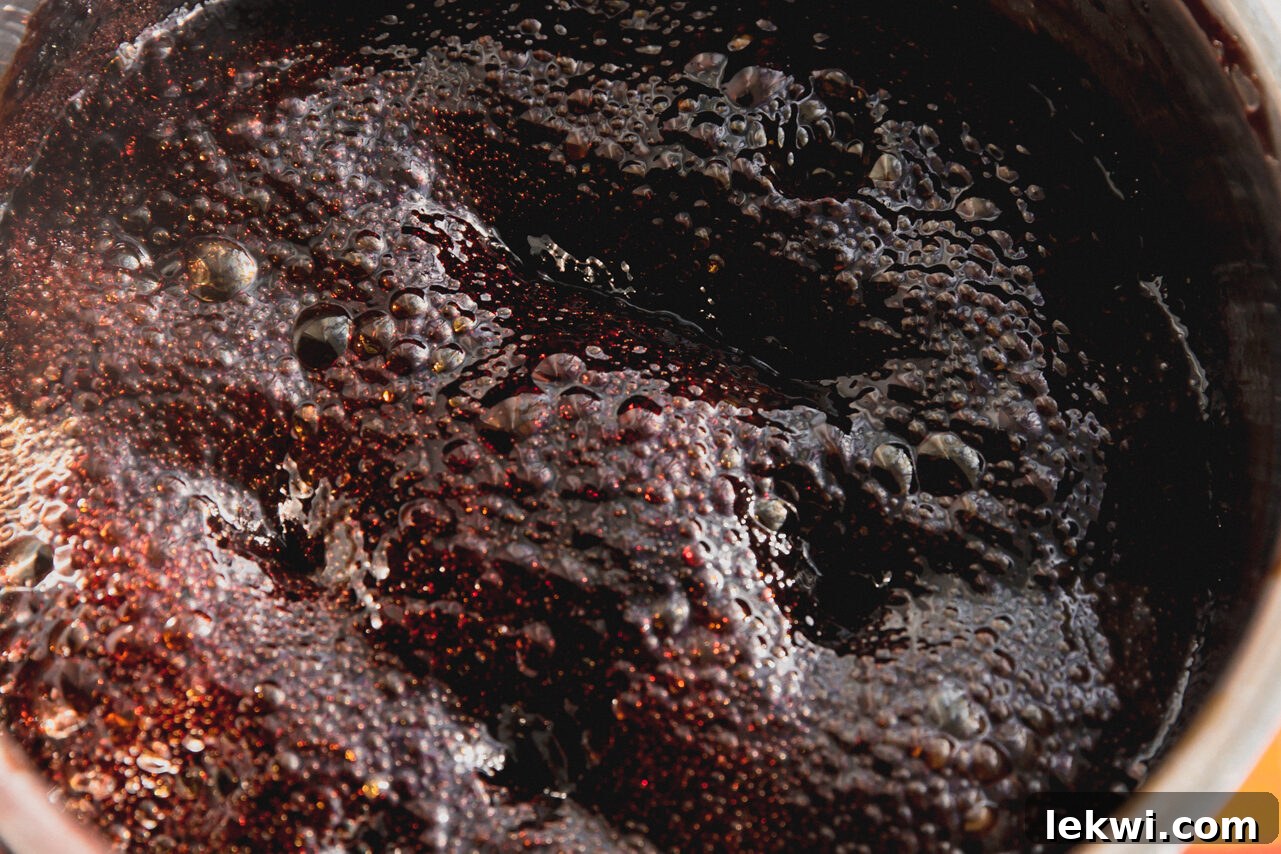
Step Two: Heat to Hard Crack Stage. Attach your candy thermometer to the side of the pot, ensuring the tip is submerged in the mixture but not touching the bottom. Place the pot over medium-low heat, then gradually increase to medium. Stir the mixture frequently to prevent scorching. It will begin to bubble and thicken, a process that usually takes about 20-25 minutes. The crucial point is to wait for the mixture to reach exactly 300°F (149°C), which is the “hard crack” stage. This temperature is vital for the lollipops to become hard and not chewy.

Step Three: Prepare Molds and Pour. While the mixture is heating, prepare your lollipop molds by inserting the lollipop sticks about halfway into each mold cavity. Once the elderberry and honey mixture reaches 300°F, immediately remove it from the heat. Working quickly and very carefully (the syrup will be extremely hot), use a ladle or a heat-resistant spoon to spoon the hot syrup into each mold cavity. Don’t worry if a little spills outside the mold; these excess bits can be easily broken off once hardened.
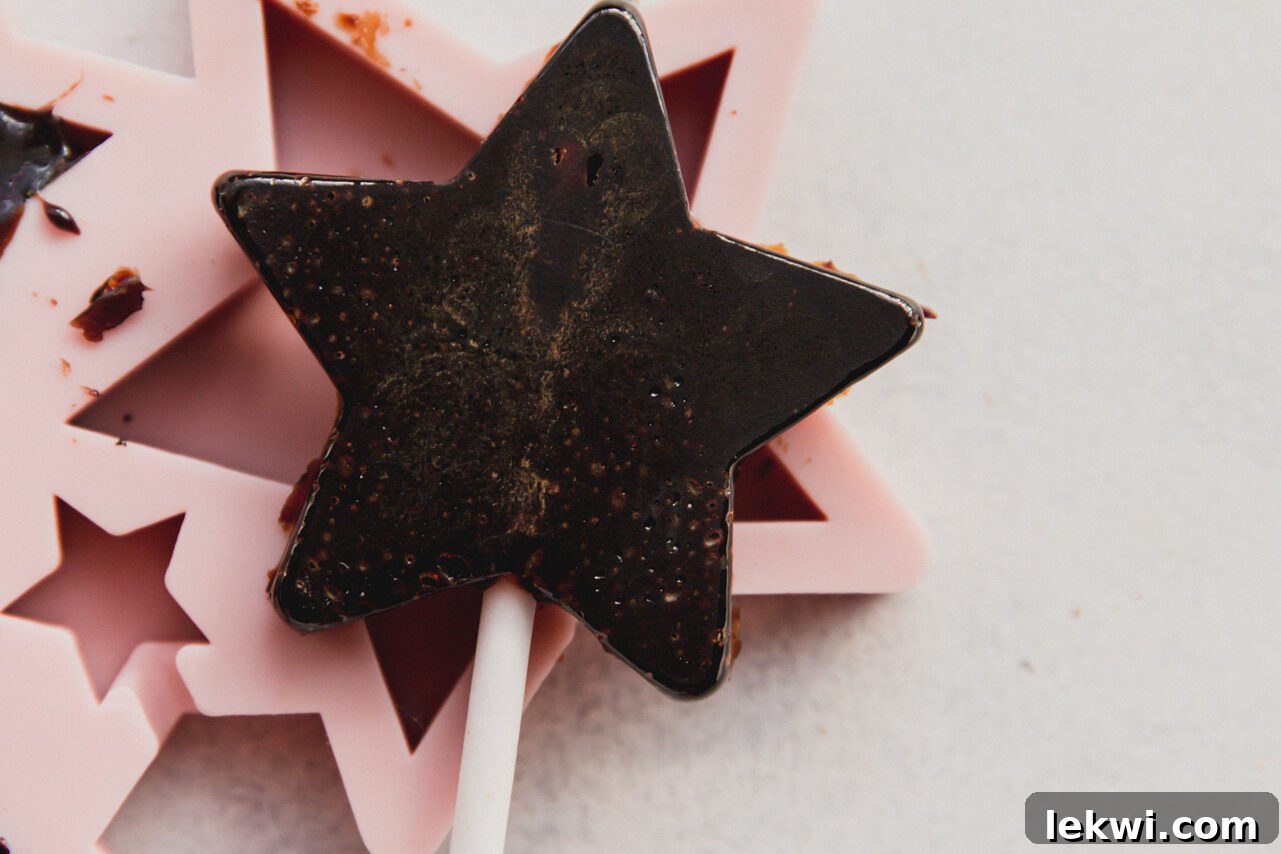
Step Four: Set and Enjoy. Once all the molds are filled, carefully transfer them to the refrigerator. Allow them to set completely for at least one hour. Chilling helps them firm up quickly and makes them easier to remove from the molds. Once fully hardened, gently pop them out of their molds. Your homemade elderberry lollipops are now ready to be enjoyed as a soothing and delicious winter wellness treat!
Pro Tips & Tricks for Perfect Lollipops
- Safety First: Honey and Hard Candy Warnings. It is crucial to remember that honey should never be given to babies under one year old due to the risk of infant botulism. Additionally, hard candies and lollipops pose a significant choking hazard for small children and toddlers. These lollipops are not recommended for young children. Always supervise older children while they enjoy them.
- Consult Your Pediatrician. When introducing any new remedy or dietary addition, especially for children, it’s always best practice to consult with your pediatrician. They can offer personalized advice based on your child’s age, health conditions, and specific needs.
- Choose the Right Cookware. While glass cookware is beautiful, it is a definitive no-no for candy making. Glass can shatter under high, direct heat, posing a serious safety risk. Always opt for a sturdy, heavy-bottomed pot made of materials like stainless steel. This ensures even heat distribution and reduces the risk of burning your precious elderberry mixture.
- Prevent Sticking with Arrowroot Starch. The best way to store homemade lollipops is to wrap each one individually in a small plastic bag or parchment paper, just like store-bought candies. However, if you find your lollipops are still a bit sticky, you can lightly dust them with a thin layer of arrowroot starch. This fine powder will absorb any surface moisture and help prevent them from sticking to each other or their wrappers.
- Work Quickly and Carefully. Once the elderberry and honey mixture reaches the hard crack stage, it will cool and harden very rapidly. Have your molds and sticks ready beforehand, and work efficiently yet cautiously when pouring the hot syrup. Speed is important, but safety is paramount.
- Humidity Matters. High humidity can be the enemy of hard candies, causing them to become sticky or “weep.” Try to make your lollipops on a dry day if possible. If you live in a humid environment, consider storing them in an airtight container with a desiccant packet (like food-grade silica gel) to absorb excess moisture.
- Cleaning Sticky Pots. Don’t despair over a sugar-crusted pot! To easily clean any stubborn sugar that’s stuck after making lollipops, simply add water to the pot and bring it to a boil. The boiling water will dissolve the hardened sugar, making cleanup effortless.
Understanding Elderberry Dosage
While elderberry is a natural remedy, understanding appropriate dosages is important. However, it’s crucial to preface this by stating: always consult with your doctor or a qualified healthcare professional before taking elderberry, especially for children or if you have underlying health conditions.
General guidelines often suggest 1 tablespoon of elderberry syrup for adults and 1 teaspoon for children. This serves as a common reference point, but individual needs can vary greatly. When making lollipops, the size of your mold will directly impact how much elderberry syrup is in each lollipop. Therefore, consider the volume of your molds and adjust your serving size or consumption frequency accordingly to align with general recommendations and, most importantly, your doctor’s advice. These lollipops are intended as a supplemental boost, not a primary treatment, and should be used responsibly.
Elderberry and Autoimmune Considerations
For individuals with autoimmune diseases, caution is advised when considering elderberry supplements. Elderberry is known for its immune-stimulating properties, which can be beneficial for a healthy immune system battling a cold or flu. However, in the context of an autoimmune condition, where the immune system is already overactive and mistakenly attacks the body’s own tissues, stimulating it further could potentially trigger or exacerbate a flare-up. Sources suggest that elderberry’s immune-modulating effects might not be suitable for all autoimmune conditions.
If you have an autoimmune disease, it is absolutely essential to consult with your doctor or rheumatologist before incorporating elderberry into your diet or using elderberry lollipops. They can provide guidance tailored to your specific condition and medications. Personally, as someone with an autoimmune disease, I make these lollipops for my family to enjoy their benefits, but I exercise caution and typically avoid consuming them myself without explicit medical approval. Your health journey is unique, and personalized medical advice is always the safest approach.
Frequently Asked Questions About Elderberry Lollipops
When stored properly in an airtight container in the refrigerator, homemade elderberry lollipops can last for several weeks. Ensuring they are individually wrapped helps to maintain their freshness and prevent them from sticking together.
To preserve their quality and prevent stickiness, wrap each individual lollipop tightly in a small piece of plastic wrap or parchment paper. Once wrapped, place them in an airtight container. Store this container in the refrigerator. This keeps them firm, fresh, and prevents moisture from compromising their texture.
While a candy thermometer is highly recommended for accuracy, you can attempt to make lollipops using the “cold water test.” To do this, drop a small amount of the simmering syrup into a glass of very cold water. If the syrup instantly forms brittle threads that snap easily when bent (the “hard crack” stage), it’s ready. If it’s still soft or bends, continue cooking and retest. This method requires practice and a keen eye, so proceed with caution.
Don’t scrub! The easiest way to remove hardened sugar from your pot is to fill the pot with water, bring it to a boil, and let it simmer for a few minutes. The boiling water will dissolve the sugar residue, making it incredibly easy to rinse away. This simple trick saves you a lot of scrubbing effort.
If your lollipops turn out too sticky, it likely means the syrup didn’t reach the full “hard crack” stage of 300°F (149°C). Even a few degrees short can result in a softer, chewier, and stickier candy. Ensure your candy thermometer is accurate and that you cook the mixture to the precise temperature. As a temporary fix, dusting them lightly with arrowroot starch and storing them individually wrapped in the fridge can help manage stickiness.
While honey provides unique health benefits and flavor, you could experiment with other sugar types like organic cane sugar or maple syrup, though the texture and setting properties might vary. Honey’s specific sugar composition contributes to the hard crack stage differently. If altering the recipe, be prepared for potential adjustments in cooking time and final consistency. Always remember that for babies under one, no honey should be used.
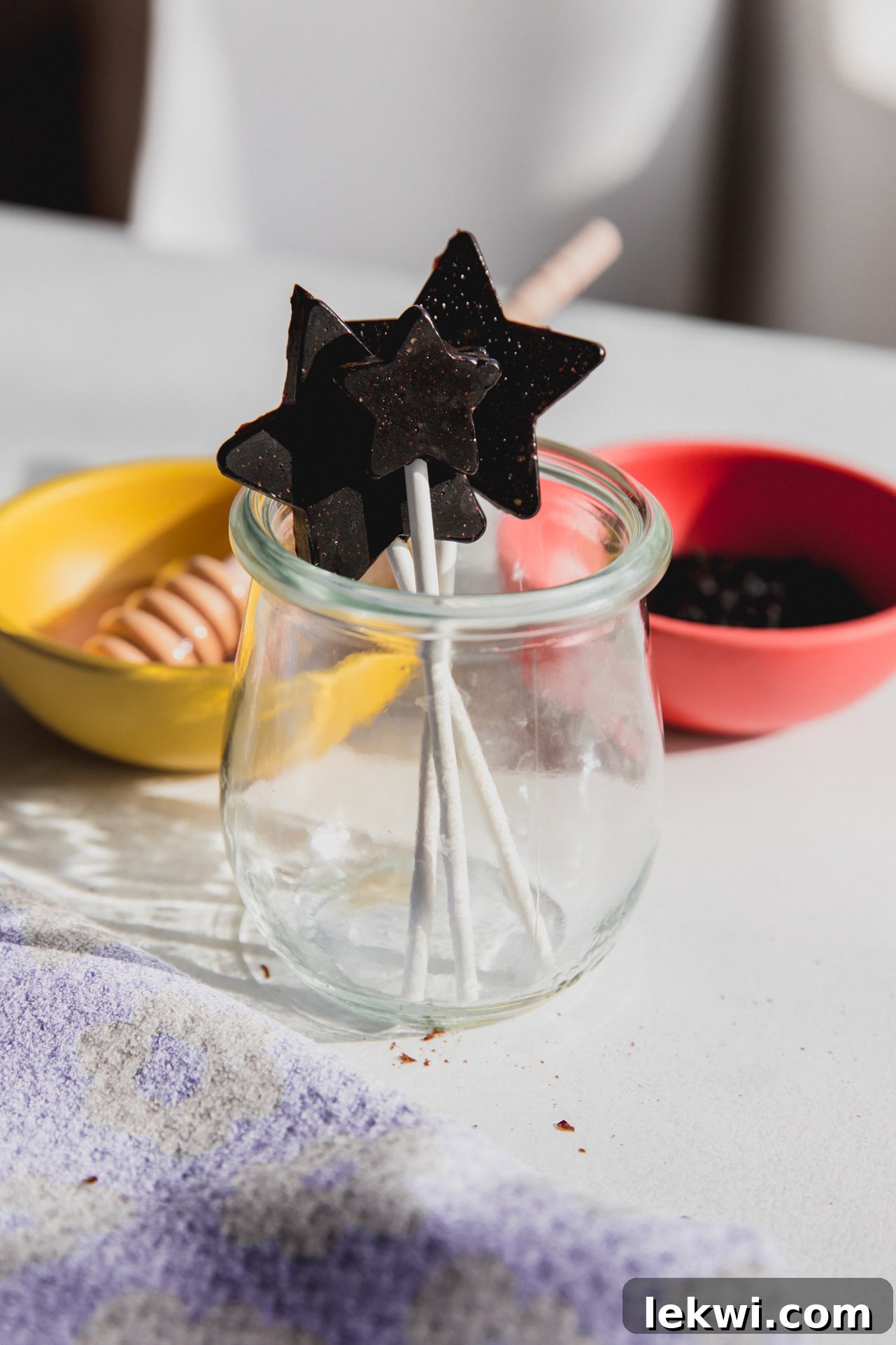
If you tried these Homemade Elderberry Lollipops or any other recipe on our blog, please leave a 🌟 star rating and let us know how it went in the 📝 comments below. Your feedback helps our community! Thanks for visiting and happy lollipop making!
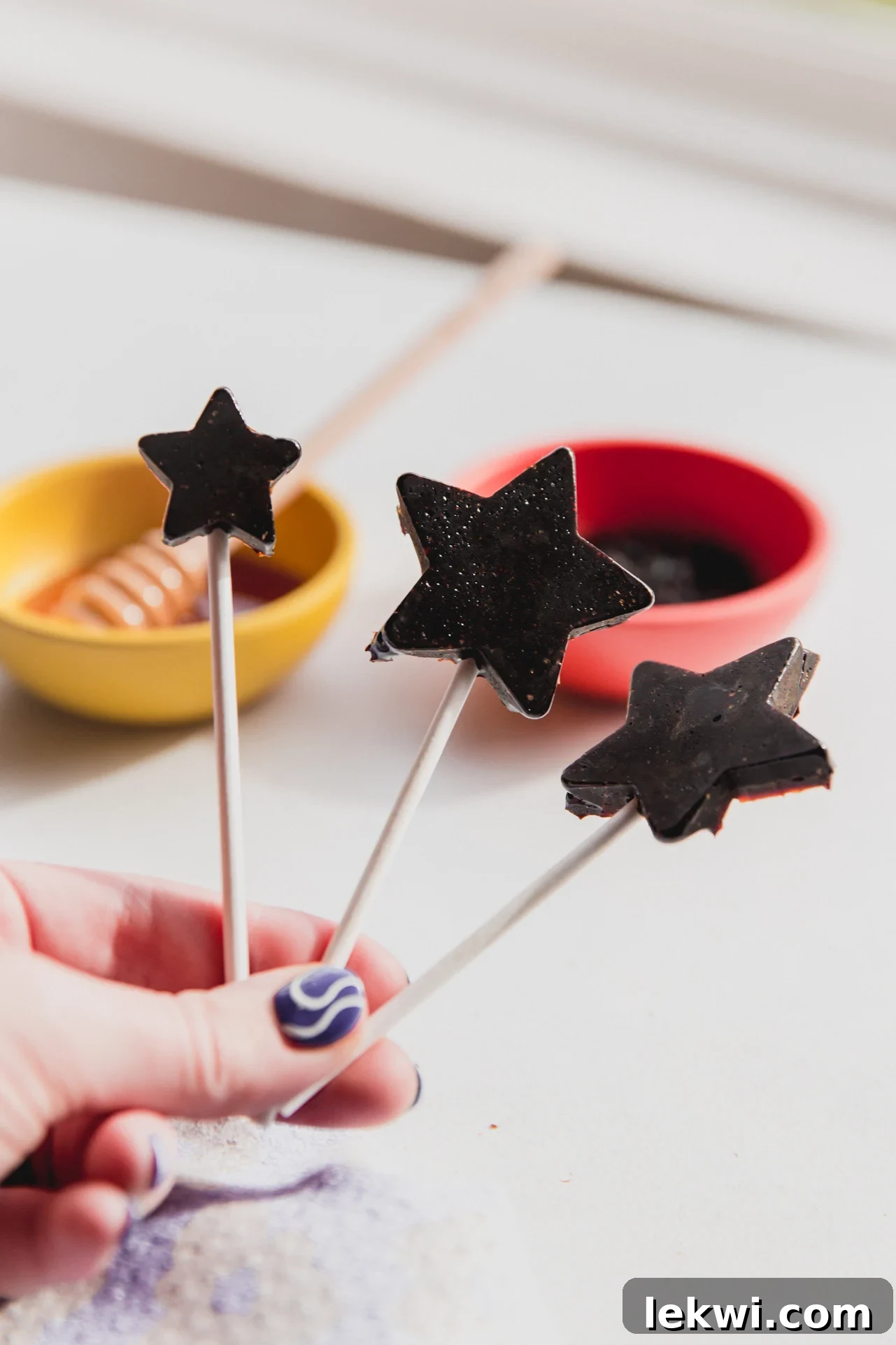
Homemade Elderberry Lollipops
6
lollipops
5
mins
30
mins
35
mins
Michelle
Leave a Review
Pin Recipe
Ingredients
-
½
cup
elderberry syrup,
see notes for options -
¼
cup
honey
-
1
thumb grated ginger,
optional, for flavor and benefits -
1
tsp
ground cinnamon,
optional, for warmth and aroma
Instructions
-
Prepare your lollipop molds by inserting lollipop sticks about halfway into each cavity. Set them aside on a heat-proof surface, ready for pouring.
-
In a heavy-bottomed pot, combine the elderberry syrup and honey. Stir gently until these two wholesome ingredients are fully integrated.
-
Attach a candy thermometer to the side of the pot, ensuring it doesn’t touch the bottom. Place the pot over medium-low heat, gradually increasing to medium. Stir the mixture often to prevent burning. The syrup will begin to bubble and thicken over approximately 20-25 minutes. Continue cooking until the thermometer reads precisely 300°F (149°C), which is the crucial “hard crack” stage.
-
Once the mixture reaches 300°F, immediately remove the pot from the heat. Working quickly and with extreme caution (the syrup is very hot), use a ladle to spoon the hot mixture carefully into the prepared lollipop molds. Don’t worry if a small amount overflows, as it can be easily removed once cooled.
-
Transfer the filled molds to the refrigerator and allow them to set completely for at least one hour. Once firm, gently remove the elderberry lollipops from their molds and enjoy their soothing goodness!
-
For best freshness and to prevent sticking, store the lollipops individually wrapped in an airtight container in the refrigerator.
Notes
Adding grated ginger can enhance flavor and benefits, but consider your family’s taste preferences, especially if serving to children, as ginger can be quite potent.
Essential Tools: A reliable candy thermometer is highly recommended. For shaping, you can use a star-shaped mold or a standard lollipop mold.
Important Autoimmune Note: Elderberry can stimulate the immune system, which might lead to a flare-up in individuals with autoimmune diseases (source). If you have an autoimmune condition, please consult your doctor before trying elderberry.