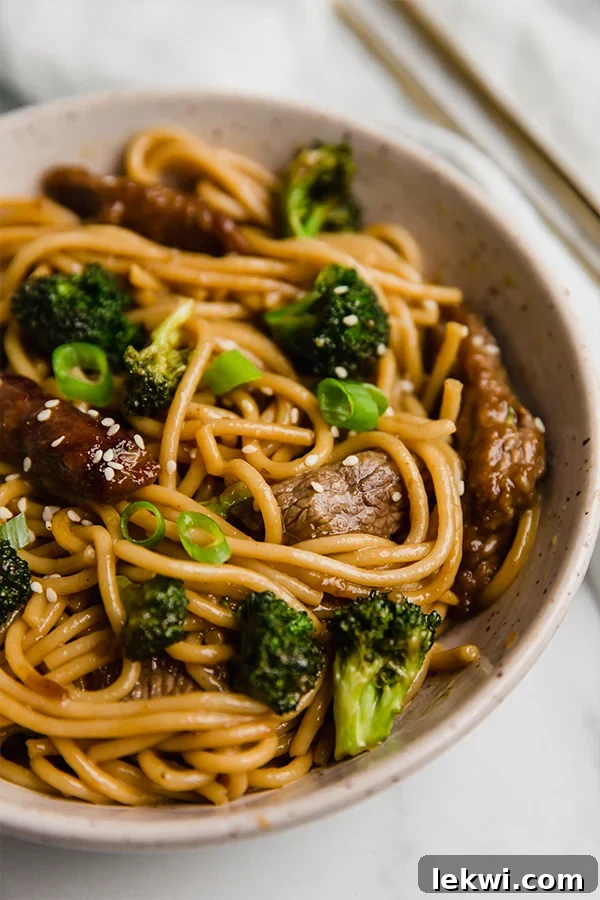
Craving a flavorful, hearty, and incredibly easy meal that ticks all the boxes? Look no further than this fantastic **Gluten-Free Beef and Broccoli Lo Mein**! Forget unhealthy takeout—this homemade version brings authentic Asian-inspired flavors right to your kitchen in a single pan. What makes it even better? It’s naturally gluten-free and can be effortlessly adapted to be grain-free, paleo, and even AIP-friendly, ensuring everyone can enjoy a delicious and satisfying dish.
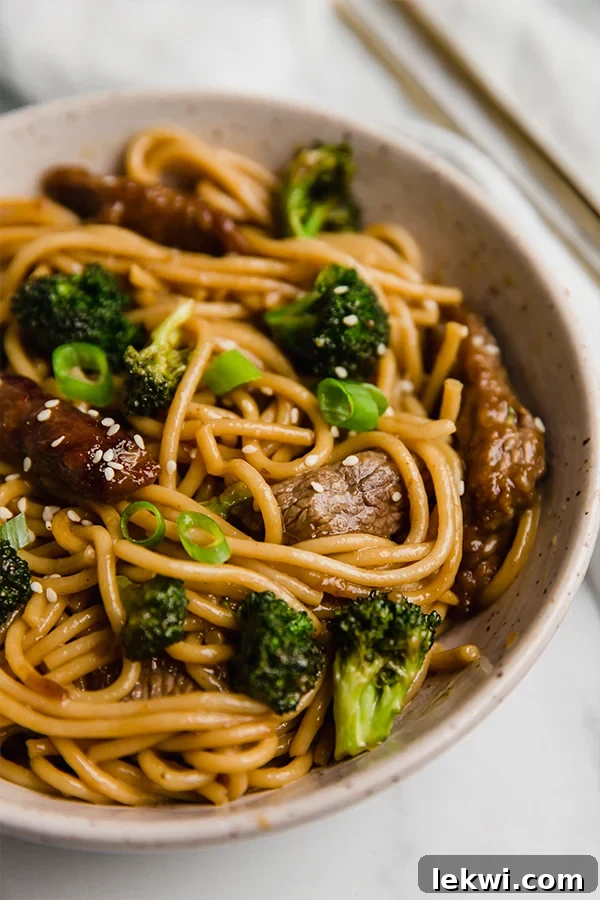
Unveiling Lo Mein: A Beloved Noodle Dish
Lo mein, a staple in Chinese cuisine, translates literally to “tossed noodles.” It’s a popular dish known for its soft, chewy egg noodles tossed with a savory sauce, an assortment of vibrant vegetables, and typically a protein like chicken, beef, shrimp, or pork. Unlike chow mein, which often features stir-fried crispy noodles, lo mein focuses on tender, saucy noodles that are mixed into the other ingredients rather than fried separately. Its inherent versatility makes it a beloved choice, easily adaptable to suit various tastes and dietary preferences, from vegetarian to protein-rich variations.
Traditionally, lo mein derives much of its signature umami flavor from soy sauce, and the noodles themselves are typically wheat-based, meaning it contains gluten. However, this recipe offers a brilliant twist, meticulously crafted to deliver all the comforting flavors you expect from classic lo mein without any gluten or soy. By using thoughtfully selected ingredients, we transform this classic into a dish that’s not only incredibly delicious but also aligns with grain-free, paleo, and even the autoimmune protocol (AIP) guidelines. It’s a testament to how traditional favorites can be reimagined for modern dietary needs without compromising on taste or texture.
Gluten in Traditional Lo Mein: Understanding the Difference
Yes, traditional lo mein almost always contains gluten. The two primary sources of gluten in a conventional lo mein dish are:
- The Noodles: Classic lo mein noodles are typically made from wheat flour, which contains gluten.
- The Sauce: Soy sauce, a key ingredient in most lo mein sauces, is made from fermented soybeans and wheat, making it a common source of gluten. Even “tamari” can sometimes contain small amounts of wheat if not explicitly labeled gluten-free.
For individuals with celiac disease, gluten sensitivity, or those following a specific diet that excludes gluten (like paleo or AIP), traditional lo mein is off-limits. This recipe meticulously addresses both of these concerns. We swap out wheat-based noodles for gluten-free alternatives and replace soy sauce with coconut aminos, ensuring a completely gluten-free and soy-free experience without sacrificing the rich, savory depth of flavor that makes lo mein so appealing.
Why You’ll Fall in Love with This Gluten-Free Beef and Broccoli Lo Mein
This isn’t just another dinner recipe; it’s a culinary experience designed to bring comfort, flavor, and convenience to your table. Here’s why this gluten-free beef and broccoli lo mein will quickly become a cherished favorite:
- Unmatched Comfort and Irresistible Flavor: Imagine tender, chewy noodles coated in a rich, savory, and slightly sweet sauce, perfectly complemented by succulent beef and crisp-tender broccoli. It’s the ultimate comfort food, evoking all the nostalgic warmth of your favorite Asian-inspired meals. The blend of garlic, ginger, and coconut aminos creates a deeply satisfying flavor profile that will have you coming back for more. It’s gourmet taste with homemade simplicity.
- Wholesome, Filling, and Perfectly Balanced: This dish is designed to nourish your body and keep you feeling satisfied. With lean protein from the sirloin steak, complex carbohydrates from the gluten-free pasta, and a generous serving of fiber-rich broccoli, it’s a meal that provides a complete nutritional package. It avoids the heavy, sometimes overly oily feeling of traditional takeout, offering a lighter yet equally fulfilling alternative that supports a balanced lifestyle.
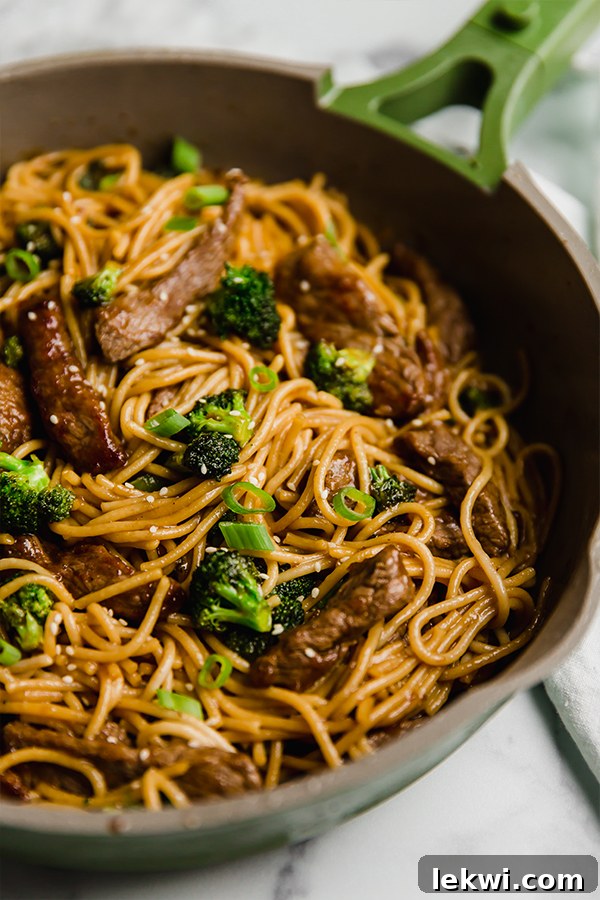
- Incredibly Quick and Easy One-Pan Wonder: Life is busy, and sometimes you need a delicious meal without a mountain of dirty dishes. This recipe shines in its simplicity, primarily utilizing a single large skillet for cooking the broccoli, beef, and combining the final dish. This minimizes cleanup, making it perfect for weeknight dinners or when you want maximum flavor with minimal effort. From start to finish, you’ll be amazed at how quickly this gourmet-quality meal comes together.
- Dietary Friendly & Highly Adaptable: One of the standout features of this lo mein is its incredible flexibility. Beyond being naturally gluten-free and soy-free, it can be easily adjusted to fit grain-free, paleo, and AIP diets by simply selecting the appropriate noodle alternative. This makes it a fantastic option for families or gatherings with diverse dietary needs, ensuring everyone can enjoy a delicious meal without feeling left out.
- Fantastic for Meal Prep and Leftovers: This recipe makes excellent leftovers, often tasting even better the next day as the flavors meld further. It’s ideal for batch cooking on the weekend to enjoy healthy, homemade lunches or dinners throughout the week. Simply portion it out, and you have quick, delicious meals ready to go, saving you time and stress during busy days.
The Essential Ingredients for This Delicious Recipe
Crafting this incredible gluten-free beef and broccoli lo mein requires a thoughtful selection of ingredients that deliver on flavor, texture, and dietary compatibility. Here’s a closer look at what you’ll need:
- Gluten-Free Spaghetti: The foundation of our lo mein! While traditional lo mein uses wheat-based egg noodles, we opt for gluten-free spaghetti. Brands like Jovial Foods offer excellent brown rice spaghetti, which holds up beautifully and provides a satisfying chew. For those strictly following a paleo or AIP diet, Jovial’s cassava pasta is a fantastic grain-free alternative that works wonderfully in this dish, providing a similar noodle experience.
- Sliced Sirloin Steak: Sirloin is a lean and flavorful cut that cooks quickly and remains tender when sliced thinly against the grain. Its robust flavor pairs perfectly with the savory sauce. If sirloin isn’t available, flank steak, skirt steak, or even NY strip steak are excellent substitutes. For a more budget-friendly or quicker option, you can even modify the recipe to use ground beef, which absorbs the sauce beautifully.
- Fresh Broccoli Florets: Broccoli adds a wonderful pop of color, essential fiber, and a tender-crisp texture that complements the noodles and beef. Fresh florets are ideal, but you can also use frozen broccoli (ensure it’s thawed and drained well) in a pinch. Feel free to add other quick-cooking vegetables if you desire, such as sliced carrots, bell peppers, or snow peas.
- Coconut Aminos: This is our star ingredient for a soy-free and gluten-free alternative to soy sauce. Coconut aminos offer a rich, savory, and slightly sweet flavor profile that mimics soy sauce without the soy or gluten. It’s a key component in creating the authentic umami depth of our lo mein sauce.
- Apple Cider Vinegar (ACV): A splash of apple cider vinegar brightens the sauce, adding a subtle tang that balances the richness of the coconut aminos and the sweetness of the coconut sugar. It’s an important acidic component that rounds out the overall flavor.
- Coconut Sugar: Used in moderation, coconut sugar provides a natural sweetness to the sauce, helping to caramelize the flavors and achieve that classic lo mein taste without refined sugars. It’s a paleo-friendly sweetener that contributes to the dish’s depth.
- Aromatic Spices (Garlic Powder, Ginger Powder, Onion Powder): These pantry staples are crucial for building the signature Asian-inspired flavor profile. Garlic and ginger are indispensable in lo mein, providing warmth and pungency, while onion powder adds another layer of savory depth.
- Arrowroot Starch: This acts as a thickener for our sauce, giving it that desirable glossy, clingy texture that coats every noodle and piece of beef. It’s a gluten-free and paleo-friendly alternative to cornstarch.
- Avocado Oil: A high-smoke point oil perfect for sautéing the broccoli and searing the beef. Its neutral flavor ensures the other ingredients shine.
- Garnishes (Green Onion, Sesame Seeds): Freshly chopped green onions provide a vibrant finish, adding a mild oniony bite and freshness. Toasted sesame seeds offer a nutty crunch and an appealing visual touch. (Omit sesame seeds for strict AIP).
Mastering Gluten-Free Beef and Broccoli Lo Mein: A Step-by-Step Guide
Creating this delicious and healthy lo mein is a straightforward process, even for beginner cooks. Follow these detailed steps to achieve perfect results every time:
- Prepare Your Pasta to Perfection: Begin by cooking your chosen gluten-free spaghetti according to the package directions. Gluten-free pasta can sometimes get sticky, so adding a tablespoon of avocado oil to the boiling water can help prevent this. Once cooked to al dente, drain the pasta thoroughly and immediately toss it with a small amount of avocado oil to keep the noodles from clumping together. Set aside while you prepare the rest of the dish.
- Cook the Vibrant Broccoli: In a large, deep skillet or wok, heat 1-2 tablespoons of avocado oil over medium heat. Once shimmering, add the fresh broccoli florets. Season with a pinch of sea salt and black pepper (omit pepper for AIP). Sauté for 6-7 minutes, stirring occasionally, until the broccoli is bright green and fork-tender but still retains a slight crispness. Remove the cooked broccoli from the pan and set it aside. Quickly wipe out the pan with a paper towel, preparing it for the steak.
- Sear the Flavorful Steak: In a medium bowl, combine the arrowroot starch with the remaining sea salt and black pepper (if using). Add the thinly sliced sirloin steak to the bowl, tossing until each piece is thoroughly coated with the starch mixture. This coating will help create a beautiful sear and tenderize the beef. Return the cleaned skillet to medium-high heat and add 2-3 tablespoons of fresh avocado oil. Once the oil is hot and shimmering (you might see a slight ripple), add half of the coated steak slices to the pan in a single layer. Cook for 2-3 minutes on each side until nicely browned and cooked through. Avoid overcrowding the pan to ensure a good sear; cook the remaining steak in a second batch if necessary. Remove all cooked steak from the pan and set aside.
- Whisk Together the Irresistible Sauce: In a small bowl, combine all the sauce ingredients: coconut aminos, apple cider vinegar, coconut sugar, garlic powder, ginger powder, and onion powder. Whisk everything together until the coconut sugar is dissolved and the sauce is well combined. This flavorful mixture is the heart of your lo mein!
- Combine and Serve Your Masterpiece: Return the large skillet to low heat. Add the cooked gluten-free spaghetti, the sautéed broccoli, the seared steak, and the whisked coconut aminos sauce to the pan. Gently stir all the ingredients together, ensuring the noodles, beef, and broccoli are thoroughly coated with the delicious sauce. Allow it to heat through for 1-2 minutes, tossing occasionally. Remove the pan from the heat. Serve immediately, garnished generously with freshly chopped green onions and a sprinkle of sesame seeds (omit sesame seeds for AIP).
Expert Tips & Tricks for Lo Mein Perfection
Elevate your gluten-free beef and broccoli lo mein from great to absolutely exceptional with these tried-and-true tips:
- Bring Your Steak to Room Temperature: For the juiciest and most tender steak, allow your sliced sirloin to sit at room temperature for about 15-20 minutes before cooking. This helps the meat cook more evenly and prevents it from seizing up when it hits the hot pan, resulting in a more tender bite.
- Don’t Overcrowd the Pan When Searing Beef: This is crucial for achieving a beautiful sear on your steak. If you add too much meat at once, the temperature of the pan will drop, and the steak will steam instead of sear, resulting in a gray, less flavorful outcome. Cook the beef in batches if necessary, ensuring each piece has enough space to brown properly.
- Perfect Your Broccoli Texture: Aim for tender-crisp broccoli. You want it cooked through but still with a slight bite, avoiding mushiness. The 6-7 minute cooking time is a good guideline, but always test with a fork.
- Make Extra for Delicious Leftovers: This recipe is a fantastic candidate for batch cooking. It’s so good that it tends to disappear quickly! Consider doubling the recipe to ensure you have plenty of leftovers for meal prep throughout the week. The flavors often deepen overnight, making it even more enjoyable the next day.
- Customize with Additional Vegetables: Lo mein is incredibly versatile. Don’t hesitate to add extra vegetables you have on hand. Sliced carrots, bell peppers, snap peas, bok choy, or even mushrooms would make wonderful additions. Add harder vegetables like carrots earlier with the broccoli, and softer ones like spinach or bok choy in the last few minutes of cooking.
- Adjust Seasoning to Your Taste: While the sauce measurements are balanced, feel free to taste and adjust the seasoning before combining everything. You might prefer a touch more sweetness, tang, or a stronger ginger kick. Remember, you can always add more, but you can’t take it away!
Is Gluten-Free Lo Mein Truly Healthy? A Closer Look
The term “healthy” is subjective and can mean different things to different people. However, when we evaluate this gluten-free beef and broccoli lo mein, it definitely stands out as a nutritious option, especially when compared to its traditional takeout counterparts. Here’s why:
- Balanced Macronutrients: This recipe offers a well-rounded profile of protein, carbohydrates, and healthy fats. The lean sirloin provides high-quality protein essential for muscle repair and satiety. Gluten-free pasta offers complex carbohydrates for sustained energy, and healthy avocado oil contributes beneficial fats.
- Fiber-Rich Vegetables: With a generous amount of broccoli, this dish is packed with dietary fiber, which aids digestion, promotes fullness, and contributes to overall gut health. The option to add more vegetables further boosts its nutrient density.
- Controlled Ingredients: By making it at home, you have complete control over the quality of ingredients. You can choose grass-fed beef, organic broccoli, and high-quality gluten-free pasta. You also avoid common additives, excessive sodium, and unhealthy oils often found in restaurant or pre-packaged lo mein.
- Soy-Free and Refined Sugar-Free Options: Utilizing coconut aminos instead of soy sauce eliminates soy, which can be a common allergen or concern for some. Using coconut sugar (or even omitting it for AIP) reduces reliance on refined sugars, making it a better choice for blood sugar management.
While gluten-free doesn’t automatically equate to “healthy,” this recipe is thoughtfully designed with whole, nutrient-dense ingredients. It can certainly fit beautifully into a healthy eating routine, providing a satisfying, balanced, and flavorful meal that supports your well-being.
Choosing the Best Noodles for Gluten-Free Lo Mein
The right noodles are crucial for achieving the perfect lo mein texture. For this gluten-free version, we primarily recommend gluten-free spaghetti due to its excellent texture and ability to mimic traditional lo mein noodles. Our top recommendation is:
- Jovial Foods Gluten-Free Brown Rice Spaghetti: This brand consistently produces high-quality gluten-free pasta that holds its shape well and has a pleasant chew, very similar to traditional wheat pasta. It’s widely available and a fantastic choice for a classic lo mein feel.
- Jovial Foods Cassava Pasta (Paleo & AIP-Friendly): For those strictly avoiding grains or following the Autoimmune Protocol (AIP), Jovial’s cassava pasta is an outstanding grain-free alternative. Made from cassava flour, it offers a surprisingly similar texture to wheat pasta and performs beautifully in this recipe, allowing you to enjoy lo mein even on stricter dietary protocols.
When cooking gluten-free noodles, always follow package directions carefully, as cooking times can vary. A common tip is to slightly undercook them by about a minute, as they will finish cooking when tossed in the hot sauce.
Preparing Ahead & Reheating for Convenience
This gluten-free beef and broccoli lo mein is not only delicious fresh but also reheats wonderfully, making it an excellent choice for meal prep!
- Making Ahead: You can cook the pasta, beef, and broccoli ahead of time and store them separately in airtight containers in the refrigerator for up to 3-4 days. Prepare the sauce and store it in a separate container. When ready to serve, simply combine and heat everything in a skillet as directed in the last step.
- Storage: Store any leftover assembled lo mein in an airtight container in the refrigerator for up to 3-4 days.
- Reheating: For best results, reheat the lo mein in a skillet over medium-low heat. Add a splash of water or coconut aminos if it seems a bit dry. Stir gently until heated through, typically 5-7 minutes. You can also microwave individual portions, though the skillet method often yields a better texture, especially for the noodles and beef.
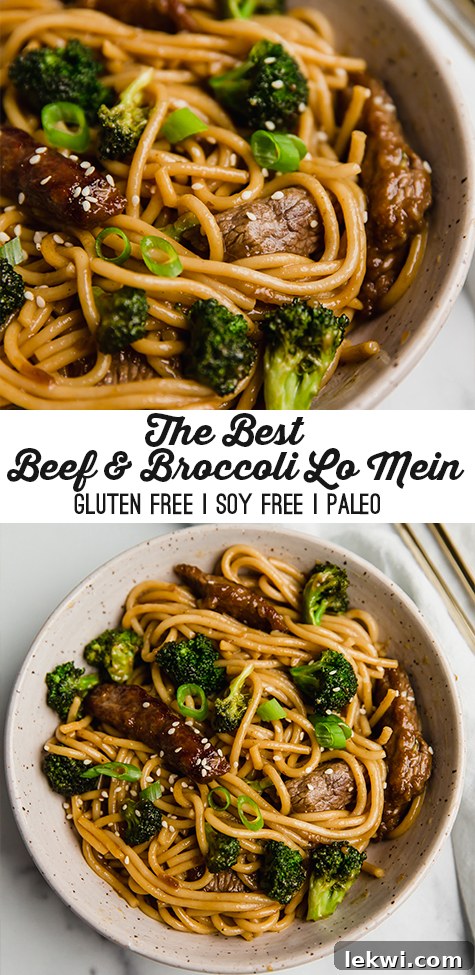
Recipe: Gluten-Free Beef and Broccoli Lo Mein
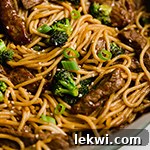
Gluten-free Beef and Broccoli Lo Mein
Leave a Review
Pin Recipe
Ingredients
- 12 oz gluten-free spaghetti, sub Jovial cassava spaghetti for AIP
- 3 tbsp avocado oil, divided
- 3 cups broccoli florets
- ¾ tsp sea salt
- ¼ tsp black pepper, omit for AIP
- 1 tbsp arrowroot starch
- 1 lb sirloin, sliced thin against the grain
- ⅓ cup coconut aminos
- 2 tsp coconut sugar
- 1 tsp apple cider vinegar
- 2 tsp garlic powder
- 1 tsp ginger powder
- 2 tsp onion powder
- 1 tbsp green onion, chopped
- 1 tsp sesame seeds, omit for AIP
Instructions
-
Prepare the pasta as directed. Drain and set aside, adding a bit of avocado oil to keep it from sticking.
-
Using a large deep skillet, heat 1-2 tbsp of avocado oil on medium heat. Add the broccoli and a pinch of salt and pepper (omit pepper for AIP). Cook for 6-7 minutes or until fork-tender. Remove the broccoli from the pan, set aside, and clean out the pan.
-
Add the arrowroot starch to a bowl along with the remainder of the salt and pepper. Add the steak slices, coating thoroughly.
-
Using the same pan, heat 2-3 tbsp of avocado oil. Once the oil is hot and shimmering, add half of the steak slices. Cook for 2-3 minutes on each side, and repeat until all of the steak is cooked. Remove from the heat.
-
Whisk the coconut aminos, apple cider vinegar, coconut sugar, garlic, ginger, and onion powder together.
-
Add the cooked spaghetti, cooked broccoli, steak, and coconut aminos mixture to the pan. Add the pan to low heat and stir to combine and reheat, coating the lo mein in the sauce.
-
Remove from the heat and serve with green onion and sesame seeds (omit sesame seeds for AIP).
Notes
Calories: 630kcal,
Carbohydrates: 81g,
Protein: 38.9g,
Fat: 16.7g,
Fiber: 5g
This Gluten-Free Beef and Broccoli Lo Mein is more than just a meal; it’s a celebration of flavor, health, and convenience. Whether you’re navigating dietary restrictions or simply looking for a delicious, easy, and wholesome dinner, this recipe delivers. Its comforting taste, balanced nutrition, and simple one-pan preparation make it an instant classic in any home. Dive into a bowl tonight and savor the satisfying flavors!
You’ll also love these delicious and healthy alternatives:
- Mongolian Ground Beef
- Teriyaki Chicken Stir Fry
- Ground Beef Ramen Stir Fry