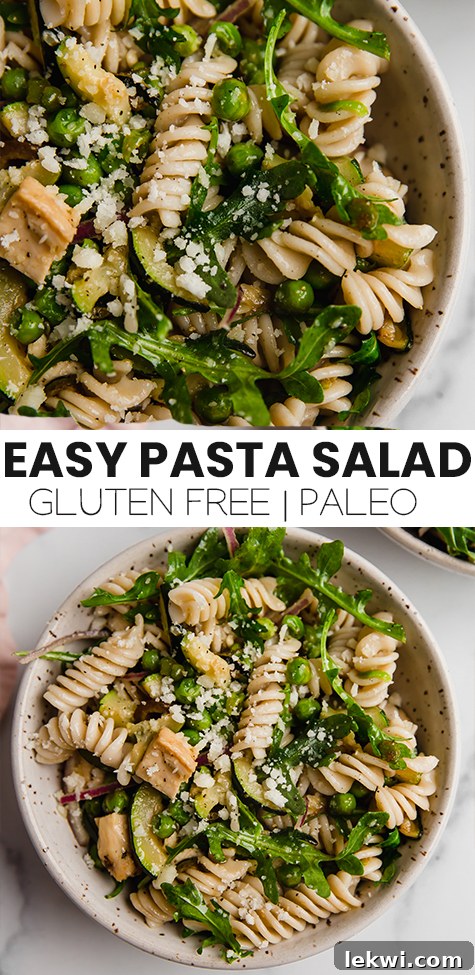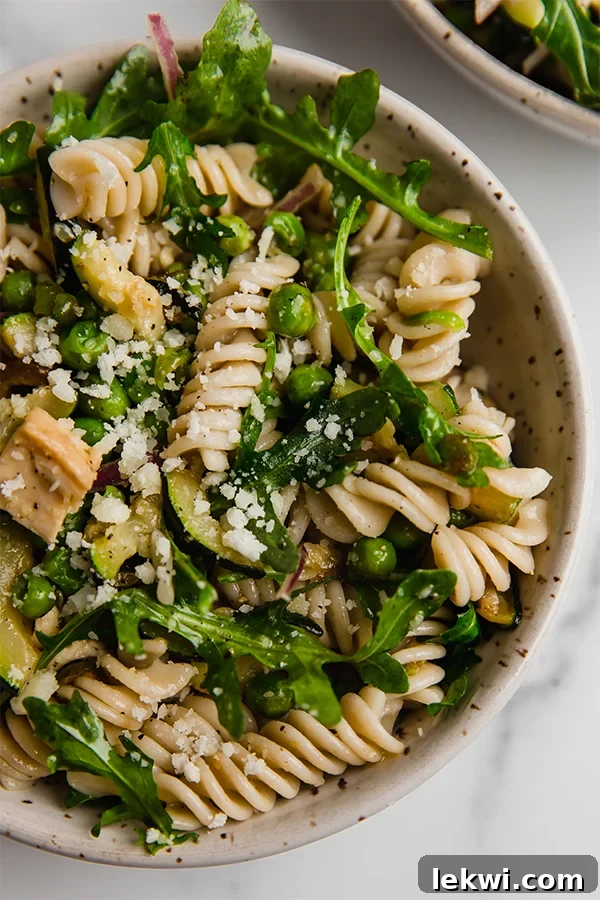
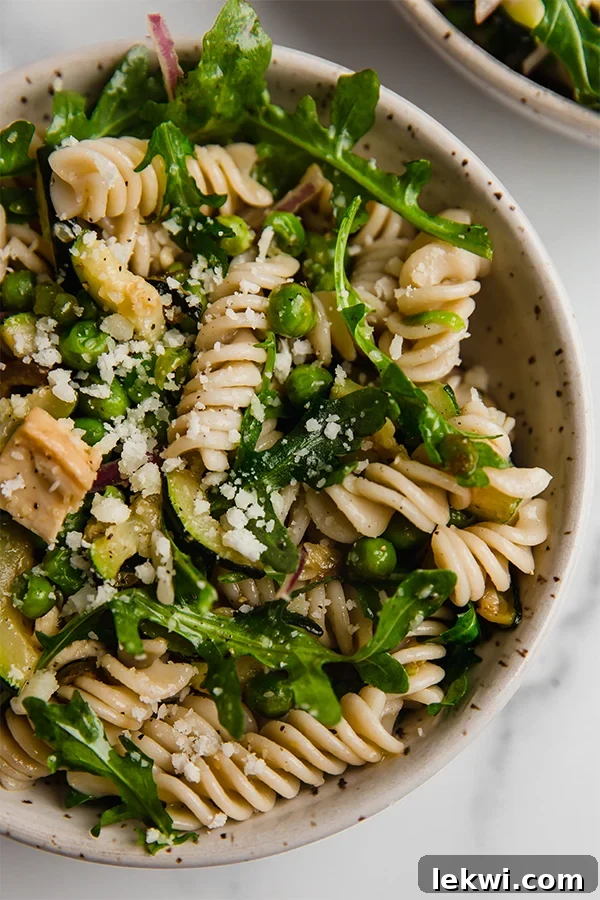
Gluten-Free Spring Pasta Salad: A Healthy & Delicious Seasonal Dish
As the days grow longer and the air turns warmer, there’s an undeniable shift in our culinary desires. Spring finally graces us with its presence, bringing with it a craving for fresh, vibrant flavors and lighter meals. And what better way to celebrate the season than with a delightful pasta salad? This isn’t just any pasta salad; it’s a meticulously crafted **Gluten-Free Spring Pasta Salad**, designed to be both incredibly tasty and remarkably accommodating for various dietary needs, including Paleo and AIP (Autoimmune Protocol) variations.
For too long, those with dietary restrictions felt excluded from enjoying classic comfort foods like a hearty pasta salad. But thanks to the incredible advancements in allergen-friendly ingredients, those days are happily behind us! This recipe recaptures all the nostalgic charm and satisfying flavors of a traditional pasta salad, but without any of the gluten, dairy, or other common irritants. It’s a dish that promises pure enjoyment, free from “nasty side effects,” making it an ideal choice for a healthy lunch, a light dinner, or a perfect accompaniment to any sunny-day gathering.
Why This Spring Pasta Salad is Your New Go-To Recipe
This isn’t just a recipe; it’s an invitation to embrace joyful eating, even with dietary considerations. Our **Gluten-Free Spring Pasta Salad** stands out for several compelling reasons:
- Dietary Inclusivity: It’s inherently gluten-free, with easy modifications to make it fully Paleo and AIP compliant. We even provide options for a dairy-free experience. This makes it perfect for sharing with friends and family who have diverse dietary needs.
- Fresh, Seasonal Flavors: We lean into the best of spring produce – crisp green vegetables and fresh arugula – creating a salad that bursts with seasonal goodness. The simple yet flavorful dressing ties all the components together beautifully.
- Hearty and Satisfying: Packed with tender chicken and wholesome gluten-free pasta, this salad is substantial enough to serve as a main course, yet light enough not to weigh you down. It strikes that perfect balance between fulfilling and refreshing.
- Quick and Easy Preparation: With straightforward steps and minimal cooking, this recipe is designed for convenience. It’s perfect for busy weeknights, meal prepping, or last-minute potluck contributions.
- Versatility: While we provide a fantastic base recipe, it’s also highly adaptable. Feel free to swap in your favorite seasonal vegetables or protein sources to make it uniquely yours.
Essential Ingredients for Your Healthy Spring Pasta Salad
Creating a truly exceptional pasta salad begins with quality ingredients. Here’s what you’ll need, along with tips for substitutions and considerations for specific dietary protocols:
For the Salad Base:
- Gluten-Free Fusilli Pasta (or other shapes): The choice of pasta is crucial for a gluten-free dish. Fusilli works wonderfully by holding the dressing in its spirals, but any short pasta shape like penne, rotini, or elbow macaroni would also be great. For optimal texture and taste, I highly recommend brands like Jovial’s brown rice pasta. If you’re following a strict Paleo or AIP diet, their cassava pasta is an excellent grain-free and legume-free alternative that performs remarkably well. Always cook according to package directions for al dente perfection.
- Chicken Breast: Lean and tender, chicken breast provides a fantastic protein punch. You can also use boneless, skinless chicken thighs for a slightly richer flavor and juicier texture; just be mindful that cooking times may vary. Ensure the chicken is fully cooked and cubed into bite-sized pieces for easy mixing.
- Fresh Seasonal Vegetables: This is where the “spring” in the salad truly shines! I love the combination of chopped zucchini and frozen peas. Peas add a lovely sweetness and pop of color, but remember to omit them if strictly adhering to AIP due to their legume status. Other fantastic spring vegetable additions could include asparagus (lightly blanched or roasted), thinly sliced radishes for a peppery bite, fresh spinach or kale, or even blanched snap peas. The goal is a vibrant mix that adds crunch, color, and nutrients.
- Fresh Arugula: Arugula provides a wonderful, slightly peppery kick that elevates the flavor profile of the salad. It adds a sophisticated “bite” and a lovely green freshness. If you’re not a fan of arugula’s distinct taste, baby spinach or mixed greens can be used as a milder alternative.
- Red Onion: Finely sliced red onion offers a sharp, pungent flavor and a beautiful purple hue. For a milder onion flavor, you can soak the sliced red onion in ice water for about 10-15 minutes before adding it to the salad.
- Black Olives: Sliced black olives contribute a salty, briny depth that complements the other ingredients beautifully. Choose good quality, pitted olives for the best flavor and convenience.
- Pecorino Cheese (Optional): For those who can tolerate dairy, a sprinkle of grated Pecorino cheese adds a wonderful salty and tangy umami flavor. However, to make this recipe dairy-free, Paleo, or AIP, simply omit the cheese entirely. As an excellent dairy-free and flavor-boosting alternative, nutritional yeast offers a cheesy, savory taste without any dairy.
For the Simple & Zesty Dressing:
- Extra Virgin Olive Oil: The base of our simple dressing, good quality olive oil provides healthy fats and a smooth texture. You’ll use some for the dressing and a small amount for sautéing.
- White Balsamic Vinegar: This offers a lighter, less intense tang than regular balsamic vinegar, preserving the vibrant colors of the salad. Regular balsamic vinegar will also work perfectly well if white balsamic isn’t available.
- Garlic Powder & Onion Powder: These pantry staples provide a consistent, savory depth of flavor to the dressing without the raw bite of fresh garlic or onion.
- Salt & Pepper: Essential for seasoning. Remember to omit black pepper for a strict AIP diet, as it’s a nightshade derivative. Adjust salt to taste based on your preference and the saltiness of your olives and cheese (if using).
Step-by-Step Guide: Crafting Your Gluten-Free Spring Pasta Salad
Making this fresh and flavorful pasta salad is straightforward. Follow these steps for a perfect dish every time:
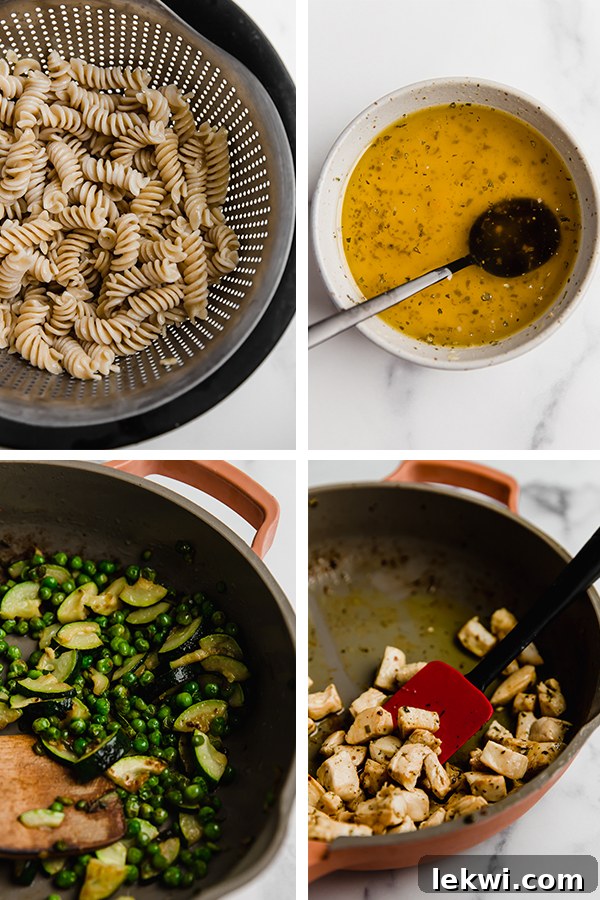
- Cook the Gluten-Free Pasta: In a large pot, bring generously salted water to a rolling boil. Add your chosen gluten-free pasta and cook according to the package directions until it’s perfectly al dente. Overcooked gluten-free pasta can become mushy, so keep a close eye on it! Once cooked, strain the pasta thoroughly. To prevent sticking and help it cool down, drizzle with a small amount of olive oil and toss gently. Set aside to cool while you prepare the other components.
- Prepare the Zesty Dressing: While the pasta is cooking, whisk together the dressing ingredients in a small bowl. Combine 1/3 cup of olive oil, white or regular balsamic vinegar, garlic powder, onion powder, a pinch of salt, and black pepper (if using). Whisk vigorously until all ingredients are well combined and the dressing is emulsified. Taste and adjust seasoning as needed. Set aside.
- Sauté the Fresh Vegetables: Heat 2 tablespoons of olive oil in a large skillet or pan over medium heat. Add the chopped zucchini and frozen peas (if using). Sauté for about 5-6 minutes, or until the zucchini is tender-crisp and the peas are heated through. Transfer the cooked vegetables to a separate bowl and set aside.
- Cook the Tender Chicken: Using the same pan (no need to clean it!), add the cubed chicken breast or thigh. Season generously with salt and pepper. Sauté over medium heat, stirring occasionally, until the chicken is cooked through and reaches an internal temperature of 165°F (74°C). This typically takes 8-10 minutes depending on the size of the cubes. Once cooked, remove the chicken from the pan and let it cool slightly. Cutting it into smaller, uniform pieces before cooking ensures even cooking.
- Assemble Your Spring Pasta Salad: In a large mixing bowl, combine the cooled pasta, cooked chicken, and sautéed vegetables. Add the fresh arugula, sliced red onion, and black olives. Pour the prepared dressing over all the ingredients. If you’re using Pecorino cheese (or nutritional yeast for dairy-free/Paleo/AIP), add it now. Toss everything together gently but thoroughly to ensure all ingredients are evenly coated with the dressing.
- Chill and Serve: For best flavor, serve the pasta salad lightly chilled. You can either serve it immediately at room temperature or refrigerate it for at least 30 minutes to allow the flavors to meld.
Tips for Success & Variations
- Perfect Pasta Texture: For gluten-free pasta, it’s often best to slightly undercook it by about a minute from package instructions if you plan to chill the salad, as it will absorb more dressing and firm up in the fridge. Rinsing gluten-free pasta with cold water after draining can also help prevent it from becoming overly sticky.
- Flavor Boosters: Enhance your dressing with fresh herbs like chopped parsley, basil, or dill for an extra layer of spring flavor. A squeeze of fresh lemon juice can also brighten the dressing significantly.
- Protein Power-Ups: While chicken is fantastic, consider grilled shrimp, flaked salmon, or even chickpeas (for vegetarian/vegan, omit for AIP) as alternatives. Roasted tofu or tempeh can also make excellent plant-based protein additions.
- Veggie Swaps: Don’t limit yourself to zucchini and peas. Steamed broccoli florets, cherry tomatoes (omit for AIP), bell peppers (omit for AIP), or cucumber can all be wonderful additions. Roasting some of your vegetables (like asparagus or bell peppers) before adding them can introduce a smoky depth.
- Make It Spicy: A pinch of red pepper flakes (omit for AIP) can add a subtle heat to the dressing if you enjoy a little spice.
Frequently Asked Questions About Spring Pasta Salad
Can I make this pasta salad without cheese?
Absolutely! The Pecorino cheese definitely adds a wonderful savory depth, but the salad is incredibly delicious without it. If you’re avoiding dairy for Paleo or AIP reasons, simply omit it. For a cheesy flavor without dairy, a tablespoon or two of nutritional yeast is a fantastic substitute. It provides a savory, umami note that many find reminiscent of cheese.
How should I store this pasta salad for the best results?
For optimal freshness and texture, especially if you’re not planning to serve the entire batch immediately, it’s highly recommended to store the components separately. Keep the cooked pasta, chicken, and sautéed vegetables in separate airtight containers in the refrigerator. Store the dressing in a separate container, and add the fresh arugula, red onion, and black olives just before serving. This prevents the pasta from getting too hard, the arugula from becoming soggy, and allows you to refresh the flavors before combining.
How long does this pasta salad last in the fridge?
If you follow the separate storage method, the cooked chicken, pasta, and vegetables will last for about 3-4 days in the refrigerator. The dressing can also be stored separately for up to a week. For the freshest taste and best texture, however, it’s always best to assemble and enjoy the pasta salad within 2-3 days of cooking. When ready to eat, simply combine the chilled components and toss with the dressing.
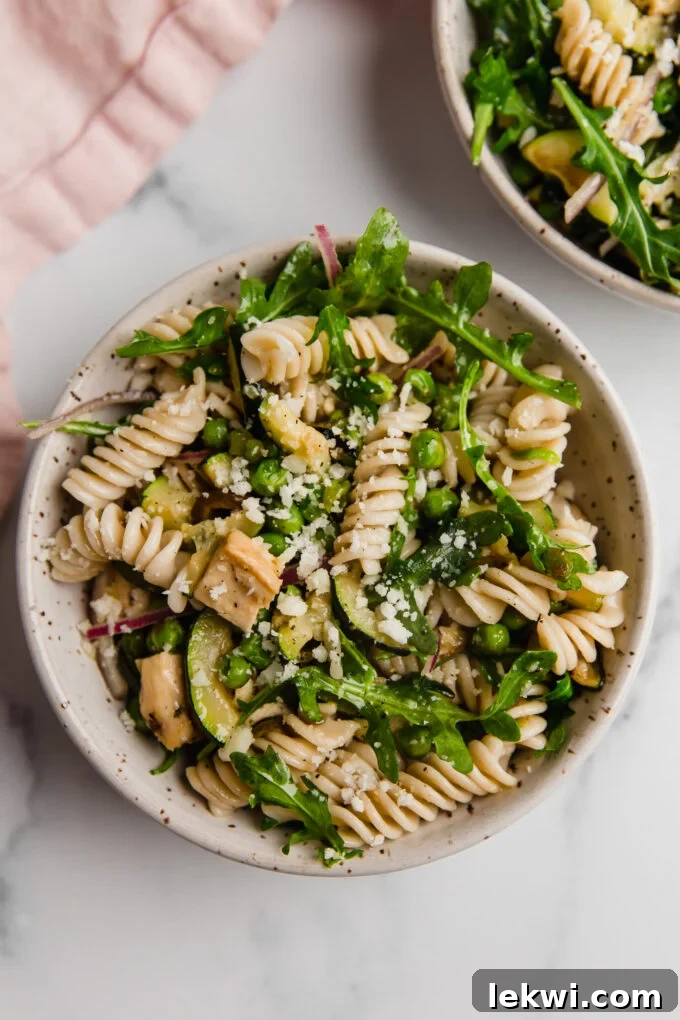
The Recipe: Gluten-Free Spring Pasta Salad (Paleo & AIP Friendly)
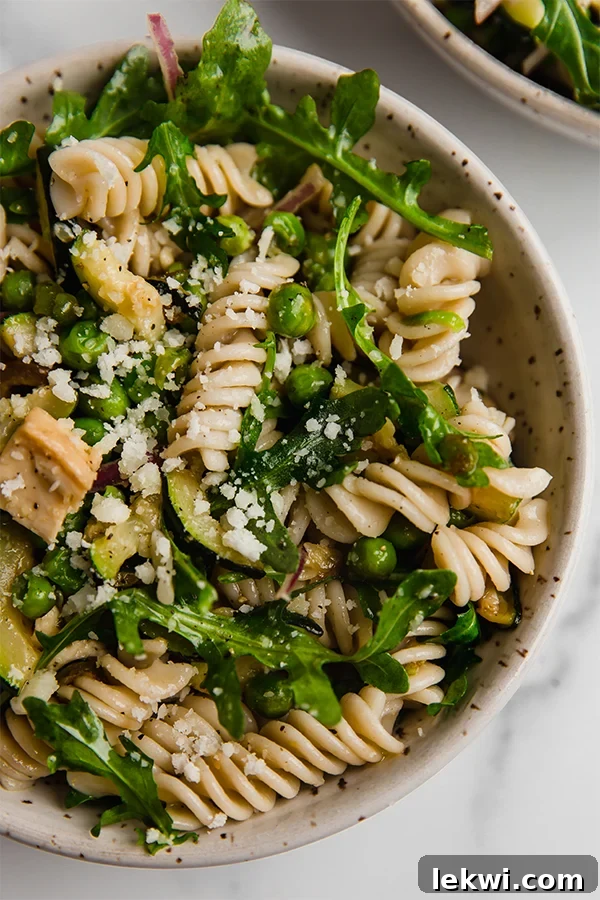
Spring Pasta Salad (Gluten-free, Paleo & AIP)
4
servings
20
mins
30
mins
Michelle
Ingredients
- 8 oz gluten-free fusilli pasta, I use Jovial rice pasta, or cassava pasta for AIP/Paleo
- ⅓ cup + 2 tbsp olive oil, divided
- 3 tbsp white, or regular balsamic vinegar
- 2 tsp garlic powder
- 2 tsp onion powder
- 1 tsp salt, divided
- ¼ tsp black pepper, omit for AIP
- 1 zucchini, chopped
- ½ cup frozen peas, omit for AIP
- 1 lb chicken breast, or thigh, cubed
- 2 cups arugula
- ½ red onion, sliced
- ¼ cup black olives, sliced
- 1 tbsp pecorino cheese, omit or sub nutritional yeast for AIP/paleo
Instructions
-
Fill a large pot 3/4ths of the way with water and salt. Bring to a boil and add the pasta. Cook as directed until cooked to your liking. Strain and set aside, tossing in a bit of olive oil to prevent sticking and to allow to cool.
-
While the pasta cooks, prep the dressing by combining 1/3 cup olive oil, balsamic vinegar, garlic powder, onion powder, a pinch of salt and pepper. Set aside.
-
Using a large pan, heat 2 tbsp of olive oil over medium heat. Add the zucchini and peas and cook for 5-6 minutes or until the zucchini and peas are cooked through. Set aside.
-
Add the chicken to the same pan and season with salt and pepper. Sauté until cooked through to an internal temperature of 165 F. Set aside and allow to cool.
-
Prepare the pasta salad by combining the pasta, chicken, vegetables, dressing, and optional cheese. Toss to combine and serve lightly chilled.
Notes
Serving:
1
serving
,
Calories:
511
kcal
,
Carbohydrates:
28.4
g
,
Protein:
36.2
g
,
Fat:
29.4
g
,
Fiber:
2.9
g
You May Also Love These Healthy & Allergen-Friendly Recipes:
- Bacon Ranch Zucchini Noodle Pasta Salad
- Greek Gnocchi Salad
- Bacon Ranch Sweet Potato Salad
- Easy Vinegar Cucumber Salad